Addiction Research
According to the World Health Organization (WHO), addiction is 'a chronic disease of the central nervous system that is characterized by a loss of control over impulsive behavior that leads to compulsive drug seeking and taking, and to relapses even after months of abstinence'. Addiction is a complex neuroadaptive process, where drugs of abuse alter cellular and molecular aspects of neural function. The brain circuits mediating the various behavioral effects of these drugs are rendered more, or less, responsive to those effects.
Addiction Research Products Targets
- Others (13)
- D4 Receptor (12)
- 5-HT7 Receptor (11)
- 5-HT6 Receptor (14)
- 5-ht5 Receptor (2)
- 5-HT4 Receptor (17)
- NOP Receptor (21)
- Mu-Opioid Receptors (15)
- Kappa Opioid Receptors (14)
- AMPA Receptor (45)
- GABAA-ρ Receptor (8)
- GABAA Receptor (66)
- GPR55 (8)
- CB2 Receptor (6)
- CB1 Receptor (17)
- Nicotinic (α7) Receptor (25)
- Nicotinic (α4β2) Receptor (14)
- D3 Receptor (12)
- NMDA Receptor (87)
- Kainate Receptor (22)
- D2 Receptor (14)
- D1 and D5 Receptor (16)
- Glutamate Transporter (18)
- Dopamine Transporter (20)
- CRF2 Receptor (3)
- CRF1 Receptor (5)
- 5-HT Transporter (30)
- Delta opioid receptor (16)
Products for Addiction Research - Page 50
- Cat.No. Product Name Information/Activity
-
BCC5686
Nociceptin
Nociceptin, a heptadecapeptide, is the endogenous ligand of the nociceptin receptor, acting as a potent anti-analgesic.

-
BCC5749
Nociceptin (1-13)NH2
Nociceptin (1-13), amide is a potent ORL1 (OP4) receptor agonist with a pEC50 of 7.9 for mouse vas deferens and a Ki of 0.75 nM for binding to rat forebrain membranes.
-
BCC5781
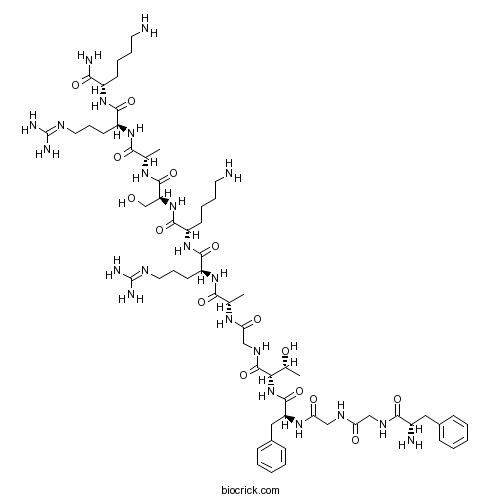
[Arg14,Lys15]Nociceptin
236098-40-1
![[Arg14,Lys15]Nociceptin chemical structure](/media/images/struct/BCC5781.png)
-
BCC5778
[(pF)Phe4]Nociceptin(1-13)NH2
380620-88-2
![[(pF)Phe4]Nociceptin(1-13)NH2 chemical structure](/media/images/struct/BCC5778.png)
-
BCC5701
[Phe1Ψ(CH2-NH)Gly2]Nociceptin(1-13)NH2
213130-17-7
![[Phe1Ψ(CH2-NH)Gly2]Nociceptin(1-13)NH2 chemical structure](/media/images/struct/BCC5701.png)
-
BCC6085
Orphanin FQ (1-11)
178249-41-7

-
BCC5755
Ac-RYYRWK-NH2
200959-47-3

-
BCC7612
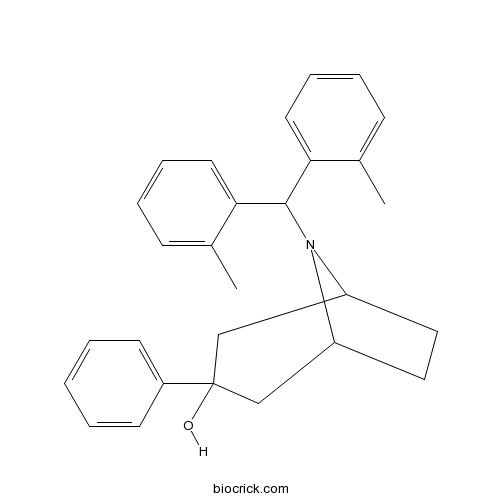
SCH 221510
322473-89-2
-
BCC7423
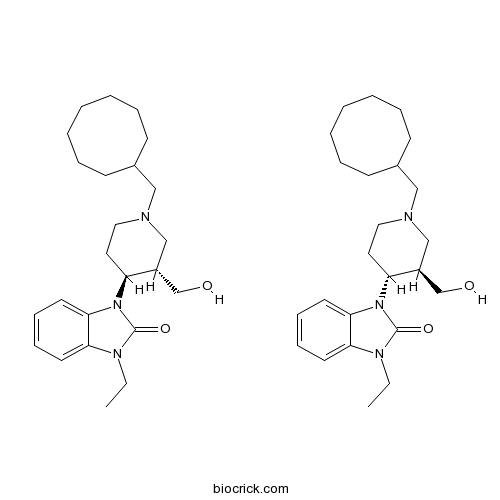
(±)-J 113397
Potent and selective NOP antagonist
-
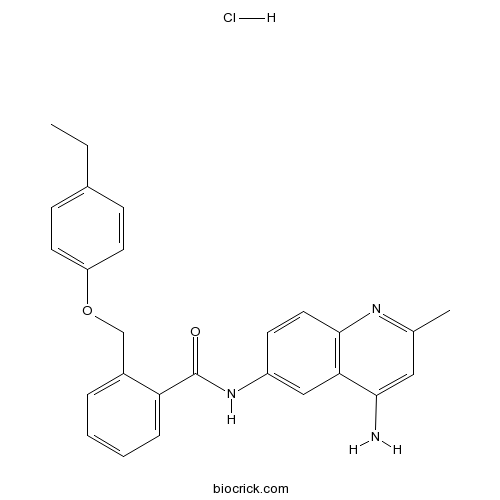
BCC3800
JTC-801
JTC-801 is a selective opioid receptor-like1 (ORL1) receptor antagonist, binding to ORL1 receptor with a Ki value of 8.2 nM.