Alzheimer's Disease Research
Alzheimer's disease (AD), the most common type of dementia, is an irreversible and progressive neurodegenerative disorder causing cognitive and functional impairment. It is characterized by formation of protein aggregates and progressive loss of neurons in the central nervous system (CNS). The symptoms of AD include short-term memory loss, confusion, irritability, aggression and mood swings, progressing to long-term memory deficit, withdrawal from social interactions and subsequently a loss in higher central functioning.
Alzheimer's Disease Research Products Targets
- Others (23)
- Cyclooxygenase (24)
- Complement (2)
- AMPA Receptor (45)
- Nicotinic (α7) Receptor (25)
- Nicotinic (α4β2) Receptor (14)
- NMDA Receptor (87)
- Kainate Receptor (22)
- Microtubule (19)
- DYRK (3)
- Cholinesterase (10)
- Autophagy (44)
- Antioxidant (19)
- Amyloid beta Peptide (28)
- Estrogen and Related Receptor (33)
- Glycogen Synthase Kinase 3 (20)
- gamma-Secretase (9)
Products for Alzheimer's Disease Research - Page 18
- Cat.No. Product Name Information/Activity
-
BCC7970
Lithium carbonate
554-13-2

-
BCC3898
MeBIO
667463-95-8
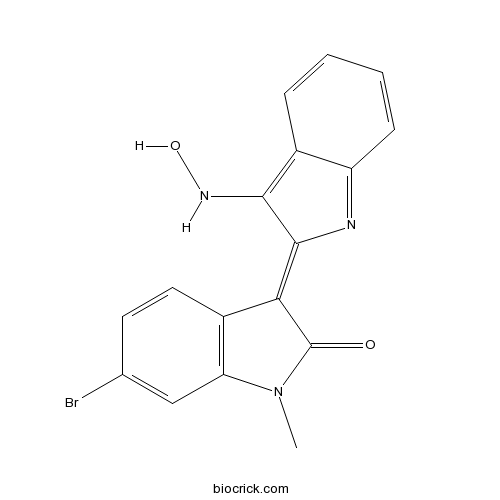
-
BCC7208
NSC 693868
40254-90-8

-
BCC3650
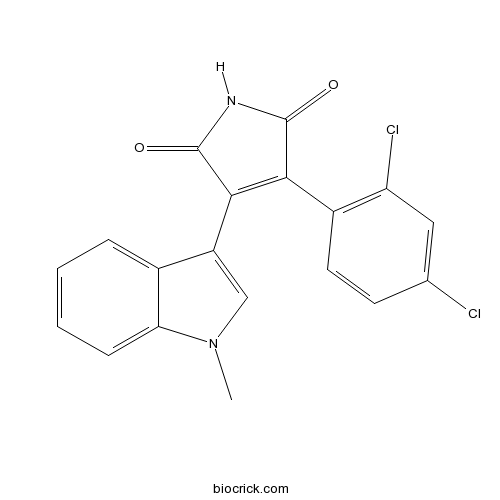
SB 216763
SB 216763 is potent, selective and ATP-competitive GSK-3 inhibitor with IC50s of 34.3 nM for both GSK-3α and GSK-3β.
-
BCC3651
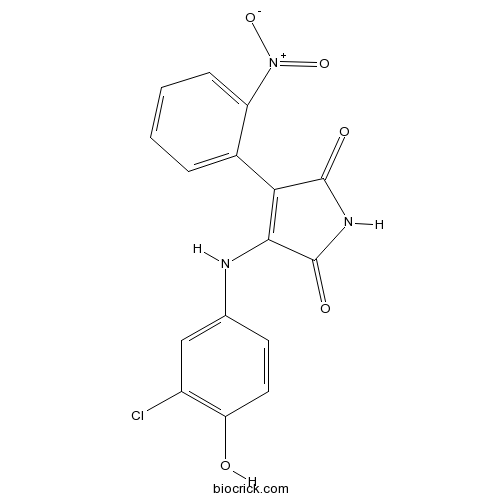
SB 415286
Potent, selective GSK-3 inhibitor,SB415286 is a potent GSK3α inhibitor with IC50/Ki of 78 nM/31 nM with equally effective inhibition of GSK-3β.
-
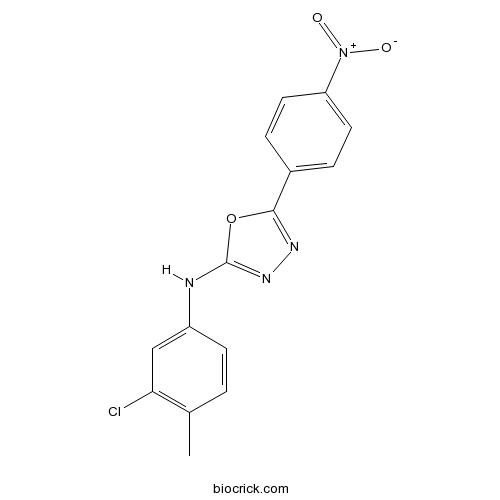
BCC6146
TC-G 24
1257256-44-2
-
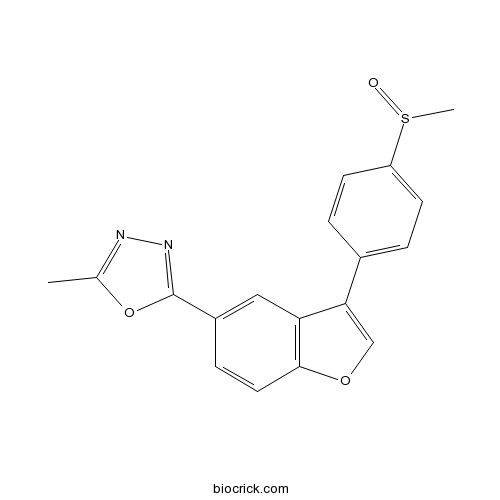
BCC6074
TCS 2002
1005201-24-0
-
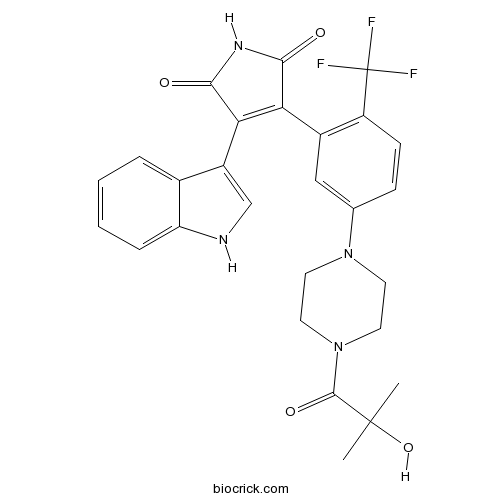
BCC2443
TCS 21311
TCS 21311 (NIBR3049) is a potent, highly selective JAK3 inhibitor with an IC50 of 8 nM, it displays >100-fold selectivity over JAK1, JAK2 and TYK2. TCS 21311 (NIBR3049) inhibits PKCα, PKCθ, and GSK3β with IC50s of 13, 68, and 3 nM, respectively.
-
BCC5817
2B-(SP)
186901-17-7

-
BCC5747
Phospho-Glycogen Synthase Peptide-2 (substrate)
851366-97-7