
Alzheimer's Disease Research
Alzheimer's disease (AD), the most common type of dementia, is an irreversible and progressive neurodegenerative disorder causing cognitive and functional impairment. It is characterized by formation of protein aggregates and progressive loss of neurons in the central nervous system (CNS). The symptoms of AD include short-term memory loss, confusion, irritability, aggression and mood swings, progressing to long-term memory deficit, withdrawal from social interactions and subsequently a loss in higher central functioning.
Alzheimer's Disease Research Products Targets
- Others (23)
- Cyclooxygenase (24)
- Complement (2)
- AMPA Receptor (45)
- Nicotinic (α7) Receptor (25)
- Nicotinic (α4β2) Receptor (14)
- NMDA Receptor (87)
- Kainate Receptor (22)
- Microtubule (19)
- DYRK (3)
- Cholinesterase (10)
- Autophagy (44)
- Antioxidant (19)
- Amyloid beta Peptide (28)
- Estrogen and Related Receptor (33)
- Glycogen Synthase Kinase 3 (20)
- gamma-Secretase (9)
Products for Alzheimer's Disease Research - Page 25
- Cat.No. Product Name Information/Activity
-
BCC7394
TC 1698 dihydrochloride
787587-06-8

-
BCC7264
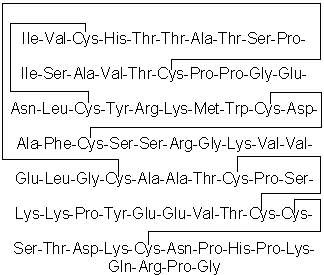
α-Bungarotoxin
11032-79-4
-
BCC1047
COG 133
ApoE peptide fragment; <span class='symbol'>α</span>7 nAChR antagonist

-
BCC5974
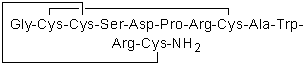
α-Conotoxin ImI
156467-85-5
-
BCC6897
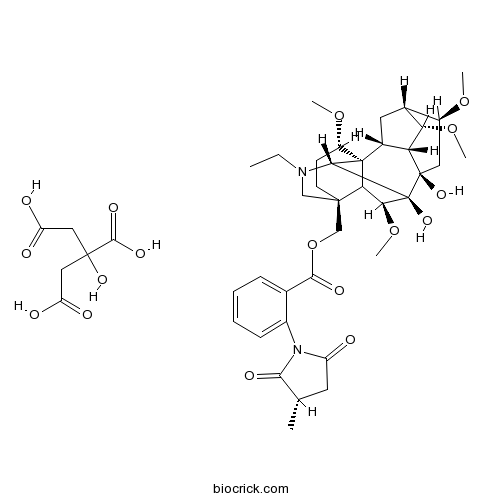
Methyllycaconitine citrate
112825-05-5
-
BCC7028
MG 624
77257-42-2

-
BCC4027
Tropisetron Hydrochloride
Tropisetron Hydrochloride (SDZ-ICS-930) is a selective 5-HT3 receptor antagonist and α7-nicotinic receptor agonist with an IC50 of 70.1 ± 0.9 nM for 5-HT3 receptor.

-
BCC1324
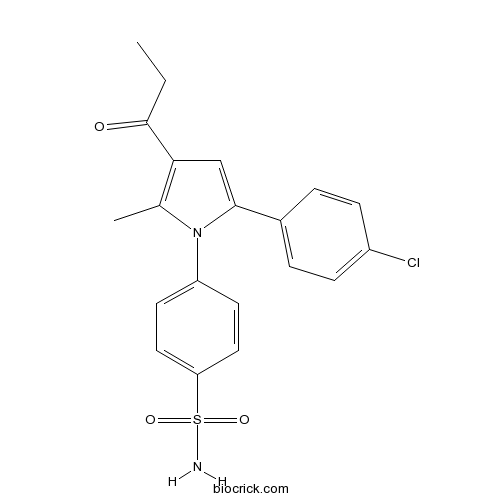
A-867744
A-867744 is a highly potent and selective type II positive allosteric modulator (PAM) of the alpha7 nicotinic acetylcholine receptors (nAChR) with an EC50 of 1.0 μM.
-
BCC7788
CCMI
CCMI is a potent and selective α7 nAChR-positive allosteric modulator, does not bind to or activate α7 nAChRs via the orthosteric site, and causes significant positive modulation of agonist-induced currents at α7 nAChRs. CCMI has potential in CNS diseases with cognitive dysfunction.

-
BCC1251
Ivermectin
Ivermectin (MK-933) is a broad-spectrum anti-parasite medication used in humans most commonly to treat nematode infections such as onchocerciasis, as well as scabies and lice. Ivermectin (MK-933) is a specific inhibitor of Impα/β1-mediated nuclear import and has potent antiviral activity towards both HIV-1 and dengue virus. It is a positive allosteric effector of P2X4 and the α7 neuronal nicotinic acetylcholine receptor (nAChRs). Ivermectin also inhibits bovine herpesvirus1 (BoHV-1) replication and inhibits BoHV-1 DNA polymerase nuclear import.