Alzheimer's Disease Research
Alzheimer's disease (AD), the most common type of dementia, is an irreversible and progressive neurodegenerative disorder causing cognitive and functional impairment. It is characterized by formation of protein aggregates and progressive loss of neurons in the central nervous system (CNS). The symptoms of AD include short-term memory loss, confusion, irritability, aggression and mood swings, progressing to long-term memory deficit, withdrawal from social interactions and subsequently a loss in higher central functioning.
Alzheimer's Disease Research Products Targets
- Others (23)
- Cyclooxygenase (24)
- Complement (2)
- AMPA Receptor (45)
- Nicotinic (α7) Receptor (25)
- Nicotinic (α4β2) Receptor (14)
- NMDA Receptor (87)
- Kainate Receptor (22)
- Microtubule (19)
- DYRK (3)
- Cholinesterase (10)
- Autophagy (44)
- Antioxidant (19)
- Amyloid beta Peptide (28)
- Estrogen and Related Receptor (33)
- Glycogen Synthase Kinase 3 (20)
- gamma-Secretase (9)
Products for Alzheimer's Disease Research - Page 22
- Cat.No. Product Name Information/Activity
-
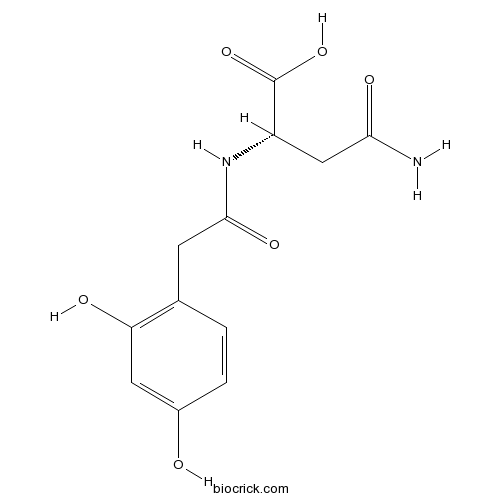
BCC6585
2,4-Dihydroxyphenylacetyl-L-asparagine
111872-98-1
-
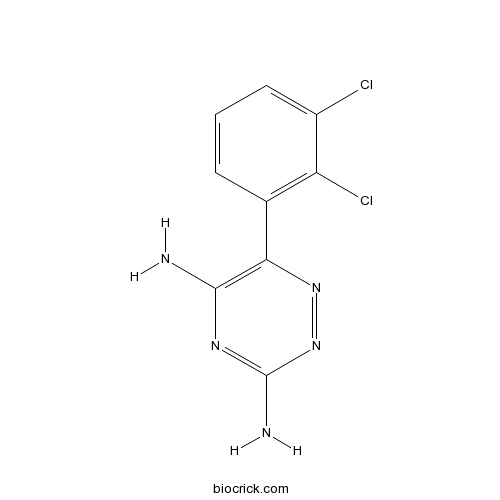
BCC5051
Lamotrigine
Lamotrigine(BW430C) is a novel anticonvulsant drug for inhibition of 5-HT and sodium channel Target: Sodium Channel Lamotrigine stabilises presynaptic neuronal membranes by blockade of voltage-dependent sodium channels, thus preventing the release of excitatory neurotransmitters, particularly glutamate and aspartate [1].
-
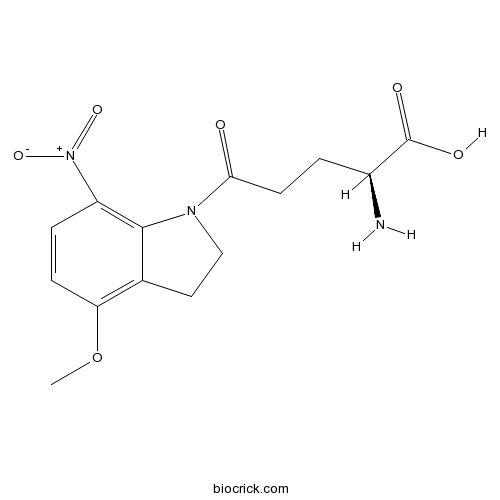
BCC7086
MNI-caged-L-glutamate
295325-62-1
-
BCC7453
Pentylenetetrazole
54-95-5

-
BCC6731
Salsolinol-1-carboxylic acid
57256-34-5

-
BCC6632
Spaglumic acid
Spaglumic Acid is a neuropeptide found in millimolar concentrations in brain.

-
BCN2571
L-Theanine
L-Theanine (L-Glutamic Acid γ-ethyl amide)is a non-protein amino acid contained in green tea leaves, which blocks the binding of L-glutamic acid to glutamate receptors in the brain, and with neuroprotective and anti-oxidative activities. L-Theanine causes anti-stress effects via the inhibition of cortical neuron excitation by oral intake.

-
BCC2512
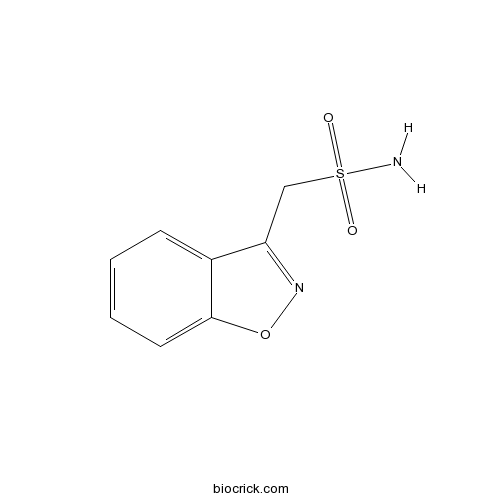
Zonisamide
Zonisamide is a 1,2 benzisoxazole derivative and the first agent of this chemical class to be developed as an antiepileptic drug.
-
BCC7705
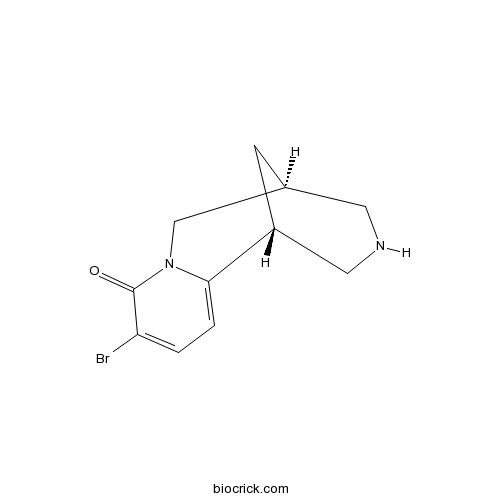
3-Bromocytisine
3-Bromocytisine (3-Br-cytisine) is a potent nACh receptors agonist, with IC50s are 0.28, 0.30 and 31.6 nM for hα4β4, hα4β2, and hα7-nACh, respectively. 3-Bromocytisine (3-Br-cytisine) shows different effects on high (HS) and low (LS) ACh sensitivity α4β2 nAChRs with EC50s are 8 and 50 nM, respectively.
-
BCC7099
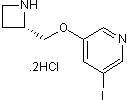
5-Iodo-A-85380 dihydrochloride
1217837-17-6