Parkinson's Disease Research
Parkinson's disease (PD) is a degenerative disease of the central nervous system that often impairs motor skills, speech, and other functions. Symptoms of the disease include resting tremor, bradykinesia and rigidity. The primary symptoms are the result of decreased stimulation of the motor cortex by the basal ganglia, normally caused by the insufficient formation and action of dopamine, which is produced in the dopaminergic neurons of the brain. Symptoms of the disease appear once 50-80% of dopamine neurons have died. Parkinson's disease is both chronic and progressive.
Parkinson's Disease Research Products Targets
- Adenosine A2B Receptor (7)
- Adenosine A2A Receptor (11)
- Caspase (9)
- Bcl-2 Family (13)
- Voltage-gated Calcium Channel (CaV) (38)
- GABAB Receptor (28)
- Others (23)
- Cyclooxygenase (24)
- D4 Receptor (12)
- STIM-Orai Channel (4)
- Ryanodine Receptor (6)
- Hsp90 (10)
- Hsp70 (4)
- 5-HT7 Receptor (11)
- 5-HT6 Receptor (14)
- 5-ht5 Receptor (2)
- 5-HT4 Receptor (17)
- Glutamate (Metabotropic) Group III Receptor (26)
- Glutamate (Metabotropic) Group II Receptor (33)
- Glutamate (Metabotropic) Group I Receptor (54)
- AMPA Receptor (45)
- GABAA-ρ Receptor (8)
- GABAA Receptor (66)
- Nicotinic (α7) Receptor (25)
- Nicotinic (α4β2) Receptor (14)
- D3 Receptor (12)
- LRRK2 (4)
- Catechol O-Methyltransferase (3)
- Vesicular Monoamine Transporter (4)
- NMDA Receptor (87)
- Kainate Receptor (22)
- IP3 Receptor (2)
- D2 Receptor (14)
- D1 and D5 Receptor (16)
- Trk Receptor (13)
- Trace Amine 1 Receptor (2)
- Adenosine A3 Receptor (8)
- Adenosine A1 Receptor (12)
- Monoamine Oxidase (10)
- M5 Receptor (2)
- M4 Receptor (3)
- M3 Receptor (4)
- M2 Receptor (5)
- M1 Receptor (8)
- Adrenergic α2 Receptor (33)
- Adrenergic α1 Receptor (22)
- Adrenergic β3 Receptor (12)
- Adrenergic β2 Receptor (6)
- Adrenergic β1 Receptor (7)
- Protein Arginine Methyltransferase (2)
Products for Parkinson's Disease Research - Page 3
- Cat.No. Product Name Information/Activity
-
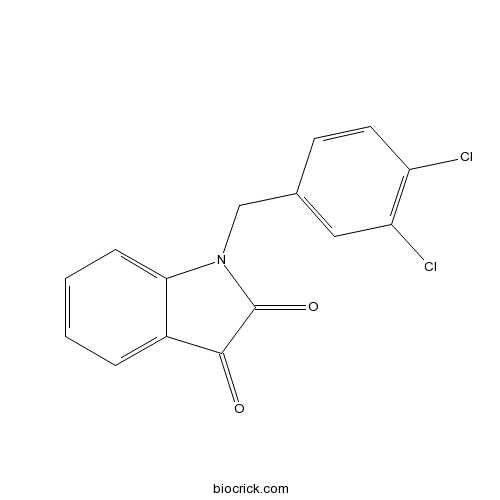
BCC2099
Apoptosis Activator 2
MDK83190 is a potent apoptosis activator, induces Apaf-1 oligomerization, increases procaspase-9 processing and subsequent caspase-3 activation in a cyto c-dependent Manner.
-
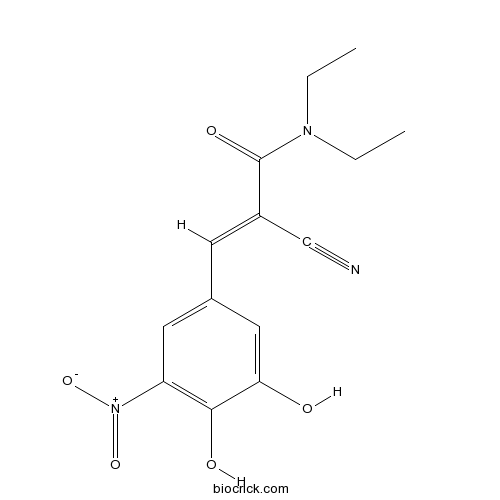
BCC2217
Entacapone
Entacapone is a specific, potent, peripherally acting catechol-O-methyltransferase (COMT) inhibitor with IC50 of 151 nM for PD treatment.
-
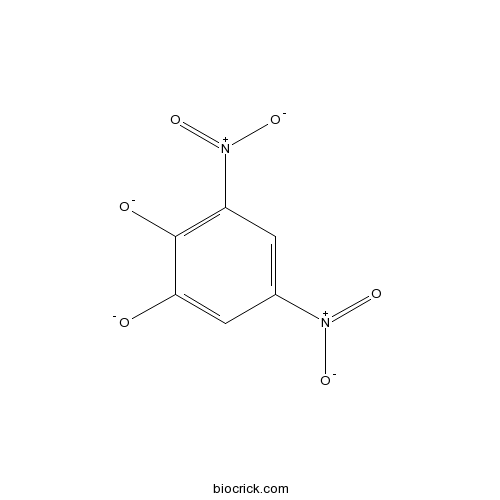
BCC5661
OR-486
7659-29-2
-
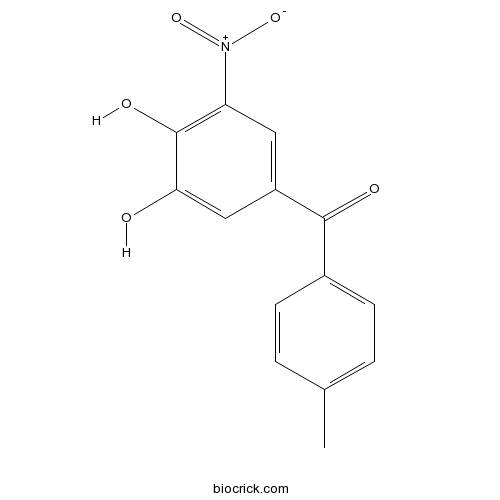
BCC2334
Tolcapone
COMT inhibitor; also inhibits transthyretin aggregation,Tolcapone is a selective, potent and reversible of catechol-O-methyl transferase (COMT) inhibitor with Ki of 30 nM.
-
BCC5269
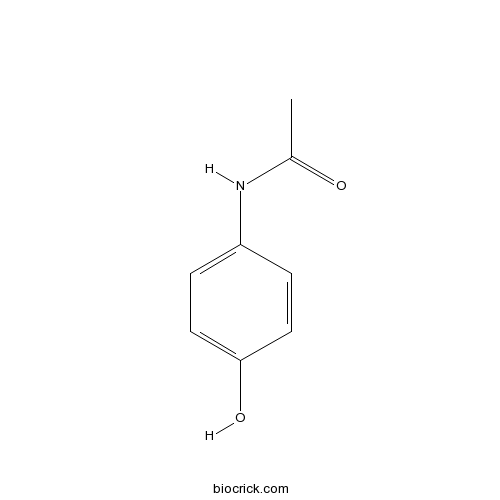
Acetaminophen
Acetaminophen (paracetamol) is a selective cyclooxygenase-2 (COX-2) inhibitor with an IC50 of 25.8 μM; is a widely used antipyretic and analgesic drug. Acetaminophen is a potent hepatic N-acetyltransferase 2 (NAT2) inhibitor.
-
BCC2097
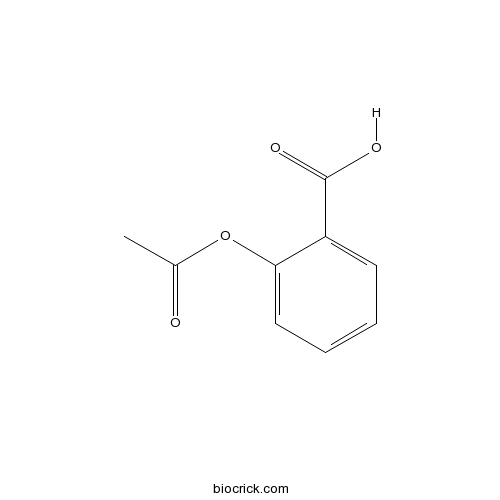
Aspirin (Acetylsalicylic acid)
Aspirin is a non-selective and irreversible inhibitor of COX-1 and COX-2 with IC50s of 5 and 210 μg/mL.
-
BCC1099
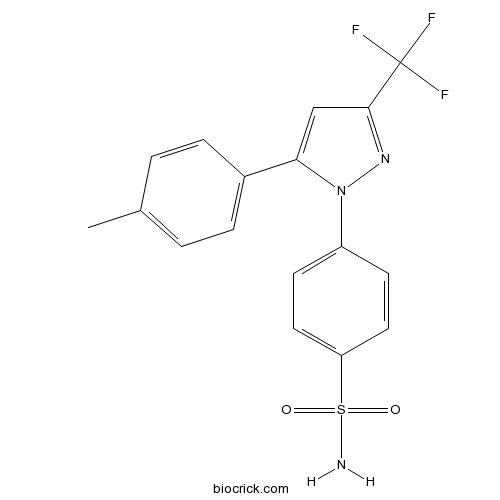
Celecoxib
Celecoxib is a selective COX-2 inhibitor with an IC50 of 40 nM.
-
BCC4439
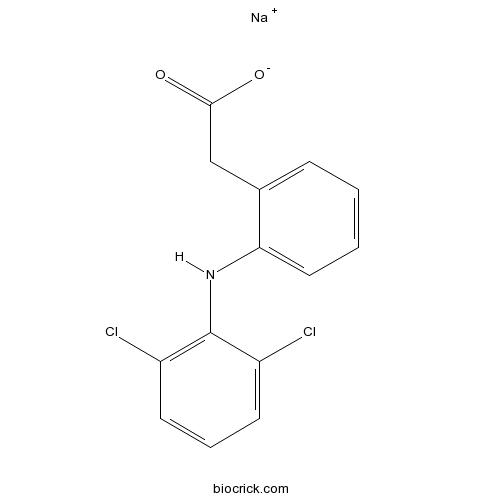
Diclofenac Sodium
Diclofenac Sodium (GP 45840) is a potent and nonselective anti-inflammatory agent, acts as a COX inhibitor, with IC50s of 4 and 1.3 nM for human COX-1 and COX-2 in CHO cells, and 5.1 and 0.84 μM for ovine COX-1 and COX-2, respectively. Diclofenac Sodium induces apoptosis of neural stem cells (NSCs) via the activation of the caspase cascade.
-
BCC7064
DuP 697
DuP-697 is a member of the vicinal diaryl heterocycles and a potent, irreversible, selective and orally active COX-2 inhibitor (IC50 of 10 nM and 800 nM for human COX-2 and COX-1, respectively). DuP-697 exerts antiproliferative (IC50 of 42.8 nM), antiangiogenic and apoptotic effects on HT29 colorectal cancer cells. DuP-697 inhibits prostaglandin synthesis and has anti-inflammatory, anticancer and antipyretic effects.

-
BCC4428
Etodolac
Etodolac (AY-24236) is a non-steroidal anti-inflammatory compound that is a non-selective inhibitor of COX (IC50=53.5 nM)