Parkinson's Disease Research
Parkinson's disease (PD) is a degenerative disease of the central nervous system that often impairs motor skills, speech, and other functions. Symptoms of the disease include resting tremor, bradykinesia and rigidity. The primary symptoms are the result of decreased stimulation of the motor cortex by the basal ganglia, normally caused by the insufficient formation and action of dopamine, which is produced in the dopaminergic neurons of the brain. Symptoms of the disease appear once 50-80% of dopamine neurons have died. Parkinson's disease is both chronic and progressive.
Parkinson's Disease Research Products Targets
- Adenosine A2B Receptor (7)
- Adenosine A2A Receptor (11)
- Caspase (9)
- Bcl-2 Family (13)
- Voltage-gated Calcium Channel (CaV) (38)
- GABAB Receptor (28)
- Others (23)
- Cyclooxygenase (24)
- D4 Receptor (12)
- STIM-Orai Channel (4)
- Ryanodine Receptor (6)
- Hsp90 (10)
- Hsp70 (4)
- 5-HT7 Receptor (11)
- 5-HT6 Receptor (14)
- 5-ht5 Receptor (2)
- 5-HT4 Receptor (17)
- Glutamate (Metabotropic) Group III Receptor (26)
- Glutamate (Metabotropic) Group II Receptor (33)
- Glutamate (Metabotropic) Group I Receptor (54)
- AMPA Receptor (45)
- GABAA-ρ Receptor (8)
- GABAA Receptor (66)
- Nicotinic (α7) Receptor (25)
- Nicotinic (α4β2) Receptor (14)
- D3 Receptor (12)
- LRRK2 (4)
- Catechol O-Methyltransferase (3)
- Vesicular Monoamine Transporter (4)
- NMDA Receptor (87)
- Kainate Receptor (22)
- IP3 Receptor (2)
- D2 Receptor (14)
- D1 and D5 Receptor (16)
- Trk Receptor (13)
- Trace Amine 1 Receptor (2)
- Adenosine A3 Receptor (8)
- Adenosine A1 Receptor (12)
- Monoamine Oxidase (10)
- M5 Receptor (2)
- M4 Receptor (3)
- M3 Receptor (4)
- M2 Receptor (5)
- M1 Receptor (8)
- Adrenergic α2 Receptor (33)
- Adrenergic α1 Receptor (22)
- Adrenergic β3 Receptor (12)
- Adrenergic β2 Receptor (6)
- Adrenergic β1 Receptor (7)
- Protein Arginine Methyltransferase (2)
Products for Parkinson's Disease Research - Page 2
- Cat.No. Product Name Information/Activity
-
BCN2702
Gossypol
Gossypol, a natural product isolated from cottonseeds and roots, binds to Bcl-xL protein and Bcl-2 protein with Kis of 0.5-0.6 μM and 0.2-0.3 mM, respectively.

-
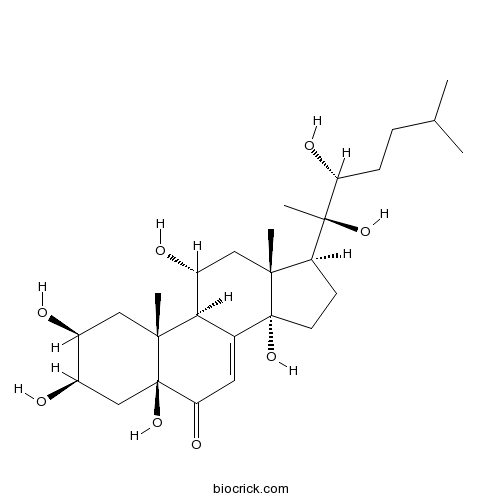
BCC2397
Muristerone A
Stimulates Bcl-XL mRNA transcription; antiapoptotic
-
BCC2398
SU 9516
SU9516 is a potent CDK2 inhibitor, with an IC50 of 22 nM, and also shows inhibitory effects on CDK1 and CDK4, with IC50s of 40, 200 nM, respectively.

-
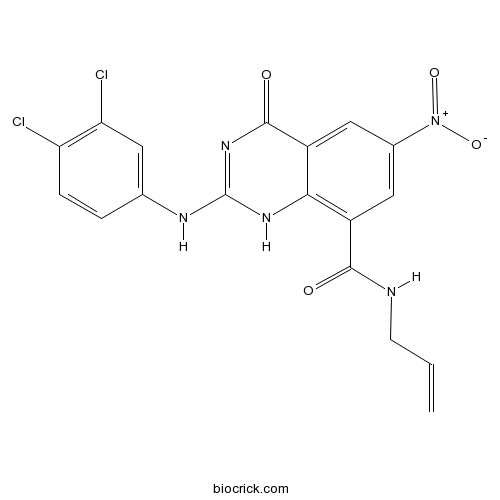
BCC2356
AZ 10417808
Selective non-peptide caspase-3 inhibitor
-
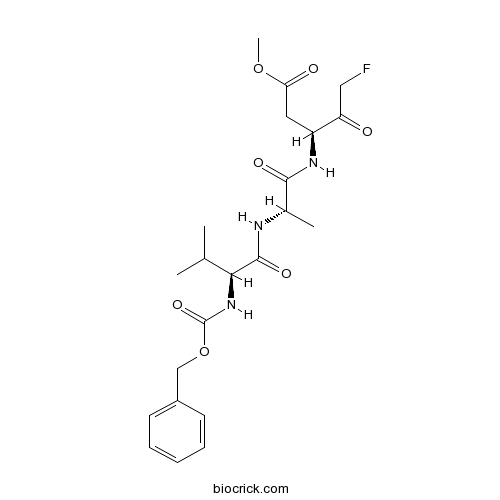
BCC1126
Z-VAD-FMK
Z-VAD(OMe)-FMK (Z-Val-Ala-Asp(OMe)-FMK) is a cell-permeable and irreversible pan-caspase inhibitor. Z-VAD(OMe)-FMK is an ubiquitin carboxy-terminal hydrolase L1 (UCHL1) inhibitor. Z-VAD(OMe)-FMK irreversibly modifies UCHL1 by targeting the active site of UCHL1.
-
BCC2358
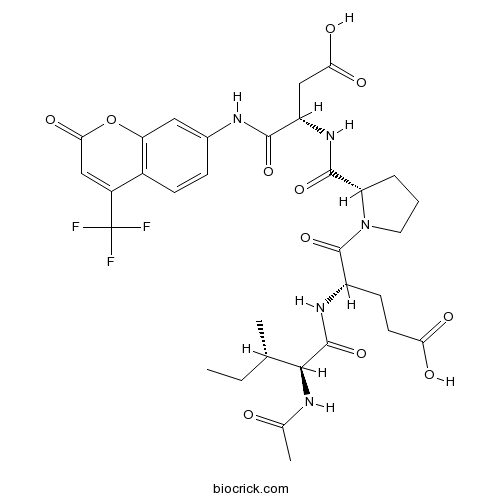
Ac-IEPD-AFC
Ac-IEPD-AFC (IEPD) is a substrate of Granzyme B.
-
BCC2359
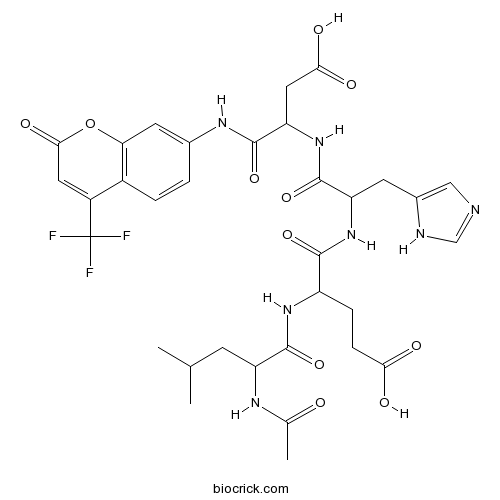
Ac-LEHD-AFC
210345-03-2
-
BCN1552
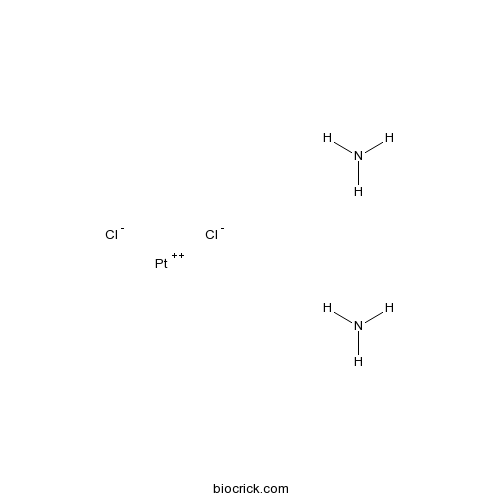
Cisplatin
Potent pro-apoptotic anticancer agent; activates caspase-3,Cisplatin is an inorganic platinum complex, which is able to inhibit DNA synthesis by conforming DNA adducts in tumor cells.
-
BCC3600
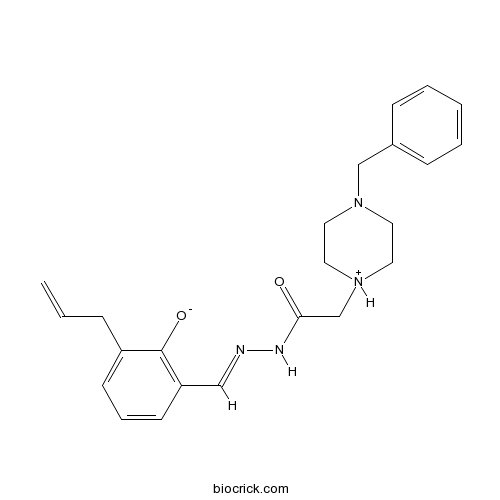
PAC-1
PAC-1 is an activator of procaspase-3 induces apoptosis in cancer cells with EC50 of 2.08 μM.
-
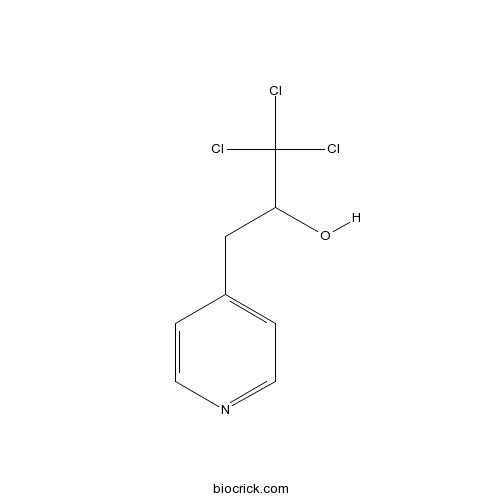
BCC2360
PETCM
PETCM is an activator of caspase-3 and acts as an cytochrome c (cyto c)-dependent manner. PETCM promotes Apaf-1 oligomerization and induces cell apoptosis in HeLa cells.