Parkinson's Disease Research
Parkinson's disease (PD) is a degenerative disease of the central nervous system that often impairs motor skills, speech, and other functions. Symptoms of the disease include resting tremor, bradykinesia and rigidity. The primary symptoms are the result of decreased stimulation of the motor cortex by the basal ganglia, normally caused by the insufficient formation and action of dopamine, which is produced in the dopaminergic neurons of the brain. Symptoms of the disease appear once 50-80% of dopamine neurons have died. Parkinson's disease is both chronic and progressive.
Parkinson's Disease Research Products Targets
- Adenosine A2B Receptor (7)
- Adenosine A2A Receptor (11)
- Caspase (9)
- Bcl-2 Family (13)
- Voltage-gated Calcium Channel (CaV) (38)
- GABAB Receptor (28)
- Others (23)
- Cyclooxygenase (24)
- D4 Receptor (12)
- STIM-Orai Channel (4)
- Ryanodine Receptor (6)
- Hsp90 (10)
- Hsp70 (4)
- 5-HT7 Receptor (11)
- 5-HT6 Receptor (14)
- 5-ht5 Receptor (2)
- 5-HT4 Receptor (17)
- Glutamate (Metabotropic) Group III Receptor (26)
- Glutamate (Metabotropic) Group II Receptor (33)
- Glutamate (Metabotropic) Group I Receptor (54)
- AMPA Receptor (45)
- GABAA-ρ Receptor (8)
- GABAA Receptor (66)
- Nicotinic (α7) Receptor (25)
- Nicotinic (α4β2) Receptor (14)
- D3 Receptor (12)
- LRRK2 (4)
- Catechol O-Methyltransferase (3)
- Vesicular Monoamine Transporter (4)
- NMDA Receptor (87)
- Kainate Receptor (22)
- IP3 Receptor (2)
- D2 Receptor (14)
- D1 and D5 Receptor (16)
- Trk Receptor (13)
- Trace Amine 1 Receptor (2)
- Adenosine A3 Receptor (8)
- Adenosine A1 Receptor (12)
- Monoamine Oxidase (10)
- M5 Receptor (2)
- M4 Receptor (3)
- M3 Receptor (4)
- M2 Receptor (5)
- M1 Receptor (8)
- Adrenergic α2 Receptor (33)
- Adrenergic α1 Receptor (22)
- Adrenergic β3 Receptor (12)
- Adrenergic β2 Receptor (6)
- Adrenergic β1 Receptor (7)
- Protein Arginine Methyltransferase (2)
Products for Parkinson's Disease Research - Page 75
- Cat.No. Product Name Information/Activity
-
BCC6241
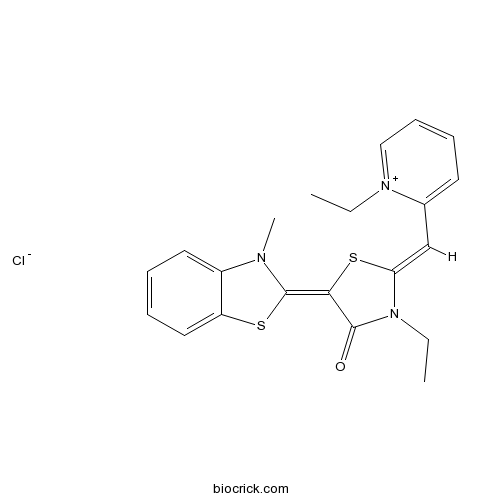
MKT 077
MKT-077 is a rhodacyanine dye and also a heat shock protein 70 (Hsp70) inhibitor which exhibits significant antitumor activity.
-
BCC7968
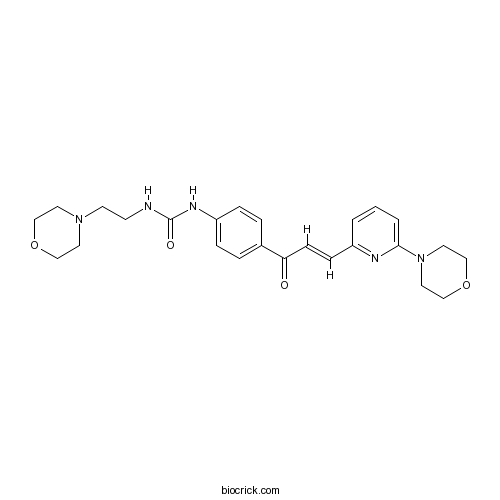
TRC 051384
TRC051384 is a heat shock protein 70 (HSP70) inducer.
-
BCC2121
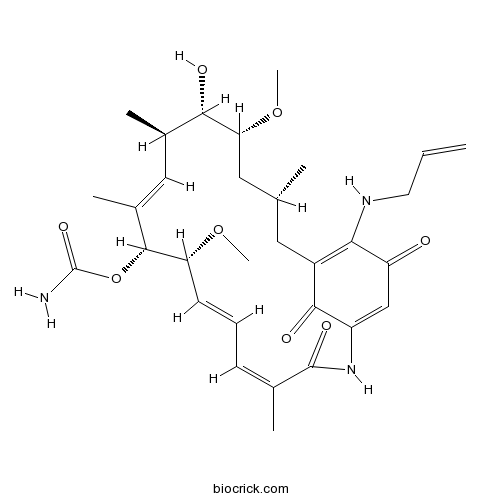
17-AAG (KOS953)
Tanespimycin (17-AAG) is a potent HSP90 inhibitor with an IC50 of 5 nM, having a 100-fold higher binding affinity for tumour cell derived HSP90 than normal cell derived HSP90. Tanespimycin (17-AAG) depletes cellular STK38/NDR1 and reduces STK38 kinase activity. Tanespimycin (17-AAG) also downregulates the stk38 gene expression.
-
BCC2124
BIIB021
BIIB021 is an orally available, fully synthetic inhibitor of HSP90 with Ki and EC50 of 1.7 nM and 38 nM, respectively.

-
BCC1175
17-DMAG (Alvespimycin) HCl
Alvespimycin hydrochloride (17-DMAG hydrochloride; KOS-1022; BMS 826476) is a potent inhibitor of Hsp90, binding to Hsp90 with EC50 of 62±29 nM.

-
BCC5600
EC 144
911397-80-3

-
BCC7676
Gedunin
2753-30-2

-
BCC2125
Geldanamycin
Selective Hsp90 inhibitor; breast cancer stem cell inhibitor,Geldanamycin is a natural existing HSP90 inhibitor with Kd of 1.2 μM, specifically disrupts glucocorticoid receptor (GR)/HSP association.

-
BCC7132
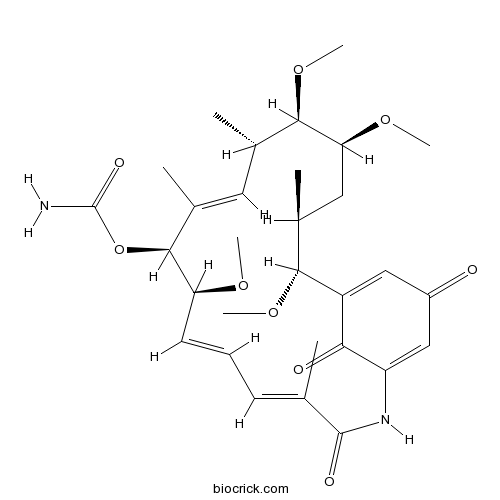
Herbimycin A
Antiangiogenic. Inhibits Src family kinases and Hsp90
-
BCC7551
Macbecin I
73341-72-7