Parkinson's Disease Research
Parkinson's disease (PD) is a degenerative disease of the central nervous system that often impairs motor skills, speech, and other functions. Symptoms of the disease include resting tremor, bradykinesia and rigidity. The primary symptoms are the result of decreased stimulation of the motor cortex by the basal ganglia, normally caused by the insufficient formation and action of dopamine, which is produced in the dopaminergic neurons of the brain. Symptoms of the disease appear once 50-80% of dopamine neurons have died. Parkinson's disease is both chronic and progressive.
Parkinson's Disease Research Products Targets
- Adenosine A2B Receptor (7)
- Adenosine A2A Receptor (11)
- Caspase (9)
- Bcl-2 Family (13)
- Voltage-gated Calcium Channel (CaV) (38)
- GABAB Receptor (28)
- Others (23)
- Cyclooxygenase (24)
- D4 Receptor (12)
- STIM-Orai Channel (4)
- Ryanodine Receptor (6)
- Hsp90 (10)
- Hsp70 (4)
- 5-HT7 Receptor (11)
- 5-HT6 Receptor (14)
- 5-ht5 Receptor (2)
- 5-HT4 Receptor (17)
- Glutamate (Metabotropic) Group III Receptor (26)
- Glutamate (Metabotropic) Group II Receptor (33)
- Glutamate (Metabotropic) Group I Receptor (54)
- AMPA Receptor (45)
- GABAA-ρ Receptor (8)
- GABAA Receptor (66)
- Nicotinic (α7) Receptor (25)
- Nicotinic (α4β2) Receptor (14)
- D3 Receptor (12)
- LRRK2 (4)
- Catechol O-Methyltransferase (3)
- Vesicular Monoamine Transporter (4)
- NMDA Receptor (87)
- Kainate Receptor (22)
- IP3 Receptor (2)
- D2 Receptor (14)
- D1 and D5 Receptor (16)
- Trk Receptor (13)
- Trace Amine 1 Receptor (2)
- Adenosine A3 Receptor (8)
- Adenosine A1 Receptor (12)
- Monoamine Oxidase (10)
- M5 Receptor (2)
- M4 Receptor (3)
- M3 Receptor (4)
- M2 Receptor (5)
- M1 Receptor (8)
- Adrenergic α2 Receptor (33)
- Adrenergic α1 Receptor (22)
- Adrenergic β3 Receptor (12)
- Adrenergic β2 Receptor (6)
- Adrenergic β1 Receptor (7)
- Protein Arginine Methyltransferase (2)
Products for Parkinson's Disease Research - Page 68
- Cat.No. Product Name Information/Activity
-
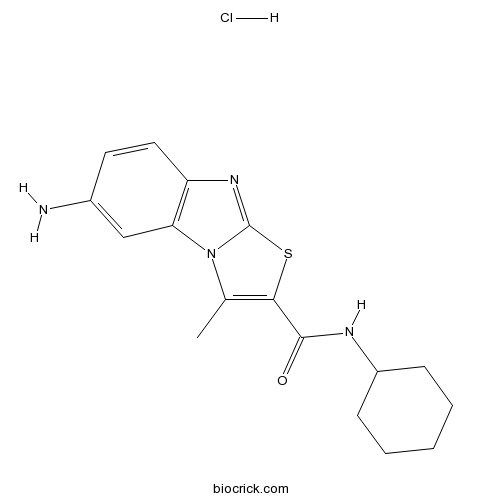
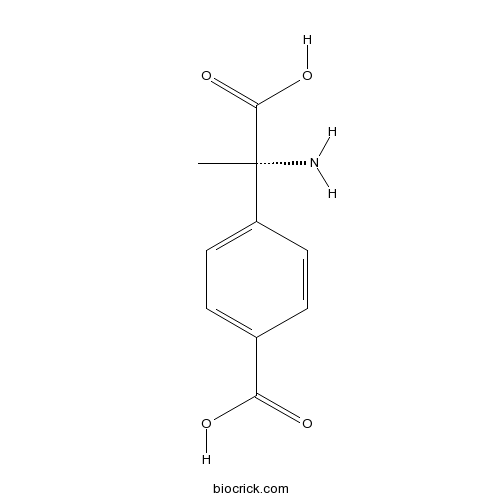
BCC6611
(S)-MCPG
(S)-MCPG is the active isomer of (RS)-MCPG (Cat.
-
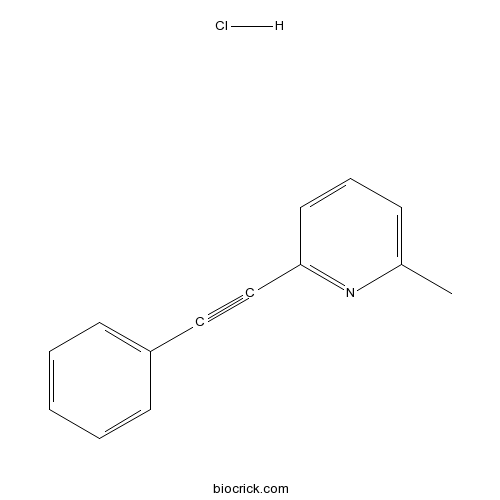
BCC1777
MPEP Hydrochloride
MPEP hydrochloride is a potent and highly selective non-competitive antagonist at the mGlu5 receptor subtype with IC50 of 36 nM.
-
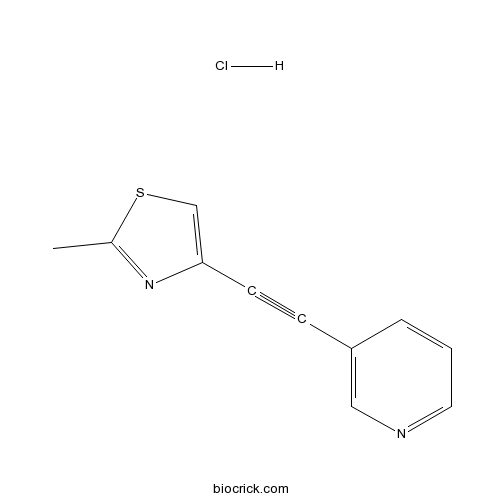
BCC1780
MTEP hydrochloride
MTEP hydrochloride is a potent, selective and non-competitive mGlu5 antagonist with an IC50 of 5 nM and a Ki of 16 nM. MTEP hydrochloride produces antiparkinsonian-like effects.
-
BCC6119
NPS 2390
226878-01-9

-
BCC6895
PHCCC
PHCCC is a Group I metabotropic glutamate receptor antagonist with EC 50 of 6 uM and a positive allosteric modulator of mGluR4. Also as a potent to antagonism for mGluR2 and mGluR8.

-
BCC6971
SIB 1757
31993-01-8

-
BCC7682
YM 202074
299900-84-8

-
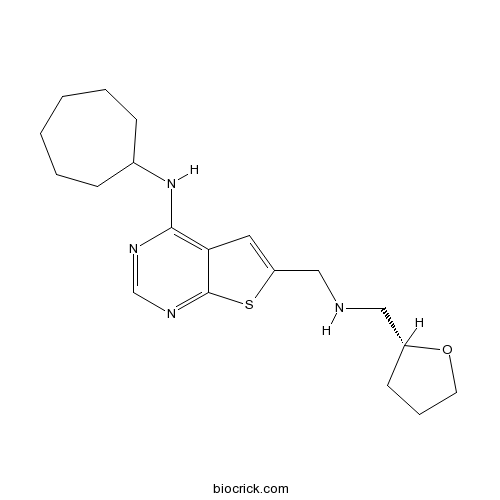
BCC5956
YM 230888
446257-23-4
-
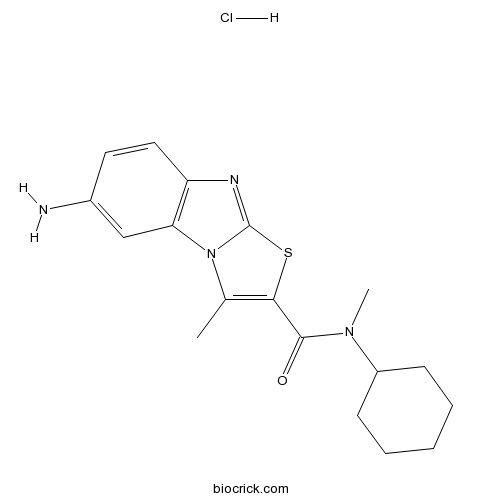
BCC7366
YM 298198 hydrochloride
1216398-09-2
-
BCC7365
Desmethyl-YM 298198
1177767-57-5