
Arthritis Research
Arthritis is an inflammatory disease of the joints, including the synovium, cartilage, bone, and supporting tissues. It is the leading cause of disability in the US and there are over 100 different types of the disease. The most common types of arthritis are osteoarthritis, rheumatoid arthritis and gout.
Arthritis Research Products Targets
- Matrix Metalloprotease (16)
- Cell Adhesion Molecule (21)
- Leukotriene and Related Receptor (13)
- Others (7)
- Glucocorticoid Receptor (9)
- Focal Adhesion Kinase (4)
- Cyclooxygenases (24)
- Arthritis Research » Complement (2)
- Calcium-Sensitive Protease Modulators (12)
- Chemokine CXC Receptor (9)
- Chemokine CC Receptor (13)
- p38 MAPK (16)
- Janus N-terminal Kinase (12)
- Rho-Kinases (9)
- NO donors and precursors (9)
- nNOS (5)
- iNOS (11)
- eNOS (1)
- Cytokine (15)
Products for Arthritis Research - Page 4
- Cat.No. Product Name Information/Activity
-
BCN5607
Resveratrol
Resveratrol (trans-Resveratrol; SRT501), a natural polyphenolic phytoalexin that possesses anti-oxidant, anti-inflammatory, cardioprotective, and anti-cancer properties. Resveratrol (SRT 501) has a wide spectrum of targets including mTOR, JAK, β-amyloid, Adenylyl cyclase, IKKβ, DNA polymerase. Resveratrol also is a specific SIRT1 activator. Resveratrol is a potent pregnane X receptor (PXR) inhibitor.

-
BCC7111
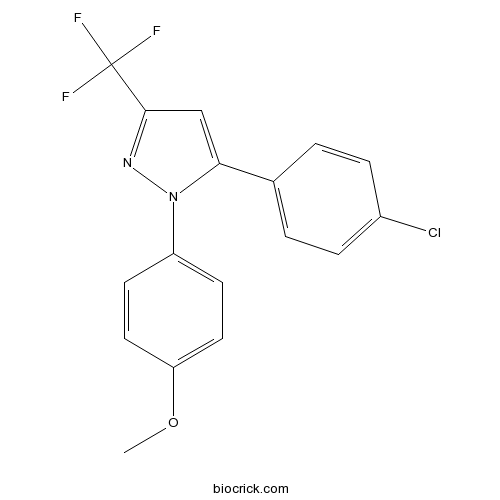
SC 560
SC-560 is a potent and selective COX-1 inhibitor with an IC50 of 9 nM.
-
BCC5948
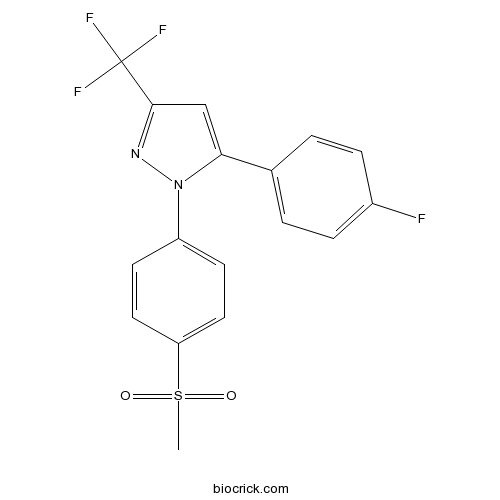
SC 58125
162054-19-5
-
BCC7809
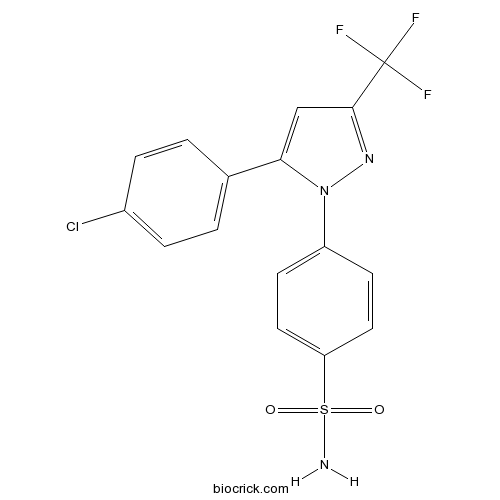
SC 236
170569-86-5
-
BCC4861
Sulindac
Sulindac (MK-231) is a non-steroidal antiinflammatory agent, acts as a COX-2 inhibitor, and inhibits overexpression of COX-2.

-
BCC7391
Talniflumate
66898-62-2

-
BCC7419
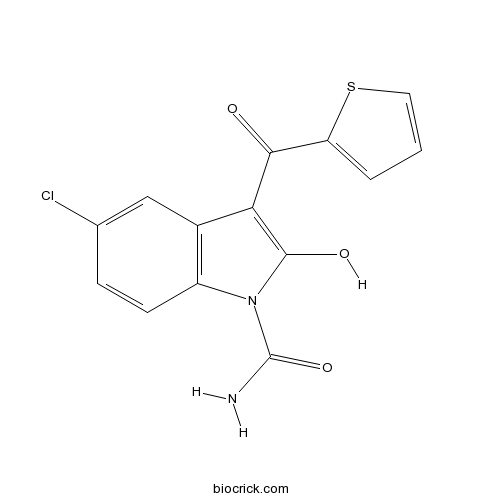
Tenidap
Tenidap, a non-steroidal anti-inflammatory drug, is a selective COX-1 inhibitor, with IC50 values of 0.03 µM and 1.2 µM for COX-1 and COX-2, respectively. Tenidap has anti-inflammatory and antirheumatic properties. Tenidap is also a specific SLC26A3 inhibitor.
-
BCC4441
Valdecoxib
Valdecoxib is a highly potent and selective inhibitor of COX-2, with IC50s of 5 nM and 140 μM for COX-2 and COX-1, respeceively. Valdecoxib can be used in the research of arthritis and pain.

-
BCC7886
BTZO 1
BTZO-1 binds to Macrophage migration inhibitory factor (MIF) with a Kd value of 68.6 nM, and its binding requires the N-terminal Pro1. BTZO-1 can activate antioxidant response element (ARE)-mediated gene expression and suppress oxidative stress-induced cardiomyocyte apoptosis in vitro.

-
BCC6816
Chicago Sky Blue 6B
2610-05-1