
7-MethoxymukonalCAS# 119736-83-3 |
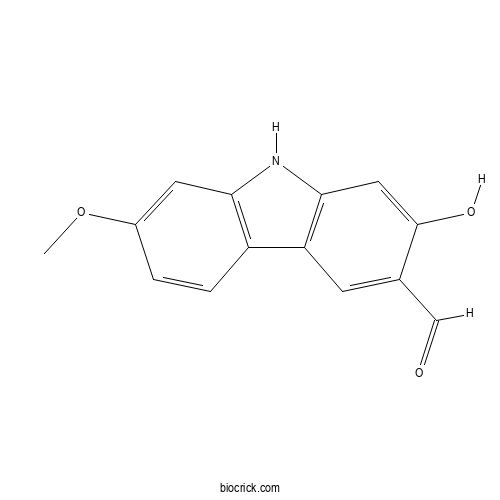
| Cas No. | 119736-83-3 | SDF | File under preparation. |
| PubChem ID | 189687.0 | Appearance | Yellow powder |
| Formula | C14H11NO3 | M.Wt | 241.2 |
| Type of Compound | N/A | Storage | Desiccate at -20°C |
| Solubility | Soluble in Chloroform,Dichloromethane,Ethyl Acetate,DMSO,Acetone,etc. | ||
| Chemical Name | 2-hydroxy-7-methoxy-9H-carbazole-3-carbaldehyde | ||
| SMILES | COC1=CC2=C(C=C1)C3=C(N2)C=C(C(=C3)C=O)O | ||
| Standard InChIKey | JLWFCPLXNANORV-UHFFFAOYSA-N | ||
| Standard InChI | InChI=1S/C14H11NO3/c1-18-9-2-3-10-11-4-8(7-16)14(17)6-13(11)15-12(10)5-9/h2-7,15,17H,1H3 | ||
| General tips | For obtaining a higher solubility , please warm the tube at 37 ℃ and shake it in the ultrasonic bath for a while.Stock solution can be stored below -20℃ for several months. We recommend that you prepare and use the solution on the same day. However, if the test schedule requires, the stock solutions can be prepared in advance, and the stock solution must be sealed and stored below -20℃. In general, the stock solution can be kept for several months. Before use, we recommend that you leave the vial at room temperature for at least an hour before opening it. |
||
| About Packaging | 1. The packaging of the product may be reversed during transportation, cause the high purity compounds to adhere to the neck or cap of the vial.Take the vail out of its packaging and shake gently until the compounds fall to the bottom of the vial. 2. For liquid products, please centrifuge at 500xg to gather the liquid to the bottom of the vial. 3. Try to avoid loss or contamination during the experiment. |
||
| Shipping Condition | Packaging according to customer requirements(5mg, 10mg, 20mg and more). Ship via FedEx, DHL, UPS, EMS or other couriers with RT, or blue ice upon request. | ||
Quality Control & MSDS
3D structure
Package In Stock

Number of papers citing our products


7-Methoxymukonal Dilution Calculator
7-Methoxymukonal Molarity Calculator
| 1 mg | 5 mg | 10 mg | 20 mg | 25 mg | |
| 1 mM | 4.1459 mL | 20.7297 mL | 41.4594 mL | 82.9187 mL | 103.6484 mL |
| 5 mM | 0.8292 mL | 4.1459 mL | 8.2919 mL | 16.5837 mL | 20.7297 mL |
| 10 mM | 0.4146 mL | 2.073 mL | 4.1459 mL | 8.2919 mL | 10.3648 mL |
| 50 mM | 0.0829 mL | 0.4146 mL | 0.8292 mL | 1.6584 mL | 2.073 mL |
| 100 mM | 0.0415 mL | 0.2073 mL | 0.4146 mL | 0.8292 mL | 1.0365 mL |
| * Note: If you are in the process of experiment, it's necessary to make the dilution ratios of the samples. The dilution data above is only for reference. Normally, it's can get a better solubility within lower of Concentrations. | |||||
- Aesculioside E
Catalog No.:BCX2427
CAS No.:254896-68-9
- Artemorin
Catalog No.:BCX2426
CAS No.:64845-92-7
- Aesculioside F
Catalog No.:BCX2425
CAS No.:254896-69-0
- Kuwanon D
Catalog No.:BCX2424
CAS No.:67172-84-3
- Spiradine G
Catalog No.:BCX2423
CAS No.:21040-66-4
- Morusalnol B
Catalog No.:BCX2422
CAS No.:1941207-44-8
- Sanggenon I
Catalog No.:BCX2421
CAS No.:86450-79-5
- Kuwanon F
Catalog No.:BCX2420
CAS No.:71344-07-5
- Aesculioside G
Catalog No.:BCX2419
CAS No.:254896-70-3
- Escin Ia methyl ester
Catalog No.:BCX2418
CAS No.:26339-91-3
- Esculetin 6-O-β-D-apiofuranosyl-(1→6)-β-D-glucopyranoside
Catalog No.:BCX2417
CAS No.:163017-13-8
- Didendronbiline A
Catalog No.:BCX2416
CAS No.:2267991-55-7
- 3-Methylcarbazole
Catalog No.:BCX2429
CAS No.:4630-20-0
- Heptaphylline
Catalog No.:BCX2430
CAS No.:17750-35-5
- Monardic acid A
Catalog No.:BCX2431
CAS No.:1607436-76-9
- Mukonine
Catalog No.:BCX2432
CAS No.:23523-94-6
- Spiramine B
Catalog No.:BCX2433
CAS No.:114485-96-0
- Scutebarbolide A
Catalog No.:BCX2434
CAS No.:2691860-41-8
- Sanggenon G
Catalog No.:BCX2435
CAS No.:85698-31-3
- 7-Hydroxyheptaphylline
Catalog No.:BCX2436
CAS No.:170663-15-7
- Clauszoline K
Catalog No.:BCX2437
CAS No.:187110-71-0
- Clausine K
Catalog No.:BCX2438
CAS No.:182261-96-7
- 2-Phenyl-2-norkhellin
Catalog No.:BCX2439
CAS No.:2549-25-9
- Mukonal
Catalog No.:BCX2440
CAS No.:20323-67-5
Integrated density functional theory, molecular docking, and pharmacokinetic modeling of mukonal and its derivatives as inhibitors of the Plasmodium falciparum TFIIH complex (Tfb5 subunit).[Pubmed:42322572]
Cell Mol Biol (Noisy-le-grand). 2026 Mar 31;72(3):54-62.
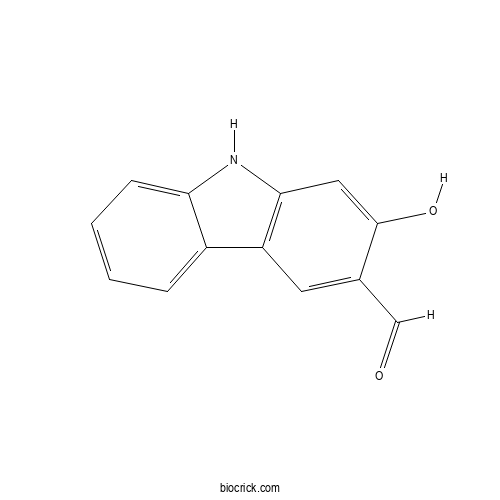
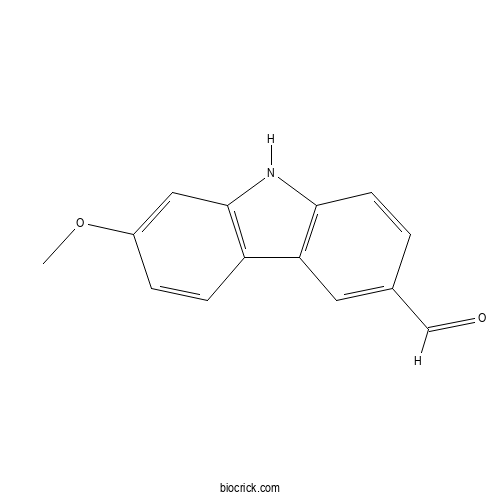
Plasmodium falciparum is the most dangerous malaria parasite affecting humans. Compounds such as mukonal, 7-hydroxymukonal, and 7-Methoxymukonal have shown potential for the treatment of this disease. Density Functional Theory (DFT), molecular docking, and pharmacokinetic analyses are valuable computational approaches for predicting potential drug candidates against P. falciparum. In this study, three compounds mukonal, 7-hydroxymukonal, and 7-Methoxymukonal were optimized and evaluated through molecular docking and pharmacokinetic analysis against the target protein PF3D7_1441900 (transcription factor TFIIH complex subunit Tfb5, putative) from P. falciparum isolate 3D7. Frontier molecular orbital and density of states analyses revealed that 7-Methoxymukonal has a relatively smaller energy gap compared with the other two compounds. In addition, 7-Methoxymukonal exhibited the strongest binding affinity toward the target protein. The ADME results indicated favorable drug-like properties and low toxicity, further supporting the therapeutic potential of these compounds. Overall, our theoretical findings suggest that compound 3, namely 7-Methoxymukonal, is the most promising candidate against the selected protein, in agreement with the other computed parameters.
alpha-Glucosidase and Nitric Oxide Inhibitory Activities of Pyranocoumarins and Carbazoles From the Roots of Clausena excavata and the Semisynthetic Analogs of Clausarin and Nordentatin.[Pubmed:40720625]
Chem Biodivers. 2025 Nov;22(11):e00510.
Phytochemical investigation of the methanol extract of Clausena excavata roots led to the isolation of six pyranocoumarin derivatives, including xanthyletin (1), kinocoumarin (2), clausarin (3), nordentatin (4), dentatin (4a), and citrusarin A (5), and three carbazole alkaloids, that is, heptaphylline (6), 7-Methoxymukonal (7), and clausine K (8). Seven new semisynthetic analogs of compounds 2, 3, and 4 (2a, 3b-3d, and 4b-4d) were prepared through methylation, etherification, and basic hydrolysis for biological assays. Compounds 2, 6, 3b, 3c, 4b, and 4c displayed stronger alpha-glucosidase inhibitory activity than the positive control, acarbose (IC(50) 391.47 microM), with IC(50) values in the range of 32.89-92.55 microM. Molecular docking suggested that these compounds bind near the enzyme's active site via van der Waals forces, hydrogen bonds, and hydrophobic interactions. Compound 3 showed the strongest nitric oxide (NO) inhibitory activity (IC(50) = 27.95 microM), followed by 3d (IC(50) = 33.62 microM) and 4 (IC(50) = 35.41 microM). For the two compounds tested for cytotoxicity against A549 cells, 3b (IC(50) = 11.71 microM) was more potent than cisplatin (IC(50) = 21.56 microM), whereas 4b (IC(50) = 22.39 microM) showed similar activity to cisplatin. Drug-likeness and pharmacokinetic properties of the isolated and semisynthetic compounds were also evaluated.
Semi-Synthesis of Small Molecules of Aminocarbazoles: Tumor Growth Inhibition and Potential Impact on p53.[Pubmed:33804175]
Molecules. 2021 Mar 15;26(6):1637.
The tumor suppressor p53 is inactivated by mutation in approximately 50% of human cancers. Small molecules that bind and stabilize those mutants may represent effective anticancer drugs. Herein, we report the tumor cell growth inhibitory activity of carbazole alkaloids and amino derivatives, as well as their potential activation of p53. Twelve aminocarbazole alkaloids were semi-synthesized from heptaphylline (1), 7-methoxy heptaphylline (2), and 7-Methoxymukonal (3), isolated from Clausena harmandiana, using a reductive amination protocol. Naturally-occurring carbazoles 1-3 and their amino derivatives were evaluated for their potential effect on wild-type and mutant p53 activity using a yeast screening assay and on human tumor cell lines. Naturally-occurring carbazoles 1-3 showed the most potent growth inhibitory effects on wild-type p53-expressing cells, being heptaphylline (1) the most promising in all the investigated cell lines. However, compound 1 also showed growth inhibition against non-tumor cells. Conversely, semi-synthetic aminocarbazole 1d showed an interesting growth inhibitory activity in tumor cells expressing both wild-type and mutant p53, exhibiting low growth inhibition on non-tumor cells. The yeast assay showed a potential reactivation of mutant p53 by heptaphylline derivatives, including compound 1d. The results obtained indicate that carbazole alkaloids may represent a promising starting point to search for new mutp53-reactivating agents with promising applications in cancer therapy.
Cytotoxicity and Apoptosis Induction of Coumarins and Carbazole Alkaloids from Clausena harmandiana.[Pubmed:31540345]
Molecules. 2019 Sep 18;24(18):3385.
Seven compounds, carbazole alkaloids (heptaphylline, 7-methoxyheptaphylline, 7-Methoxymukonal) and coumarins (clausarin, dentatin, nordentatin, and xanthoxyletin), were isolated from the root bark of Clausena harmandiana. Antioxidation, cytotoxicity and apoptosis induction were evaluated in vitro. Results showed that clausarin exerted the highest DPPH radical scavenging and 7-Methoxymukonal had the highest ferric reducing antioxidant power. In contrary, dentatin was the least DPPH radical scavenger, and heptaphylline was the least reducing antioxidant power. The isolated compounds showed different cytotoxicity. The hepatocellular carcinoma (HepG2) was generally more sensitive to the isolated compounds than lung cancer (SK-LU-1), colon cancer (HCT-116), and noncancerous (Vero) cell lines, respectively. Clausarin possessed the highest cytotoxicity selectively against cancer cell lines tested. 7-Methoxymukonal and 7-methoxyheptaphylline exhibited less cytotoxicity only in HepG2 cells and were inactive in the SK-LU-1 and HCT116 cells. Despite xantoxyletin possessing low antioxidant and low cytotoxic activity, it induced the highest apoptosis percentage with the lowest necrosis percentage of HepG2 cells after 24 h. In conclusion, xantoxyletin primarily show potential anticancer activity. The root bark of C. harmandiana is a good source of bioactive compounds or the lead for the development of new pharmaceutical agent.
Increased Carbazole Alkaloid Accumulation in Clausena harmandiana Callus Culture by Treatments of Biocontrol Agent, Trichoderma harzianum and Bacillus subtilis.[Pubmed:31140051]
Appl Biochem Biotechnol. 2019 Nov;189(3):871-883.
Clausena harmandiana (Pierre) Guillaumin is the Thai medicinal plant that possessed several pharmacological activities. The main active constituents of this plant are the carbazole alkaloids, isolated from wild plants. However, the in vitro culture for production of carbazole alkaloids from this plant has never been reported. Therefore, we aimed to develop callus culture of C. harmandiana elicited with two biotic elicitors, Trichoderma harzianum and Bacillus subtilis, as a sustainable source of carbazole alkaloids. The callus treated with living B. subtilis (BL) at 0.1 and 1% (v/v) for 3 days accumulated 5-fold increased level of clausine K. The highest level reached 309.37 +/- 34.84 mug/g DW. This treatment also showed a significant increase in both total phenolic content and antioxidant capacity, which support the optimum usage of this elicitor. Moreover, only callus treated with 1% (v/v) Trichoderma culture filtrate (CF) showed a significant increase in the total phenolic contents and antioxidant capacity. The correlation analysis also revealed the significant correlation between antioxidant capacity and total phenolic level, total flavonoids, and clausine K but not 7-Methoxymukonal. The results from our study suggested the use of C. harmandiana callus with the Bacillus elicitors for high-level production of clausine K.
Production of carbazole alkaloids through callus and suspension cultures in Clausena harmandiana.[Pubmed:30585087]
Nat Prod Res. 2020 Feb;34(3):434-440.
Carbazole alkaloids are major constituents in Clausena spp. and exhibit a wide range of biological activities. The roots of Clausena harmandiana are a rich source of active carbazole alkaloids. However, its roots take several years to grow to be able to harvest. To obtain an alternative source of carbazole alkaloids, in vitro callus cultures of C. harmandiana were induced, and the formation of two active carbazole alkaloids was investigated. The effects of precursor, concentrations of sucrose, elicitors and light were studied to improve carbazole alkaloids formation. In this study, light had a strong effect on the formation of both carbazole alkaloids. The highest yields of clausine K and 7-Methoxymukonal were 4.74 +/- 0.26 and 0.92 +/- 0.04 mg/g DW, respectively, which have more than 10-fold found in intact roots. According to the results of this study, C. harmandiana callus cultures can be used as an alternative source of carbazole alkaloids for additional biological studies.
A new coruleoellagic acid derivative from stems of Rhodamnia dumetorum.[Pubmed:29073789]
Nat Prod Res. 2018 Jul;32(14):1653-1659.
A new coruleoellagic acid derivative, 3,3',4,4',5'-pentamethylcoruleoellagic acid (1) together with nine known compounds, hexamethylcoruleoellagic acid (2), 3,4,3'-tri-O-methylellagic acid (3), heptaphylline (4), 7-Methoxymukonal (5), dentatin (6), sinapaldehyde (7), gallic acid (8), 2,6-dimethoxy-4H-pyran-4-one (9) and beta-sitosterol (10) were isolated from the stems of Rhodamnia dumetorum. Their structures were identified by physical and spectroscopic data (IR, 1D and 2D NMR, and MS). Compounds 1, 2 and 7-10 were tested for antibacterial activity against six pathogenic bacterial strains (Bacillus cereus, Escherichia coli, Pseudomonas aeruginosa, Salmonella enterica serovar Typhimurium, Staphylococcus aureus, and Methicillin resistant S. aureus (MRSA)).

Calcutta University

University of Minnesota

University of Maryland School of Medicine

University of Illinois at Chicago

The Ohio State University

University of Zurich

Harvard University

Colorado State University

Auburn University

Yale University

Worcester Polytechnic Institute

Washington State University

Stanford University

University of Leipzig

Universidade da Beira Interior

The Institute of Cancer Research

Heidelberg University

University of Amsterdam

University of Auckland

TsingHua University

The University of Michigan

Miami University

DRURY University

Jilin University

Fudan University

Wuhan University

Sun Yat-sen University

Universite de Paris

Deemed University

Auckland University

The University of Tokyo

Korea University



