
SalicifoliolCAS# 125564-65-0 |
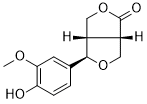
| Cas No. | 125564-65-0 | SDF | File under preparation. |
| PubChem ID | N/A | Appearance | Powder |
| Formula | C13H14O5 | M.Wt | 250.3 |
| Type of Compound | N/A | Storage | Desiccate at -20°C |
| Solubility | Soluble in Chloroform,Dichloromethane,Ethyl Acetate,DMSO,Acetone,etc. | ||
| General tips | For obtaining a higher solubility , please warm the tube at 37 ℃ and shake it in the ultrasonic bath for a while.Stock solution can be stored below -20℃ for several months. We recommend that you prepare and use the solution on the same day. However, if the test schedule requires, the stock solutions can be prepared in advance, and the stock solution must be sealed and stored below -20℃. In general, the stock solution can be kept for several months. Before use, we recommend that you leave the vial at room temperature for at least an hour before opening it. |
||
| About Packaging | 1. The packaging of the product may be reversed during transportation, cause the high purity compounds to adhere to the neck or cap of the vial.Take the vail out of its packaging and shake gently until the compounds fall to the bottom of the vial. 2. For liquid products, please centrifuge at 500xg to gather the liquid to the bottom of the vial. 3. Try to avoid loss or contamination during the experiment. |
||
| Shipping Condition | Packaging according to customer requirements(5mg, 10mg, 20mg and more). Ship via FedEx, DHL, UPS, EMS or other couriers with RT, or blue ice upon request. | ||
Quality Control & MSDS
Package In Stock

Number of papers citing our products


Salicifoliol Dilution Calculator
Salicifoliol Molarity Calculator
| 1 mg | 5 mg | 10 mg | 20 mg | 25 mg | |
| 1 mM | 3.9952 mL | 19.976 mL | 39.9521 mL | 79.9041 mL | 99.8801 mL |
| 5 mM | 0.799 mL | 3.9952 mL | 7.9904 mL | 15.9808 mL | 19.976 mL |
| 10 mM | 0.3995 mL | 1.9976 mL | 3.9952 mL | 7.9904 mL | 9.988 mL |
| 50 mM | 0.0799 mL | 0.3995 mL | 0.799 mL | 1.5981 mL | 1.9976 mL |
| 100 mM | 0.04 mL | 0.1998 mL | 0.3995 mL | 0.799 mL | 0.9988 mL |
| * Note: If you are in the process of experiment, it's necessary to make the dilution ratios of the samples. The dilution data above is only for reference. Normally, it's can get a better solubility within lower of Concentrations. | |||||
- Blestrianol A
Catalog No.:BCX2731
CAS No.:136966-83-1
- Bulbocodin D
Catalog No.:BCX2730
CAS No.:211229-85-5
- erythro-4-(1-Hydroxy-2-(2-methoxy-4-((E)-prop-1-en-1-yl)phenoxy)propyl)-2-methoxyphenol
Catalog No.:BCX2729
CAS No.:50393-88-9
- Shancigusin B
Catalog No.:BCX2728
CAS No.:1174157-26-6
- Collinsonidin
Catalog No.:BCX2727
CAS No.:116107-25-6
- 4'-demethylpicropodophyllin
Catalog No.:BCX2726
CAS No.:112066-16-7
- Juglanbioside E
Catalog No.:BCX2725
CAS No.:2349377-83-7
- Juglanbioside B
Catalog No.:BCX2724
CAS No.:2349377-78-0
- Tricin 7-O-rutinoside
Catalog No.:BCX2723
CAS No.:102208-64-0
- 7'-Methoxylariciresinol
Catalog No.:BCX2722
CAS No.:1426550-86-8
- 7'-Ethoxylariciresinol
Catalog No.:BCX2721
CAS No.:1907632-04-5
- Cycloramoside A
Catalog No.:BCX2720
CAS No.:2170496-95-2
- 5-(3-(Hydroxymethyl)-2,4-dimethylphenyl)-2-methylpentane-2,3-diol
Catalog No.:BCX2733
CAS No.:2182900-78-1
- Glaberide I
Catalog No.:BCX2734
CAS No.:77790-52-4
- p-Coumaraldehyde
Catalog No.:BCX2735
CAS No.:20711-53-9
- Lactitol
Catalog No.:BCX2736
CAS No.:585-86-4
- 6-Methoxytryptamine
Catalog No.:BCX2737
CAS No.:3610-36-4
- Farnesylacetone
Catalog No.:BCX2738
CAS No.:762-29-8
- Dihydrolanosterol
Catalog No.:BCX2739
CAS No.:79-62-9
- Methyl coumalate
Catalog No.:BCX2740
CAS No.:6018-41-3
- Brevianamide N
Catalog No.:BCX2741
CAS No.:1174538-71-6
- 2-Hydroxymusaitinerin A
Catalog No.:BCX2742
CAS No.:3118515-52-6
- 5,7,2'-Trimethoxyflavone
Catalog No.:BCX2743
CAS No.:4308-57-0
- 7,2'-Trimethoxyflavone
Catalog No.:BCX2744
CAS No.:62536-78-1
Anti-invasive and cytotoxic evaluation of a (+)-pinoresinol-based semisynthetic library against glioblastoma.[Pubmed:42158170]
Beilstein J Org Chem. 2026 May 11;22:691-704.
The Australian endemic plant genus Eremophila has long been recognized for its unique chemical diversity, with numerous novel and bioactive compounds reported. In this study, we chemically investigated the seeds of Eremophila maculata for the first time, which led to the isolation and characterization of two known plant metabolites, (+)-Salicifoliol and (+)-pinoresinol. Due to the reported biological properties of the lignan natural product (+)-pinoresinol and its high abundance from the seeds of E. maculata, we synthesized five analogues for biological evaluations. Preliminary cytotoxicity evaluations of the semisynthetic pinoresinol-based library against two human glioblastoma cell lines, U251MG and KNS42, showed (+)-4,4'-di(3,3-dimethylbutanoyl)pinoresinol had slight cytotoxicity at 10 microM. A transwell anti-invasive assay on the same compound showed a reduction in the invasion of adult U251MG cells by 50% and pediatric KNS42 cells by 30%, with IC(50) values of 0.26 and 0.40 microM, respectively.
[A new cyclohexene derivative from whole herb of Pachysandra terminalis].[Pubmed:41507747]
Zhongguo Zhong Yao Za Zhi. 2025 Sep;50(17):4836-4840.
To investigate the chemical constituents of the whole plant of Pachysandra terminalis, silica gel, Sephadex LH-20, and semi-preparative high-performance liquid chromatography were used for separation and purification. The structures of the isolated compounds were elucidated based on spectroscopic data(NMR, MS), electronic circular dichroism(ECD) data, and physicochemical properties. Nine compounds were isolated and identified from the ethanol extract of the whole plant of P. terminalis, namely pactermol B(1), loliolide(2), pubinernoid A(3), phillygenin(4), epipinoresinol(5), pinoresinol(6), Salicifoliol(7), ferulic acid(8), and trans-ferulic acid methyl ester(9). Among them, compound 1 is a new cyclohexene derivative, and compounds 2-5 and 7-9 were isolated from the genus Pachysandra for the first time. The antitumor activities of the isolated compounds were evaluated using the CCK-8 assay. The results showed that all compounds showed no significant cytotoxicity against A549, H460, and HepG2 cell lines.
Glucose Uptake-Stimulating Metabolites from Aerial Parts of Centaurea sicula.[Pubmed:38528772]
J Nat Prod. 2024 Apr 26;87(4):1179-1186.
A comprehensive phytochemical investigation of aerial parts obtained from Centaurea sicula L. led to the isolation of 14 terpenoids (1-14) and nine polyphenols (15-23). The sesquiterpenoid group (1-11) included three structural families, namely, elemanolides (1-6), eudesmanolides (7 and 8), and germacranolides (9-11) with four unreported secondary metabolites (5-8), whose structure has been determined by extensive spectroscopic analysis, including 1D/2D NMR, HR-MS, and chemical conversion. Moreover, an unprecedented alkaloid, named siculamide (24), was structurally characterized, and a possible biogenetic origin was postulated. Inspired by the traditional use of the plant and in the frame of ongoing research on compounds with potential activity on metabolic syndrome, all the isolated compounds were evaluated for their stimulation of glucose uptake, disclosing remarkable activity for dihydrocnicin (10) and the lignan Salicifoliol (15).
[Chemical constituents from fruits of Vitex trifolia var. simplicifolia].[Pubmed:30384535]
Zhongguo Zhong Yao Za Zhi. 2018 Sep;43(18):3694-3700.
The present study is to investigate the chemical constituents from the dried ripe fruits of Vitex trifolia var. simplicifolia The compounds were isolated by using a variety of chromatographic methods including silicagel, ODS, Sephadex LH-20, reversed-phase HPLC, and other methods. Their structures were identified by NMR, and MS date. As a result, 18 compounds were isolated and identified as ent-2-oxo15,16,19-trihydroxypimar-8(14)-ene (1), chrysosplenol D (2), casticin (3), luteolin (4), eupatrin (5), apigenin (6), 5,4'-dihydroxy-3,6,7-trimethoxyflavone (7), luteolin-4'-O-glucoside (8), hypolaetin-7-O-beta-D-glucopyranoside (9), swertisin (10), agestricin D (11), 5,3'-dihydroxy-6,7,4'-trimethoxyflavanone (12), tomentic acid (13), 2alpha,3beta,23-trihydroxyolean-12-en-28-oic acid (14), 3'-acetoxy-4'-angeloyloxy-3',4'-dihydroseselin (15), dihydrodehydrodiconiferyl alcohol (16), 3,5'-dimethoxy-4',7-epoxy-8,3'-neolignane-5,9,9'-triol (17) and Salicifoliol (18). Among them, compounds 1, 2, 5-15, 17 and 18 were obtained from V. trifolia var. simplicifolia Cham for the first time and compounds 1, 5, 7-11, 15, 17 and 18 were isolated from thegenus Vitex for the first time.
[Chemical Constituents of Eucommia ulmoides in Guizhou Province].[Pubmed:26767291]
Zhong Yao Cai. 2015 May;38(5):980-4.
OBJECTIVE: To study the chemical constituents of Eucommia ulmoides in Guizhou Province. METHODS: Silica gel, Sephadex LH-20, RP-18, MCI and semi-preparative HPLC were used to study the chemical constituents of Eucommia ulmoides, and the chemical structures were elucidated by application of spectral data. RESULTS: 16 compounds were isolated from the bark of Eucommia ulmoides. Their structures were identified as beta-sitosterol (1), cycloeucalenol (2), betulinic acid (3), 24-methylenecycloartenone (4), cycloeucalenone (5), Salicifoliol (6), pinoresinol (7), genipin (8) , alternariol (9), balanophonin (10), eucommidiol (11), pinoresinol-4'-O-beta-D-glucopyranoside (12), eucommiol (13), deoxyeucommiol (14), 8-hydroxypinoresinol (15), and dehydrodiconiferyl alcohol -gamma'-O-beta-D-glucopyranoside (16). CONCLUSION: Seven compounds, including compounds 2,4 - 6,9, 10 and 15 are isolated from Eucommia ulmoides for the first time, and compound 14 is isolated from the bark of Eucommia ulmoides for the first time.
New guaian-type sesquiterpene from Wikstroemia indica.[Pubmed:24660446]
Nat Prod Commun. 2014 Jan;9(1):1-2.
From a MeOH extract of powdered roots of Wikstroemia indica, we isolated a new guaian-type sesquiterpene (1) and two known guaian-type sesquiterpenes [oleodaphnal (2), 1alpha,7alpha,10alphaH-guaia-4,11-dien-3-one (3)], together with twelve known compounds: (+)-arctigenin, (+)-matairesinol, (+)-trachelogenin, (+)-nortrachelogenin, (+)-hinokinin, (+)-kusunokinin, 7-methoxycoumarin, 7-hydroxycoumarin (umbelliferone), daphnogitin, daphnoretin, Salicifoliol, and (-)-pinoresinol. The structure of compound 1 was determined to be 4,10,11-guaiatrien-3-one-14-oic acid, by the analyses of spectral data.
The effect of the aerial part of Lindera akoensis on lipopolysaccharides (LPS)-induced nitric oxide production in RAW264.7 cells.[Pubmed:23624606]
Int J Mol Sci. 2013 Apr 26;14(5):9168-81.
Four new secondary metabolites, 3alpha-((E)-Dodec-1-enyl)-4beta-hydroxy-5beta-methyldihydrofuran-2-one (1), linderinol (6), 4'-O-methylkaempferol 3-O-alpha-L-(4''-E-p-coumaroyl)rhamnoside (11) and kaempferol 3-O-alpha-L-(4''-Z-p-coumaroyl)rhamnoside (12) with eleven known compounds-3-epilistenolide D1 (2), 3-epilistenolide D2 (3), (3Z,4alpha,5beta)-3-(dodec-11-ynylidene)-4-hydroxy-5-methylbutanolide (4), (3E,4beta,5beta)-3-(dodec-11-ynylidene)-4-hydroxy-5-methylbutanolide (5), matairesinol (7), syringaresinol (8), (+)-pinoresinol (9), Salicifoliol (10), 4''-p-coumaroylafzelin (13), catechin (14) and epicatechin (15)-were first isolated from the aerial part of Lindera akoensis. Their structures were determined by detailed analysis of 1D- and 2D-NMR spectroscopic data. All of the compounds isolated from Lindera akoensis showed that in vitro anti-inflammatory activity decreases the LPS-stimulated production of nitric oxide (NO) in RAW 264.7 cell, with IC50 values of 4.1-413.8 microM.
Polyphenols from plants used in traditional Indonesian medicine (Jamu): uptake and antioxidative effects in rat H4IIE hepatoma cells.[Pubmed:15720788]
J Pharm Pharmacol. 2005 Feb;57(2):233-40.
Phytochemical investigation of plants used in traditional Indonesian medicine (Jamu) yielded lignans (pinoresinol, 9 alpha-hydroxypinoresinol and Salicifoliol), flavonoids (3-O-beta-(D)-glucopyranosyl-(1-->6)-beta-(D)-glucopyranosylkaempferol, luteolin and apigenin) and coumarins (coumarin, 8-hydroxycoumarin and 5-hydroxycoumarin). The beneficial effects of the respective plants for human health are thought to be associated with antioxidative activity. In the present study, the antioxidative capacity of the isolated compounds was determined in an in-vitro assay. Luteolin and kaempferol (cleavage product of 3-O-beta-(D)-glucopyranosyl-(1-->6)-beta-(D)-glucopyranosylkaempferol, which is thought to be formed in the intestine) showed strong antioxidant activity; pinoresinol and 9 alpha-hydroxypinoresinol showed only minor antioxidative effects. The coumarins, as well as apigenin and 3-O-beta-(D)-glucopyranosyl-(1-->6)-beta-(D)-glucopyranosylkaempferol were inactive. The antioxidative effects of luteolin, kaempferol and pinoresinol were further investigated in H4IIE rat hepatoma cells. A strong protective effect of kaempferol and luteolin was found against H2O2-mediated intracellular reactive oxygen species formation measured using the dichlorofluorescein assay and H2O2-mediated DNA strand breaks. Pinoresinol did not have a protective effect against H2O2-mediated DNA-damage, but in the dichlorofluorescein assay, an antioxidative effect was detectable. During studies with H4IIE cells, kaempferol, luteolin and pinoresinol were taken up by the cells within 60 min. The flavonoids were found to be relatively toxic at higher concentrations, while pinoresinol was less cytotoxic. In conclusion, kaempferol and luteolin, at low concentrations (< or = 50 microM), protect H4IIE cells against oxidative stress but are cytotoxic at higher concentrations; the biological effects of pinoresinol are less prominent in comparison. These results are important for the identification of pharmacologically active substances from traditional Indonesian medicinal plants.
Oxygen insertion in Sesamum indicum furanofuran lignans. Diastereoselective syntheses of enzyme substrate analogues.[Pubmed:11540412]
Can J Chem. 1997 Jun;75(6):840-9.
The furofuran lignans in sesame seed have an unusual oxygen insertion between their furan and aryl rings. In our continuing investigations on the isolation and characterization of the enzyme(s) involved, the diastereoselective syntheses of various substrate analogues for the oxygen insertion step were developed for future substrate specificity and inhibitor studies. This synthetic strategy also provided entry to so-called furofuranone epoxy-lignans, such as Salicifoliol from Bupleurum sp., and acuminatolide from Helichrysum sp.

Calcutta University

University of Minnesota

University of Maryland School of Medicine

University of Illinois at Chicago

The Ohio State University

University of Zurich

Harvard University

Colorado State University

Auburn University

Yale University

Worcester Polytechnic Institute

Washington State University

Stanford University

University of Leipzig

Universidade da Beira Interior

The Institute of Cancer Research

Heidelberg University

University of Amsterdam

University of Auckland

TsingHua University

The University of Michigan

Miami University

DRURY University

Jilin University

Fudan University

Wuhan University

Sun Yat-sen University

Universite de Paris

Deemed University

Auckland University

The University of Tokyo

Korea University



