
DihydrolanosterolCAS# 79-62-9 |
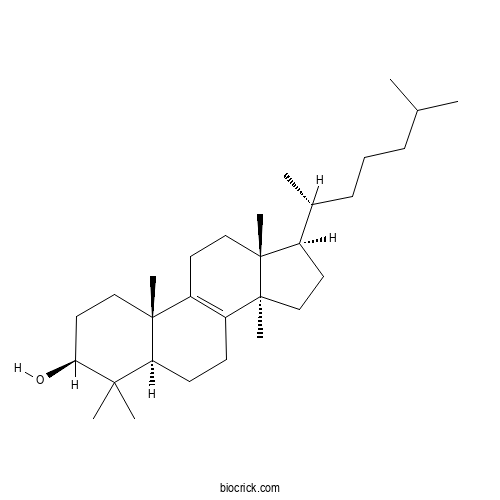
| Cas No. | 79-62-9 | SDF | File under preparation. |
| PubChem ID | 440560.0 | Appearance | Powder |
| Formula | C30H52O | M.Wt | 428.7 |
| Type of Compound | N/A | Storage | Desiccate at -20°C |
| Solubility | Soluble in Chloroform,Dichloromethane,Ethyl Acetate,DMSO,Acetone,etc. | ||
| Chemical Name | (3S,5R,10S,13R,14R,17R)-4,4,10,13,14-pentamethyl-17-[(2R)-6-methylheptan-2-yl]-2,3,5,6,7,11,12,15,16,17-decahydro-1H-cyclopenta[a]phenanthren-3-ol | ||
| SMILES | CC(C)CCCC(C)C1CCC2(C1(CCC3=C2CCC4C3(CCC(C4(C)C)O)C)C)C | ||
| Standard InChIKey | MBZYKEVPFYHDOH-BQNIITSRSA-N | ||
| Standard InChI | InChI=1S/C30H52O/c1-20(2)10-9-11-21(3)22-14-18-30(8)24-12-13-25-27(4,5)26(31)16-17-28(25,6)23(24)15-19-29(22,30)7/h20-22,25-26,31H,9-19H2,1-8H3/t21-,22-,25+,26+,28-,29-,30+/m1/s1 | ||
| General tips | For obtaining a higher solubility , please warm the tube at 37 ℃ and shake it in the ultrasonic bath for a while.Stock solution can be stored below -20℃ for several months. We recommend that you prepare and use the solution on the same day. However, if the test schedule requires, the stock solutions can be prepared in advance, and the stock solution must be sealed and stored below -20℃. In general, the stock solution can be kept for several months. Before use, we recommend that you leave the vial at room temperature for at least an hour before opening it. |
||
| About Packaging | 1. The packaging of the product may be reversed during transportation, cause the high purity compounds to adhere to the neck or cap of the vial.Take the vail out of its packaging and shake gently until the compounds fall to the bottom of the vial. 2. For liquid products, please centrifuge at 500xg to gather the liquid to the bottom of the vial. 3. Try to avoid loss or contamination during the experiment. |
||
| Shipping Condition | Packaging according to customer requirements(5mg, 10mg, 20mg and more). Ship via FedEx, DHL, UPS, EMS or other couriers with RT, or blue ice upon request. | ||
Quality Control & MSDS
3D structure
Package In Stock

Number of papers citing our products


Dihydrolanosterol Dilution Calculator
Dihydrolanosterol Molarity Calculator
-
 LanosterolCatalog No.: BCN3332CAS No.: 79-63-0
-
 TirucallolCatalog No.: BCN7787CAS No.: 514-46-5
-
 EupholCatalog No.: BCN7790CAS No.: 514-47-6
-
 EburicolCatalog No.: BCN4252CAS No.: 6890-88-6
-
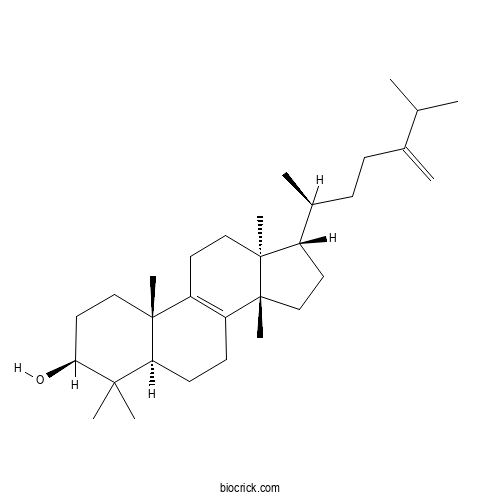 EuphorbolCatalog No.: BCN0321CAS No.: 566-14-3
-
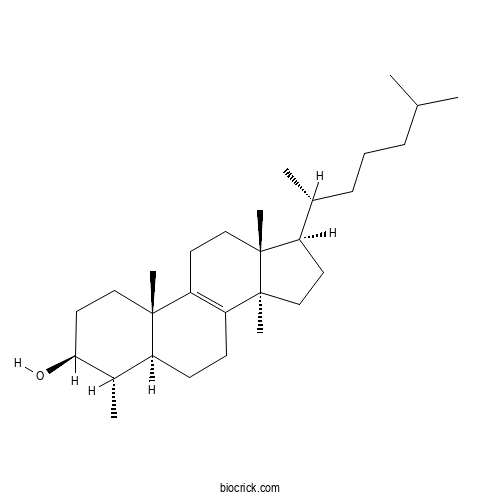 31-NorlanostenolCatalog No.: BCX1532CAS No.: 16910-39-7
-
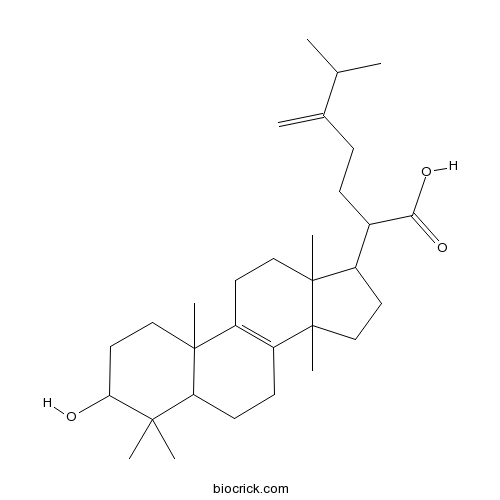 Eburicoic acidCatalog No.: BCN2556CAS No.: 560-66-7
-
 InotodiolCatalog No.: BCN3331CAS No.: 35963-37-2
-
 Trametenolic acidCatalog No.: BCN3330CAS No.: 24160-36-9
-
 a,b-Elemolic acidCatalog No.: BCN0018CAS No.: 28282-27-1
| 1 mg | 5 mg | 10 mg | 20 mg | 25 mg | |
| 1 mM | 2.3326 mL | 11.6632 mL | 23.3263 mL | 46.6527 mL | 58.3158 mL |
| 5 mM | 0.4665 mL | 2.3326 mL | 4.6653 mL | 9.3305 mL | 11.6632 mL |
| 10 mM | 0.2333 mL | 1.1663 mL | 2.3326 mL | 4.6653 mL | 5.8316 mL |
| 50 mM | 0.0467 mL | 0.2333 mL | 0.4665 mL | 0.9331 mL | 1.1663 mL |
| 100 mM | 0.0233 mL | 0.1166 mL | 0.2333 mL | 0.4665 mL | 0.5832 mL |
| * Note: If you are in the process of experiment, it's necessary to make the dilution ratios of the samples. The dilution data above is only for reference. Normally, it's can get a better solubility within lower of Concentrations. | |||||
- Farnesylacetone
Catalog No.:BCX2738
CAS No.:762-29-8
- 6-Methoxytryptamine
Catalog No.:BCX2737
CAS No.:3610-36-4
- Lactitol
Catalog No.:BCX2736
CAS No.:585-86-4
- p-Coumaraldehyde
Catalog No.:BCX2735
CAS No.:20711-53-9
- Glaberide I
Catalog No.:BCX2734
CAS No.:77790-52-4
- 5-(3-(Hydroxymethyl)-2,4-dimethylphenyl)-2-methylpentane-2,3-diol
Catalog No.:BCX2733
CAS No.:2182900-78-1
- Salicifoliol
Catalog No.:BCX2732
CAS No.:125564-65-0
- Blestrianol A
Catalog No.:BCX2731
CAS No.:136966-83-1
- Bulbocodin D
Catalog No.:BCX2730
CAS No.:211229-85-5
- erythro-4-(1-Hydroxy-2-(2-methoxy-4-((E)-prop-1-en-1-yl)phenoxy)propyl)-2-methoxyphenol
Catalog No.:BCX2729
CAS No.:50393-88-9
- Shancigusin B
Catalog No.:BCX2728
CAS No.:1174157-26-6
- Collinsonidin
Catalog No.:BCX2727
CAS No.:116107-25-6
- Methyl coumalate
Catalog No.:BCX2740
CAS No.:6018-41-3
- Brevianamide N
Catalog No.:BCX2741
CAS No.:1174538-71-6
- 2-Hydroxymusaitinerin A
Catalog No.:BCX2742
CAS No.:3118515-52-6
- 5,7,2'-Trimethoxyflavone
Catalog No.:BCX2743
CAS No.:4308-57-0
- 7,2'-Trimethoxyflavone
Catalog No.:BCX2744
CAS No.:62536-78-1
- 7,2'-Dihydroxyflavone
Catalog No.:BCX2745
CAS No.:77298-66-9
- Rubone
Catalog No.:BCX2746
CAS No.:73694-15-2
- Orixalone A
Catalog No.:BCX2747
CAS No.:797788-72-8
- 3-Sulfotaurolithocholic acid disodium salt
Catalog No.:BCX2748
CAS No.:64936-83-0
- (11β,16α)-9,21-Dichloro-17-[(2-furanylcarbonyl)oxy]-11-hydroxy-16-methylpregna-1,4-diene-3,6,20-trione
Catalog No.:BCX2749
CAS No.:1305334-30-8
- 7,4'-dihydroxy-3'-methoxyflavanone
Catalog No.:BCX2750
CAS No.:13192-07-9
- Isomogroside VI
Catalog No.:BCX2751
CAS No.:2496376-70-4
Hepatic management of toxic sterols after acute deletion of Cyp51 from cholesterol synthesis.[Pubmed:41581873]
J Biol Chem. 2026 Mar;302(3):111188.
Lanosterol 14alpha-demethylase (CYP51), a key enzyme in cholesterol synthesis, is essential for normal liver function. Reduced CYP51 activity leads to metabolism-associated liver disease and ultimately hepatocellular carcinoma, yet the hepatocellular processes most affected and their crosstalk with other liver cell types remain poorly defined. Here, we present a new inducible liver-specific Cyp51 KO mouse (iLKO) model designed to study how acute disruption of cholesterol synthesis is managed in the adult liver. Doxycycline-inducible deletion minimizes developmental confounders of albumin-Cre models and enables isolation of viable primary hepatocytes. iLKO hepatocytes and liver tissue showed efficient CYP51 depletion with marked accumulation of lanosterol and 24,25-Dihydrolanosterol, whereas hepatic cholesterol levels remained unchanged or only mildly reduced, indicating compensatory uptake and/or pathway rerouting. Histology and transmission electron microscopy revealed hepatomegaly with mild portal inflammation, ductular reaction, endoplasmic reticulum dilation, mitochondrial swelling, and increased nuclear lipid droplets, consistent with adaptation to endoplasmic reticulum stress but without overt fibrosis at the studied time points. Notably, crystal-like inclusions-particularly in Kupffer cells-were observed. Although MALDI-TOF mass spectrometry imaging could not determine their exact composition, their presence in the context of toxic sterol overload strongly suggests noncholesterol sterol crystallization as a previously unrecognized trigger of inflammation. In summary, the iLKO model allows dissection of sterol toxicity independently of developmental effects and provides mechanistic insight into how disrupted cholesterol synthesis in adult hepatocytes initiates sterol-driven cellular stress and inflammation that predispose to metabolism-associated liver disease and hepatocellular carcinoma.
Hydroxyzine Effects on Post-Lanosterol Biosynthesis in Smith-Lemli-Opitz Syndrome (SLOS) Models.[Pubmed:40305315]
Biomolecules. 2025 Apr 10;15(4):562.
Smith-Lemli-Opitz syndrome (SLOS) is a developmental disability arising from bi-allelic pathogenic variants in the 7-dehydrocholestrol reductase (DHCR7) enzyme and the accumulation of 7-dehydrocholesterol (7-DHC). 7-DHC spontaneously oxidizes and gives rise to cytotoxic oxysterols. Our recent high-throughput screening on Dhcr7-deficient Neuro2a cells identified hydroxyzine (HYZ) as a medication that could counteract the high levels of 7-DHC. We assessed the effects of HYZ in Dhcr7-deficient Neuro2a cells, neuronal cultures and glial cultures from Dhcr7(T93M/T93M) transgenic mice, and human dermal fibroblasts from patients with SLOS. LC-MS/MS biochemical analyses revealed a strong modulatory effect of HYZ on post-lanosterol biosynthesis across all four SLOS models. However, the HYZ-induced biochemical changes were complex, dose-dependent, and variable across the four SLOS models. Dhcr7-deficient Neuro2a cells showed decreased 7-DHC, 8-dehydrocholesterol (8-DHC), and desmosterol (DES) levels (all p < 0.01), while neuronal and glial cultures from Dhcr7(T93M/T93M) transgenic mice reported 8 significantly altered analytes (all p < 0.001). Human dermal fibroblast from patients with SLOS reacted to HYZ exposure with significantly decreased 7-DHC, 7-dehydrodesmosterol (7-DHD), and Dihydrolanosterol (DHL) levels (p < 0.001), coupled with elevation in zymosterol (ZYM), zymostenol (ZYME), and 8-DHC (p < 0.001). Further evaluations are required to determine if the potentially beneficial effects of decreased 7-DHC, 7-DHD and DHL levels in SLOS models and patient biomaterials are counteracted by the rise in other post-lanosterol intermediates.
Knockouts of CYP51A1, DHCR24, or SC5D from cholesterol synthesis reveal pathways modulated by sterol intermediates.[Pubmed:39262789]
iScience. 2024 Aug 3;27(9):110651.
Sterols from cholesterol synthesis are crucial for cholesterol production, but also have individual roles difficult to assess in vivo due to essentiality of cholesterol. We developed HepG2 cell models with knockouts (KOs) for three enzymes of cholesterol synthesis, each accumulating specific sterols. Surprisingly, KOs of CYP51, DHCR24, and SC5D shared only 9% of differentially expressed genes. The most striking was the phenotype of CYP51 KO with highly elevated lanosterol and 24,25-Dihydrolanosterol, significant increase in G2+M phase and enhanced cancer and cell cycle pathways. Comparisons with mouse liver Cyp51 KO data suggest 24,25-Dihydrolanosterol activates similar cell proliferation pathways, possibly via elevated LEF1 and WNT/NFKB signaling. In contrast, SC5D and DHCR24 KO cells with elevated lathosterol or desmosterol proliferated slowly, with downregulated E2F, mitosis, and enriched HNF1A. These findings demonstrate that increase of lanosterol and 24,25-Dihydrolanosterol, but not other sterols, promotes cell proliferation in hepatocytes.
The potential of Chlorella spp. as antiviral source against African swine fever virus through a virtual screening pipeline.[Pubmed:39151375]
J Mol Graph Model. 2024 Nov;132:108846.
African swine fever (ASF) causes high mortality in pigs and threatens global swine production. There is still a lack of therapeutics available, with two vaccines under scrutiny and no approved small-molecule drugs. Eleven (11) viral proteins were used to identify potential antivirals in in silico screening of secondary metabolites (127) from Chlorella spp. The metabolites were screened for affinity and binding selectivity. High-scoring compounds were assessed through in silico ADMET (Absorption, Distribution, Metabolism, Excretion, Toxicity) predictions, compared to structurally similar drugs, and checked for off-target docking with prepared swine receptors. Molecular dynamics (MD) simulations determined binding stability while binding energy was measured in Molecular Mechanics - Generalized Born Surface Area (MMGBSA) or Poisson-Boltzmann Surface Area (MMPBSA). Only six (6) compounds passed until MD analyses, of which five (5) were stable after 100 ns of MD runs. Of these five compounds, only three had binding affinities that were comparable to or stronger than controls. Specifically, phytosterols 24,25-Dihydrolanosterol and CID 4206521 that interact with the RNA capping enzyme (pNP868R), and ergosterol which bound to the Erv-like thioreductase (pB119L). The compounds identified in this study can be used as a theoretical basis for in vitro screening to develop potent antiviral drugs against ASFV.
Direct binding to sterols accelerates endoplasmic reticulum-associated degradation of HMG CoA reductase.[Pubmed:38319967]
Proc Natl Acad Sci U S A. 2024 Feb 13;121(7):e2318822121.
The maintenance of cholesterol homeostasis is crucial for normal function at both the cellular and organismal levels. Two integral membrane proteins, 3-hydroxy-3-methylglutaryl coenzyme A reductase (HMGCR) and Scap, are key targets of a complex feedback regulatory system that operates to ensure cholesterol homeostasis. HMGCR catalyzes the rate-limiting step in the transformation of the 2-carbon precursor acetate to 27-carbon cholesterol. Scap mediates proteolytic activation of sterol regulatory element-binding protein-2 (SREBP-2), a membrane-bound transcription factor that controls expression of genes involved in the synthesis and uptake of cholesterol. Sterol accumulation triggers binding of HMGCR to endoplasmic reticulum (ER)-localized Insig proteins, leading to the enzyme's ubiquitination and proteasome-mediated ER-associated degradation (ERAD). Sterols also induce binding of Insigs to Scap, which leads to sequestration of Scap and its bound SREBP-2 in the ER, thereby preventing proteolytic activation of SREBP-2 in the Golgi. The oxygenated cholesterol derivative 25-hydroxycholesterol (25HC) and the methylated cholesterol synthesis intermediate 24,25-Dihydrolanosterol (DHL) differentially modulate HMGCR and Scap. While both sterols promote binding of HMGCR to Insigs for ubiquitination and subsequent ERAD, only 25HC inhibits the Scap-mediated proteolytic activation of SREBP-2. We showed previously that 1,1-bisphosphonate esters mimic DHL, accelerating ERAD of HMGCR while sparing SREBP-2 activation. Building on these results, our current studies reveal specific, Insig-independent photoaffinity labeling of HMGCR by photoactivatable derivatives of the 1,1-bisphosphonate ester SRP-3042 and 25HC. These findings disclose a direct sterol binding mechanism as the trigger that initiates the HMGCR ERAD pathway, providing valuable insights into the intricate mechanisms that govern cholesterol homeostasis.
Recent advances in antifungal drug development targeting lanosterol 14alpha-demethylase (CYP51): A comprehensive review with structural and molecular insights.[Pubmed:37220949]
Chem Biol Drug Des. 2023 Sep;102(3):606-639.
Fungal infections are posing serious threat to healthcare system due to emerging resistance among available antifungal agents. Among available antifungal agents in clinical practice, azoles (diazole, 1,2,4-triazole and tetrazole) remained most effective and widely prescribed antifungal agents. Now their associated side effects and emerging resistance pattern raised a need of new and potent antifungal agents. Lanosterol 14alpha-demethylase (CYP51) is responsible for the oxidative removal of 14alpha-methyl group of sterol precursors lanosterol and 24(28)-methylene-24,25-Dihydrolanosterol in ergosterol biosynthesis hence an essential component of fungal life cycle and prominent target for antifungal drug development. This review will shed light on various azole- as well as non-azoles-based derivatives as potential antifungal agents that target fungal CYP51. Review will provide deep insight about structure activity relationship, pharmacological outcomes, and interactions of derivatives with CYP51 at molecular level. It will help medicinal chemists working on antifungal development in designing more rational, potent, and safer antifungal agents by targeting fungal CYP51 for tackling emerging antifungal drug resistance.
Processive kinetics in the three-step lanosterol 14alpha-demethylation reaction catalyzed by human cytochrome P450 51A1.[Pubmed:37209823]
J Biol Chem. 2023 Jul;299(7):104841.
Cytochrome P450 (P450, CYP) family 51 enzymes catalyze the 14alpha-demethylation of sterols, leading to critical products used for membranes and the production of steroids, as well as signaling molecules. In mammals, P450 51 catalyzes the 3-step, 6-electron oxidation of lanosterol to form (4beta,5alpha)-4,4-dimethyl-cholestra-8,14,24-trien-3-ol (FF-MAS). P450 51A1 can also use 24,25-Dihydrolanosterol (a natural substrate in the Kandutsch-Russell cholesterol pathway). 24,25-Dihydrolanosterol and the corresponding P450 51A1 reaction intermediates, the 14alpha-alcohol and -aldehyde derivatives of Dihydrolanosterol, were synthesized to study the kinetic processivity of the overall 14alpha-demethylation reaction of human P450 51A1. A combination of steady-state kinetic parameters, steady-state binding constants, dissociation rates of P450-sterol complexes, and kinetic modeling of the time course of oxidation of a P450-Dihydrolanosterol complex showed that the overall reaction is highly processive, with k(off) rates of P450 51A1-Dihydrolanosterol and the 14alpha-alcohol and 14alpha-aldehyde complexes being 1 to 2 orders of magnitude less than the forward rates of competing oxidations. epi-Dihydrolanosterol (the 3alpha-hydroxy analog) was as efficient as the common 3beta-hydroxy isomer in the binding and formation of dihydro FF-MAS. The common lanosterol contaminant dihydroagnosterol was found to be a substrate of human P450 51A1, with roughly one-half the activity of Dihydrolanosterol. Steady-state experiments with 14alpha-methyl deuterated Dihydrolanosterol showed no kinetic isotope effect, indicating that C-14alpha C-H bond breaking is not rate-limiting in any of the individual steps. The high processivity of this reaction generates higher efficiency and also renders the reaction less sensitive to inhibitors.
Characterization of the cholesterol biosynthetic pathway in Dioscorea transversa.[Pubmed:37142228]
J Biol Chem. 2023 Jun;299(6):104768.
Cholesterol is the precursor of bioactive plant metabolites such as steroidal saponins. An Australian plant, Dioscorea transversa, produces only two steroidal saponins: 1beta-hydroxyprotoneogracillin and protoneogracillin. Here, we used D. transversa as a model in which to elucidate the biosynthetic pathway to cholesterol, a precursor to these compounds. Preliminary transcriptomes of D. transversa rhizome and leaves were constructed, annotated, and analyzed. We identified a novel sterol side-chain reductase as a key initiator of cholesterol biosynthesis in this plant. By complementation in yeast, we determine that this sterol side-chain reductase reduces Delta(24,28) double bonds required for phytosterol biogenesis as well as Delta(24,25) double bonds. The latter function is believed to initiate cholesterogenesis by reducing cycloartenol to cycloartanol. Through heterologous expression, purification, and enzymatic reconstitution, we also demonstrate that the D. transversa sterol demethylase (CYP51) effectively demethylates obtusifoliol, an intermediate of phytosterol biosynthesis and 4-desmethyl-24,25-Dihydrolanosterol, a postulated downstream intermediate of cholesterol biosynthesis. In summary, we investigated specific steps of the cholesterol biosynthetic pathway, providing further insight into the downstream production of bioactive steroidal saponin metabolites.
Integrated Analysis of Gut Microbiome and Lipid Metabolism in Mice Infected with Carbapenem-Resistant Enterobacteriaceae.[Pubmed:36295794]
Metabolites. 2022 Sep 22;12(10):892.
The disturbance in gut microbiota composition and metabolism has been implicated in the process of pathogenic bacteria infection. However, the characteristics of the microbiota and the metabolic interaction of commensals-host during pathogen invasion remain more than vague. In this study, the potential associations of gut microbes with disturbed lipid metabolism in mice upon carbapenem-resistant Escherichia coli (CRE) infection were explored by the biochemical and multi-omics approaches including metagenomics, metabolomics and lipidomics, and then the key metabolites-reaction-enzyme-gene interaction network was constructed. Results showed that intestinal Erysipelotrichaceae family was strongly associated with the hepatic total cholesterol and HDL-cholesterol, as well as a few sera and fecal metabolites involved in lipid metabolism such as 24, 25-Dihydrolanosterol. A high-coverage lipidomic analysis further demonstrated that a total of 529 lipid molecules was significantly enriched and 520 were depleted in the liver of mice infected with CRE. Among them, 35 lipid species showed high correlations (|r| > 0.8 and p < 0.05) with the Erysipelotrichaceae family, including phosphatidylglycerol (42:2), phosphatidylglycerol (42:3), phosphatidylglycerol (38:5), phosphatidylcholine (42:4), ceramide (d17:1/16:0), ceramide (d18:1/16:0) and diacylglycerol (20:2), with correlation coefficients higher than 0.9. In conclusion, the systematic multi-omics study improved the understanding of the complicated connection between the microbiota and the host during pathogen invasion, which thereby is expected to lead to the future discovery and establishment of novel control strategies for CRE infection.
Isolation of lanosterol and dihydrolanosterol from the unsaponifiable matter of lanolin by urea complexation and countercurrent chromatography in heart-cut recycling mode.[Pubmed:36191441]
J Chromatogr B Analyt Technol Biomed Life Sci. 2022 Nov 1;1210:123470.
4,4-Dimethyl-substituted sterols are bioactive minor sterols of most animal fats and plant oils, but higher shares are present in lanolin (wool grease). Here, the isolation of the 4,4-dimethyl-substituted sterols Dihydrolanosterol and lanosterol from lanolin by countercurrent chromatography (CCC) is described. An initial examination of the hexane extract of saponified lanolin showed the presence of relatively high portions of fatty alcohols which were known to co-elute with the target analytes in CCC. Hence, fatty alcohols were precipitated by urea complexation. Unexpectedly, 4,4-dimethyl-substituted sterols were also found in the crystalline fraction, while cholesterol and other desmethylsterols were detected in the liquid phase. Urea complexation represented a useful preparative method for the separation of desmethylsterols and 4,4-dimethyl-substituted sterols from lanolin. Shake flask experiments of 4,4-dimethyl-substituted sterols and fatty alcohols with 14 biphasic solvent systems indicated suitable partition coefficients (K values) with n-hexane/ethanol/water (12:8:1, v/v/v) and n-hexane/benzotrifluoride/acetonitrile (20:7:13, v/v/v). After initial tests with conventional CCC, the application of CCC in heart-cut recycling mode provided 4,4-dimethyl-substituted sterols with purities of 99 % (Dihydrolanosterol) and 95 % (lanosterol).
Squalene through Its Post-Squalene Metabolites Is a Modulator of Hepatic Transcriptome in Rabbits.[Pubmed:35456988]
Int J Mol Sci. 2022 Apr 10;23(8):4172.
Squalene is a natural bioactive triterpene and an important intermediate in the biosynthesis of sterols. To assess the effect of this compound on the hepatic transcriptome, RNA-sequencing was carried out in two groups of male New Zealand rabbits fed either a diet enriched with 1% sunflower oil or the same diet with 0.5% squalene for 4 weeks. Hepatic lipids, lipid droplet area, squalene, and sterols were also monitored. The Squalene administration downregulated 9 transcripts and upregulated 13 transcripts. The gene ontology of transcripts fitted into the following main categories: transporter of proteins and sterols, lipid metabolism, lipogenesis, anti-inflammatory and anti-cancer properties. When the results were confirmed by RT-qPCR, rabbits receiving squalene displayed significant hepatic expression changes of LOC100344884 (PNPLA3), GCK, TFCP2L1, ASCL1, ACSS2, OST4, FAM91A1, MYH6, LRRC39, LOC108176846, GLT1D1 and TREH. A squalene-enriched diet increased hepatic levels of squalene, lanosterol, Dihydrolanosterol, lathosterol, zymostenol and desmosterol. Strong correlations were found among specific sterols and some squalene-changed transcripts. Incubation of the murine AML12 hepatic cell line in the presence of lanosterol, Dihydrolanosterol, zymostenol and desmosterol reproduced the observed changes in the expressions of Acss2, Fam91a1 and Pnpla3. In conclusion, these findings indicate that the squalene and post-squalene metabolites play important roles in hepatic transcriptional changes required to protect the liver against malfunction.
A comparison of the bacterial CYP51 cytochrome P450 enzymes from Mycobacterium marinum and Mycobacterium tuberculosis.[Pubmed:35346833]
J Steroid Biochem Mol Biol. 2022 Jul;221:106097.
Members of the CYP51 family of cytochrome P450 enzymes are classified as sterol demethylases involved in the metabolic formation of cholesterol and related derivatives. The CYP51 enzyme from Mycobacterium marinum was studied and compared to its counterpart from Mycobacterium tuberculosis to determine the degree of functional conservation between them. Spectroscopic analyses of substrate and inhibitor binding of the purified CYP51 enzymes from M. marinum and M. tuberculosis were performed. The catalytic oxidation of lanosterol and related steroids was investigated. M. marinum CYP51 was structurally characterized by X-ray crystallography. The CYP51 enzyme of M. marinum is sequentially closely related to CYP51B1 from M. tuberculosis. However, differences in the heme spin state of each enzyme were observed upon the addition of steroids and other ligands. Both enzymes displayed different binding properties to those reported for the CYP51-Fdx fusion protein from the bacterium Methylococcus capsulatus. The enzymes were able to oxidatively demethylate lanosterol to generate 14-demethylanosterol, but no products were detected for the related species Dihydrolanosterol and eburicol. The crystal structure of CYP51 from M. marinum in the absence of added substrate but with a Bis-Tris molecule within the active site was resolved. The CYP51 enzyme of M. marinum displays differences in how steroids and other ligands bind compared to the M. tuberculosis enzyme. This was related to structural differences between the two enzymes. Overall, both of these CYP51 enzymes from mycobacterial species displayed significant differences to the CYP51 enzymes of eukaryotic species and the bacterial CYP51-Fdx enzyme of Me. capsulatus.
Dietary squalene modifies plasma lipoproteins and hepatic cholesterol metabolism in rabbits.[Pubmed:34291245]
Food Funct. 2021 Sep 7;12(17):8141-8153.
To evaluate the effects of squalene, the main unsaponifiable component of virgin olive oil, on lipid metabolism, two groups of male New Zealand rabbits were fed a 1% sunflower oil-enriched regular diet or the same diet containing 0.5% squalene for 4 weeks. Plasma triglycerides, total- and HDL-cholesterol and their lipoproteins were assayed. Analyses of hepatic lipid droplets, triglycerides, total- and non-esterified cholesterol, squalene, protein and gene expression, and cholesterol precursors were carried out. In the jejunum, the squalene content and mRNA and protein APOB expressions were measured. Finally, we studied the effect of cholesterol precursors in AML12 cells. Squalene administration significantly increased plasma total cholesterol, mainly carried as non-esterified cholesterol in IDL and large LDL, and corresponded to an increased number of APOB100-containing particles without accumulation of triglycerides and decreased reactive oxygen species. Despite no significant changes in the APOB content in the jejunum, the latter displayed increased APOB mRNA and squalene levels. Increases in the amounts of non-esterified cholesterol, squalene, lanosterol, Dihydrolanosterol, lathosterol, cholestanol, zymostenol, desmosterol and caspase 1 were also observed in the liver. Incubation of AML12 cells in the presence of lanosterol increased caspase 1. In conclusion, squalene administration in rabbits increases the number of modified APOB-containing lipoproteins, and hepatic cholesterol biosynthesis is linked to caspase 1 probably through lanosterol.
Decreased caveolae in AGPAT2 lacking adipocytes is independent of changes in cholesterol or sphingolipid levels: A whole cell and plasma membrane lipidomic analysis of adipogenesis.[Pubmed:33989739]
Biochim Biophys Acta Mol Basis Dis. 2021 Sep 1;1867(9):166167.
BACKGROUND: Adipocytes from lipodystrophic Agpat2(-/-) mice have impaired adipogenesis and fewer caveolae. Herein, we examined whether these defects are associated with changes in lipid composition or abnormal levels of caveolae-associated proteins. Lipidome changes were quantified in differentiated Agpat2(-/-) adipocytes to identify lipids with potential adipogenic roles. METHODS: Agpat2(-/-) and wild type brown preadipocytes were differentiated in vitro. Plasma membrane was purified by ultracentrifugation. Number of caveolae and caveolae-associated proteins, as well as sterol, sphingolipid, and phospholipid lipidome were determined across differentiation. RESULTS: Differentiated Agpat2(-/-) adipocytes had decreased caveolae number but conserved insulin signaling. Caveolin-1 and cavin-1 levels were equivalent between Agpat2(-/-) and wild type adipocytes. No differences in PM cholesterol and sphingolipids abundance were detected between genotypes. Levels of phosphatidylserine at day 10 of differentiation were increased in Agpat2(-/-) adipocytes. Wild type adipocytes had increased whole cell triglyceride, diacylglycerol, phosphatidylglycerol, phosphatidic acid, lysophosphatidylcholine, lysophosphatidylethanolamine, and trihexosyl ceramide, and decreased 24,25-Dihydrolanosterol and sitosterol, as a result of adipogenic differentiation. By contrast, adipogenesis did not modify whole cell neutral lipids but increased lysophosphatidylcholine, sphingomyelin, and trihexosyl ceramide levels in Agpat2(-/-) adipocytes. Unexpectedly, adipogenesis decreased PM levels of main phospholipids in both genotypes. CONCLUSION: In Agpat2(-/-) adipocytes, decreased caveolae is not associated with changes in PM cholesterol nor sphingolipid levels; however, increased PM phosphatidylserine content may be implicated. Abnormal lipid composition is associated with the adipogenic abnormalities of Agpat2 -/- adipocytes but does not prevent insulin signaling.
Disturbances of brain cholesterol metabolism: A new excitotoxic process associated with status epilepticus.[Pubmed:33774180]
Neurobiol Dis. 2021 Jul;154:105346.
The understanding of the excitotoxic processes associated with a severe status epilepticus (SE) is of major importance. Changes of brain cholesterol homeostasis is an emerging candidate for excitotoxicity. We conducted an overall analysis of the cholesterol homeostasis both (i) in fluids and tissues from patients with SE: blood (n = 63, n = 87 controls), CSF (n = 32, n = 60 controls), and post-mortem brain tissues (n = 8, n = 8 controls) and (ii) in a mouse model of SE induced by an intrahippocampal injection of kainic acid. 24-hydroxycholesterol levels were decreased in kainic acid mouse hippocampus and in human plasma and post-mortem brain tissues of patients with SE when compared with controls. The decrease of 24-hydroxycholesterol levels was followed by increased cholesterol levels and by an increase of the cholesterol synthesis. Desmosterol levels were higher in human CSF and in mice and human hippocampus after SE. Lanosterol and Dihydrolanosterol levels were higher in plasma from SE patients. Our results suggest that a CYP46A1 inhibition could occur after SE and is followed by a brain cholesterol accumulation. The excess of cholesterol is known to be excitotoxic for neuronal cells and may participate to neurological sequelae observed after SE. This study highlights a new pathophysiological pathway involved in SE excitotoxicity.

Calcutta University

University of Minnesota

University of Maryland School of Medicine

University of Illinois at Chicago

The Ohio State University

University of Zurich

Harvard University

Colorado State University

Auburn University

Yale University

Worcester Polytechnic Institute

Washington State University

Stanford University

University of Leipzig

Universidade da Beira Interior

The Institute of Cancer Research

Heidelberg University

University of Amsterdam

University of Auckland

TsingHua University

The University of Michigan

Miami University

DRURY University

Jilin University

Fudan University

Wuhan University

Sun Yat-sen University

Universite de Paris

Deemed University

Auckland University

The University of Tokyo

Korea University



