
Ischemia-Reperfusion Injury Research
Ischemia/Reperfusion (I/R) injury is defined as the cellular damage that results from a period of ischemia that is followed by the reestablishment of the blood supply to the infarcted tissue.Myocardial ischemia, also known as cardiac ischemia, is defined as the deprivation of oxygen and nutrients to the heart. This phenomenon occurs during a myocardial infarction, when an occlusive thrombus within a coronary artery prevents blood supply to the myocardium, but can also occur during cardiac surgery as a result of pharmacological intervention to temporarily stop the heart. Reperfusion restores blood supply to ischemic tissue, but this is paradoxically associated with further tissue damage.
Ischemia-Reperfusion Injury Research Products Targets
- Adenosine A2B Receptor (7)
- Adenosine A2A Receptor (11)
- Oxidative Phosphorylation (6)
- NHE (3)
- p53 (20)
- Inhibitor of Apoptosis (3)
- Caspase (9)
- Bcl-2 Family (13)
- Apoptosis Inducing (36)
- 14.3.3 Protein (1)
- Voltage-gated Sodium (NaV) Channel (30)
- Voltage-gated Potassium (KV) Channel (38)
- Others (7)
- Calcium-Sensing Receptor (4)
- Calcium Binding Protein Modulator (18)
- Epithelial Sodium Channel (3)
- Calpain (7)
- Adenosine A3 Receptor (8)
- Adenosine A1 Receptor (12)
- ASK1 (2)
- Acid-Sensing Ion Channel (3)
- Calcium-Activated Potassium (KCa) Channel (19)
- Calcium-Sensitive Protease Modulator (12)
- Inward Rectifier Potassium (Kir) Channel (21)
- NCX (5)
- Mitochondrial Permeability Transition Pore (3)
- Mitochondrial Calcium Uniporter (1)
- Ca2+-ATPase (7)
Products for Ischemia-Reperfusion Injury Research - Page 15
- Cat.No. Product Name Information/Activity
-
BCC2414
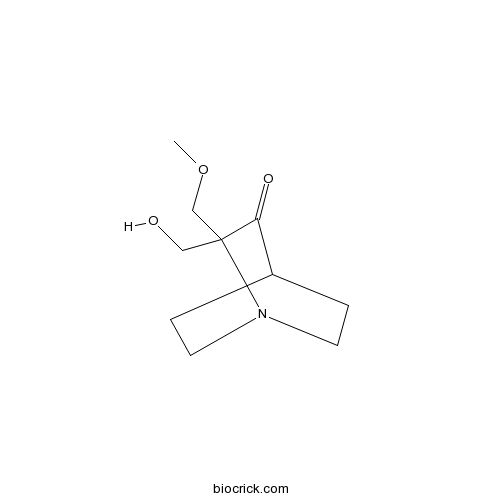
PRIMA-1MET
PRIMA-1Met restores wild-type conformation and function to mutant p53, and triggers apoptosis in tumor cells. PRIMA-1Met also targets the selenoprotein thioredoxin reductase 1 (TrxR1), a key regulator of cellular redox balance.
-
BCC6131
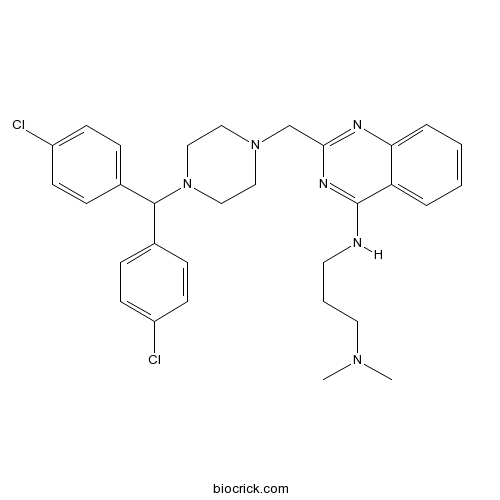
SCH 529074
922150-11-6
-
BCC5900
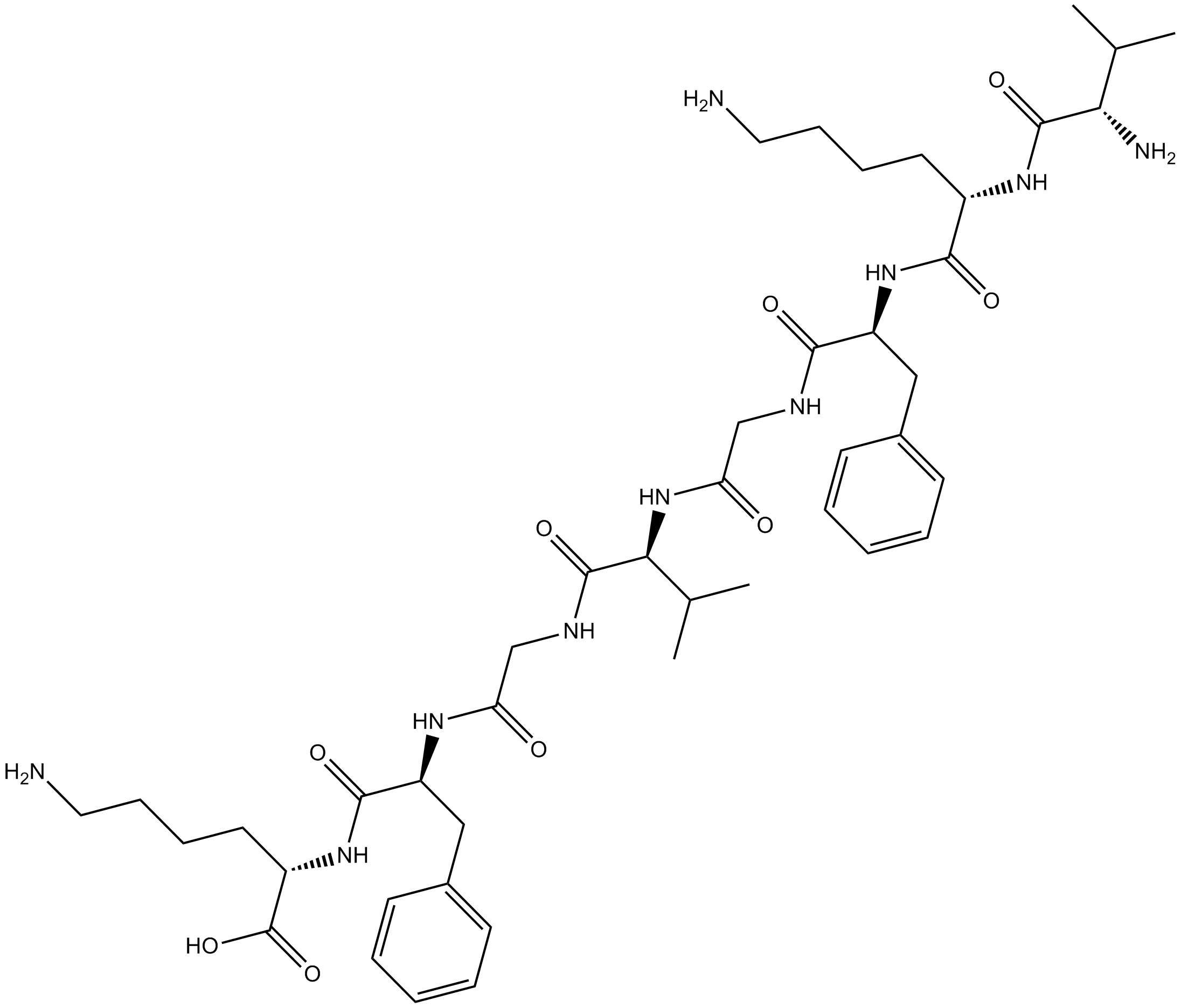
CALP3
CALP3, a Ca2+-like peptide, is a potent Ca2+ channel blocker that activates EF hand motifs of Ca2+-binding proteins. CALP3 can functionally mimic increased [Ca2+]i by modulating the activity of Calmodulin (CaM), Ca2+ channels and pumps. CALP3 has the potential in controlling apoptosis in diseases such as AIDS or neuronal loss due to ischemia.
-
BCC6625
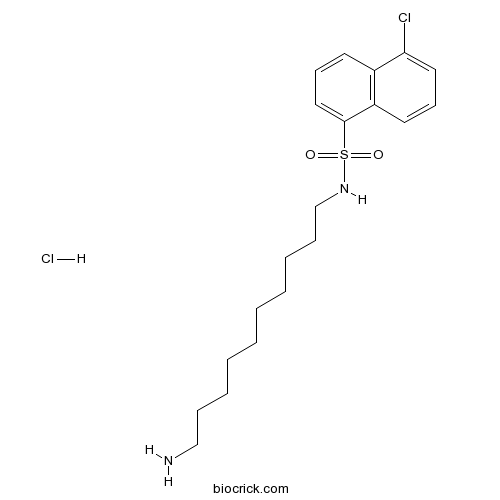
A-7 hydrochloride
79127-24-5
-
BCC7410
Calmidazolium chloride
Calmidazolium chloride (R 24571) is a calmodulin (CaMK) antagonist, antagonizing CaM-dependent phosphodiesterase and calmodulin-induced activation of erythrocyte Ca2+-transporting ATPase with IC50s of 0.15 and 0.35 μM, respectively. Also in anti-cancer research. Calmidazolium binds to CaMK with a Kd of 3 nM.

-
BCC5898
CALP2
261969-04-4

-
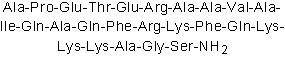
BCC5690
Camstatin
1002295-95-5
-
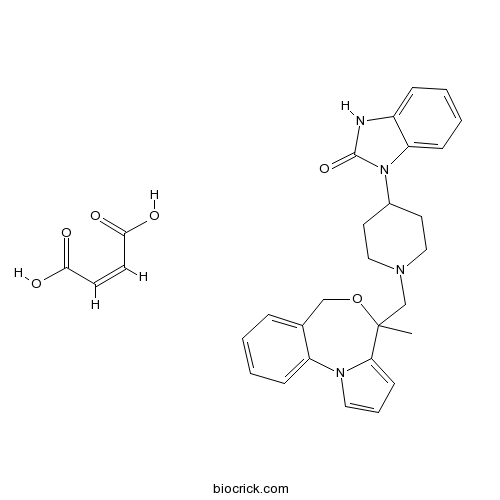
BCC7303
CGS 9343B
Zaldaride maleate (CGS-9343B) is a potent, orally active and selective inhibitor of calmodulin. Zaldaride maleate (CGS-9343B) inhibits CaM (calmodulin)-stimulated cAMP phosphodiesterase activity, with an IC50 of 3.3 nM. Zaldaride maleate (CGS-9343B) prevents estrogen-induced transcription activation by ER, reversibly blocks voltage-activated Na+, Ca2+ and K+ currents in PC12 cells and inhibits nAChR.
-
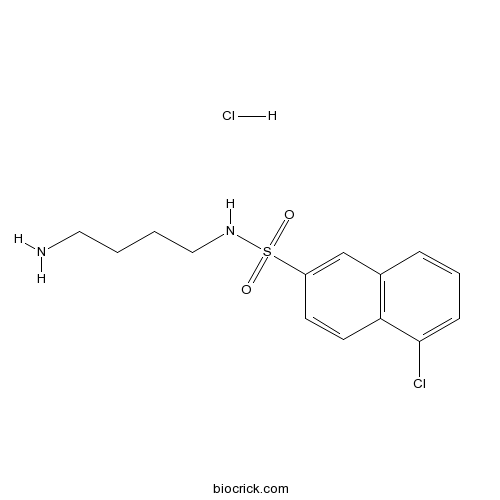
BCC6620
W-13 hydrochloride
88519-57-7
-
BCC6621
W-5 hydrochloride
61714-25-8