Neuroscience Research
Neuroscience is the study of the nervous system - one of the major mammalian systems responsible for sustaining life. The central nervous system (CNS) and peripheral nervous system (PNS) work in concert to coordinate basic functions such as moving and breathing, as well as 'higher order' functions including thought, speech and emotion.
Neuroscience Research Products Areas
- Stress and Anxiety Research (392)
- Nociception (957)
- Neurotransmission (892)
- Neuropeptides (43)
- Neural Development (795)
- Memory, Learning and Cognition (746)
- Blood-Brain Barrier (119)
- Stroke Research (665)
- Sleep Research (267)
- Schizophrenia Research (709)
- Parkinson's Disease Research (752)
- Huntington's Disease Research (465)
- Epilepsy Research (560)
- Depression Research (631)
- Alzheimer's Disease Research (399)
- Addiction Research (509)
- Multiple Sclerosis (419)
Products for Neuroscience Research - Page 8
- Cat.No. Product Name Information/Activity
-
BCC2344
L-685,458
L-685458 is a potent inhibitor of Amyloid β-Protein precursor γ-secretase activity with IC50 of 17 nM, shows greater than 50-100-fold selectivity over other aspartyl proteases tested.

-
BCC2345
MRK 560
MRK-560 is a potent, orally bioavailable and brain-penetrant γ-secretase inhibitor.

-
BCC7351
Ro 90-7501
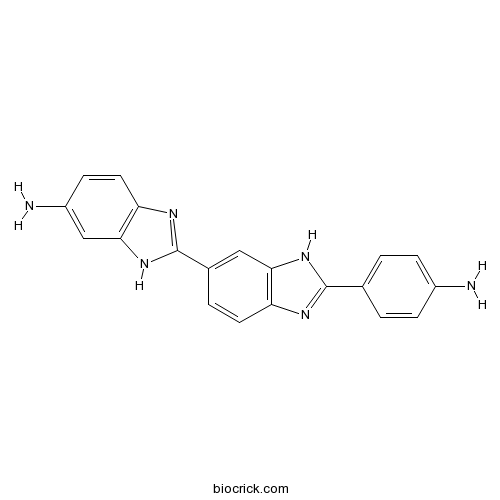
Ro 90-7501 is an amyloid β42 (Aβ42) fibril assembly inhibitor that reduces Aβ42-induced cytotoxicity (EC50 of 2 μM). Ro 90-7501 inhibits ATM phosphorylation and DNA repair. RO 90-7501 selectively enhances toll-like receptor 3 (TLR3) and RIG-I-like receptor (RLR) ligand-induced IFN-β gene expression and antiviral response. Ro 90-7501 also inhibits protein phosphatase 5 (PP5) in a TPR-dependent manner. Ro 90-7501 has significant radiosensitizing effects on cervical cancer cells.
-
BCN5763
Tanshinone IIA
Tanshinone IIA (Tan IIA) is one of the main fat-soluble compositions in the root of red-rooted salvia. Tanshinone IIA may suppress angiogenesis by targeting the protein kinase domains of VEGF/VEGFR2.

-
BCC1044
Amyloid Beta-Peptide (12-28) (human)
β-amyloid (12-28) is a peptide fragment of β-amyloid protein (β1-42). β1–42 a 42 amino acid protein , is the major component of senile plaque cores. β-amyloid (12-28) shows aggregation properties. β-amyloid (12-28) has the potential for Alzheimer’s disease research.

-
BCC1045
Amyloid Beta-Peptide (1-40) (human)
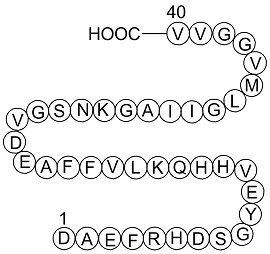
β-Amyloid (1-40) is a primary protein in plaques found in the brains of patients with Alzheimer's disease.
-
BCC1027
Amyloid Beta-peptide (25-35) (human)
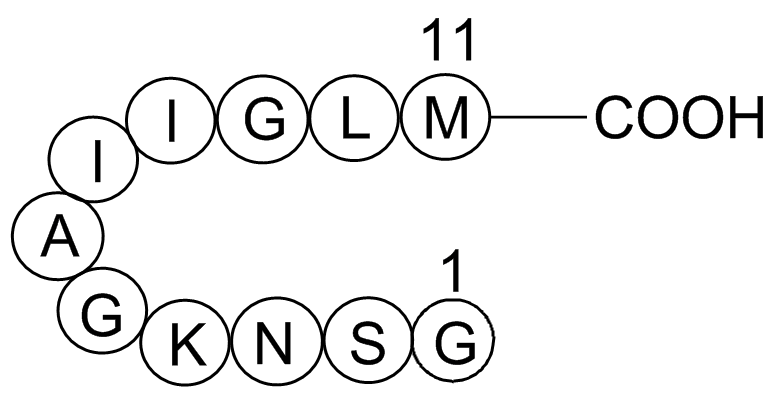
Amyloid beta-peptide(25-35) is the fragment Aβ(25-35) of the Alzheimer's amyloid β-peptide, has shown neurotoxic activities in cultured cells.
-
BCC7821
Colivelin
Colivelin is a brain penetrant neuroprotective peptide and a potent activator of STAT3, suppresses neuronal death by activating STAT3 in vitro. Colivelin exhibits long-term beneficial effects against neurotoxicity, Aβ deposition, neuronal apoptosis, and synaptic plasticity deficits in neurodegenerative disease. Colivelin has the potential for the treatment of alzheimer's disease and ischemic brain injury

-
BCC6293
CRANAD 2
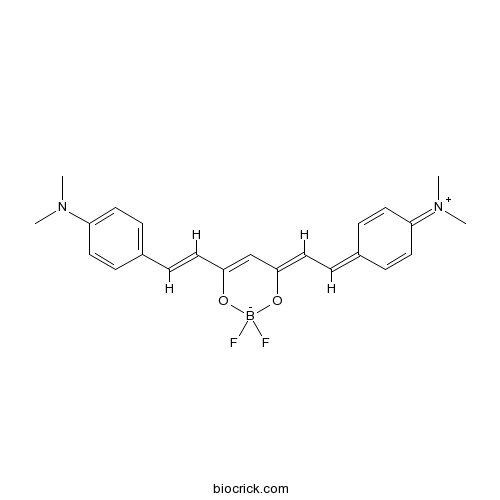
1193447-34-5
-
BCN5304
Cryptotanshinone
Cryptotanshinone is a natural compound extracted from the root of Salvia miltiorrhiza Bunge that shows antitumor activities. Cryptotanshinone inhibits STAT3 with an IC50 of 4.6 μM.