Depression Research
Major depressive disorder, often referred to as major depression, is a heterogenous condition with complex and diverse neurobiological etiologies. Depression is characterized by a triad of symptoms: low or depressed mood, anhedonia and low energy or fatigue. Approximately 15% of the population in developed countries has been affected by depression in their lifetime and the chance of developing depression is twice as high in women. 40-50% of depressive causes are inheritable (genes as yet unidentified) and the remaining 50-60% of causes are caused by environmental stressors.
Depression Research Products Targets
- FGFR (5)
- Voltage-gated Calcium Channel (CaV) (38)
- Others (13)
- Glucocorticoid Receptor (9)
- Nucleoside Transporter (5)
- Glycine Transporter (6)
- GABA (10)
- Cannabinoid Transporter (10)
- Acetylcholine Transporter (1)
- D4 Receptor (12)
- 5-HT7 Receptor (11)
- 5-HT6 Receptor (14)
- 5-ht5 Receptor (2)
- 5-HT4 Receptor (17)
- NK2 Receptor (7)
- NK1 Receptor (15)
- Glutamate (Metabotropic) Group III Receptor (26)
- Glutamate (Metabotropic) Group II Receptor (33)
- Glutamate (Metabotropic) Group I Receptor (54)
- AMPA Receptor (45)
- D3 Receptor (12)
- NK3 Receptor (5)
- Vesicular Monoamine Transporter (4)
- NMDA Receptor (87)
- Kainate Receptor (22)
- D2 Receptor (14)
- D1 and D5 Receptor (16)
- Trk Receptor (13)
- Trace Amine 1 Receptor (2)
- Glutamate Transporter (18)
- Dopamine Transporter (20)
- CRF2 Receptor (3)
- CRF1 Receptor (5)
- Adrenergic Transporter (23)
- 5-HT Transporter (30)
- Vasopressin Receptor (6)
- Monoamine Oxidase (10)
- Adrenergic α2 Receptor (33)
- Adrenergic α1 Receptor (22)
- Adrenergic β3 Receptor (12)
- Adrenergic β2 Receptor (6)
- Adrenergic β1 Receptor (7)
Products for Depression Research
- Cat.No. Product Name Information/Activity
-
BCC2522
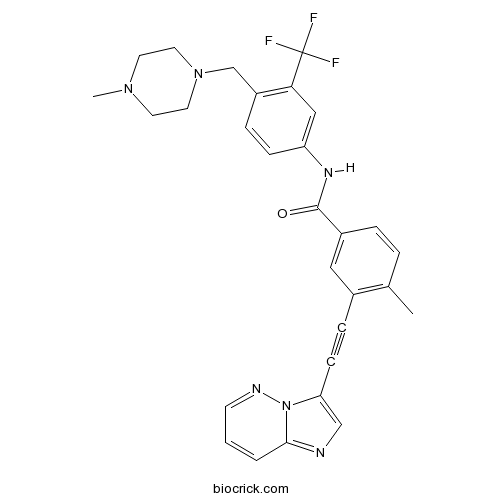
Ponatinib (AP24534)
Ponatinib (AP24534) is an orally active multi-targeted kinase inhibitor with IC50s of 0.37 nM, 1.1 nM, 1.5 nM, 2.2 nM, and 5.4 nM for Abl, PDGFRα, VEGFR2, FGFR1, and Src, respectively.
-
BCC7765
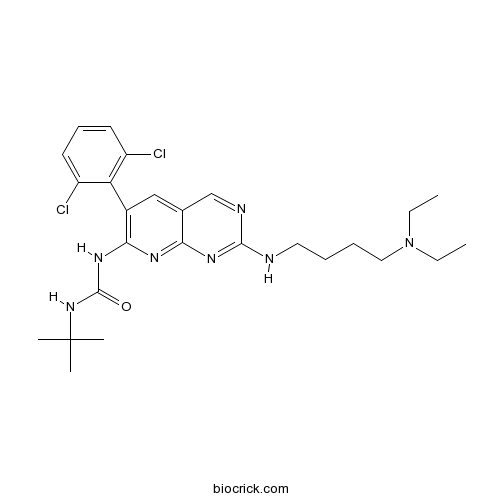
PD 161570
PD-161570 is a potent and ATP-competitive human FGF-1 receptor inhibitor with an IC50 of 39.9 nM and a Ki of 42 nM. PD-161570 also inhibits the PDGFR, EGFR and c-Src tyrosine kinases with IC50 values of 310 nM, 240 nM, and 44 nM, respectively. PD-161570 inhibits PDGF-stimulated autophosphorylation and FGF-1 receptor phosphorylation with IC50s of 450 nM and 622 nM, respectively.
-
BCC3662
PD 173074
PD173074 is a potent FGFR1 inhibitor with an IC50 of 25 nM and also inhibits VEGFR2 with an IC50 of 100-200 nM, showing 1000-fold selectivity for FGFR1 over PDGFR and c-Src.

-
BCC1970
SU 5402
SU 5402 is a potent multi-targeted receptor tyrosine kinase inhibitor with IC50 of 20 nM, 30 nM, and 510 nM for VEGFR2, FGFR1, and PDGFRβ, respectively.

-
BCC2508
TSU-68 (SU6668,Orantinib)
Orantinib (SU6668; TSU-68) is a multi-targeted receptor tyrosine kinase inhibitor with Kis of 2.1 μM, 8 nM and 1.2 μM for Flt-1, PDGFRβ and FGFR1, respectively.

-
BCN2203
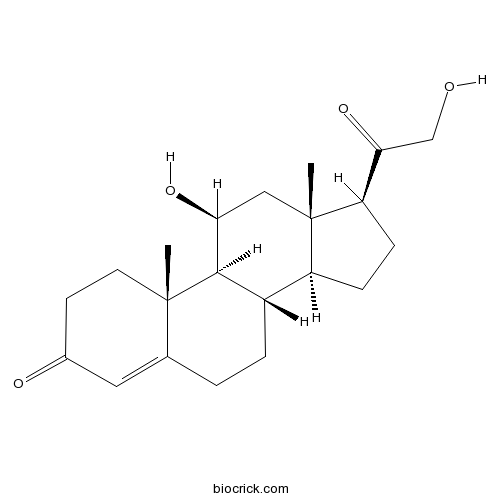
Corticosterone
Corticosterone is an adrenocortical steroid that has modest but significant activities as a mineralocorticoid and a glucocorticoid.
-
BCC4907
Fluticasone propionate
Fluticasone propionate is a high affinity, selective GR (glucocorticoid receptor) agonist which is derived from fluticasone used to treat asthma and allergic rhinitis.

-
BCC6115
GSK 9027
1229096-88-1

-
BCC2256
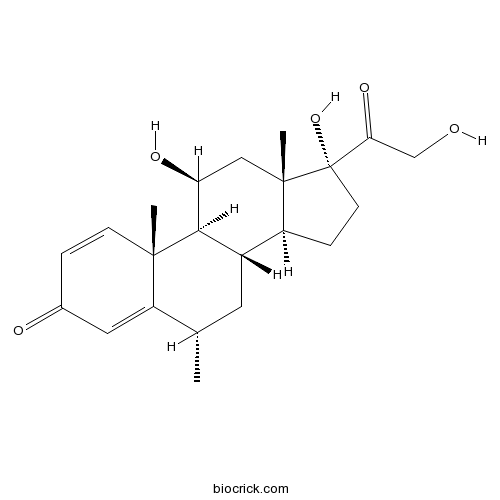
Methylprednisolone
Methylprednisolone is a synthetic corticosteroid with anti-inflammatory and immunomodulating properties.
-
BCC4801
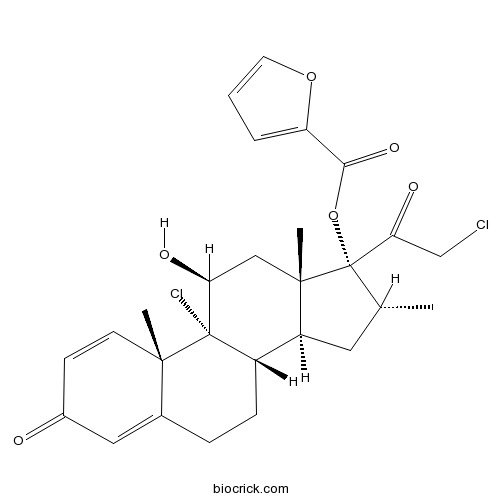
Mometasone furoate
Mometasone furoate, prodrug of the free form mometasone, is a agent with high affinity for the glucocorticoid receptor.