Depression Research
Major depressive disorder, often referred to as major depression, is a heterogenous condition with complex and diverse neurobiological etiologies. Depression is characterized by a triad of symptoms: low or depressed mood, anhedonia and low energy or fatigue. Approximately 15% of the population in developed countries has been affected by depression in their lifetime and the chance of developing depression is twice as high in women. 40-50% of depressive causes are inheritable (genes as yet unidentified) and the remaining 50-60% of causes are caused by environmental stressors.
Depression Research Products Targets
- FGFR (5)
- Voltage-gated Calcium Channel (CaV) (38)
- Others (13)
- Glucocorticoid Receptor (9)
- Nucleoside Transporter (5)
- Glycine Transporter (6)
- GABA (10)
- Cannabinoid Transporter (10)
- Acetylcholine Transporter (1)
- D4 Receptor (12)
- 5-HT7 Receptor (11)
- 5-HT6 Receptor (14)
- 5-ht5 Receptor (2)
- 5-HT4 Receptor (17)
- NK2 Receptor (7)
- NK1 Receptor (15)
- Glutamate (Metabotropic) Group III Receptor (26)
- Glutamate (Metabotropic) Group II Receptor (33)
- Glutamate (Metabotropic) Group I Receptor (54)
- AMPA Receptor (45)
- D3 Receptor (12)
- NK3 Receptor (5)
- Vesicular Monoamine Transporter (4)
- NMDA Receptor (87)
- Kainate Receptor (22)
- D2 Receptor (14)
- D1 and D5 Receptor (16)
- Trk Receptor (13)
- Trace Amine 1 Receptor (2)
- Glutamate Transporter (18)
- Dopamine Transporter (20)
- CRF2 Receptor (3)
- CRF1 Receptor (5)
- Adrenergic Transporter (23)
- 5-HT Transporter (30)
- Vasopressin Receptor (6)
- Monoamine Oxidase (10)
- Adrenergic α2 Receptor (33)
- Adrenergic α1 Receptor (22)
- Adrenergic β3 Receptor (12)
- Adrenergic β2 Receptor (6)
- Adrenergic β1 Receptor (7)
Products for Depression Research - Page 3
- Cat.No. Product Name Information/Activity
-
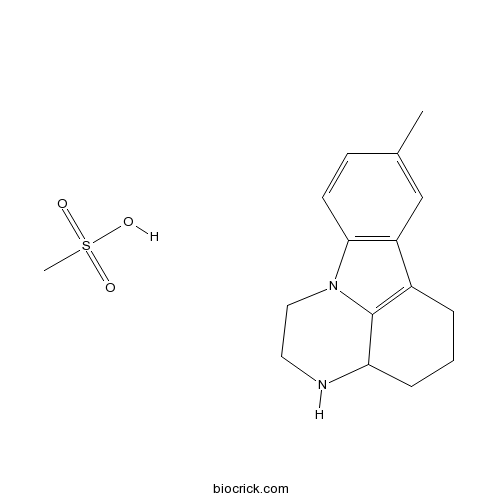
BCC6764
Pirlindole mesylate
207572-66-5
-
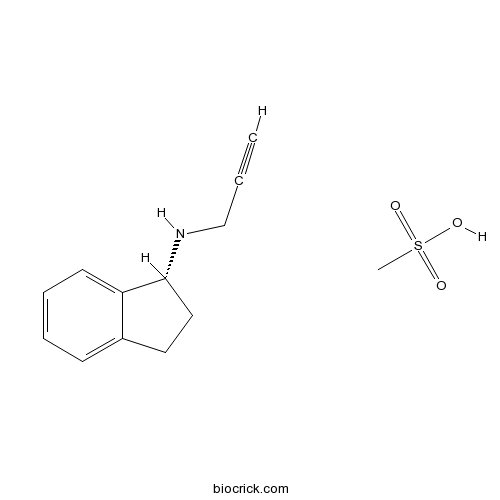
BCN2166
Rasagiline mesylate
Rasagiline mesylate is a new MAO-B inhibitor for the treatment of idiopathic Parkinson's disease.
-
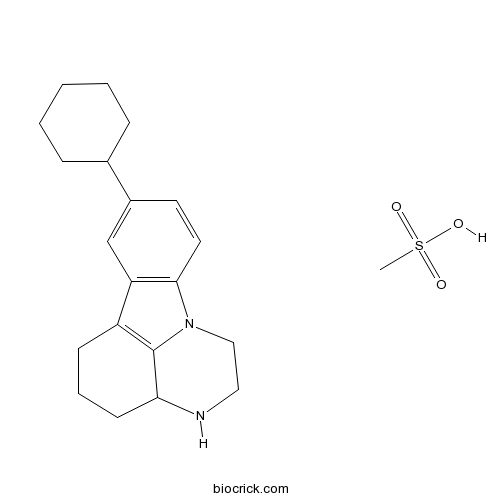
BCC6763
Tetrindole mesylate
170964-68-8
-
BCC7791
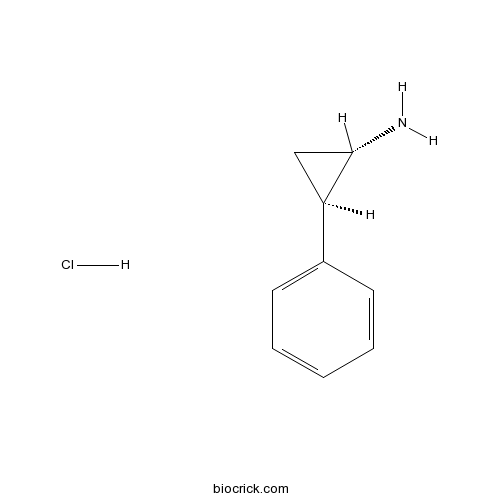
Tranylcypromine hydrochloride
Tranylcypromine is a monoamine oxidase inhibitor, which inhibits CYP2A6 with Ki of 0.08 μM and 0.2 μM in cDNA-expressing microsomes and Human Liver Microsomes, respectively.
-
BCN2195
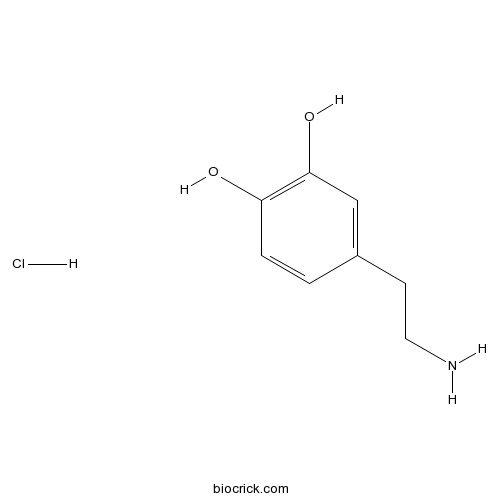
Dopamine hydrochloride
Dopamine HCl is a catecholamine neurotransmitter present in a wide variety of animals,And a dopamine D1-5 receptors agonist.
-
BCC4814
(+,-)-Octopamine HCl
Octopamine hydrochloride ((±)-p-Octopamine hydrochlorid) is an endogenous biogenic amine that is closely related to norepinephrine, and has effects on the adrenergic and dopaminergic systems.

-
BCC5033
Amitriptyline HCl
Amitriptyline hydrochloride is a dibenzocycloheptene-derivative tricyclic antidepressant (TCA).

-
BCC5944
BDNF (human)
218441-99-7

-
BCC6072
7,8-Dihydroxyflavone
7,8-Dihydroxyflavone is a potent and selective TrkB agonist that mimics the physiological actions of Brain-derived neurotrophic factor (BDNF). Displays therapeutic efficacy toward various neurological diseases.

-
BCC6239
LM 22A4
LM22A-4 is a specific agonist of tyrosine kinase receptor B, used for neurological disease research.