Parkinson's Disease Research
Parkinson's disease (PD) is a degenerative disease of the central nervous system that often impairs motor skills, speech, and other functions. Symptoms of the disease include resting tremor, bradykinesia and rigidity. The primary symptoms are the result of decreased stimulation of the motor cortex by the basal ganglia, normally caused by the insufficient formation and action of dopamine, which is produced in the dopaminergic neurons of the brain. Symptoms of the disease appear once 50-80% of dopamine neurons have died. Parkinson's disease is both chronic and progressive.
Parkinson's Disease Research Products Targets
- Adenosine A2B Receptor (7)
- Adenosine A2A Receptor (11)
- Caspase (9)
- Bcl-2 Family (13)
- Voltage-gated Calcium Channel (CaV) (38)
- GABAB Receptor (28)
- Others (23)
- Cyclooxygenase (24)
- D4 Receptor (12)
- STIM-Orai Channel (4)
- Ryanodine Receptor (6)
- Hsp90 (10)
- Hsp70 (4)
- 5-HT7 Receptor (11)
- 5-HT6 Receptor (14)
- 5-ht5 Receptor (2)
- 5-HT4 Receptor (17)
- Glutamate (Metabotropic) Group III Receptor (26)
- Glutamate (Metabotropic) Group II Receptor (33)
- Glutamate (Metabotropic) Group I Receptor (54)
- AMPA Receptor (45)
- GABAA-ρ Receptor (8)
- GABAA Receptor (66)
- Nicotinic (α7) Receptor (25)
- Nicotinic (α4β2) Receptor (14)
- D3 Receptor (12)
- LRRK2 (4)
- Catechol O-Methyltransferase (3)
- Vesicular Monoamine Transporter (4)
- NMDA Receptor (87)
- Kainate Receptor (22)
- IP3 Receptor (2)
- D2 Receptor (14)
- D1 and D5 Receptor (16)
- Trk Receptor (13)
- Trace Amine 1 Receptor (2)
- Adenosine A3 Receptor (8)
- Adenosine A1 Receptor (12)
- Monoamine Oxidase (10)
- M5 Receptor (2)
- M4 Receptor (3)
- M3 Receptor (4)
- M2 Receptor (5)
- M1 Receptor (8)
- Adrenergic α2 Receptor (33)
- Adrenergic α1 Receptor (22)
- Adrenergic β3 Receptor (12)
- Adrenergic β2 Receptor (6)
- Adrenergic β1 Receptor (7)
- Protein Arginine Methyltransferase (2)
Products for Parkinson's Disease Research - Page 46
- Cat.No. Product Name Information/Activity
-
BCC6555
(-)-Bicuculline methobromide
(-)-Bicuculline methobromide (l-Bicuculline methobromide) is a potent GABAA receptor antagonist. (-)-Bicuculline methobromide blocks afterhyperpolarizations (AHPs) mediated by Ca2+-activated K+ channels in various types of neurons.

-
BCN3763
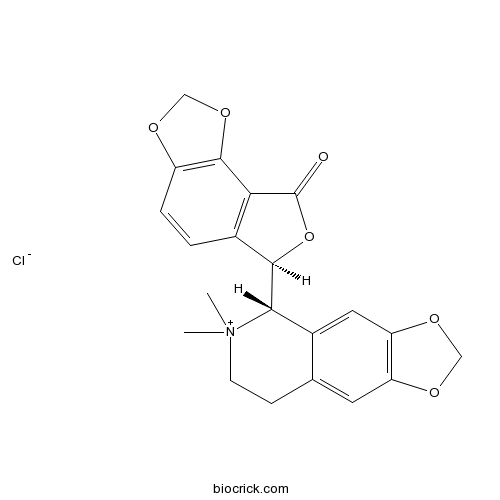
(-)-Bicuculline methochloride
(-)-Bicuculline methochloride (l-Bicuculline methochloride) is a potent GABAA receptor antagonist. (-)-Bicuculline methochloride blocks afterhyperpolarizations (AHPs) mediated by Ca2+-activated K+ channels in various types of neurons.
-
BCN1238
(+)-Bicuculline
(+)-Bicuculline is a light-sensitive competitive antagonist of GABA-A receptor.

-
BCC3782
Furosemide
Furosemide is a loop diuretic inhibitor of Na+/2Cl-/K+ (NKCC) cotransporter of which used in the treatment of congestive heart failure and edema.

-
BCC6193
PHP 501 trifluoroacetate
1236105-75-1

-
BCC5705
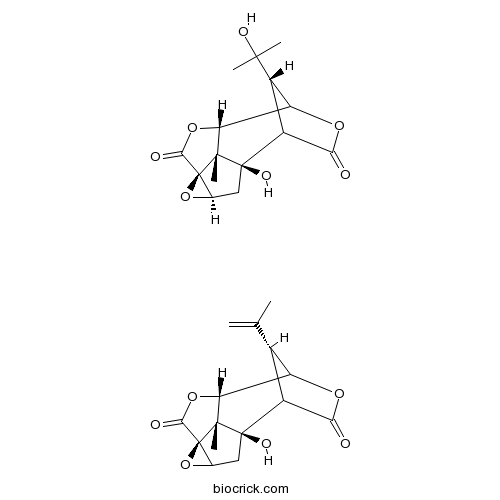
Picrotoxin
Picrotoxin (Cocculin) is a natural noncompetitive antagonist of GABAA receptor, binds to the interface pocket on the GABAR. Picrotoxin (Cocculin) causes overstimulation and induces convulsions.
-
BCC7266
SCS
3232-36-8

-
BCC6997
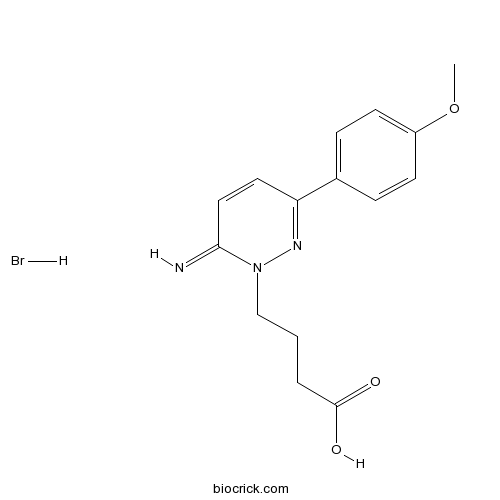
SR 95531 hydrobromide
Gabazine is a selective and competitive antagonist of GABAA receptor, with an IC50 of ~0.2 μM for GABA receptor.
-
BCC7510
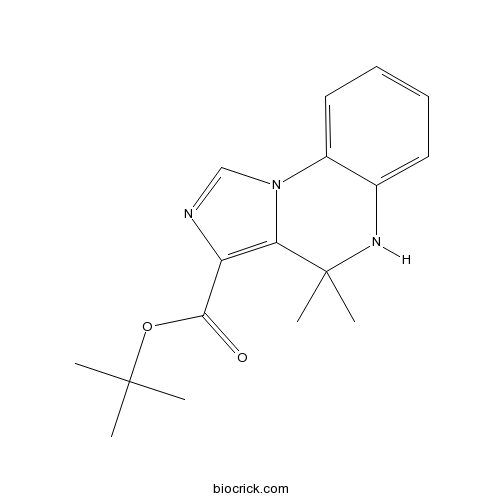
TB 21007
207306-50-1
-
BCC7471
U 93631
U93631 is a GABAA receptor ligand of novel chemical structure with IC50 of 100 nM,and has been shown to induce a rapid, time-dependent decay of GABA-induced whole-cell Cl-currents in recombinant GABAA receptors.