
Products for Anthraquinones
-
BCN7036
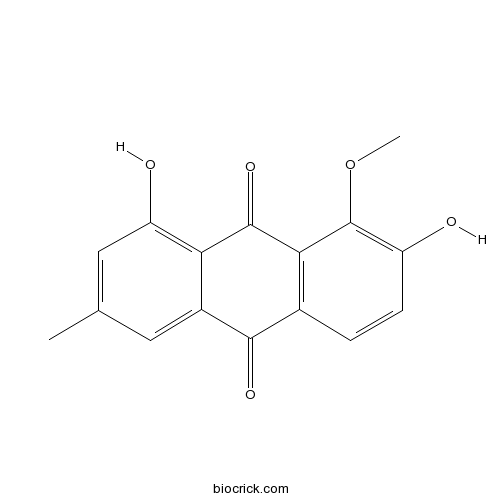
1-O-Methylnataloe-emodin
Botanical source: The herbs of Aloe vera
(CAS NO.:
103392-51-4)
-
BCN6349
Rhein-8-glucoside calcium salt
Botanical source: The roots of Rheum palmatum L.
(CAS NO.:
113443-70-2)

-
BCN6047
Rubiadin
Rubiadin is a dihydroxy anthraquinone isolated from Rubia cordifolia. Rubiadin has a potent antixidant activity.
(CAS NO.:
117-02-2)

-
BCN6048
Dantron
Danthron is a natural product extracted from the traditional Chinese medicine rhubarb. Danthron functions in regulating glucose and lipid metabolism by activating AMPK.
(CAS NO.:
117-10-2)

-
BCN3451
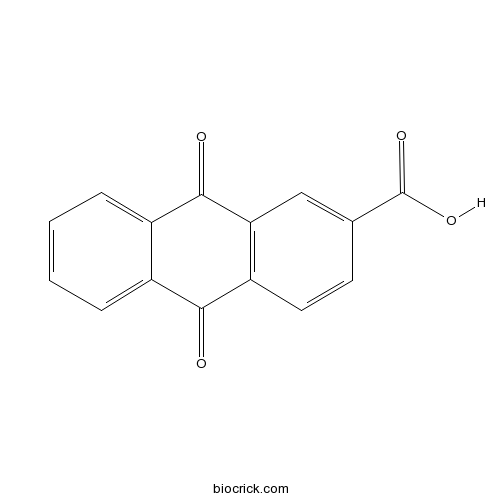
2-Anthraquinonecarboxylic acid
Anthraquinone-2-carboxylic acid is a major anthraquinone isolated from Brazilian taheebo, with anti-inflammatory activity and antinociceptive.
(CAS NO.:
117-78-2)
-
BCN4726
Floribundone 1
Botanical source: The herbs of Senna septemtrionalis
(CAS NO.:
118555-84-3)

-
BCN3397
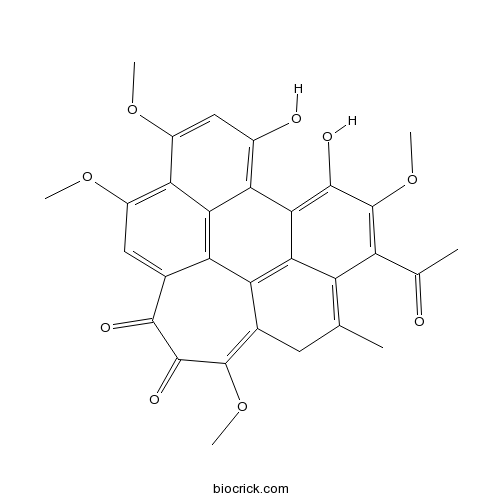
Hypocrellin B
Hypocrellin B, a pigment isolated from the fungi Hypocrella bambusae and Shiraia bambusicola, is an apoptosis inducer. Hypocrellin B can be used as a photosensitizer for photodynamic therapy of cancer. Hypocrellin B also has antimicrobial and antileishmanial activities.
(CAS NO.:
123940-54-5)
-
BCN6541
Carminic acid
Botanical source: The cochineal insects (Dactylopius spp.)
(CAS NO.:
1260-17-9)

-
BCN1003
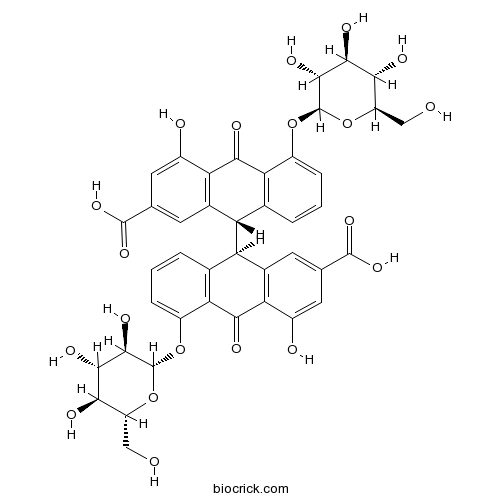
Sennoside B
Sennoside B is an anthraquinone glycoside, found in large quantities in leaves and pods of Senna (Cassia angustifolia). Sennoside B can inhibit PDGF-stimulated cell proliferation by binding to PDGF-BB and its receptor and by down-regulating the PDGFR-beta signaling pathway.
(CAS NO.:
128-57-4)
-
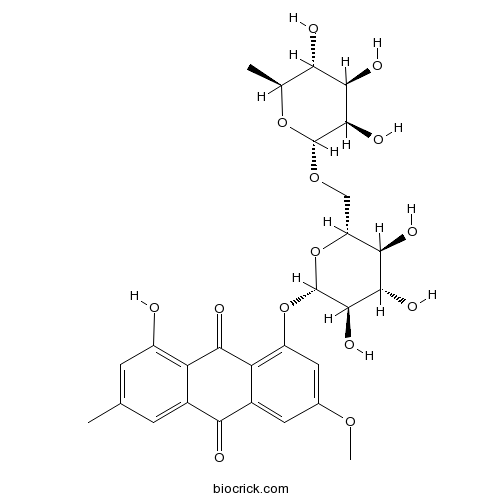
BCN7324
Physcion 8-O-rutinoside
Botanical source: The barks of Rhamnus libanoticus.
(CAS NO.:
129393-21-1)
-
BCN6175
Chrysophanol 8-O-glucoside
Chrysophanol 8-O-glucoside, from the roots of Rumex acetosa, shows moderate elastase inhibition activity.
(CAS NO.:
13241-28-6)

-
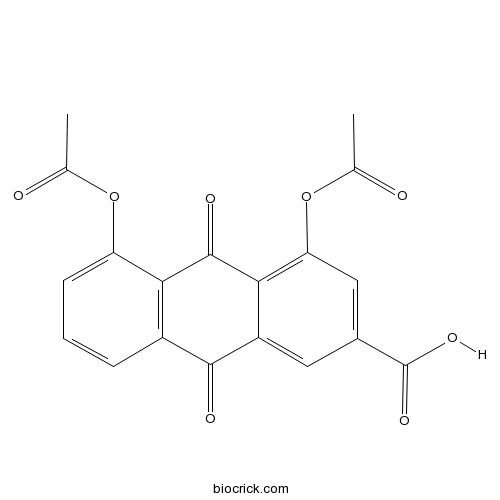
BCN2291
Diacerein
Diacerein (Diacerhein), a interleukin-1 beta inhibitor, is a slow-acting medicine of the class anthraquinone used to treat joint diseases.
(CAS NO.:
13739-02-1)
-
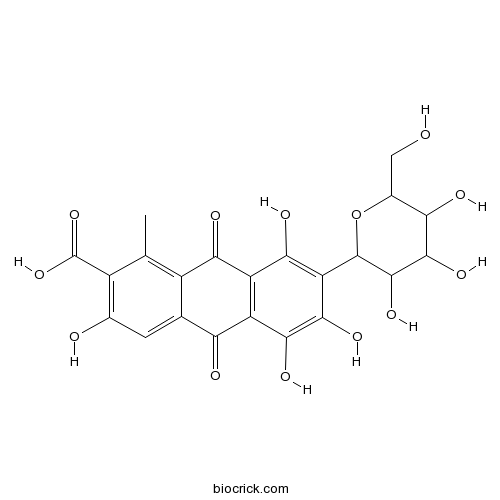
BCN2223
Carmine
Botanical source:
(CAS NO.:
1390-65-4)
-
BCN1042
Aloin A
Aloin(Aloin-A; Barbaloin-A) is a natural antitumor anthraquinone glycoside with iron chelating and non-atherogenic activities.
(CAS NO.:
1415-73-2)

-
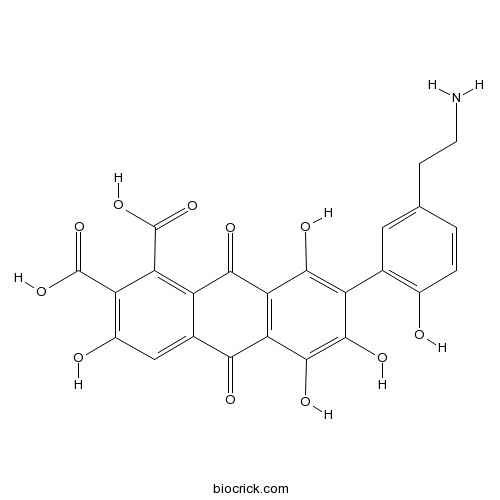
BCN1807
Laccaic acid E
Botanical source:
(CAS NO.:
14597-16-1)
-
BCN3398
Hypocrellin C
Hypocrellin C is a pigment isolated from the fungi Hypocrella bambusae and Shiraia bambusicola.
(CAS NO.:
149457-83-0)

-
BCN4694
Torososide A
Botanical source: The leaves of Cassia torosa
(CAS NO.:
165689-32-7)

-
BCN1108
2-Hydroxy-3-methylanthraquinone
Botanical source: The herbs of Scutellaria barbata D. Don
(CAS NO.:
17241-40-6)

-
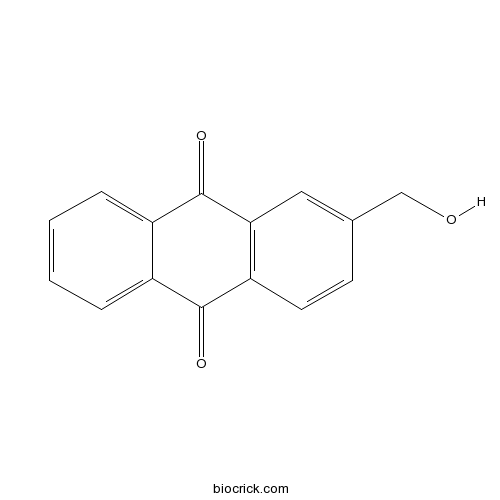
BCN3090
2-(Hydroxymethyl)anthraquinone
Botanical source:
(CAS NO.:
17241-59-7)
-
BCN1122
Xanthorin
Botanical source: The seeds of Cassia obtusifolia
(CAS NO.:
17526-15-7)

-
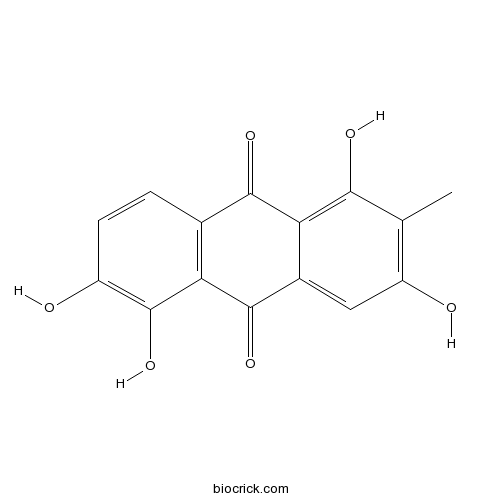
BCN3126
3-hydroxymorindone
Botanical source: The herbs of Morinda citrifolia
(CAS NO.:
80368-74-7)
-
BCN3469
9,10-Anthracenedione
Botanical source: The roots of Rubia cordifolia L.
(CAS NO.:
19852-76-7)

-
BCN6329
Emodin-8-beta-D-glucoside
Emodin-8-glucoside is an anthraquinone derivative isolated from Aloe vera, binds to minor groove of DNA.
(CAS NO.:
23313-21-5)

-
BCN8170
Physcion 1-glucoside
Botanical source: The root and rhizome of Rheum palmatum L
(CAS NO.:
23451-01-6)

-
BCN3450
Digiferruginol
Botanical source: The roots of Rubia cordifolia L.
(CAS NO.:
24094-45-9)


BioCrick BioTech
88# Keyuan road,Hi-Tech Zone
Chengdu, Sichuan 610042, PRC
Email: info@biocrick.com
Tel:86-28-8543-3893


88# Keyuan road,Hi-Tech Zone
Chengdu, Sichuan 610042, PRC
Email: info@biocrick.com
Tel:86-28-8543-3893
Follow us:
BioCrick is one of the biggest natural products manufacturers in Asia
Our products can be used as reference standards,inhibitors in pharmacological research
Our MISSION is to provide Best-in-class High-purity natural compounds to researchers all around the world

© 2007-2026 BioCrick BioTech. All rights reserved. sitemap