
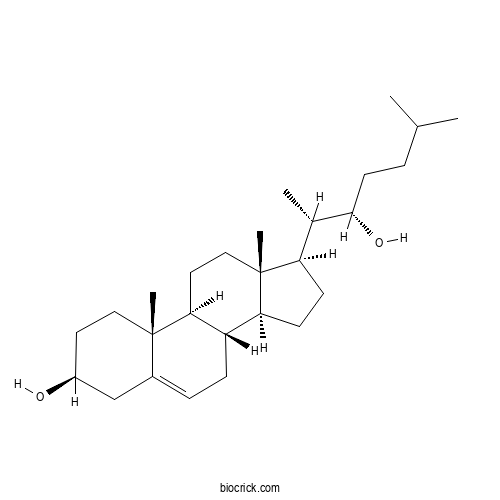
22(S)-HydroxycholesterolCAS# 22348-64-7 |
| Cas No. | 22348-64-7 | SDF | File under preparation. |
| PubChem ID | 168038.0 | Appearance | Solid |
| Formula | C27H46O2 | M.Wt | 402.7 |
| Type of Compound | N/A | Storage | Desiccate at -20°C |
| Solubility | Soluble in Chloroform,Dichloromethane,Ethyl Acetate,DMSO,Acetone,etc. | ||
| Chemical Name | (3S,8S,9S,10R,13S,14S,17R)-17-[(2S,3S)-3-hydroxy-6-methylheptan-2-yl]-10,13-dimethyl-2,3,4,7,8,9,11,12,14,15,16,17-dodecahydro-1H-cyclopenta[a]phenanthren-3-ol | ||
| SMILES | CC(C)CCC(C(C)C1CCC2C1(CCC3C2CC=C4C3(CCC(C4)O)C)C)O | ||
| Standard InChIKey | RZPAXNJLEKLXNO-QUOSNDFLSA-N | ||
| Standard InChI | InChI=1S/C27H46O2/c1-17(2)6-11-25(29)18(3)22-9-10-23-21-8-7-19-16-20(28)12-14-26(19,4)24(21)13-15-27(22,23)5/h7,17-18,20-25,28-29H,6,8-16H2,1-5H3/t18-,20-,21-,22+,23-,24-,25-,26-,27+/m0/s1 | ||
| General tips | For obtaining a higher solubility , please warm the tube at 37 ℃ and shake it in the ultrasonic bath for a while.Stock solution can be stored below -20℃ for several months. We recommend that you prepare and use the solution on the same day. However, if the test schedule requires, the stock solutions can be prepared in advance, and the stock solution must be sealed and stored below -20℃. In general, the stock solution can be kept for several months. Before use, we recommend that you leave the vial at room temperature for at least an hour before opening it. |
||
| About Packaging | 1. The packaging of the product may be reversed during transportation, cause the high purity compounds to adhere to the neck or cap of the vial.Take the vail out of its packaging and shake gently until the compounds fall to the bottom of the vial. 2. For liquid products, please centrifuge at 500xg to gather the liquid to the bottom of the vial. 3. Try to avoid loss or contamination during the experiment. |
||
| Shipping Condition | Packaging according to customer requirements(5mg, 10mg, 20mg and more). Ship via FedEx, DHL, UPS, EMS or other couriers with RT, or blue ice upon request. | ||
Quality Control & MSDS
3D structure
Package In Stock

Number of papers citing our products


22(S)-Hydroxycholesterol Dilution Calculator
22(S)-Hydroxycholesterol Molarity Calculator
-
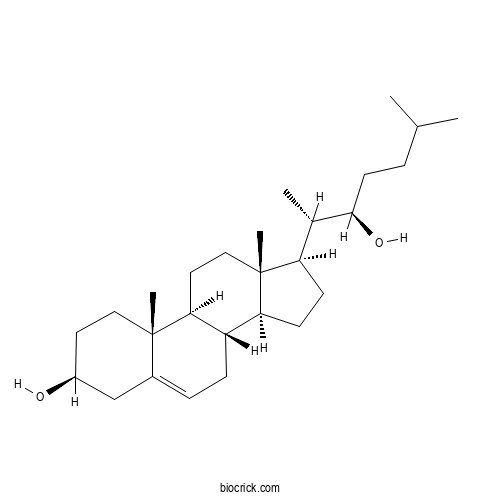 (22R)-HydroxycholesterolCatalog No.: BCX2463CAS No.: 17954-98-2
-
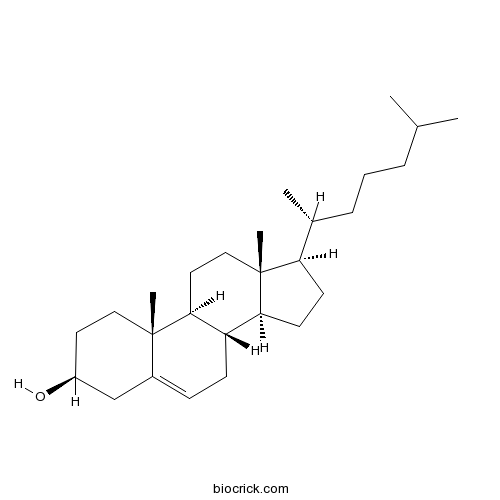 CholesterolCatalog No.: BCN2199CAS No.: 57-88-5
-
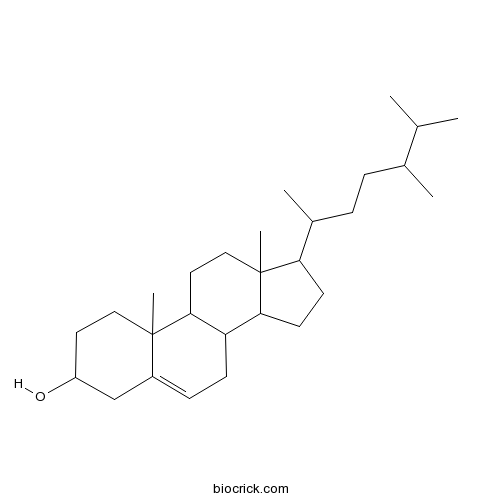 CampesterolCatalog No.: BCN3181CAS No.: 474-62-4
-
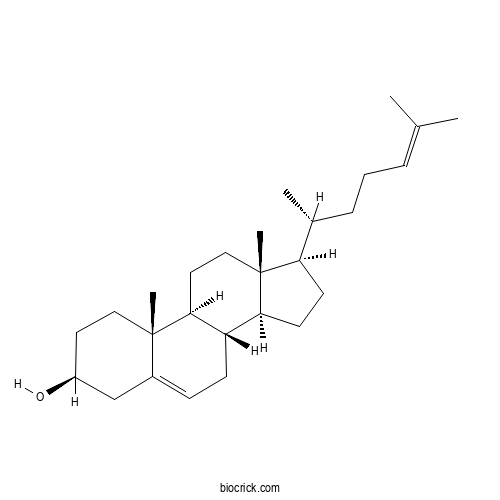 DesmosterolCatalog No.: BCX2361CAS No.: 313-04-2
-
 27-HydroxycholesterolCatalog No.: BCN2750CAS No.: 20380-11-4
-
 Delta 5-avenasterolCatalog No.: BCN3211CAS No.: 18472-36-1
-
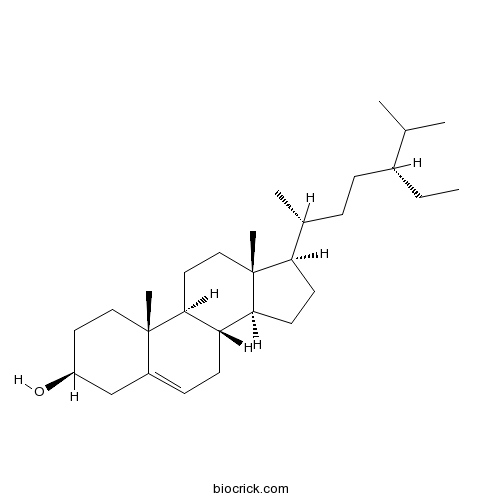 Beta-SitosterolCatalog No.: BCN1015CAS No.: 83-46-5
-
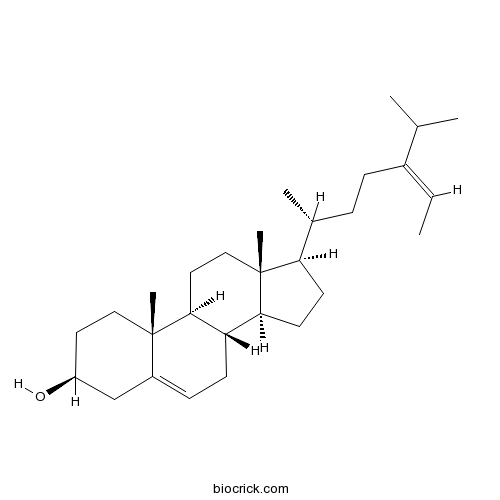 FucosterolCatalog No.: BCN6427CAS No.: 17605-67-3
-
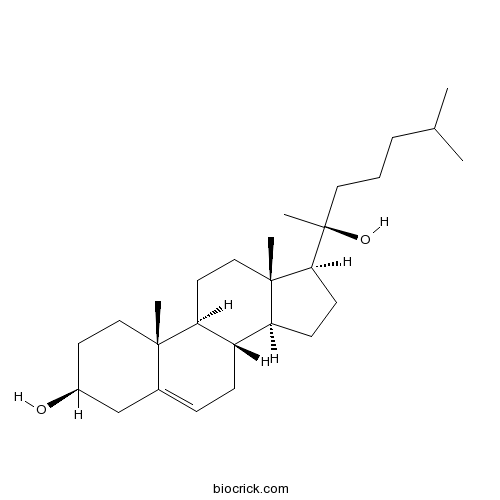 20(S)-HydroxycholesterolCatalog No.: BCC7937CAS No.: 516-72-3
-
 ClerosterolCatalog No.: BCN2905CAS No.: 2364-23-0
-
 BrassicasterolCatalog No.: BCN2613CAS No.: 474-67-9
-
 AndrostenediolCatalog No.: BCC8828CAS No.: 521-17-5
-
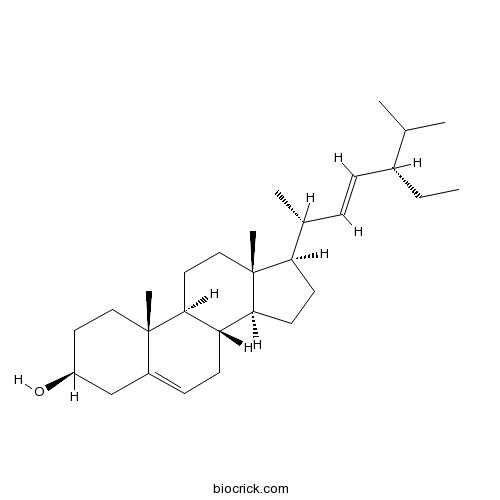 StigmasterolCatalog No.: BCN4376CAS No.: 83-48-7
| 1 mg | 5 mg | 10 mg | 20 mg | 25 mg | |
| 1 mM | 2.4832 mL | 12.4162 mL | 24.8324 mL | 49.6648 mL | 62.081 mL |
| 5 mM | 0.4966 mL | 2.4832 mL | 4.9665 mL | 9.933 mL | 12.4162 mL |
| 10 mM | 0.2483 mL | 1.2416 mL | 2.4832 mL | 4.9665 mL | 6.2081 mL |
| 50 mM | 0.0497 mL | 0.2483 mL | 0.4966 mL | 0.9933 mL | 1.2416 mL |
| 100 mM | 0.0248 mL | 0.1242 mL | 0.2483 mL | 0.4966 mL | 0.6208 mL |
| * Note: If you are in the process of experiment, it's necessary to make the dilution ratios of the samples. The dilution data above is only for reference. Normally, it's can get a better solubility within lower of Concentrations. | |||||
- Caffeoyl CoA
Catalog No.:BCX2365
CAS No.:53034-79-0
- CoA
Catalog No.:BCX2364
CAS No.:85-61-0
- Acetyl CoA
Catalog No.:BCX2363
CAS No.:102029-73-2
- 7-Dehydrocholestero
Catalog No.:BCX2362
CAS No.:434-16-2
- Desmosterol
Catalog No.:BCX2361
CAS No.:313-04-2
- 2,2-Dimethyl-2,3-dihydroquinazolin-4(1H )-one
Catalog No.:BCX2360
CAS No.:77726-78-4
- Uridine 5'-diphosphogalactose disodium
Catalog No.:BCX2359
CAS No.:137868-52-1
- Uridine 5'-diphosphoxylose disodium
Catalog No.:BCX2358
CAS No.:108320-89-4
- Adenosine triphosphate
Catalog No.:BCX2357
CAS No.:56-65-5
- Cisplatin
Catalog No.:BCX2356
CAS No.:15663-27-1
- Uridine 5'-diphosphogaluronic acid trisodium
Catalog No.:BCX2355
CAS No.:148407-07-2
- Phenylephrine
Catalog No.:BCX2354
CAS No.:59-42-7
- Feruloyl CoA
Catalog No.:BCX2367
CAS No.:30802-02-9
- Palmitoyl CoA
Catalog No.:BCX2368
CAS No.:188174-64-3
- Benzoyl CoA
Catalog No.:BCX2369
CAS No.:102185-37-5
- Cinnamoyl CoA
Catalog No.:BCX2370
CAS No.:76109-04-1
- Sinapoyl CoA
Catalog No.:BCX2371
CAS No.:54429-80-0
- NADPH tetrasodium salt
Catalog No.:BCX2372
CAS No.:2646-71-1
- p-Coumaroyl CoA
Catalog No.:BCX2373
CAS No.:119785-99-8
- L-Ascorbic-1-13C acid
Catalog No.:BCX2374
CAS No.:178101-88-7
- CoA sodium salt
Catalog No.:BCX2375
CAS No.:55672-92-9
- Flavin adenine dinucleotide disodium salt hydrate
Catalog No.:BCX2376
CAS No.:84366-81-4
- Diplomorphanin A
Catalog No.:BCX2377
CAS No.:1559076-44-6
- cis-Oxyresveratrol 3-O-glucoside
Catalog No.:BCX2378
CAS No.:2493206-35-0
Discovery of 22(S)-23-phenyl-24-norchol-5-en-3beta,22-diol (PFM046) as the first-in-class, steroidal, non-sulfated Liver X Receptor antagonist with anticancer activity.[Pubmed:39671877]
Eur J Med Chem. 2025 Feb 5;283:117136.
A plethora of studies have demonstrated the crucial role played by Liver X Receptors (LXRs) in cancer. However, whether LXRs activation results in pro-versus anti-tumor effects is still matter of debate. Recently, we have reported the ability of 22(S)-Hydroxycholesterol-3-sulfate (PFM037) to antagonize LXRalpha activity, and, at the same time, its capability to improve in-vivo anti-tumor immune responses. Herein we report the first study aimed at the definition of structure-activity relationships of PFM037. Successfully, we identified 22(S)-23-phenyl-24-norchol-5-en-3beta,22-diol (PFM046) as a more potent LXRs antagonist than PFM037. PFM046 showed a peculiar LXR target gene expression profile, being able, as expected for an antagonist, to suppress SCD1 and FASN expression, while surprisingly maintaining the ability to upregulate ABCA1 gene, as typical for an agonist. PFM046 showed a remarkable antitumor activity in two both in vitro-and in-vivo mouse models, highlighting the high potential of LXRs antagonists in oncological applications.
Oxysterols as promising small molecules for bone tissue engineering: Systematic review.[Pubmed:32908817]
World J Orthop. 2020 Jul 18;11(7):328-344.
BACKGROUND: Bone tissue engineering is an area of continued interest within orthopaedic surgery, as it promises to create implantable bone substitute materials that obviate the need for autologous bone graft. Recently, oxysterols - oxygenated derivatives of cholesterol - have been proposed as a novel class of osteoinductive small molecules for bone tissue engineering. Here, we present the first systematic review of the in vivo evidence describing the potential therapeutic utility of oxysterols for bone tissue engineering. AIM: To systematically review the available literature examining the effect of oxysterols on in vivo bone formation. METHODS: We conducted a systematic review of the literature following PRISMA guidelines. Using the PubMed/MEDLINE, Embase, and Web of Science databases, we queried all publications in the English-language literature investigating the effect of oxysterols on in vivo bone formation. Articles were screened for eligibility using PICOS criteria and assessed for potential bias using an expanded version of the SYRCLE Risk of Bias assessment tool. All full-text articles examining the effect of oxysterols on in vivo bone formation were included. Extracted data included: Animal species, surgical/defect model, description of therapeutic and control treatments, and method for assessing bone growth. Primary outcome was fusion rate for spinal fusion models and percent bone regeneration for critical-sized defect models. Data were tabulated and described by both surgical/defect model and oxysterol employed. Additionally, data from all included studies were aggregated to posit the mechanism by which oxysterols may mediate in vivo bone formation. RESULTS: Our search identified 267 unique articles, of which 27 underwent full-text review. Thirteen studies (all preclinical) met our inclusion/exclusion criteria. Of the 13 included studies, 5 employed spinal fusion models, 2 employed critical-sized alveolar defect models, and 6 employed critical-sized calvarial defect models. Based upon SYRCLE criteria, the included studies were found to possess an overall "unclear risk of bias"; 54% of studies reported treatment randomization and 38% reported blinding at any level. Overall, seven unique oxysterols were evaluated: 20(S)-hydroxycholesterol, 22(R)-hydroxycholesterol, 22(S)-Hydroxycholesterol, Oxy4/Oxy34, Oxy18, Oxy21/Oxy133, and Oxy49. All had statistically significant in vivo osteoinductive properties, with Oxy4/Oxy34, Oxy21/Oxy133, and Oxy49 showing a dose-dependent effect in some cases. In the eight studies that directly compared oxysterols to rhBMP-2-treated animals, similar rates of bone growth occurred in the two groups. Biochemical investigation of these effects suggests that they may be primarily mediated by direct activation of Smoothened in the Hedgehog signaling pathway. CONCLUSION: Present preclinical evidence suggests oxysterols significantly augment in vivo bone formation. However, clinical trials are necessary to determine which have the greatest therapeutic potential for orthopaedic surgery patients.
Effects of Oxysterols on Chondrogenesis of Human Adipose-derived Stem Cells.[Pubmed:32366556]
Ann Clin Lab Sci. 2020 Mar;50(2):190-198.
Human adipose-derived stem cells (hADSCs) have been implicated as a high potency source of chondrocytes in cell therapy for cartilage defects. However, appropriate stimulators for the chondrogenesis of hADSCs are needed. Oxysterols have the potential to act as a stimulator. This study aims to investigate the effect of oxysterols on the chondrogenesis of hADSCs. hADSCs were collected from the abdominal subcutaneous tissue samples of patients undergoing caesarean section, and were cultured to passage 5. Mesenchymal stem cell markers were examined by flow cytometry. After the cells were subjected to adipogenic, osteogenic, and chondrogenic induction, the differentiation of each cell lineage was evaluated by RT-PCR and specific staining (Oil red O, Alizarin red S, and Alcian blue, respectively). The cell pellets of hADSCs were cultured in chondrogenic induced media containing 2muM 22(R)-hydroxycholesterol, 22(S)-Hydroxycholesterol, or 25-hydroxycholesterol for 4 weeks. At 3 and 4 weeks of culture, the size and wet weight of the pellets were measured. The expressions of chondrogenesis-related genes and glycosaminoglycans production were examined by quantitative real-time PCR and Alcian blue staining. hADSCs were positive for the mesenchymal markers CD75, CD90, and CD105, while being negative for the hematopoietic markers CD31, CD34 and CD45. The multilineage potential of hADSCs was confirmed by the expression of adipogenic-, osteogenic-, and chondrogenic-specific genes, along with specific staining. 22(R)-hydroxycholesterol treatment significantly increased the size and wet weight of the pellet, glycosaminoglycans production, and expression of chondrogenic-related genes compared to the control group and other oxysterols (P<0.05). These results indicate that 22(R)-hydroxycholesterol can be effective as a stimulator for the chondrogenesis of hADSCs.
Evaluating the oxysterol combination of 22(S)-hydroxycholesterol and 20(S)-hydroxycholesterol in periodontal regeneration using periodontal ligament stem cells and alveolar bone healing models.[Pubmed:29208033]
Stem Cell Res Ther. 2017 Dec 6;8(1):276.
BACKGROUND: Oxysterols, oxygenated by-products of cholesterol biosynthesis, play roles in various physiological and pathological systems. However, the effects of oxysterols on periodontal regeneration are unknown. This study investigated the effects of the specific oxysterol combination of 22(S)-Hydroxycholesterol and 20(S)-hydroxycholesterol (SS) on the regeneration of periodontal tissues using in-vitro periodontal ligament stem cells (PDLSCs) and in-vivo models of alveolar bone defect. METHODS: To evaluate the effects of the combined oxysterols on PDLSC biology, we studied the SS-induced osteogenic differentiation of PDLSCs by assessing alkaline phosphatase activity, intracellular calcium levels [Ca(2+)](i), matrix mineralization, and osteogenic marker mRNA expression and protein levels. To verify the effect of oxysterols on alveolar bone regeneration, we employed tooth extraction bone defect models. RESULTS: Oxysterols increased the osteogenic activity of PDLSCs compared with the control group. The expression of liver X receptor (LXR) alpha and beta, the nuclear receptors for oxysterols, and their target gene, ATP-binding cassette transporter A1 (ABCA1), increased significantly during osteogenesis. Oxysterols also increased protein levels of the hedgehog (Hh) receptor Smo and the transcription factor Gli1. We further confirmed the reciprocal reaction between the LXRs and Hh signaling. Transfection of both LXRalpha and LXRbeta siRNAs decreased Smo and Gli1 protein levels. In contrast, the inhibition of Hh signaling attenuated the LXRalpha and LXRbeta protein levels. Subsequently, SS-induced osteogenic activity of PDLSCs was suppressed by the inhibition of LXRs or Hh signaling. The application of SS also enhanced bone formation in the defect sites of in-vivo models, showing equivalent efficacy to recombinant human bone morphogenetic protein-2. CONCLUSIONS: These findings suggest that a specific combination of oxysterols promoted periodontal regeneration by regulating PDLSC activity and alveolar bone regeneration.
Regulation of liver X receptor target genes by 22-functionalized oxysterols. Synthesis, in silico and in vitro evaluations.[Pubmed:28011133]
Steroids. 2017 Feb;118:119-127.
The endogenous oxysterol 22(R)-hydroxycholesterol (22RHC, 1) is an LXR agonist which upregulates genes of critical involvement in human cholesterol- and lipid metabolism. In contrast, its synthetic epimer 22(S)-Hydroxycholesterol (22SHC, 8) has shown specific antagonistic effects in recent studies, avoiding unwanted side effects provided by potent LXR agonists. In terms of LXR modulation, the aim of this study was to compare 22SHC (8), 22RHC (1) and synthesized ligands with keto- and amide functionality in the 22nd position of the cholesterol scaffold. 22SHC (8) and 22RHC (1) performed as expected while 22-ketocholesterol (22KC, 10) revealed an attractive in vitro profile for further investigation in terms of anti-atherosclerotic properties as selective upregulation of the ATP-binding cassette transporter ABCA1 was observed. A new synthesized amide derivate, Fernholtz cyclohexylamide (13) was shown to reduce lipogenesis in a dose-responsive manner and abolish the effect of the potent LXR agonist T0901317 when administered simultaneously.
Synthesis, in vitro and in vivo biological evaluation of new oxysterols as modulators of the liver X receptors.[Pubmed:27471149]
J Steroid Biochem Mol Biol. 2017 Jan;165(Pt B):323-330.
Liver X Receptor (LXR) modulators have shown potential as drugs since they target genes affecting metabolism and fatty acid synthesis. LXR antagonists are of particular interest since they are able to reduce the synthesis of complex fatty acids and glucose uptake. Based on molecular modeling, five new cholesterol mimics were synthesized, where four contained a hydroxyl group in the 22-S-position. The new compounds were screened in vitro against several genes affecting lipid metabolism. The compound that performed best in vitro was a dimethylamide derivative of 22(S)-Hydroxycholesterol and it was chosen for in vivo testing. However, the blood plasma analysis from the in vivo tests revealed a concentration lower than needed to give any response, indicating either rapid metabolism or low bioavailability.
Mitochondrial function contributes to oxysterol-induced osteogenic differentiation in mouse embryonic stem cells.[Pubmed:25523141]
Biochim Biophys Acta. 2015 Mar;1853(3):561-72.
Oxysterols, oxidized derivatives of cholesterol, are biologically active molecules. Specific oxysterols have potent osteogenic properties that act on osteoprogenitor cells. However, the molecular mechanisms underlying these osteoinductive effects on embryonic stem cells (ESCs) are unknown. This study investigated the effect of an oxysterol combination of 22(S)-Hydroxycholesterol and 20(S)-hydroxycholesterol (SS) on osteogenic differentiation of ESCs and the alterations to mitochondrial activity during differentiation. Osteogenic differentiation was assessed by alkaline phosphatase (ALP) activity, matrix mineralization, mRNA expression of osteogenic factors, runt-related transcription factor 2, osterix, and osteocalcin, and protein levels of collagen type IA (COLIA) and osteopontin (OPN). Treatment of cells with SS increased osteoinductive activity compared to the control group. Intracellular reactive oxygen species production, intracellular ATP content, mitochondrial membrane potential, mitochondrial mass, mitochondrial DNA copy number, and mRNA expression of peroxisome proliferator-activated receptor-gamma coactivators 1alpha and beta, transcription factors involved in mitochondrial biogenesis, were significantly increased during osteogenesis, indicating upregulation of mitochondrial activity. Oxysterol combinations also increased protein levels of mitochondrial respiratory complexes I-V. We also found that SS treatment increased hedgehog signaling target genes, Smo and Gli1 expression. Inhibition of Hh signaling by cyclopamine suppressed mitochondrial biogenesis and ESC osteogenesis. Subsequently, oxysterol-induced Wnt/beta-catenin pathways were inhibited by repression of Hh signaling and mitochondrial biogenesis. Transfection of beta-catenin specific siRNA decreased the protein levels of COLIA and OPN, as well as ALP activity. Collectively, these data suggest that lipid-based oxysterols enhance differentiation of ESCs toward the osteogenic lineage by regulating mitochondrial activity, canonical Hh/Gli, and Wnt/beta-catenin signaling.
Immobilizing hydroxycholesterol with apatite on titanium surfaces to induce ossification.[Pubmed:26331067]
Biomater Res. 2014 Oct 20;18:16.
BACKGROUND: Immobilizing bioactive molecules and osteoconductive apatite on titanium implants have investigated direct ossification. In this study, hydroxycholesterol (HC) was immobilized with apatite on titanium through simply adsorption or sandwich-like coating. Three kinds of hydroxycholesterol were chosen to induce ossification: 20alpha-hydroxycholesterol (20alpha- HC), 22(S)-Hydroxycholesterol (22(S)-HC) and 25-hydroxycholesterol (25-HC).The effects of HC/apatite coating on ossification abilities were evaluated in vitro and in vivo. RESULTS: At 6 d, adsorbed apatite/25-HC and apatite/22(S)-HC coating exhibited some cytotoxicity, while the cell viability of apatite/20alpha-HC coating was similar as apatite coating. Immobilizing HC with apatite significantly enhanced the ALP activities compared with apatite coating. There was no significant difference in ALP value between adsorbed apatite/HC coating and sandwich-like apatite/HC/apatite coating. When compared with apatite coating, the mineral deposition improved by adsorbed HC with apatite at higher concentration in vivo. CONCLUSIONS: When compared with apatite coating, immobilizing HC with apatite coating induced the ossification in vitro and in vivo.
Synthesis and initial biological evaluation of new mimics of the LXR-modulator 22(S)-hydroxycholesterol.[Pubmed:24268541]
Bioorg Med Chem. 2014 Jan 1;22(1):643-50.
The generic, synthetic oxysterol 22(S)-Hydroxycholesterol (22SHC) has shown antagonistic effects towards liver X receptor (LXR) in vitro and promising effects on plasma triacylglycerol level and body weight-gain in animal studies. On the contrary, the endogenic LXR agonist 22(R)-hydroxycholesterol (22RHC) and synthetic LXR agonists convincingly have shown agonistic effects on genes involved in lipogenesis, and inhibitory effects on cell proliferation in vitro and in vivo. We hypothesized that the carbon side chain containing the hydroxyl group at the 22-position was a pharmacophore affecting these opposite effects on LXR. This prompted us to initiate a rational drug design incorporating the 22-hydroxylated 20-27 cholesterol moiety into cholesterol-mimicking building blocks. The two enantiomers of the 22-hydroxylated 20-27 cholesterol moiety were synthesized with an excellent enantiomeric excess and the stereochemistry are supported by X-ray crystallography. Molecular modelling of the new compounds showed promising LXR selectivity (LXRbeta over LXRalpha) and initial in vitro biological evaluation in human myotubes showed that compound 16b had agonistic effects on the gene expression of SCD1 and increased lipogenesis.
LXR antagonists induce ABCD2 expression.[Pubmed:24239766]
Biochim Biophys Acta. 2014 Feb;1841(2):259-66.
X-linked adrenoleukodystrophy (X-ALD) is a rare neurodegenerative disorder characterized by the accumulation of very-long-chain fatty acids resulting from a beta-oxidation defect. Oxidative stress and inflammation are also key components of the pathogenesis. X-ALD is caused by mutations in the ABCDI gene, which encodes for a peroxisomal half ABC transporter predicted to participate in the entry of VLCFA-CoA into the peroxisome, the unique site of their beta-oxidation. Two homologous peroxisomal ABC transporters, ABCD2 and ABCD3 have been proven to compensate for ABCD1 deficiency when overexpressed. Pharmacological induction of these target genes could therefore represent an alternative therapy for X-ALD patients. Since LXR activation was shown to repress ABCD2 expression, we investigated the effects of LXR antagonists in different cell lines. Cells were treated with GSK(17) (a LXR antagonist recently discovered from the GlaxoSmithKline compound collection), 22(S)-Hydroxycholesterol (22S-HC, another LXR antagonist) and 22R-HC (an endogenous LXR agonist). We observed up-regulation of ABCD2,ABCD3 and CTNNB1 (the gene encoding for beta-catenin, which was recently demonstrated to induce ABCD2 expression) in human HepG2 hepatoma cells and in X-ALD skin fibroblasts treated with LXR antagonists. Interestingly, induction in X-ALD fibroblasts was concomitant with a decrease in oxidative stress. Rats treated with 22S-HC showed hepatic induction of the 3 genes of interest. In human, we show by multiple tissue expression array that expression of ABCD2 appears to be inversely correlated with NR1H3 (LXRalpha) expression. Altogether, antagonists of LXR that are currently developed in the context of dyslipidemia may find another indication with X-ALD.

Calcutta University

University of Minnesota

University of Maryland School of Medicine

University of Illinois at Chicago

The Ohio State University

University of Zurich

Harvard University

Colorado State University

Auburn University

Yale University

Worcester Polytechnic Institute

Washington State University

Stanford University

University of Leipzig

Universidade da Beira Interior

The Institute of Cancer Research

Heidelberg University

University of Amsterdam

University of Auckland

TsingHua University

The University of Michigan

Miami University

DRURY University

Jilin University

Fudan University

Wuhan University

Sun Yat-sen University

Universite de Paris

Deemed University

Auckland University

The University of Tokyo

Korea University



