
PhenylephrineCAS# 59-42-7 |
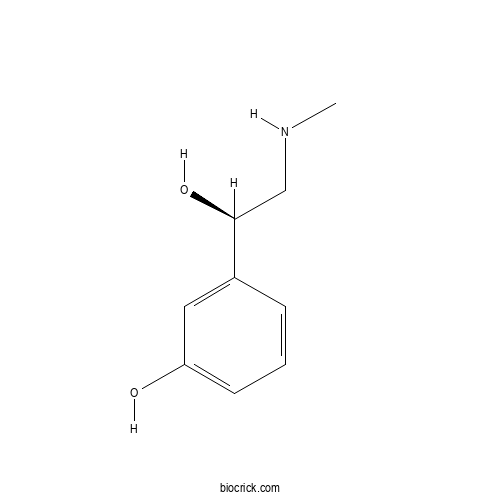
| Cas No. | 59-42-7 | SDF | File under preparation. |
| PubChem ID | 6041.0 | Appearance | Powder |
| Formula | C9H13NO2 | M.Wt | 167.2 |
| Type of Compound | N/A | Storage | Desiccate at -20°C |
| Solubility | Soluble in Chloroform,Dichloromethane,Ethyl Acetate,DMSO,Acetone,etc. | ||
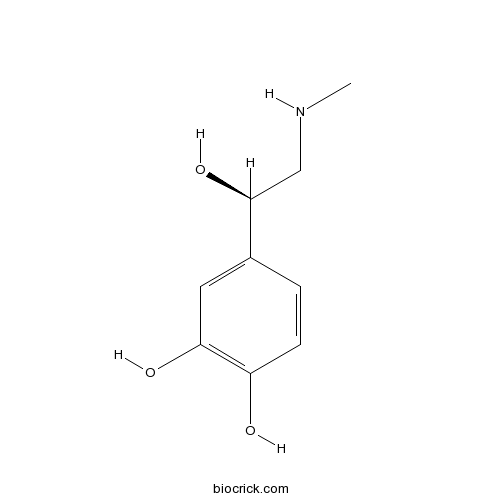
| Chemical Name | 3-[(1R)-1-hydroxy-2-(methylamino)ethyl]phenol | ||
| SMILES | CNCC(C1=CC(=CC=C1)O)O | ||
| Standard InChIKey | SONNWYBIRXJNDC-VIFPVBQESA-N | ||
| Standard InChI | InChI=1S/C9H13NO2/c1-10-6-9(12)7-3-2-4-8(11)5-7/h2-5,9-12H,6H2,1H3/t9-/m0/s1 | ||
| General tips | For obtaining a higher solubility , please warm the tube at 37 ℃ and shake it in the ultrasonic bath for a while.Stock solution can be stored below -20℃ for several months. We recommend that you prepare and use the solution on the same day. However, if the test schedule requires, the stock solutions can be prepared in advance, and the stock solution must be sealed and stored below -20℃. In general, the stock solution can be kept for several months. Before use, we recommend that you leave the vial at room temperature for at least an hour before opening it. |
||
| About Packaging | 1. The packaging of the product may be reversed during transportation, cause the high purity compounds to adhere to the neck or cap of the vial.Take the vail out of its packaging and shake gently until the compounds fall to the bottom of the vial. 2. For liquid products, please centrifuge at 500xg to gather the liquid to the bottom of the vial. 3. Try to avoid loss or contamination during the experiment. |
||
| Shipping Condition | Packaging according to customer requirements(5mg, 10mg, 20mg and more). Ship via FedEx, DHL, UPS, EMS or other couriers with RT, or blue ice upon request. | ||
Quality Control & MSDS
3D structure
Package In Stock

Number of papers citing our products


Phenylephrine Dilution Calculator
Phenylephrine Molarity Calculator



| 1 mg | 5 mg | 10 mg | 20 mg | 25 mg | |
| 1 mM | 5.9809 mL | 29.9043 mL | 59.8086 mL | 119.6172 mL | 149.5215 mL |
| 5 mM | 1.1962 mL | 5.9809 mL | 11.9617 mL | 23.9234 mL | 29.9043 mL |
| 10 mM | 0.5981 mL | 2.9904 mL | 5.9809 mL | 11.9617 mL | 14.9522 mL |
| 50 mM | 0.1196 mL | 0.5981 mL | 1.1962 mL | 2.3923 mL | 2.9904 mL |
| 100 mM | 0.0598 mL | 0.299 mL | 0.5981 mL | 1.1962 mL | 1.4952 mL |
| * Note: If you are in the process of experiment, it's necessary to make the dilution ratios of the samples. The dilution data above is only for reference. Normally, it's can get a better solubility within lower of Concentrations. | |||||
- Dotriacontane
Catalog No.:BCX2353
CAS No.:544-85-4
- 5-Pentadecylresorcinol
Catalog No.:BCX2352
CAS No.:3158-56-3
- 2-tert-Butyl-4-methoxyphenol
Catalog No.:BCX2351
CAS No.:121-00-6
- Pipemidic acid
Catalog No.:BCX2350
CAS No.:51940-44-4
- Methylaervine
Catalog No.:BCX2349
CAS No.:86293-40-5
- Pyridoxal phosphate
Catalog No.:BCX2348
CAS No.:54-47-7
- (+)-Licarin B
Catalog No.:BCX2347
CAS No.:42016-15-9
- Caffealdehyde
Catalog No.:BCX2346
CAS No.:141632-15-7
- Acridone
Catalog No.:BCX2345
CAS No.:578-95-0
- Lactose
Catalog No.:BCX2344
CAS No.:63-42-3
- Bryodulcosigenin
Catalog No.:BCX2343
CAS No.:88930-16-9
- D-Glucuronic acid
Catalog No.:BCX2342
CAS No.:6556-12-3
- Uridine 5'-diphosphogaluronic acid trisodium
Catalog No.:BCX2355
CAS No.:148407-07-2
- Cisplatin
Catalog No.:BCX2356
CAS No.:15663-27-1
- Adenosine triphosphate
Catalog No.:BCX2357
CAS No.:56-65-5
- Uridine 5'-diphosphoxylose disodium
Catalog No.:BCX2358
CAS No.:108320-89-4
- Uridine 5'-diphosphogalactose disodium
Catalog No.:BCX2359
CAS No.:137868-52-1
- 2,2-Dimethyl-2,3-dihydroquinazolin-4(1H )-one
Catalog No.:BCX2360
CAS No.:77726-78-4
- Desmosterol
Catalog No.:BCX2361
CAS No.:313-04-2
- 7-Dehydrocholestero
Catalog No.:BCX2362
CAS No.:434-16-2
- Acetyl CoA
Catalog No.:BCX2363
CAS No.:102029-73-2
- CoA
Catalog No.:BCX2364
CAS No.:85-61-0
- Caffeoyl CoA
Catalog No.:BCX2365
CAS No.:53034-79-0
- 22(S)-Hydroxycholesterol
Catalog No.:BCX2366
CAS No.:22348-64-7
Inter-anesthesiologist Practice Variation in Vasopressor Administration for Intraoperative Hypotension: A Retrospective Cohort Study.[Pubmed:42830881]
Cureus. 2026 Oct 4;18(10):e117418.
Introduction Intraoperative hypotension (IOH) is common and has been associated with postoperative organ injury, morbidity, and mortality. Although its incidence and treatment thresholds have been investigated, variation in vasopressor administration across individual anesthesiologists remains incompletely characterized. We aimed to assess inter-anesthesiologist variation in documented vasopressor administration in response to IOH during elective non-cardiac surgery. Methods We conducted a single-center retrospective cohort study of adults undergoing elective non-cardiac surgery with at least one mean arterial pressure measurement below 65 mmHg. The primary unit of analysis was the hypotensive episode, and the primary outcome was documented ephedrine or Phenylephrine administration associated with each episode. Inter-anesthesiologist variation was assessed using multivariable logistic regression adjusted for case-mix and episode order, with procedure-clustered robust covariance. Adjusted probabilities were estimated by marginal standardization. Results Among 900 procedures managed by 20 anesthesiologists, 2,146 hypotensive episodes were analyzed, of which 734 (34.2%) were associated with vasopressor administration. After adjustment, anesthesiologist identity remained associated with episode-level vasopressor administration (p<0.001), with marginal standardized probabilities ranging from 3.7% to 52.2%. Findings were consistent across sensitivity analyses. Conclusions Substantial inter-anesthesiologist variation in documented vasopressor use was observed after adjustment for measured case-mix variables, highlighting the need to better understand the determinants and clinical significance of provider-associated variation.
Pediatric Pheochromocytoma With Rapid Cyclic Blood Pressure Fluctuations: A Case Report.[Pubmed:42829526]
Clin Case Rep. 2026 Oct 2;14(10):e73583.
Cyclic blood pressure fluctuations in pheochromocytoma are extremely rare, and previously reported cases have been limited to adults. We report a 5-year-old boy with von Hippel-Lindau disease and a left adrenal pheochromocytoma who developed rapid cyclic blood pressure fluctuations immediately after tracheal intubation. Despite preoperative doxazosin (titrated from 0.5 to 3 mg/day over 27 days) and fluid loading, systolic blood pressure oscillated between 50 and 150 mmHg at approximately 7-min intervals after tracheal intubation. The fluctuations were independent of surgical manipulation and refractory to Phenylephrine and phentolamine. Plasma norepinephrine was markedly elevated before tumor manipulation. After tumor resection, profound vasoplegic hypotension required high-dose norepinephrine, epinephrine, and vasopressin; hemodynamics gradually stabilized, and all vasoactive agents were discontinued on postoperative Day 3. This case demonstrates that pediatric pheochromocytoma can develop cyclic blood pressure fluctuations similar to those in adults and underscores the importance of individualized preoperative alpha-blockade and strict postoperative hemodynamic management after tumor resection.
Sodium nitrite reduces circulating asymmetric dimethylarginine in a reduced uterine perfusion pressure rat model of preeclampsia.[Pubmed:42827595]
Front Pharmacol. 2026 Sep 18;17:1939792.
INTRODUCTION: Preeclampsia (PE) is characterized by hypertension, endothelial dysfunction, and reduced nitric oxide (NO) bioavailability. Asymmetric dimethylarginine (ADMA), an endogenous inhibitor of endothelial NO synthase, is elevated in PE and contributes to vascular dysfunction. NO may regulate ADMA production. NO formation from nitrite occurs under hypoxic-ischemic conditions. Thus, this study investigated whether sodium nitrite attenuates circulating ADMA levels and vascular endothelial dysfunction in placental ischemia induced by reduced uteroplacental perfusion pressure (RUPP) in pregnant rats. METHODS: Pregnant Wistar rats were assigned to Sham, RUPP, Sham-Nitrite, and RUPP-Nitrite groups. Sodium nitrite (15 mg/kg/day) was administered orally from gestational day 14-21. RESULTS: RUPP rats exhibited increased systolic, diastolic, and mean arterial pressure, reduced fetal and placental weights, impaired acetylcholine-induced relaxation, enhanced Phenylephrine-induced vasoconstriction, and increased plasma ADMA levels compared to Sham group. Sodium nitrite treatment attenuated hypertension, improved fetal and placental parameters, partially restored endothelial function and reduced vascular hyper-reactivity. Plasma NO metabolites in the RUPP-Nitrite group were not significantly different from Sham. Importantly, sodium nitrite markedly attenuated the RUPP-induced increases in circulating ADMA, suggesting modulation of the ADMA-NO pathway in experimental PE. DISCUSSION: These findings indicate that nitrite treatment may attenuate endothelial dysfunction and vascular impairment associated with placental ischemia, potentially involving modulation of circulating ADMA.
Exogenous L6 myotube mitochondrial transplantation attenuates hypertrophy and elicits a unique proteomic signature in phenylephrine-treated H9C2 cardiomyocytes.[Pubmed:42817986]
bioRxiv [Preprint]. 2026 Sep 22:2026.09.21.753229.
Mitochondrial transplantation has recently emerged as an alternative treatment for cardiovascular disease (CVD), aimed at increasing mitochondrial number and improving mitochondrial function. Though mitochondrial dysfunction is a key factor in the development of right ventricular hypertrophy/failure, the effects of mitochondrial transplantation on disease mitigation have been largely unexplored. Therefore, this in vitro study aimed to determine whether the transplantation of exogenous L6 myotube mitochondria mitigates negative outcomes in H9C2 cardiomyocytes that were stimulated to hypertrophy with Phenylephrine. Control (CTL), control with mitochondrial transplantation (MitoTx), Phenylephrine only (Phe-only), and Phenylephrine with mitochondrial transplantation (Phe+MitoTx) treatments were evaluated. Pilot experiments indicated mitochondrial transplantation into healthy cardiomyocytes acutely increased Complex I-linked oxidative phosphorylation (OXPHOS) capacity (p=0.005) and maximal respiratory capacity (p=0.022) within 24 hours, and these data alongside microscopic evidence of fluorescently labeled L6 mitochondria in H9C2 cardiomyocytes suggested successful transplantation. Regarding treatment comparisons, Phe-only showed a significant increase in cell area (p<0.05), while Phe+MitoTx blunted the hypertrophic cardiomyocyte response. Consistent with these results, proteomic analysis of 4,806 proteins showed that transplantation enriched the mitochondrial proteome, impacting pathways including OXPHOS, respiration, fatty acid and amino acid metabolism, while suppressing extracellular matrix remodeling and de-differentiation signatures. This response was observed in healthy and Phenylephrine-stressed cardiomyocytes. In conclusion, our in vitro data indicates that transplantation of L6 skeletal muscle mitochondria mitigates negative effects induced by Phenylephrine in H9C2 cardiomyocytes. However, more rigorous in vivo studies are needed to determine if this is a suitable approach for disease mitigation.
Stress-Induced Changes in Contractile Activity of Rat Aorta and Pulmonary Artery.[Pubmed:42816686]
Bull Exp Biol Med. 2026 Sep 30.
Immobilization stress (12 and 24 h) simulated in female Wistar rats reduced the amplitude of Phenylephrine-induced contraction of isolated aortic and pulmonary artery rings. Acetylcholine-induced, endothelium-dependent vasorelaxation of the aorta and pulmonary artery increased after 12-h stress exposure. Therefore, stress modulates the functional state of these arteries without signs of endothelial injury.
Ability of the PulseCO Algorithm to Assess Changes in Stroke Volume Induced by Changes in Vascular Tone.[Pubmed:42802306]
Acta Anaesthesiol Scand. 2026 Nov;70(10):e70338.
BACKGROUND: Vasoconstriction during anesthesia can influence stroke volume (SV) by preload modulation, making accurate SV monitoring essential to guide vasopressor therapy. Since gold standard methods like pulmonary artery catheterization and lithium dilution provide only intermittent estimates, continuous and less invasive arterial pulse contour analysis systems are increasingly used. However, their accuracy under altered vascular tone remains uncertain. We aimed to evaluate the PulseCO algorithm's (SV-P) ability to detect clinically relevant changes in SV index (SVI) during manipulation of vascular tone, using lithium dilution with the LiDCO method (CI-Li) as reference, and to assess how absolute systemic vascular resistance index (SVRI) levels influenced agreement between methods. METHODS: In this prospective observational study, adult patients undergoing general anesthesia were monitored using continuous SV-P and intermittent CI-Li at three predefined time points: (1) supine baseline after anesthetic induction, (2) after head-up tilt (HUT), and (3) during Phenylephrine infusion in HUT. Agreement in SVI changes was assessed by directional concordance, absolute changes and Bland-Altman analysis, and the impact of vascular load was further explored by examining SVRI. A >/= 10% change in SVI was defined as clinically relevant. RESULTS: A total of 19 patients were included. Directional concordance between the two methods was 100% in both interventions. The SV-P registered SVI changes >/= 10% in all patients during both interventions, while lithium dilution registered this in 16 and 18 patients, respectively. The SV-P consistently overestimated SVI changes compared with CI-Li, with a non-significant mean difference of -1.6 mL/m(2) (95% CI: -4.2 to 1.1, p = 0.28) from baseline to HUT, and a significant overestimation during Phenylephrine infusion with a mean difference of 4.9 mL/m(2) (95% CI: 2.5 to 7.4, p = 0.001). Relative discrepancies between SV-P and CI-Li appeared to increase with higher SVRI. CONCLUSION: The arterial pulse wave-based algorithm detected clinically relevant changes in SVI with 100% sensitivity and showed a 100% concordance with lithium dilution in the direction of change. However, it generally overestimated absolute SVI changes, and most markedly so during Phenylephrine administration. Relative discrepancies in absolute SVI values appeared to increase with higher SVRI, highlighting that vascular load affects agreement. EDITORIAL COMMENT: This study compares the performance of one device's pulse contour-based estimates for stroke volume to estimates of stroke volume, same device, based on dilution-based cardiac output and observed heart rate. This was also tracked during anesthesia interventions expected to alter peripheral vascular tone. These 2 methods for stroke volume (index) estimation agreed in direction of change with the clinical interventions, while pulse contour analysis appeared to overestimate changes in stroke volume compared to the flow-based estimates.
Anesthetic management in pregnant women with Fontan circulation: a single-center retrospective study (2011-2026).[Pubmed:42800408]
Int J Obstet Anesth. 2026 Sep 9;68:105279.
BACKGROUND: Pregnancy in women with Fontan circulation presents substantial anesthetic and hemodynamic challanges with limited evidence to guide peripartum management. METHODS: This retrospective single-center cohort study (2011-2026) included all pregnancies in women with Fontan circulation managed at a tertiary referral center. The primary outcome was anesthetic technique and the incidence of anesthesia-related hemodynamic instability during delivery. Maternal characteristics, anesthetic management, and maternal and neonatal outcomes were reviewed. RESULTS: Twelve women experienced 32 pregnancies, including 17 deliveries. Cesarean delivery accounted for 76% (13/17). Among 12 cesarean with full anesthetic details, neuraxial anesthesia was used in 83% (10/12), predominantly low-dose combined spinal-epidural anesthesia with prophylactic Phenylephrine infusion. Invasive arterial pressure monitoring was used in 75% (9/12). Anesthesia-related complications were limited to one transient hypotensive episode and two transient desaturation events. Two patients experiances thromboembolic events post-cesarean delivery; one patient developed postpartum pulmonary embolism, and another patient experianced transient ischemic attack. No maternal deaths occurred. Prematurity occurred in 65% (11/17) of deliveries, and 56% (10/18) of neonates required neonatal intensive care admission. CONCLUSIONS: In women with Fontan circulation managed within a structured multidisciplinary program, a standardized anesthetic approach incorporating low-dose combined spinal epidural anesthesia and prophylactic Phenylephrine infusion was associated with favorable maternal outcomes. These findings should be interpreted in the context of comprehensive multidisciplinary care, careful patient selection, and institutional expertise rather than attributed to the anesthetic technique alone.
Green-Synthesized Gold Nanoparticles Using Pfaffia glomerata Extract Improve Maternal Hypertension and Angiogenic Markers in Pregnant Hypertensive Rats.[Pubmed:42797250]
Pharmaceutics. 2026 Aug 27;18(9):1074.
Background: Hypertensive disorders of pregnancy present a major global health challenge. Green nanotechnology offers a strategy to enhance the stability and efficacy of bioactive natural products. This study evaluated gold nanoparticles green-synthesized with Pfaffia glomerata extract (AuNPs-PG) against gestational hypertension and fetal complications in spontaneously hypertensive rats (SHRs). Methods:P. glomerata root extract was characterized by UHPLC-MS/MS. AuNPs-PG were green-synthesized with 2 mmol/L HAuCl(4) (1:5 v/v) at 40 degrees C and characterized by UV-Vis and DLS. Pregnant Wistar-Kyoto and SHRs were divided into naive, negative control (NC), amlodipine (5 mg/kg), and AuNPs-PG groups (0.03, 0.1, and 0.3 mg/kg) treated daily on gestational days 1-18 to evaluate maternal cardiovascular, renal, biochemical, and reproductive outcomes. Results: UHPLC-MS/MS identified 38 compounds. AuNPs-PG showed a plasmon band at 520-550 nm and 88.1 nm hydrodynamic diameter. In SHRs, 0.3 mg/kg AuNPs-PG reduced systolic blood pressure by 18.5% and mean arterial pressure by 15.4%, while mitigating vascular dysfunction by lowering Phenylephrine vasoconstriction by 52.7% and boosting acetylcholine vasodilation by 239.3%. Treatment shortened QTc interval by 26.4%, normalized T-wave inversion, and restored renal excretion, increasing urinary volume by 75.0% and sodium by 94.2%. Furthermore, AuNPs-PG elevated placental growth factor by 180.9%, lowered malondialdehyde by 63.5%, and preserved placental histology. Consequently, mean fetal weight increased by 21.6%, implantation index by 50.5%, and offspring-to-mother ratio by 129.6%. Conclusions: AuNPs-PG (0.3 mg/kg) effectively mitigate maternal and fetal complications in gestational hypertension. Gold nanoparticles serve as nanocarriers, whereas surface-adsorbed phytochemicals drive the biological effects.
Vasorelaxant Effects of Wild Jujube Leaf Aqueous Extract: Endothelial NO/cGMP/SERCA Signaling, Antioxidant Activity, and AI-Based Molecular Docking.[Pubmed:42796539]
Molecules. 2026 Sep 14;31(18):3252.
Ziziphus lotus (L.) Lam (wild jujube) leaves are traditionally used in Moroccan medicine to treat hypertension. The present study evaluated the aqueous extract of Z. lotus leaves (ZLAqExt) for its vasorelaxant effects, mechanisms of action, acute toxicity, antioxidant potential, and phytochemical profile. In Phenylephrine-precontracted rat aortic rings, the ZLAqExt induced concentration-dependent relaxation (Emax = 79.25 +/- 2.77% at 10(-1) mg/mL). The mechanism of action was investigated using specific antagonists and blockers. Complete inhibition by endothelium denudation, and preincubation with L-NAME, hydroxocobalamin, ODQ, and thapsigargin confirmed endothelium-dependent nitric oxide (NO)/cyclic GMP (cGMP)/sarco/endoplasmic reticulum Ca(2+)-ATPase (SERCA) pathway involvement. A partial inhibition by BaCl(2), indomethacin, calmidazolium, and KCl indicated cyclooxygenase (COX), endothelium-derived hyperpolarizing factor (EDHF), and inward-rectifier potassium (K(ir)) channel contributions. Acute oral toxicity did not show any mortality at 2 g/kg BW in mice. The extract displayed potent antioxidant activity (DPPH IC(50): 18.12 +/- 1.49 microg/mL; beta-carotene bleaching IC(50): 8.3 +/- 0.014 microg/mL). UHPLC-ESI-MS identified rutin as the major compound, followed by 3',5'-di-C-beta-glucopyranosyl phloretin with high docking affinity for guanylate cyclase and SERCA pump. The presence of flavonoids in the ZLAqExt might have mediated its vasorelaxant effects, supporting its traditional use as an antihypertensive. Our results highlight that Z. lotus is a potential natural therapeutic agent against vascular dysfunction-related cardiovascular disorders.
Remimazolam Versus Dexmedetomidine for Monitored Anesthesia Care in Patients Undergoing Transfemoral Transcatheter Aortic Valve Implantation: A Randomized Clinical Trial.[Pubmed:42795954]
J Clin Med. 2026 Sep 16;15(18):7182.
Background/Objectives: Monitored anesthesia care is increasingly used for transfemoral transcatheter aortic valve implantation (tf-TAVI), but the optimal sedative regimen remains uncertain. We compared remimazolam with dexmedetomidine during tf-TAVI. Methods: In this single-center randomized trial, 34 patients were assigned 1:1 to remimazolam or dexmedetomidine. Primary outcomes were the number of intraoperative hypotensive episodes, defined as mean arterial pressure <65 mmHg requiring vasopressor treatment, and cumulative Phenylephrine and norepinephrine doses. Secondary outcomes included hemodynamic and physiological variables, regional cerebral oxygen saturation (rSO(2)), arterial blood gases, recovery time, surgeon requests for deeper sedation, and procedural outcomes. Longitudinal variables were analyzed using generalized estimating equations with Holm adjustment for time-specific comparisons. Results: No significant between-group differences were detected in intraoperative hypotensive episodes or cumulative Phenylephrine and norepinephrine doses, and no significant group-by-time interactions were observed for blood pressure. Both left and right rSO(2) showed significant group-by-time interactions, with higher remimazolam values at selected time points after Holm adjustment. Arterial carbon dioxide tension was higher and arterial pH lower with remimazolam immediately before rapid ventricular pacing and at procedure completion. Recovery was faster with remimazolam (mean +/- standard deviation, 13.5 +/- 7.2 vs. 32.4 +/- 12.5 min; p < 0.001), and surgeon requests for deeper sedation were less frequent (11.8% vs. 76.5%; p < 0.001). Conclusions: Remimazolam was associated with faster recovery and fewer surgeon requests for deeper sedation; however, the trial was not designed or powered to establish equivalence for hypotensive episodes, vasopressor requirements or hemodynamic outcomes.
Aerobic training prevents the stress-induced endothelial dysfunction in male and female Wistar rats by different pathways.[Pubmed:42789978]
J Appl Physiol (1985). 2026 Sep 21.
Variable stress contributes to cardiovascular morbidity by impairing endothelial function through oxidative stress, inflammation and hormonal imbalance. These effects depend on sex-specific physiological responses. While aerobic exercise is recognized for its vascular benefits, the mechanisms underlying these adaptations may differ between sexes. This study investigated the sex-specific effects of aerobic training on vascular function in Wistar rats subjected to variable stress. For this, male and female Wistar rats (n=8/group) were assigned to control or stress groups (8 days using four different types of stressor stimuli), with or without aerobic training (treadmill, moderate intensity, 30 min/day for 8 weeks). Thoracic aortic endothelial function was evaluated by acetylcholine-induced relaxation and Phenylephrine-induced contraction. Antioxidant enzyme activity, nitrite concentration and protein expression of eNOS, p-eNOS(ser1177), catalase and superoxide dismutase were measured. Stress impaired endothelium-dependent relaxation and increased vascular collagen content in both sexes. In females, stress reduced eNOS phosphorylation and nitrite bioavailability, while increasing antioxidant enzyme activity. In males, no significant changes in the eNOS-NO pathway were observed, but SOD activity increased. Aerobic training attenuated stress-induced vascular injury, predominantly through the upregulation of the eNOS-NO signaling pathway in females, while in males, possibly through another pathway related to oxidative status. These findings demonstrate the protective effects of aerobic exercise on vascular health in rats subjected to variable stress and underscore the existence of sex-specific mechanisms, with distinct molecular pathways mediating vascular adaptations in males and females. Furthermore, histological analysis revealed that aerobic training reversed collagen deposition and enhanced elastic fiber content.
Obstructive Shock From Suicide Left Ventricle After Transcatheter Aortic Valve Replacement.[Pubmed:42776112]
JACC Case Rep. 2026 Sep 23:110401.
BACKGROUND: Dynamic left ventricular obstruction, often referred to as suicide left ventricle, is an uncommon and potentially fatal cause of obstructive shock after transcatheter aortic valve replacement (TAVR). CASE SUMMARY: An 89-year-old man with severe symptomatic aortic stenosis, severe concentric hypertrophy, and a small left ventricular cavity underwent transfemoral TAVR. Fifteen minutes after deployment of a 29-mm self-expanding valve, he developed hemodynamic collapse. Multimodality assessment excluded major procedural complications. At 30 minutes, echocardiography confirmed dynamic left ventricular outflow tract obstruction, with a peak gradient of 86 mm Hg, systolic anterior motion, mild mitral regurgitation, and an associated midventricular gradient. Volume expansion, Phenylephrine, and propranolol reduced the gradient to 12 mm Hg, with shock resolution within 24 hours. DISCUSSION: Early echocardiography identifies this obstructive physiology and redirects therapy toward preload and afterload augmentation, withdrawal of beta-adrenergic stimulation, and beta-blockade. TAKE-HOME MESSAGES: Dynamic left ventricular outflow tract obstruction should be suspected in early post-TAVR shock.
Comparison of arterial blood pressure and quality of induction and recovery in horses anesthetized with diazepam or guaifenesin co-induction combined with xylazine and ketamine and maintained on isoflurane.[Pubmed:42775198]
Can J Vet Res. 2026 Oct 1;90(4):145-155. eCollection 2026 Oct.
The objective of this prospective alternating crossover study was to compare quality of induction and recovery and cardiopulmonary function in horses administered guaifenesin or diazepam as co-induction drugs. Six healthy horses were anesthetized twice to undergo an MRI and surgical biopsies, with 5 wk between treatments. Horses were sedated intravenously (IV) with xylazine, 0.6 mg/kg BW, and IV induction started 4 min later. Group G received guaifenesin, 100 mg/kg BW, over 2 min and ketamine, 2 mg/kg BW, within 1 to 2 min of starting the guaifenesin. Group D received diazepam, 0.1 mg/kg BW, within 5 s and ketamine, 2 mg/kg BW, 0.5 to 1 min after and the quality of induction assessed. Horses were positioned on an MRI-compatible table, the trachea intubated, allowed to breathe spontaneously for the initial 10 min, then connected to a rebreathing circuit and anesthetic machine and mechanically ventilated under anesthesia [end-tidal isoflurane (F(E)'Isoflurane): 1.3 to 1.5%] during the MRI. Direct arterial blood pressure, heart rate, end-tidal CO(2) (P(E)'CO(2)) and F(E)'Isoflurane were recorded at 10, 20, 30, and 40 min post-induction. Requirements for dobutamine and/or Phenylephrine for arterial blood pressure support were recorded. A 2-way analysis of variance (ANOVA) was used to compare arterial blood pressure and a Wilcoxon matched-pairs signed rank test for comparing sedation, induction, and recovery scores (significance was set at P < 0.05). Arterial pressures were not significantly different between groups; however, systolic (P = 0.004), diastolic (P < 0.0001), and mean (P = 0.004) arterial pressures decreased significantly at 20, 30, and 40 min in Group D. Dose of dobutamine and/or Phenylephrine was similar between groups. Sedation, induction, and recovery scores were similar. Induction scores were good to excellent [both groups: 0.5 (0, 2); median (range)]. In conclusion, guaifenesin and diazepam at the doses used in this study produced similar effects on arterial blood pressure and on the quality of induction and recovery.
Deletion of the PDZ-Binding Motif of TAZ Protein Induces Myocardial Calcium Overload and Hypertrophy via the TBX5-MFN2 Signaling Axis.[Pubmed:42771491]
FASEB J. 2026 Sep 30;40(18):e72311.
Hypertrophic cardiomyopathy (HCM) is frequently linked to sarcomeric gene mutations, yet many familial cases remain unexplained by known pathogenic genes. Transcriptional coactivator TAZ serves as the core effector of the Hippo signaling pathway that regulates cardiomyocyte proliferation and myocardial hypertrophy, and its PDZ-binding motif is critical for maintaining the normal function of TAZ. Deletion of this motif triggers TAZ dysfunction and subsequently induces HCM; however, the underlying molecular mechanism remains to be further elucidated. PDZ-binding motif-deleted TAZ (TAZ-DeltaPDZ) was identified as the pathogenic mutation in HCM. Functional experiments revealed that TAZ-DeltaPDZ exacerbated Phenylephrine (PE)-induced cardiomyocyte hypertrophy, manifested as enlarged cardiomyocyte surface area, upregulated expression of hypertrophy marker proteins (ANP/BNP/beta-MHC), and intracellular calcium overload. Mechanistically, TAZ-DeltaPDZ blocked the transcriptional activation of mitofusin 2 (MFN2) by T-box transcription factor 5 (TBX5), thereby triggering calcium overload and aggravating myocardial hypertrophy. Further in vivo animal experiments verified that TBX5 overexpression reduced heart size, alleviated myocardial collagen deposition and inflammatory cell infiltration, and decreased intracellular calcium concentration to exert cardioprotective effects; however, TAZ-DeltaPDZ markedly reversed such protective effects mediated by TBX5 overexpression. TAZ-DeltaPDZ impairs TBX5 transcriptional function, reduces MFN2 expression, triggers cardiomyocyte calcium overload, and ultimately causes cardiac hypertrophy. This study is expected to provide novel insights for the prevention, control, and screening of pathogenic genes underlying hereditary HCM.

Calcutta University

University of Minnesota

University of Maryland School of Medicine

University of Illinois at Chicago

The Ohio State University

University of Zurich

Harvard University

Colorado State University

Auburn University

Yale University

Worcester Polytechnic Institute

Washington State University

Stanford University

University of Leipzig

Universidade da Beira Interior

The Institute of Cancer Research

Heidelberg University

University of Amsterdam

University of Auckland

TsingHua University

The University of Michigan

Miami University

DRURY University

Jilin University

Fudan University

Wuhan University

Sun Yat-sen University

Universite de Paris

Deemed University

Auckland University

The University of Tokyo

Korea University



