
Pipemidic acidCAS# 51940-44-4 |
| Cas No. | 51940-44-4 | SDF | File under preparation. |
| PubChem ID | 4831.0 | Appearance | Powder |
| Formula | C14H17N5O3 | M.Wt | 303.3 |
| Type of Compound | N/A | Storage | Desiccate at -20°C |
| Solubility | Soluble in Chloroform,Dichloromethane,Ethyl Acetate,DMSO,Acetone,etc. | ||
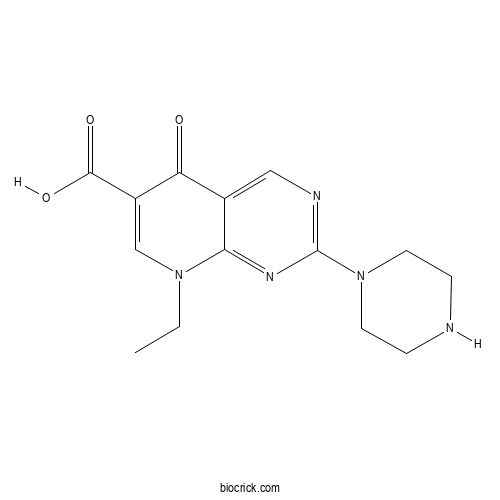
| Chemical Name | 8-ethyl-5-oxo-2-piperazin-1-ylpyrido[2,3-d]pyrimidine-6-carboxylic acid | ||
| SMILES | CCN1C=C(C(=O)C2=CN=C(N=C21)N3CCNCC3)C(=O)O | ||
| Standard InChIKey | JOHZPMXAZQZXHR-UHFFFAOYSA-N | ||
| Standard InChI | InChI=1S/C14H17N5O3/c1-2-18-8-10(13(21)22)11(20)9-7-16-14(17-12(9)18)19-5-3-15-4-6-19/h7-8,15H,2-6H2,1H3,(H,21,22) | ||
| General tips | For obtaining a higher solubility , please warm the tube at 37 ℃ and shake it in the ultrasonic bath for a while.Stock solution can be stored below -20℃ for several months. We recommend that you prepare and use the solution on the same day. However, if the test schedule requires, the stock solutions can be prepared in advance, and the stock solution must be sealed and stored below -20℃. In general, the stock solution can be kept for several months. Before use, we recommend that you leave the vial at room temperature for at least an hour before opening it. |
||
| About Packaging | 1. The packaging of the product may be reversed during transportation, cause the high purity compounds to adhere to the neck or cap of the vial.Take the vail out of its packaging and shake gently until the compounds fall to the bottom of the vial. 2. For liquid products, please centrifuge at 500xg to gather the liquid to the bottom of the vial. 3. Try to avoid loss or contamination during the experiment. |
||
| Shipping Condition | Packaging according to customer requirements(5mg, 10mg, 20mg and more). Ship via FedEx, DHL, UPS, EMS or other couriers with RT, or blue ice upon request. | ||
Quality Control & MSDS
3D structure
Package In Stock

Number of papers citing our products


Pipemidic acid Dilution Calculator
Pipemidic acid Molarity Calculator

| 1 mg | 5 mg | 10 mg | 20 mg | 25 mg | |
| 1 mM | 3.2971 mL | 16.4853 mL | 32.9707 mL | 65.9413 mL | 82.4266 mL |
| 5 mM | 0.6594 mL | 3.2971 mL | 6.5941 mL | 13.1883 mL | 16.4853 mL |
| 10 mM | 0.3297 mL | 1.6485 mL | 3.2971 mL | 6.5941 mL | 8.2427 mL |
| 50 mM | 0.0659 mL | 0.3297 mL | 0.6594 mL | 1.3188 mL | 1.6485 mL |
| 100 mM | 0.033 mL | 0.1649 mL | 0.3297 mL | 0.6594 mL | 0.8243 mL |
| * Note: If you are in the process of experiment, it's necessary to make the dilution ratios of the samples. The dilution data above is only for reference. Normally, it's can get a better solubility within lower of Concentrations. | |||||
- Methylaervine
Catalog No.:BCX2349
CAS No.:86293-40-5
- Pyridoxal phosphate
Catalog No.:BCX2348
CAS No.:54-47-7
- (+)-Licarin B
Catalog No.:BCX2347
CAS No.:42016-15-9
- Caffealdehyde
Catalog No.:BCX2346
CAS No.:141632-15-7
- Acridone
Catalog No.:BCX2345
CAS No.:578-95-0
- Lactose
Catalog No.:BCX2344
CAS No.:63-42-3
- Bryodulcosigenin
Catalog No.:BCX2343
CAS No.:88930-16-9
- D-Glucuronic acid
Catalog No.:BCX2342
CAS No.:6556-12-3
- 6-Hydroxyflavanone
Catalog No.:BCX2341
CAS No.:190831-08-4
- Guanidinoacetic acid
Catalog No.:BCX2340
CAS No.:352-97-6
- 3-Amino-3-(3,4-dimethoxyphenyl)propionic acid
Catalog No.:BCX2339
CAS No.:54160-63-3
- 3-Methyl-4-isopropylphenol
Catalog No.:BCX2338
CAS No.:3228-02-2
- 2-tert-Butyl-4-methoxyphenol
Catalog No.:BCX2351
CAS No.:121-00-6
- 5-Pentadecylresorcinol
Catalog No.:BCX2352
CAS No.:3158-56-3
- Dotriacontane
Catalog No.:BCX2353
CAS No.:544-85-4
- Phenylephrine
Catalog No.:BCX2354
CAS No.:59-42-7
- Uridine 5'-diphosphogaluronic acid trisodium
Catalog No.:BCX2355
CAS No.:148407-07-2
- Cisplatin
Catalog No.:BCX2356
CAS No.:15663-27-1
- Adenosine triphosphate
Catalog No.:BCX2357
CAS No.:56-65-5
- Uridine 5'-diphosphoxylose disodium
Catalog No.:BCX2358
CAS No.:108320-89-4
- Uridine 5'-diphosphogalactose disodium
Catalog No.:BCX2359
CAS No.:137868-52-1
- 2,2-Dimethyl-2,3-dihydroquinazolin-4(1H )-one
Catalog No.:BCX2360
CAS No.:77726-78-4
- Desmosterol
Catalog No.:BCX2361
CAS No.:313-04-2
- 7-Dehydrocholestero
Catalog No.:BCX2362
CAS No.:434-16-2
A multifunctional molecular platform for restoration quinolone antibiotics: synthesis, antimicrobial, anti-biofilm and preliminary mechanistic studies.[Pubmed:42503055]
Mol Divers. 2026 Jul 26.
Bacterial biofilms, spatially and physiologically heterogeneous communities, protect pathogens from antibiotics and drive persistent infections, particularly those caused by the clinically challenging methicillin-resistant Staphylococcus aureus (MRSA). Such biofilm-mediated protection poses a major obstacle to antibiotic therapy, rendering quinolone antibiotics markedly less effective owing to their limited penetration into the biofilm matrix and the intrinsic tolerance of sessile bacteria. Therefore, strategies capable of overcoming biofilm-associated resistance and restoring the therapeutic potential of legacy quinolone antibiotics are urgently needed. Herein, a multifunctional molecular platform, AFQ-BP, was rationally developed to serve as a dual antibiofilm and antibacterial agent. Nineteen novel derivatives were designed and synthesized, 21 and 22 exhibited strong antibacterial activity, comparable to that of frontline antibiotics such as ampicillin and ciprofloxacin. Notably, the lead candidate 22 (MIC = 2 microg/mL against MRSA 21-5) suppressed biofilm formation by 69.6% and eradicated mature biofilms by 70.2%, demonstrating a 5-fold improvement over ciprofloxacin at 1xMIC and sustained activity even at the subinhibitory concentration of 1/4xMIC. It exhibited low cytotoxicity toward HEK293 cells (IC(50) >100 microg/mL), negligible hemolysis (1.05%), and acceptable lipophilicity (cLogP = 2.70), while being predicted as non-BBB permeant. Compound 12, repurposed from the obsolete second-generation quinolone antibiotic Pipemidic acid, reduced biofilm biomass by 67.0% at 1/4xMIC. Preliminary mechanistic studies suggest a multifaceted antibiofilm mechanism involving ROS amplification, EPS disintegration, and membrane damage.
Propylene/Ethylene Separation via a Pressure-Induced Flexible Ultramicroporous Metal-Organic Framework.[Pubmed:42246492]
Inorg Chem. 2026 Jun 22;65(24):13694-13701.
Efficient separation of propylene/ethylene mixtures remains a formidable challenge because of the very similar physicochemical properties of the two olefins, particularly in methanol-to-olefins product streams. Herein, we report a pressure-responsive flexible ultramicroporous metal-organic framework, Co-PPA, constructed from Pipemidic acid ligands and Co(II) ions, featuring pearl-strand-like one-dimensional channels and reversible guest-induced gate opening. At 298 K and 0.1 bar, Co-PPA exhibits a high C(3)H(6) uptake of 25.21 cm(3) g(-1), whereas the uptake of C(2)H(4) is only 0.26 cm(3) g(-1), affording an exceptionally high C(3)H(6)/C(2)H(4) uptake ratio of 96.96. In situ single-crystal X-ray diffraction analyses together with GCMC simulations and electrostatic potential mapping suggest that the preferential adsorption of C(3)H(6) is associated with multiple synergistic host-guest interactions, including close contacts with the pore surface, dispersion interactions, and favorable electrostatic complementarity within the confined channel environment. Dynamic breakthrough experiments further demonstrate that Co-PPA enables direct production of polymer-grade ethylene (>/=99.95%) with a productivity of 28.4 cm(3) (STP) g(-1) from equimolar C(3)H(6)/C(2)H(4) mixtures. Additionally, Co-PPA exhibits excellent thermal stability, chemical robustness, and superior cycling reversibility. This work highlights flexible ultramicroporous frameworks as a promising platform for energy-efficient olefin purification and provides useful insight into the design of gate-opening adsorbents for challenging light-hydrocarbon separations.
Mapping the landscape of online antibiotic sellers in Indonesia: A study on distribution, regulation, and public health risks.[Pubmed:41830696]
Public Health. 2026 May;254:106247.
OBJECTIVES: Despite being a major market for online pharmaceutical services, Indonesia lacks clear evidence on the extent of online antibiotic sales. Information on the distribution and characteristics of online antibiotic sellers is crucial for designing effective stewardship interventions. STUDY DESIGN: A cross-sectional online mapping study. METHODS: We mapped online antibiotic sellers on three major platforms operating in Java Island Indonesia, i.e. two marketplaces and one multiservice application, from August to October 2023. Mapping was done by searching for antibiotic names, e.g. amoxicillin, ciprofloxacin, fradiomycin/gramicidin, nifuroxazide, and Pipemidic acid on each digital platform. Details on the seller and antibiotic information were documented from each seller's page on a spreadsheet. The collected information was analysed and visualised. RESULTS: Out of 3790 sellers, most were pharmacies (3759/3790; 99.2%) and active sellers (2336/2845; 82.1%). West Java had the highest concentration of sellers (1360/3790; 35.9%) followed by DKI Jakarta (742/3790; 19.6%). Most sellers displayed amoxicillin on their page (3431/3790; 90.5%). While nearly all sellers provided information on the antibiotics and required prescriptions, only three-quarters provided information on contraindications (74.1%) and usage direction (76.6%), and half did not provide information on side effects (54.6%). CONCLUSIONS: Online antibiotic sellers are prevalent in major cities across Indonesia. Many sellers did not disclose important information on their products. Stricter enforcement of regulations such as requiring the display of complete product information, verification of prescriptions, and routine monitoring of e-commerce platforms is urgently needed to ensure the rational use of antibiotics, safeguard product quality, and prevent antibiotic resistance in the community.
Reticuline isomerase AKR1B1 with aldo-keto reductase activity and detoxification function from the insect Blaps rhynchopetera.[Pubmed:41791543]
Int J Biol Macromol. 2026 Mar;352:151224.
Herbivorous insects have evolved a dual adaptive strategy when exposed to small-molecule compounds such as alkaloids. They can utilize certain compounds to support growth and development, while detoxifying harmful ones through endogenous enzymes. Multiple enzymes, including aldo-keto reductases (AKRs) and cytochrome P450 enzymes, participate in these processes. Currently, the isomerase responsible for producing reticuline has only been identified in plants, with no reports of its existence in animals or insects to date. In light of this, from the transcriptome of Blaps rhynchopetera, we identified a novel aldo-keto reductase, AKR1B1, with diverse biological functions. This study demonstrates for the first time in vitro that AKR1B1 catalyzes the conversion of (S)-reticuline to (R)-reticuline, suggesting its dual role as both an aldo-keto reductase and an isomers enzyme. Virtual screening revealed tiaprofenic acid and Pipemidic acid as small-molecule inhibitors of AKR1B1, effectively suppressing its catalytic activity toward (S)-reticuline. Antibody-based localization experiments demonstrated the highest expression levels of AKR1B1 in adults and midgut tissues, with minimal expression in eggs and muscle tissues. Furthermore, insecticide induction experiments confirmed AKR1B1's detoxification role in B. rhynchopetera. These findings establish AKR1B1 as a novel and critical player in insect compound metabolism and detoxification. This discovery provides new targets for developing insect-derived bifunctional enzymes for drug development and detoxification research, offering profound insights into the physiological mechanisms of insects.
Synthesis, Characterization and Biological Profile of Cationic Cobalt Complexes with First-Generation Quinolones.[Pubmed:40572609]
Molecules. 2025 Jun 19;30(12):2646.
The interaction of cobalt(II) with first-generation quinolones oxolinic acid (Hoxo), flumequine (Hflmq), Pipemidic acid (Hppa) and cinoxacin (Hcx) in the presence of the N,N'-donor heterocyclic ligands 2,2'-bipyridine (bipy) or 1,10-phenanthroline (phen) afforded a series of novel cobalt complexes, namely [Co(bipy)(2)(oxo)](PF(6))(2).H(2)O (1), [Co(phen)(2)(oxo)](PF(6))(2).0.5CH(3)OH.0.5H(2)O (2), [Co(bipy)(2)(flmq)](PF(6))(2).0.5CH(3)OH.0.5H(2)O (3), [Co(bipy)(2)(ppa)](PF(6))(2).CH(3)OH.0.5H(2)O (4), [Co(phen)(2)(cx)](PF(6))(2).CH(3)OH.0.5H(2)O (5), and [Co(phen)(2)(flmq)](PF(6)).0.5CH(3)OH.H(2)O (6). The characterization of the complexes involved physicochemical techniques, various spectroscopies and single-crystal X-ray crystallography. The affinity of complexes to calf-thymus (CT) DNA was monitored with various techniques, suggesting intercalation in-between the DNA-nucleobases as the most probable interaction mode, which may be combined with electrostatic interactions as a result of the cationic nature of the complexes. The affinity of the complexes for bovine and human serum albumin proteins was monitored, and the determined corresponding albumin-binding constants revealed a tight and reversible interaction.
Synergistic effects of fluorinated substituents and Fe(Ⅱ) on ferrihydrite transformation and antibiotic degradation.[Pubmed:40383068]
Ecotoxicol Environ Saf. 2025 Jun 15;298:118313.
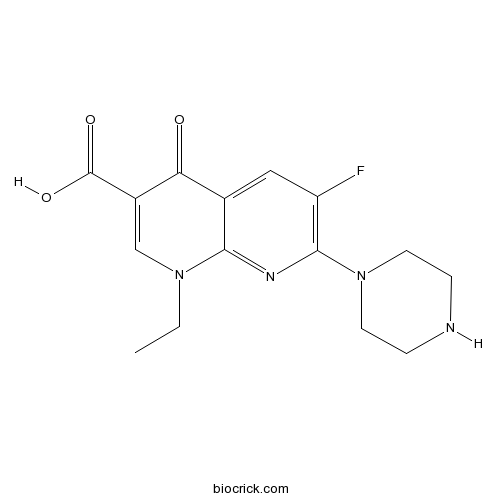
Ferrihydrite is commonly associated with antibiotics in natural environments due to its strong sorption capabilities and high specific surface area. Under reducing conditions, Fe(II) acts as a catalyst for the transformation of ferrihydrite into more crystalline minerals. However, the influence of antibiotic molecular structure on the Fe(II)-catalyzed transformation of ferrihydrite and the associated degradation mechanisms of antibiotics have remained unclear. This study employed enoxacin (ENO), a representative fluorinated pharmaceutical, and Pipemidic acid (PPA), a structural analog of ENO, to investigate the effect of fluorinated substituents on Fe(II)-facilitated ferrihydrite transformation. The results revealed that the transformation of ferrihydrite in the ENO system was 2.8 times greater than in the PPA system. ENO degradation reached 74.3 %, which was 1.13 times higher than that of PPA. ENO degradation products were more prone to hydroxylation, decarboxylation, and piperazine ring oxidation, whereas PPA degradation primarily involved oxidation of the piperazine ring. The fluorinated substituent in ENO facilitated ferrihydrite transformation by influencing the concentration of adsorbed Fe(II) and the distribution of antibiotics within the mineral inside. Furthermore, the fluorinated substituent in ENO enhanced degradation by increasing electron transfer between ENO and Fe(III), raising the content of adsorbed Fe(II) and promoting the formation of goethite. Collectively, these findings provide new insights into the environmental behavior of ferrihydrite and the fate of structurally different antibiotics in natural systems.
Antioxidant and Pro-Oxidant Properties of Selected Clinically Applied Antibiotics: Therapeutic Insights.[Pubmed:39458897]
Pharmaceuticals (Basel). 2024 Sep 24;17(10):1257.
BACKGROUND: The balance between antioxidants and pro-oxidants plays a significant role in the context of oxidative stress, influenced by both physiological and non-physiological factors. OBJECTIVES: In this study, 18 prescribed antibiotics (including doxycycline hydrochloride, tigecycline, rifampicin, tebipenem, cefuroxime, cefixime, potassium clavulanate, colistin, ampicillin, amoxicillin, amikacin, nalidixic acid, azithromycin, Pipemidic acid trihydrate, pivmecillinam, aztreonam, fosfomycin sodium, and ciprofloxacin) were subjected to simultaneous determination of antioxidant and pro-oxidant potential to assess if pro-oxidant activity is a dominant co-mechanism of antibacterial activity or if any antibiotic exhibits a balanced effect. METHODS: This study presents a recently developed approach for the simultaneous assessment of antioxidant and pro-oxidant potential on a single microplate in situ, applied to prescribed antibiotics. RESULTS: Ten antibiotics from eighteen showed lower antioxidant or pro-oxidant potential, while five exhibited only mild potential with DPPH50 values over 0.5 mM. The pro-oxidant antioxidant balance index (PABI) was also calculated to determine whether antioxidant or pro-oxidant activity was dominant for each antibiotic. Surprisingly, three antibiotics-doxycycline hydrochloride, tigecycline, and rifampicin-showed significant measures of both antioxidant and pro-oxidant activities. Especially notable was tebipenem, a broad-spectrum, orally administered carbapenem, showed a positive PABI index ratio, indicating a dominant antioxidant over pro-oxidant effect. CONCLUSIONS: These findings could be significant for both therapy, where the antibacterial effect is enhanced by radical scavenging activity, and biotechnology, where substantial pro-oxidant activity might limit microbial viability in cultures and consequently affect yield.
Novel quinolone substituted 1,3,4-oxadiazole derivatives: design, synthesis, antimicrobial and anti-inflammatory potential.[Pubmed:39096354]
Mol Divers. 2025 Jun;29(3):1911-1928.
A novel series of quinolone-substituted 1,3,4-oxadiazole derivatives 4(a-l) have been designed and synthesized. The target compounds were investigated for their antibacterial activity against gram positive (Staphylococcus aureus, ATCC 25923, Enterococcus faecalis, ATCC 29212) and gram negative bacterium (Escherichia coli, ATCC 25922, Pseudomonas aeruginosa, ATCC 27853) for antifungal activity using (Candida albicans, ATCC 10231) and anti-inflammatory activity as COX-II inhibitors, respectively. The 1,3,4-oxadiazole functionality was introduced at C-6 position of Pipemidic acid derivatives. IR, (1)H NMR and Mass spectrometry techniques confirmed the structure of synthesized derivatives. The quinolone (Pipemidic acid)-oxadiazole hybrid derivatives were effective against bacterial strains. When compared to ciprofloxacin (MIC 16 microg/mL), the compounds under consideration (4f, 4h, and 4k) showed significant antibacterial activity against all bacterial strains except Enterococcus faecalis, with MICs of 8 microg/mL. On the other hand, synthesized target compounds 4(a-l) did not respond well against Candida albicans fungal strain. The compound (4k) represents high % inhibition against COX-II. The compounds (4f, 4h and 4k) exhibited highest hydrogen bonding interaction with ARG57, ARG72, ARG78, LEU54 and MET16 target residues with a binding energy of - 8.4, - 8.6 and - 8.5 kcal/mol into the active pocket of DNA gyrase enzyme respectively even better in comparison to reference ligands. Based on the docking study, quinolone (Pipemidic acid) oxadiazole hybrid structural ligands exhibited strong interaction at binding pockets of DNA gyrase enzyme.
Identification, characterization and complete genome analysis of a Vibrio anguillarum isolated from Sebastes schlegelii.[Pubmed:38467165]
Microb Pathog. 2024 May;190:106611.
Vibrio anguillarum is an important fish pathogen in mariculture, which can infect fish with great economic losses. In this study, a Vibrio anguillarum isolated from Sebastes schlegelii was named VA1 and was identified and characterized from aspects of morphology, physiological and biochemical characteristics, 16SRNA, virulence genes, drug sensitivity, and extracellular enzyme activity. At the same time, The VA1 was investigated at the genomic level. The results showed that a Gram-negative was isolated from the diseased fish. The VA1 was characterized with uneven surface and visible flagella wrapped in a sheath and microbubble structures. The VA1 was identified as Vibrio anguillarum based on the 16S RNA sequence and physiological and biochemical characteristics. The VA1 carried most of the virulence genes (24/29) and was resistant to penicillin, oxacillin, ampicillin, cefradine, neomycin, Pipemidic acid, ofloxacin, and norfloxacin. The pathogenicity of the isolated strain was confirmed by an experimental analysis, and its LD50 was 6.43 x 10(6) CFU/ml. The VA1 had the ability to secrete gelatinase, protease, and amylase, and it had alpha-hemolysis. The whole genome size of the VA1 was 4232328bp and the G + C content was 44.95 %, consisting of two circular chromosomes, Chromosome1 and Chromosome2, with no plasmid. There were 1006 predicted protein coding sequences (CDSs). A total of 526 genes were predicted as virulence-related genes which could be classified as type IV pili, flagella, hemolysin, siderophore, and type VI secretion system. Virulence genes and correlation data were supported with the histopathological examination of the affected organs and tissues. 194 genes were predicted as antibiotic resistance genes, including fluoroquinolone antibiotic, aminoglycoside antibiotic, and beta-lactam resistant genes, which agreed with the results of the above drug sensitivity, indicating VA1 to be a multidrug-resistant bacterium. This study provided a theoretical basis for a better understanding of pathogenicity and antibiotic resistance, which might contribute to the prevention of V. anguillarum in the future.
Deep-sea in situ determination of sulfide using a sensitized chemiluminescent terbium complex.[Pubmed:36959381]
Anal Sci. 2023 Jul;39(7):1143-1149.
A new chemiluminescence (CL) method based on the chemiluminescent reaction between sulfide and an acidic permanganate solution was used to quantify sulfide in seawater. A terbium-Pipemidic acid complex was used as CL enhancer. The method was used to determine sulfide in the concentration range of 1-30 mumol/L in artificial seawater samples. The limit of detection of the method was 21 nmol/L sulfide. The sensitivity of the CL method was eight times higher than that of the CL method reported previously. Br(-) ions, which are conservative ions, interfered with sulfide. We investigated the effects of salinity, water temperature, and interfering chemicals,such asheavy-metal ions and organic matter, on the performance of the CL method. In addition, sulfite-spiked natural seawater samples were analyzed. The results demonstrate that the CL method can be used to develop a deep-sea sulfide analyzer.
Fate and Transport of Pharmaceuticals in Iron and Manganese Binary Oxide Coated Sand Columns.[Pubmed:36469013]
Environ Sci Technol. 2023 Jan 10;57(1):214-221.
Predicting the fate and transport of pharmaceuticals in terrestrial environments requires knowledge of their interactions with complex mineral assemblages. To advance knowledge along this front, we examined the reactivity of Pipemidic acid (PIP), a typical quinolone antibiotic, with quartz particles coated with a mixture of manganese oxide (MnO(2)) and goethite (alpha-FeOOH) under static and dynamic flow conditions. Batch and dynamic column experiments showed that PIP binding to MnO(2) proceeded through a heterogeneous redox reaction, while binding to goethite was not redox-reactive. Mixed columns of aggregated goethite-manganese particles however enhanced redox reactivity because (i) goethite facilitated the transport of dissolved Mn(II) ion and increased the retention of PIP oxidation products, and (ii) MnO(2) was protected from passivation. This mobility behavior was predicted using transport models accounting for adsorption and transformation kinetics of PIP on both goethite and MnO(2). This work sheds new light on reactivity changes of mixtures of Fe and Mn oxides under flow-through conditions and will have important implications in predicting the fate and transport of redox-active organic compounds as well as development of new geomedia filters for environmental remediation.
Alternative quinolone-resistance pathway caused by simultaneous horizontal gene transfer in Haemophilus influenzae.[Pubmed:36124853]
J Antimicrob Chemother. 2022 Nov 28;77(12):3270-3274.
BACKGROUND: Quinolone-resistant bacteria are known to emerge via the accumulation of mutations in a stepwise manner. Recent studies reported the emergence of quinolone low-susceptible Haemophilus influenzae ST422 isolates harbouring two relevant mutations, although ST422 isolates harbouring one mutation were never identified. OBJECTIVES: To investigate if GyrA and ParC from quinolone low-susceptible isolates can be transferred horizontally and simultaneously to susceptible isolates. METHODS: Genomic DNA was extracted from an H. influenzae isolate harbouring amino acid substitutions in both gyrA and parC and mixed with clinical isolates. The emergence of resistant isolates was compared, and WGS analysis was performed. RESULTS: By adding the genomic DNA harbouring both mutated gyrA and parC, resistant bacteria exhibiting recombination at gyrA only or both gyrA and parC loci were obtained on nalidixic acid and Pipemidic acid plates, and the frequency was found to increase with the amount of DNA. Recombination events in gyrA only and in both gyrA and parC occurred with at least 1 and 1-100 ng of DNA, respectively. The genome sequence of a representative strain showed recombination events throughout the genome. The MIC of quinolone for the resulting strains was found to be similar to that of the donor. Although the recombination efficacy was different among the various strains, all strains used in this study obtained multiple genes simultaneously. CONCLUSIONS: These findings indicate that H. influenzae can simultaneously obtain more than two mutated genes. This mechanism of horizontal transfer could be an alternative pathway for attaining quinolone resistance.
Distribution of florfenicol and norfloxacin in ice during water freezing process: Dual effects by fluorine substituents.[Pubmed:35973450]
Environ Pollut. 2022 Oct 15;311:119921.
Distribution in ice is regarded as one of important transport modes for pollutants in seasonal freeze-up waters in cold regions. However, the distribution characteristics and mechanisms of fluorinated antibiotics as emerging contaminants during the water freezing process remain unclear. Here, florfenicol and norfloxacin were selected as model fluorinated antibiotics to investigate their ice-water distribution. Effects of antibiotic molecular structure on the distribution were explored through comparative studies with their non-fluorinated structural analogs. Results showed that phase changes during the ice growth process redistributed the antibiotics, with antibiotic concentrations in water 3.0-6.4 times higher than those in ice. The solute-rich boundary layer with a concentration gradient was presented at the ice-water interface and controlled by constitutional supercooling during the freezing process. The ice-water distribution coefficient (K(IW)) values of antibiotics increased by 34.8%-38.0% with a doubling of the cooling area. The solute distribution coefficient (K(bs)) values of antibiotics at -20 degrees C were 65.6%-70.3% higher than at -10 degrees C. The K(IW) and K(bs) values of all antibiotics were negatively correlated with their water solubilities. The fluorine substituents influenced the binding energies between antibiotics and ice, resulting in a 1.1-fold increase in the binding energy of norfloxacin on the ice surface relative to its structural analog Pipemidic acid. The results provide a new insight into the transport behaviors of fluorinated pharmaceuticals in ice-water systems.
Rapid determination of 103 common veterinary drug residues in milk and dairy products by ultra performance liquid chromatography tandem mass spectrometry.[Pubmed:35938118]
Front Nutr. 2022 Jul 22;9:879518.
A multi-residue method has been developed for the identification and quantification of 103 common veterinary drug residues in milk and dairy Products. This method was based on QuEChERS with dispersive solid-phase where C18 sorbent and anhydrous sodium sulfate were used to sample purification. After evaporation and reconstitution, the samples were analyzed by ultra-performance liquid chromatography-tandem mass spectrometry. The mean recovery results were all higher than 60% except ampicillin, Pipemidic acid, enoxacin, and estriol, and the relative standard deviation was <20.0%. The limit of quantification ranged between 0.1 and 5 mug/kg for milk and between 0.5 and 25 mug/kg for milk powder. It was successfully used to detect residues of veterinary drug in real samples. This study proposes a simple and fast analytical method for monitoring multi-class veterinary drug residues to ensure food safety.

Calcutta University

University of Minnesota

University of Maryland School of Medicine

University of Illinois at Chicago

The Ohio State University

University of Zurich

Harvard University

Colorado State University

Auburn University

Yale University

Worcester Polytechnic Institute

Washington State University

Stanford University

University of Leipzig

Universidade da Beira Interior

The Institute of Cancer Research

Heidelberg University

University of Amsterdam

University of Auckland

TsingHua University

The University of Michigan

Miami University

DRURY University

Jilin University

Fudan University

Wuhan University

Sun Yat-sen University

Universite de Paris

Deemed University

Auckland University

The University of Tokyo

Korea University



