
5-PentadecylresorcinolCAS# 3158-56-3 |
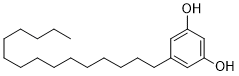
| Cas No. | 3158-56-3 | SDF | File under preparation. |
| PubChem ID | 76617.0 | Appearance | Powder |
| Formula | C21H36O2 | M.Wt | 320.5 |
| Type of Compound | N/A | Storage | Desiccate at -20°C |
| Solubility | Soluble in Chloroform,Dichloromethane,Ethyl Acetate,DMSO,Acetone,etc. | ||
| General tips | For obtaining a higher solubility , please warm the tube at 37 ℃ and shake it in the ultrasonic bath for a while.Stock solution can be stored below -20℃ for several months. We recommend that you prepare and use the solution on the same day. However, if the test schedule requires, the stock solutions can be prepared in advance, and the stock solution must be sealed and stored below -20℃. In general, the stock solution can be kept for several months. Before use, we recommend that you leave the vial at room temperature for at least an hour before opening it. |
||
| About Packaging | 1. The packaging of the product may be reversed during transportation, cause the high purity compounds to adhere to the neck or cap of the vial.Take the vail out of its packaging and shake gently until the compounds fall to the bottom of the vial. 2. For liquid products, please centrifuge at 500xg to gather the liquid to the bottom of the vial. 3. Try to avoid loss or contamination during the experiment. |
||
| Shipping Condition | Packaging according to customer requirements(5mg, 10mg, 20mg and more). Ship via FedEx, DHL, UPS, EMS or other couriers with RT, or blue ice upon request. | ||
Quality Control & MSDS
3D structure
Package In Stock

Number of papers citing our products


5-Pentadecylresorcinol Dilution Calculator
5-Pentadecylresorcinol Molarity Calculator
| 1 mg | 5 mg | 10 mg | 20 mg | 25 mg | |
| 1 mM | 3.1201 mL | 15.6006 mL | 31.2012 mL | 62.4025 mL | 78.0031 mL |
| 5 mM | 0.624 mL | 3.1201 mL | 6.2402 mL | 12.4805 mL | 15.6006 mL |
| 10 mM | 0.312 mL | 1.5601 mL | 3.1201 mL | 6.2402 mL | 7.8003 mL |
| 50 mM | 0.0624 mL | 0.312 mL | 0.624 mL | 1.248 mL | 1.5601 mL |
| 100 mM | 0.0312 mL | 0.156 mL | 0.312 mL | 0.624 mL | 0.78 mL |
| * Note: If you are in the process of experiment, it's necessary to make the dilution ratios of the samples. The dilution data above is only for reference. Normally, it's can get a better solubility within lower of Concentrations. | |||||
- 2-tert-Butyl-4-methoxyphenol
Catalog No.:BCX2351
CAS No.:121-00-6
- Pipemidic acid
Catalog No.:BCX2350
CAS No.:51940-44-4
- Methylaervine
Catalog No.:BCX2349
CAS No.:86293-40-5
- Pyridoxal phosphate
Catalog No.:BCX2348
CAS No.:54-47-7
- (+)-Licarin B
Catalog No.:BCX2347
CAS No.:42016-15-9
- Caffealdehyde
Catalog No.:BCX2346
CAS No.:141632-15-7
- Acridone
Catalog No.:BCX2345
CAS No.:578-95-0
- Lactose
Catalog No.:BCX2344
CAS No.:63-42-3
- Bryodulcosigenin
Catalog No.:BCX2343
CAS No.:88930-16-9
- D-Glucuronic acid
Catalog No.:BCX2342
CAS No.:6556-12-3
- 6-Hydroxyflavanone
Catalog No.:BCX2341
CAS No.:190831-08-4
- Guanidinoacetic acid
Catalog No.:BCX2340
CAS No.:352-97-6
- Dotriacontane
Catalog No.:BCX2353
CAS No.:544-85-4
- Phenylephrine
Catalog No.:BCX2354
CAS No.:59-42-7
- Uridine 5'-diphosphogaluronic acid trisodium
Catalog No.:BCX2355
CAS No.:148407-07-2
- Cisplatin
Catalog No.:BCX2356
CAS No.:15663-27-1
- Adenosine triphosphate
Catalog No.:BCX2357
CAS No.:56-65-5
- Uridine 5'-diphosphoxylose disodium
Catalog No.:BCX2358
CAS No.:108320-89-4
- Uridine 5'-diphosphogalactose disodium
Catalog No.:BCX2359
CAS No.:137868-52-1
- 2,2-Dimethyl-2,3-dihydroquinazolin-4(1H )-one
Catalog No.:BCX2360
CAS No.:77726-78-4
- Desmosterol
Catalog No.:BCX2361
CAS No.:313-04-2
- 7-Dehydrocholestero
Catalog No.:BCX2362
CAS No.:434-16-2
- Acetyl CoA
Catalog No.:BCX2363
CAS No.:102029-73-2
- CoA
Catalog No.:BCX2364
CAS No.:85-61-0
Isolation of Bioactive Compounds, Antibacterial Activity, and Action Mechanism of Spore Powder From Aspergillus niger xj.[Pubmed:35898902]
Front Microbiol. 2022 Jul 11;13:934857.
Aspergillus fungi can produce a wide range of secondary metabolites, and they have represented a potential resource of novel bioactive compounds. Bacterial plant diseases have a serious impact on the sustainable development of agriculture worldwide, so it is necessary to use natural antibacterial compounds in microorganisms to control plant pathogens. This study was conducted to investigate the bioactive compounds of Aspergillus niger xj, three plant pathogens (Agrobacterium tumefaciens T-37, Erwinia carotovora EC-1, and Ralstonia solanacearum RS-2) were used as indicator bacteria, according to the biological activity tracking, five compounds were isolated from A. niger xj spore powder, and characterization of compounds was done by NMR ((1)H-NMR and (13)C-NMR) and EI-MS and was identified as ergosterol (1), beta-sitosterol (2), 5-Pentadecylresorcinol (3), 5-hydroxymethyl-2-furancarboxylic acid (4), and succinimide (5). Compounds 3 and 5 were isolated from A. niger xj for the first time. The minimum inhibitory concentration (MIC) of five compounds against three plant pathogens was evaluated, the results showed that compound 4 exhibited the strongest antibacterial activity against tested bacteria, and RS-2 was the most sensitive to compound 4, showing the lowest MIC of 15.56 mug/ml. We concluded that the mechanism of action of the compound 4 against RS-2 might be described as compound 4 acting on bacterial protein synthesis and intracellular metabolism according to the results of the scanning electron microscopy observation, permeability of cell membrane and SDS-PAGE. These results indicated that compound 4 has good potential to be as a biocontrol agent. In conclusion, the results from this study demonstrated that the compounds with antibacterial activity are of great significance of the prevention and control of plant phytopathogenic bacteria, and they may be applicable to exploring alternative approaches to integrated control of phytopathogens.
The Impact of Some Natural Phenolic Compounds on alpha-Glucosidase and Sorbitol Dehydrogenase Enzymes, and Anti-leukemia Cancer Potential, Spin Density Distributions, and in silico Studies.[Pubmed:35584958]
J Oleo Sci. 2022 Jun 3;71(6):863-873.
In this study, some phenolic compounds including 4-Hexylresorcinol, 5-Pentadecylresorcinol, 5-Tricosylresorcinol, Bilobol, and Urushiol were tested against alpha-glycosidase enzyme from Saccharomyces cerevisiae and sorbitol dehydrogenase enzymes from sheep liver. These compounds determined good inhibition properties against alpha-glycosidase and sorbitol dehydrogenase (SDH) enzymes. IC(50) values were record in the range of 1.45+/-0.20-24.532+/-3.83 muM for alpha-glycosidase and 6.20+/-0.96-108.22+/-18.02 muM for SDH. These inhibitor compounds can be selective drug candidates as anti-diabetic agents, because of they have inhibition properties against both enzymes. In this study, the anti-oxidant activities of the molecules were compared with density functional theory (DFT) calculations. Comparison was made with the experimental enzymes by molecular modeling calculations. In the cellular and molecular part of the recent study, the treated cells with some phenolic compounds were assessed by molecularly targeted therapy (MTT) assay for cytotoxicity and anti-acute lymphoblastic leukemia potentials on Clone 15 HL-60, HL-60, HL-60/MX1, and HL-60/MX2 cell lines. The IC(50) of these compounds were microg/mL level against these cell lines.
Encapsulation of stevia rebaudiana Bertoni aqueous crude extracts by ionic gelation - Effects of alginate blends and gelling solutions on the polyphenolic profile.[Pubmed:30724178]
Food Chem. 2019 Mar 1;275:123-134.
We formulated and characterised two alginate blends for the encapsulation of stevia extract (SE) via ionic gelation through an extrusion technique. Calcium chloride in SE and calcium chloride solutions were assessed as crosslinkers to overcome phenolic losses by diffusion and increase encapsulation efficiency (EE). Regardless of the blend, all stevia-loaded beads exhibited high EE (62.7-101.0%). The size of the beads decreased as EE increased. Fourier transform infrared analysis showed increased hydrogen bonding between SE and alginates, confirming the successful incorporation of SE within the matrix. Untargeted metabolomics profiling identified 479 free and encapsulated polyphenolic compounds. Flavonoids (catechin and luteolin equivalents) were predominant in SE whereas tyrosols and 5-Pentadecylresorcinol equivalents were predominant in all bead formulations. Three-common discriminant compounds were exclusive to each blend and were inversely affected by the crosslinking conditions. Both alginate blends have been shown to be feasible as carrier systems of stevia extracts independent of crosslinking conditions.
Alkenylresorcinols and cytotoxic activity of the constituents isolated from Labisia pumila.[Pubmed:22633846]
Phytochemistry. 2012 Aug;80:42-9.
Phytochemical investigation on the leaves of Labisia pumila (Myrsinaceae), an important medicinal herb in Malaysia, has led to the isolation of 1-O-methyl-6-acetoxy-5-(pentadec-10Z-enyl)resorcinol (1), labisiaquinone A (2) and labisiaquinone B (3). Along with these, 16 known compounds including 1-O-methyl-6-acetoxy-5-Pentadecylresorcinol (4), 5-(pentadec-10Z-enyl)resorcinol (5), 5-(pentadecyl)resorcinol (6), (-)-loliolide (7), stigmasterol (8), 4-hydroxyphenylethylamine (9), 3,4,5-trihydroxybenzoic acid (10), 3,4-dihydroxybenzoic acid (11), (+)-catechin (12), (-)-epicatechin (13), kaempferol-3-O-alpha-rhamnopyranosyl-7-O-beta-glycopyranoside (14), kaempferol-4'-O-beta-glycopyranoside (15), quercetin-3-O-alpha-rhamnopyranoside (16), kaempferol-3-O-alpha-rhamnopyranoside (17), (9Z,12Z)-octadeca-9,12-dienoic acid (18) and stigmasterol-3-O-beta-glycopyranoside (19) were also isolated. The structures of these compounds were established on the basis of 1D and 2D NMR spectroscopy techniques ((1)H, (1)(3)C, COSY, HSQC, NOESY and HMBC experiments), mass spectrometry and chemical derivatization. Among the constituents tested 1 and 4 exhibited strongest cytotoxic activity against the PC3, HCT116 and MCF-7 cell lines (IC(5)(0) values
Antitumor effect of resorcinol derivatives from the roots of Ardisia brevicaulis by inducing apoptosis.[Pubmed:21751842]
J Asian Nat Prod Res. 2011 Aug;13(8):734-43.
Two new resorcinol derivatives 2-methoxy-4-hydroxy-6-(8Z-pentadecenyl)-benzene-1-O-acetate (1) and 2-methoxy-4-hydroxy-6-pentadecyl-benzene-1-O-acetate (2), together with four known compounds 2-methoxy-4-hydroxy-6-tridecyl-benzene-1-O-acetate (ardisiphenol D, 3), 5-(8Z-pentadecenyl)resorcinol (4), 5-Pentadecylresorcinol (5), 5-tridecylresorcinol (6), have been isolated from the roots of Ardisia brevicaulis in our previous work. In the present study, the inhibitory effect of 1-6 on the proliferation of human pancreatic PANC-1, human lung A549, human gastrointestinal carcinoma SGC 7901, human breast MCF-7, and human prostate PC-3 cancer cells was evaluated by the methyl thiazolyl tetrazolium method. Compounds 1-6 all showed inhibitory activities against the proliferation of PANC-1, A549, SGC7901, MCF-7, and PC-3 cancer cells. Compound 3, the most active agent and the main constituent with the highest yield, induced apoptosis of PANC-1 cells (the most sensitive cell line among the cell lines screened) via the activation of caspase-3 and caspase-9, up-regulation of the ratio of bax/bcl-2 protein expression.
Two new resorcinol derivatives with strong cytotoxicity from the roots of Ardisia brevicaulis Diels.[Pubmed:21162003]
Chem Biodivers. 2010 Dec;7(12):2901-7.
Two new resorcinol derivatives, 4-hydroxy-2-methoxy-6-[(8Z)-pentadec-8-en-1-yl]phenyl acetate (1) and 4-hydroxy-2-methoxy-6-pentadecylphenyl acetate (2), together with known compounds ardisiphenol D (3), 5-tridecylresorcinol (4), 5-Pentadecylresorcinol (5), 5-[(8Z)-pentadec-8-en-1-yl]resorcinol (6), belamcandaquinones C and D (7 and 8, resp.), ardisicrenoside A, ardisiacrispin B, (22E)-24-ethyl-5alpha-cholesta-7,22-dien-3-one, and (22E)-24-ethyl-5alpha-cholesta-7,22-dien-3beta-ol were isolated from the MeOH extract of the roots of Ardisia brevicaulis Diels. Their structures were determined by spectroscopic analysis including ESI- and EI-MS, and NMR data. Cytotoxicities of 1-4 against cell lines A549, MCF-7, and PANC-1 were tested in vitro by the MTT (=3-(4,5-dimethylthiazol-2-yl)-2,5-diphenyl-2H-tetrazolium bromide) method. Compounds 1-4 showed cytotoxic activity against all cell lines stronger than that of cisplatin against A549.
Kneglomeratanol, kneglomeratanones A and B, and related bioactive compounds from Knema glomerata.[Pubmed:8201311]
J Nat Prod. 1994 Mar;57(3):376-81.
One new phenylalkyl phenol, kneglomeratanol [1], and two new acetophenones, kneglomeratanones A [2] and B [3], together with ten known compounds, 3-(12'-phenyldodecyl)-phenol [4], 3-(10'-phenyldecyl)-phenol [5], 5-Pentadecylresorcinol [6], 5-(10'-phenyldecyl)-resorcinol [7], 5-(12'-phenyldodecyl)-resorcinol [8], 2,4-dihydroxy-6-(10'-phenyldecyl)-acetophenone [9], 2-hydroxy-6-(12'-phenyldodecyl)-benzoic acid [10], formononetin, biochanin A, and 8-O-methylretusin, have been isolated from the stem bark of Knema glomerata. Brine shrimp lethality was used for the activity-directed chromatographic fractionations. All of these compounds showed moderate but significant toxicities to three human tumor cell lines and inhibited the growth of crown gall tumors on discs of potato tubers.
5-Alkylresorcinols from Hakea amplexicaulis that cleave DNA.[Pubmed:2980968]
Chem Res Toxicol. 1988 Jul-Aug;1(4):204-7.
A dichloromethane extract of Hakea amplexicaulis was found to cause strand scission of phi X174 replicative form DNA in the presence of Cu(II). Bioassay-guided fractionation of this extract afforded five compounds capable of mediating DNA relaxation. Structure determination of the active principles indicated that they were 5-tridecylresorcinol (1), 5-pentadec-cis-8-enylresorcinol (2), 5-heptadeca-8,11-dienylresorcinol (3), 5-Pentadecylresorcinol (4), and 5-heptadec-cis-8-enylresorcinol (5). As noted previously for compounds in this structural series, DNA cleavage was enhanced significantly by incubation under (alkaline) conditions known to promote oxygenation of the parent compounds on the aromatic nucleus.
Contact dermatitis from Grevillea 'Robyn Gordon'.[Pubmed:2946534]
Contact Dermatitis. 1986 Sep;15(3):126-31.
Grevillea 'Robyn Gordon' is an Australian hybrid plant which may cause allergic contact dermatitis. Over the past 8 years, it has been planted extensively in Australia and is now being exported to the United States and other Western countries. Recently, an explosion in incidence of contact dermatitis due to this plant has been seen. 24 patients who were suspected of being sensitive to it were patch tested to fresh plant and extracts with confirmation of sensitivity. A cross sensitivity to Toxicodendron was demonstrated clinically and on patch testing. The allergen in Toxicodendron, 3 pentadecylcatechol, is closely linked in chemical structure to 5-Pentadecylresorcinol, present in Grevillea banksii and tridecylresorcinol in Grevillea robusta. Patch testing in patients sensitive to Grevillea 'Robyn Gordon' with tridecylresorcinol produced positive reactions, thus implicating the sensitizing role of long chain alkyl resorcinols in Grevillea 'Robyn Gordon' allergy. There is a likelihood that this sensitizing potential extends to other plants of the Grevillea genus, e.g., Grevillea robusta. With the spread of Grevillea 'Robyn Gordon' to other markets, this problem will become increasingly common.
Influence of chemical reactivity of urushiol-type haptens on sensitization and the induction of tolerance.[Pubmed:3742608]
Cell Immunol. 1986 Jan;97(1):189-96.
Contact sensitization to components of the urushiol oils of poison oak and poison ivy appears to require covalent bond formation between the o-quinones derived from urushiol catechols and nucleophilic groups on proteins. Previous studies using a murine delayed hypersensitivity model demonstrated that 5-methyl-3-pentadecylcatechol (5-Me-PDC) is an epicutaneous tolerogen to the parent compound and a weak sensitizer to itself. To investigate further the structural requirements for sensitization vs suppression, 5,6-dimethyl-3-pentadecylcatechol (5,6-di-Me-PDC) and 4,5,6-trimethylpentadecylcatechol (4,5,6-tri-Me-PDC) were synthesized. The former compound is blocked at both preferred sites for covalent bond formation and the latter is completely blocked towards conjugate addition reactions. These compounds were tested for sensitizing and suppressive ability. Epicutaneous application of both analogs suppressed subsequent induction of sensitization to 3-pentadecylcatechol (PDC) and 3-heptadecylcatechol (HDC). Lymph node cells from animals treated with 5,6-di-Me-PDC could transfer suppression. The dimethyl analog, 5,6-di-Me-PDC, but not the trimethyl analog also exhibited weak sensitizing capacity. The urushiol analogs 5-Pentadecylresorcinol (PDR) and 3-heptadecylveratrole (HDV) which cannot form o-quinones were found to be ineffective sensitizers as well. HDV in addition produced no blastogenesis in draining lymph nodes whereas lymph node cell proliferation induced by 4,5,6-tri-Me-PDC followed the same kinetics as previously observed for HDC. PDR elicited weak proliferation with a different time course. These and previous studies indicate that blocking the C5-position on the catechol ring favors the induction of suppression, although some sensitizing capacity may be retained. Covalent bond formation may not be necessary for the induction of active suppressor cell populations.

Calcutta University

University of Minnesota

University of Maryland School of Medicine

University of Illinois at Chicago

The Ohio State University

University of Zurich

Harvard University

Colorado State University

Auburn University

Yale University

Worcester Polytechnic Institute

Washington State University

Stanford University

University of Leipzig

Universidade da Beira Interior

The Institute of Cancer Research

Heidelberg University

University of Amsterdam

University of Auckland

TsingHua University

The University of Michigan

Miami University

DRURY University

Jilin University

Fudan University

Wuhan University

Sun Yat-sen University

Universite de Paris

Deemed University

Auckland University

The University of Tokyo

Korea University



