
SaxifraginCAS# 34199-21-8 |
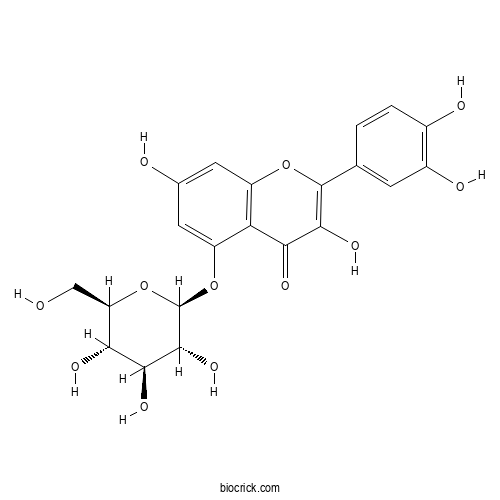
| Cas No. | 34199-21-8 | SDF | File under preparation. |
| PubChem ID | 52946987.0 | Appearance | Yellow powder |
| Formula | C21H20O12 | M.Wt | 464.4 |
| Type of Compound | N/A | Storage | Desiccate at -20°C |
| Solubility | Soluble in Chloroform,Dichloromethane,Ethyl Acetate,DMSO,Acetone,etc. | ||
| Chemical Name | 2-(3,4-dihydroxyphenyl)-3,7-dihydroxy-5-[(2S,3R,4S,5S,6R)-3,4,5-trihydroxy-6-(hydroxymethyl)oxan-2-yl]oxychromen-4-one | ||
| SMILES | C1=CC(=C(C=C1C2=C(C(=O)C3=C(O2)C=C(C=C3OC4C(C(C(C(O4)CO)O)O)O)O)O)O)O | ||
| Standard InChIKey | QJTYCCFDQWFJHU-HMGRVEAOSA-N | ||
| Standard InChI | InChI=1S/C21H20O12/c22-6-13-15(26)17(28)19(30)21(33-13)32-12-5-8(23)4-11-14(12)16(27)18(29)20(31-11)7-1-2-9(24)10(25)3-7/h1-5,13,15,17,19,21-26,28-30H,6H2/t13-,15-,17+,19-,21-/m1/s1 | ||
| General tips | For obtaining a higher solubility , please warm the tube at 37 ℃ and shake it in the ultrasonic bath for a while.Stock solution can be stored below -20℃ for several months. We recommend that you prepare and use the solution on the same day. However, if the test schedule requires, the stock solutions can be prepared in advance, and the stock solution must be sealed and stored below -20℃. In general, the stock solution can be kept for several months. Before use, we recommend that you leave the vial at room temperature for at least an hour before opening it. |
||
| About Packaging | 1. The packaging of the product may be reversed during transportation, cause the high purity compounds to adhere to the neck or cap of the vial.Take the vail out of its packaging and shake gently until the compounds fall to the bottom of the vial. 2. For liquid products, please centrifuge at 500xg to gather the liquid to the bottom of the vial. 3. Try to avoid loss or contamination during the experiment. |
||
| Shipping Condition | Packaging according to customer requirements(5mg, 10mg, 20mg and more). Ship via FedEx, DHL, UPS, EMS or other couriers with RT, or blue ice upon request. | ||
Quality Control & MSDS
3D structure
Package In Stock

Number of papers citing our products


Saxifragin Dilution Calculator
Saxifragin Molarity Calculator
-
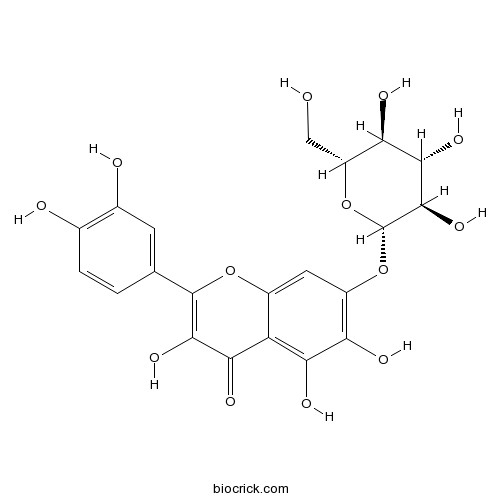 Quercetagetin-7-O-glucosideCatalog No.: BCN6480CAS No.: 548-75-4
-
 Quercetin-7-O-beta-D-glucopyranosideCatalog No.: BCN1261CAS No.: 491-50-9
-
 SpiraeosideCatalog No.: BCC8251CAS No.: 20229-56-5
-
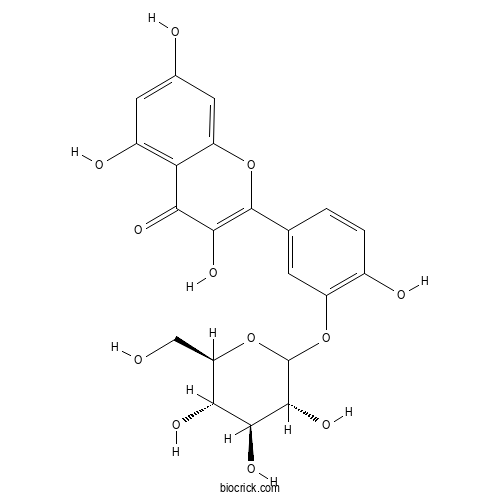 Quercetin-3'-glucosideCatalog No.: BCN9987CAS No.: 19254-30-9
-
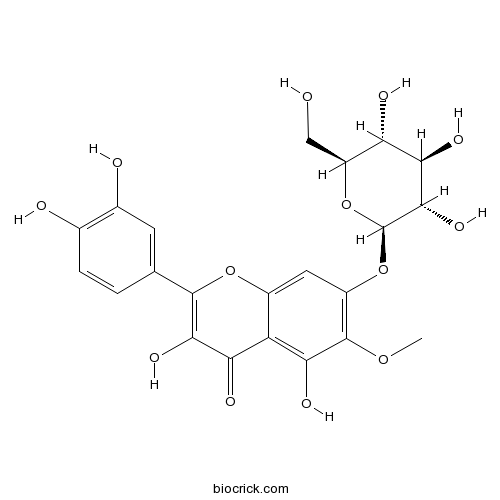 PatulitrinCatalog No.: BCN8794CAS No.: 19833-25-1
-
 HyperosideCatalog No.: BCN5570CAS No.: 482-36-0
-
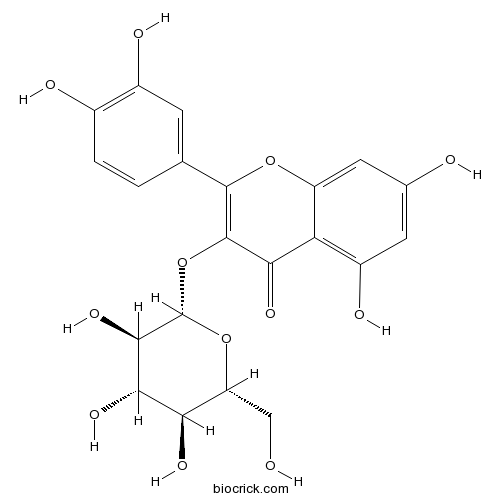 IsoquercitrinCatalog No.: BCN5569CAS No.: 482-35-9
-
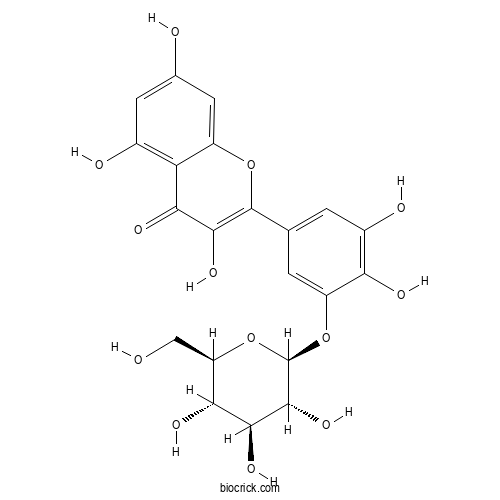 CannabiscitrinCatalog No.: BCN9870CAS No.: 520-14-9
-
 AvicularinCatalog No.: BCN5771CAS No.: 572-30-5
-
 Luteollin 5-glucosideCatalog No.: BCN5391CAS No.: 20344-46-1
-
 Kaempferol-4'-O-beta-D-glucopyranosideCatalog No.: BCN8130CAS No.: 52222-74-9
| 1 mg | 5 mg | 10 mg | 20 mg | 25 mg | |
| 1 mM | 2.1533 mL | 10.7666 mL | 21.5332 mL | 43.0663 mL | 53.8329 mL |
| 5 mM | 0.4307 mL | 2.1533 mL | 4.3066 mL | 8.6133 mL | 10.7666 mL |
| 10 mM | 0.2153 mL | 1.0767 mL | 2.1533 mL | 4.3066 mL | 5.3833 mL |
| 50 mM | 0.0431 mL | 0.2153 mL | 0.4307 mL | 0.8613 mL | 1.0767 mL |
| 100 mM | 0.0215 mL | 0.1077 mL | 0.2153 mL | 0.4307 mL | 0.5383 mL |
| * Note: If you are in the process of experiment, it's necessary to make the dilution ratios of the samples. The dilution data above is only for reference. Normally, it's can get a better solubility within lower of Concentrations. | |||||
- Taccafurostanoside B
Catalog No.:BCX2275
CAS No.:98569-68-7
- Taccafurostanoside A
Catalog No.:BCX2274
CAS No.:290809-76-6
- 1,2-Di-O-linolenoylglycerol 3-O-β-D-galactopyranoside
Catalog No.:BCX2273
CAS No.:111187-16-7
- 1β,4β-Dihydroxy-11,12,13-trinoreudesm-5-en-7-one
Catalog No.:BCX2272
CAS No.:2170107-68-1
- (2E,6Z)-8,9-Dihydroxy-N-isobutyldeca-2,6-dienamide
Catalog No.:BCX2271
CAS No.:1492015-25-4
- (2E,7E)-6,9-Dihydroxy-N-isobutyldeca-2,7-dienamide
Catalog No.:BCX2270
CAS No.:1383715-05-6
- (2E,7E)-6,9-Dihydroxy-N-isobutyldeca-2,7-dienamide
Catalog No.:BCX2269
CAS No.:1492015-24-3
- 7-O-Galloyltricetiflavan
Catalog No.:BCX2268
CAS No.:889447-89-6
- Taccalonolide Q
Catalog No.:BCX2267
CAS No.:488791-19-1
- Isosyringinoside
Catalog No.:BCX2266
CAS No.:152686-85-6
- 7-epi-Teucrenone
Catalog No.:BCX2265
CAS No.:165898-48-6
- Valerianol
Catalog No.:BCX2264
CAS No.:20489-45-6
- Chantriolide B
Catalog No.:BCX2277
CAS No.:558470-60-3
- Chantriolide A
Catalog No.:BCX2278
CAS No.:558470-59-0
- Rosthorin A
Catalog No.:BCX2279
CAS No.:93772-27-1
- 30-Hydroxyquinoa-saponin 1
Catalog No.:BCX2280
CAS No.:898565-67-8
- (3R,5R)-1,7-Bis(3,4-dihydroxyphenyl)heptane-3,5-diol 3-O-glucoside
Catalog No.:BCX2281
CAS No.:408324-05-0
- Zizyvoside I
Catalog No.:BCX2282
CAS No.:81425-28-7
- Anol glucoside
Catalog No.:BCX2283
CAS No.:120396-85-2
- Rubescensin D
Catalog No.:BCX2284
CAS No.:88907-93-1
- Rabdoternin D
Catalog No.:BCX2285
CAS No.:155969-81-6
- 7-O-Ethylepirosmanol
Catalog No.:BCX2286
CAS No.:1394242-96-6
- 4'-O-Methylthujaplicatin
Catalog No.:BCX2287
CAS No.:1613381-17-1
- Plasiaticine B
Catalog No.:BCX2288
CAS No.:1528768-32-2
Comprehensive comparative evaluation of bioactive compound and antioxidant capacity in different parts of alpine bistort.[Pubmed:41337926]
Food Chem. 2026 Jan 15;499:147288.
A comprehensive evaluation was conducted on the bioactive compounds and antioxidant capacities in different plant parts (achene, cauline leaf, and rhizome) of alpine bistort, Bistorta vivipara (L.) Gray. Qualitative analysis identified 76 compounds, with flavonoids and organic acids as the predominant chemical classes across all plant parts. Quantitative analyses indicated variations in the content of these compounds across plant parts. Cultured alpine bistort exhibited a consistent trend of higher phytochemical content and greater uniformity compared to the natural alpine bistort across all plant parts. Four compounds (cianidanol, miquelianin, Saxifragin, and neochlorogenic acid) showed potential as part-specific discriminators. Among all plant parts evaluated, the rhizome demonstrated the highest antioxidant capacity. Network pharmacology and molecular docking analyses indicated that flavonoids and organic acids serve as the primary antioxidant compounds, acting through multiple targets and pathways. These findings provide important evidence supporting the industrial application of alpine bistort.
Anti-inflammatory Activity of Saxifragin via Inhibition of NF-kappaB Involves Caspase-1 Activation.[Pubmed:26171782]
J Nat Prod. 2015 Jul 24;78(7):1579-85.
Saxifragin, the 5-glucoside of the flavonoid quercetin, is found in plants and insects. It has been reported that Saxifragin has peroxynitrite-scavenging effects. However, the mechanism of anti-inflammatory effects of Saxifragin has not yet been clearly identified. In this study, we investigated the anti-inflammatory effects of Saxifragin in lipopolysaccharide (LPS)-stimulated RAW 264.7 macrophages and animal models of inflammation. We found that Saxifragin suppressed the production of nitric oxide (NO) and prostaglandin E2 (PGE2) in LPS-activated RAW 264.7 macrophages by suppressing the level of protein and mRNA expression of inducible nitric oxide synthase (iNOS) and cyclooxygenase-2 (COX-2), respectively. Furthermore, Saxifragin inhibited mRNA expression of pro-inflammatory cytokines including tumor necrosis factor (TNF)-alpha, interleukin (IL)-6, and IL-1beta. We studied the inhibitory effects of Saxifragin on the nuclear translocation of nuclear factor (NF)-kappaB, activation of caspase-1, and phosphorylation of c-Jun N-terminal kinase (JNK) and extracellular signal-regulated kinase (ERK). Furthermore, pretreatment with Saxifragin increased the survival rate of mice with LPS-induced septic death. Collectively, these findings suggest that Saxifragin exerts anti-inflammatory activity by inhibiting NF-kappaB, caspase-1, and mitogen-activated protein kinase (MAPK) activation.
Simultaneous quantitative determination and validation of quercetin glycosides with peroxynitrite-scavenging effects from Saussurea grandifolia.[Pubmed:22177413]
J Pharm Biomed Anal. 2012 Mar 5;61:247-51.
The leaves of Saussurea grandifolia (Compositae) are used as chwinamul, a well-known Korean mountainous vegetable, or to treat hepatitis and hematuria. Since the methanolic extract of S. grandifolia leaves exhibit a potent peroxynitrite-scavenging effect, phytochemical and high-performance liquid chromatographic (HPLC) analyses were employed to identify and simultaneously quantify the active components: chlorogenic acid and 3,5-di-O-caffeoylquinic acid (3,5-DQ) as caffeoylquinic acids, and quercetin, isoquercitrin (quercetin-3-glucoside), Saxifragin (quercetin-5-glucoside), and rutin (quercetin-3-rutinoside). Validation of HPLC methods was performed to verify the linearity, LOD, LOQ, intra-day and inter-day variabilities, recovery, and repeatability to ensure that this method is selective, sensitive, precise, accurate and reproducible. In particular, leaves contained Saxifragin with potent peroxynitrite-scavenging activity (IC(50), 0.67 muM) as 4.65 mg/g dry weight, which is equivalent to 33.74 mg/g extract.
[Isolation and identification of saxifragin from Glycyrrhiza uralensis Fisch].[Pubmed:12205887]
Zhongguo Zhong Yao Za Zhi. 1999 May;24(5):295, 319.
OBJECTIVE: To extract flavonoid constituents from Glycyrrhiza uralensis. METHOD: 30% EtOH extraction and column chromatographic isolation. RESULT: A flavonoid compound was isolated. CONCLUSION: Obtained from G. uralensis for the first time, the flavonoid compound was identified as Saxifragin through spectral, physical and chemical analyses.

Calcutta University

University of Minnesota

University of Maryland School of Medicine

University of Illinois at Chicago

The Ohio State University

University of Zurich

Harvard University

Colorado State University

Auburn University

Yale University

Worcester Polytechnic Institute

Washington State University

Stanford University

University of Leipzig

Universidade da Beira Interior

The Institute of Cancer Research

Heidelberg University

University of Amsterdam

University of Auckland

TsingHua University

The University of Michigan

Miami University

DRURY University

Jilin University

Fudan University

Wuhan University

Sun Yat-sen University

Universite de Paris

Deemed University

Auckland University

The University of Tokyo

Korea University



