Hypertension Research
Hypertension is defined as a chronic elevation in blood pressure with a systolic pressure over 140 mmHg and a diastolic pressure over 90 mmHg.The majority of hypertension is primary - that is, an increase in blood pressure with no underlying cause - yet pathologies that affect the kidney or endocrine system may also trigger hypertension. This is known as secondary hypertension. The exact mechanism of primary hypertension is yet to be elucidated, though dysfunctions in mechanisms that regulate vascular tone, both directly and indirectly, have been identified as having a major influence on hypertension.
Hypertension Research Products Targets
- Adenosine A2B Receptor (7)
- Adenosine A2A Receptor (11)
- Lipoxygenase (8)
- Leukotriene and Related Receptor (13)
- Bradykinin Receptor (12)
- Others (10)
- Cyclooxygenase (24)
- Apelin Receptor (5)
- 5-HT1F Receptor (2)
- 5-HT1E Receptor (1)
- 5-HT1D Receptor (13)
- 5-HT1B Receptor (20)
- 5-HT1A Receptor (25)
- 5-HT2C Receptor (23)
- 5-HT2B Receptor (12)
- 5-HT2A Receptor (25)
- Natriuretic Peptide Receptor (4)
- Mineralocorticoid Receptor (7)
- Angiotensin-Converting Enzyme (8)
- 5-HT7 Receptor (11)
- 5-HT6 Receptor (14)
- 5-ht5 Receptor (2)
- 5-HT4 Receptor (17)
- Histamine H4 Receptor (12)
- Histamine H3 Receptor (22)
- Histamine H2 Receptor (10)
- Histamine H1 Receptor (17)
- Adenosine A3 Receptor (8)
- Adenosine A1 Receptor (12)
- Calcitonin and Related Receptor (10)
- VIP Receptor (7)
- Vasopressin Receptor (6)
- NO donors and precursors (9)
- nNOS (5)
- iNOS (11)
- eNOS (1)
- Urotensin-II Receptor (8)
- ETB Receptor (6)
- ETA Receptor (5)
- Angiotensin AT2 Receptor (3)
- Angiotensin AT1 Receptor (9)
- M5 Receptor (2)
- M4 Receptor (3)
- M3 Receptor (4)
- Purinergic (P2Y) Receptor (31)
- M2 Receptor (5)
- M1 Receptor (8)
- Neuromedin U (2)
- NKCC (2)
- Adrenergic α2 Receptor (33)
- Adrenergic α1 Receptor (22)
- Adrenergic β3 Receptor (12)
- Adrenergic β2 Receptor (6)
- Adrenergic β1 Receptor (7)
- Protease-Activated Receptor (23)
- Prostanoid Receptor (24)
- Sphingosine-1-Phosphate Receptor (13)
- Phosphodiesterase (34)
Products for Hypertension Research - Page 46
- Cat.No. Product Name Information/Activity
-
BCC7691
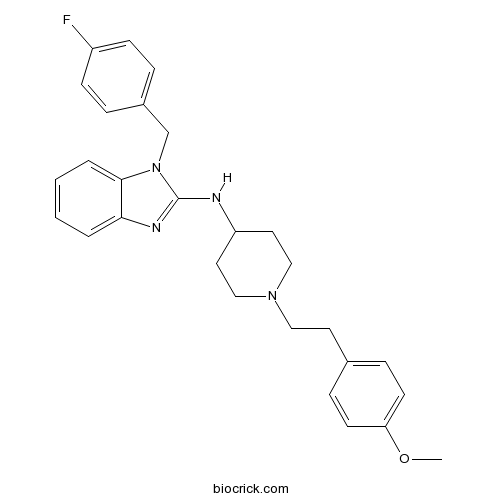
Astemizole
Astemizole (R 43512), a second-generation antihistamine drug to diminish allergic symptoms with a long duration of action, is a histamine H1-receptor antagonist, with an IC50 of 4 nM. Astemizole also shows potent hERG K+ channel blocking activity with an IC50 of 0.9 nM. Astemizole has antipruritic effects.
-
BCC4517
Cetirizine DiHCl
Cetirizine dihydrochloride, a second-generation antihistamine and the carboxylated metabolite of hydroxyzine, is a specific, orally active and long-acting histamine H1-receptor antagonist. Cetirizine dihydrochloride marks antiallergic properties and inhibits eosinophil chemotaxis during the allergic response[1][2][3].

-
BCC4528
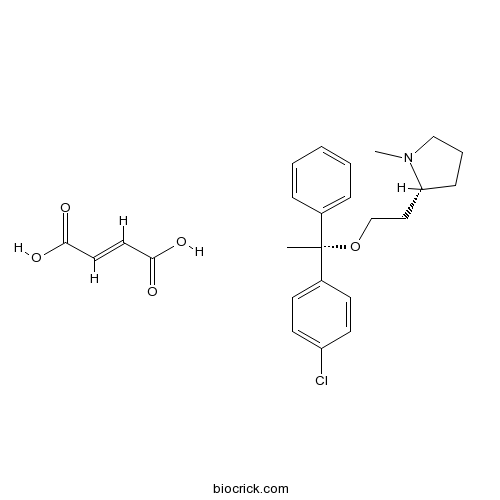
Clemastine Fumarate
Clemastine (fumarate) (HS-592 (fumarate)) is a selective histamine H1 receptor antagonist with IC50 of 3 nM.
-
BCC1486
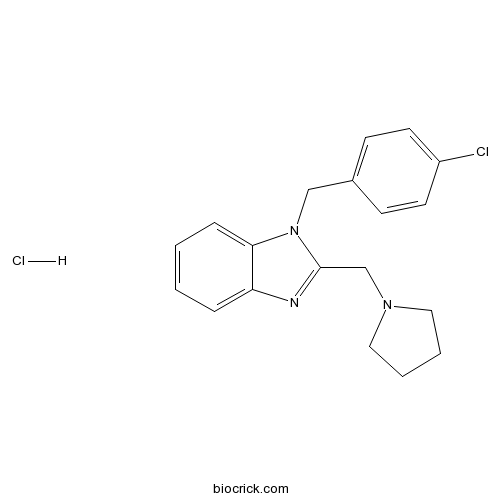
Clemizole hydrochloride
Clemizole hydrochloride is an H1 histamine receptor antagonist, is found to substantially inhibit HCV replication. The IC50 of Clemizole for RNA binding by NS4B is 24±1 nM, whereas its EC50 for viral replication is 8 µM.
-
BCC4540
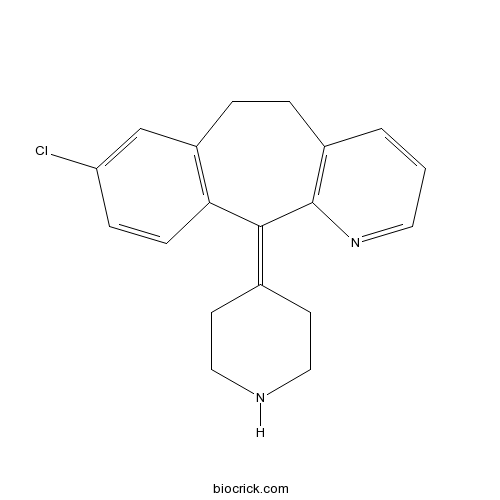
Desloratadine
Desloratadine(Sch34117) is a potent antagonist for human histamine H1 receptor used to treat allergies.
-
BCC4542
Fexofenadine HCl
Fexofenadine hydrochloride (MDL-16455 hydrochloride), a H1R antagonist, is an anti-allergic agent used in seasonal allergic rhinitis and chronic idiopathic urticarial (person aged ≥16 years).

-
BCC1262
Loratadine
Loratadine (SCH-29851) is a selective inverse peripheral histamine H1-receptor agonist with an IC50 of >32 μM. Loratadine has anti-dengue-virus (DENV) activity.

-
BCC6740
Mepyramine maleate
Mepyramine maleate, a first generation antihistamine, is an antagonist of histamine H1 receptor, with Kds of 0.8 nM, 5200 nM and >3000 nM for H1, H2, and H3 receptor, respectively, and a pKd of 9.4 for H1 receptor.

-
BCC4545
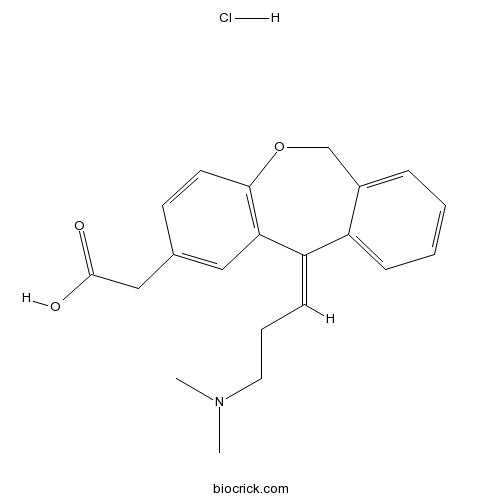
Olopatadine HCl
Olopatadine hydrochloride (ALO4943A) is a histamine blocker used to treat allergic conjunctivitis.
-
BCC3866
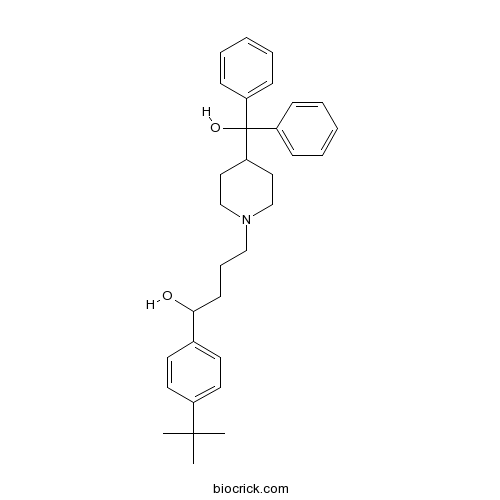
Terfenadine
Terfenadine ((±)-Terfenadine) is a potent open-channel blocker of hERG with an IC50 of 204 nM. Terfenadine, an H1 histamine receptor antagonist, acts as a potent apoptosis inducer in melanoma cells through modulation of Ca2+ homeostasis. Terfenadine induces ROS-dependent apoptosis, simultaneously activates Caspase-4, -2, -9.