Epilepsy Research
Epilepsy is a group of neurological conditions consisting of recurrent, usually unprovoked epileptic seizures. Epileptic seizures have recently been defined as "a transient occurrence of signs and/or symptoms due to abnormal, excessive or synchronous neuronal activity in the brain". Epilepsy is one of the most common disorders of the brain, with one in 10 people suffering at least one seizure in their lifetime. There are over 40 different types of epilepsy, each of which presents with its own unique combination of seizure type, typical age of onset, EEG findings, treatment, and prognosis.
Epilepsy Research Products Targets
- NHE (3)
- Monocarboxylate Transporter (3)
- VEGFR (16)
- FGFR (5)
- Voltage-gated Sodium (NaV) Channel (30)
- Voltage-gated Potassium (KV) Channel (38)
- Voltage-gated Calcium Channel (CaV) (38)
- Others (13)
- Epithelial Sodium Channel (3)
- STIM-Orai Channel (4)
- Ryanodine Receptor (6)
- Glutamate (Metabotropic) Group III Receptor (26)
- Glutamate (Metabotropic) Group II Receptor (33)
- Glutamate (Metabotropic) Group I Receptor (54)
- AMPA Receptor (45)
- GABAA-ρ Receptor (8)
- GABAA Receptor (66)
- NMDA Receptor (87)
- Kainate Receptor (22)
- IP3 Receptor (2)
- Gap Channel (7)
- Trk Receptor (13)
- Acid-Sensing Ion Channel (3)
- Calcium-Activated Potassium (KCa) Channel (19)
- Inward Rectifier Potassium (Kir) Channel (21)
- Sodium and Potassium ATPase (3)
- KCC2 (1)
- H+-ATPase (3)
- H+,K+-ATPase (4)
- Chloride Channel (17)
- NCX (5)
- Ca2+-ATPase (7)
- NKCC (2)
- Cytokine (15)
Products for Epilepsy Research - Page 44
- Cat.No. Product Name Information/Activity
-
BCC7901
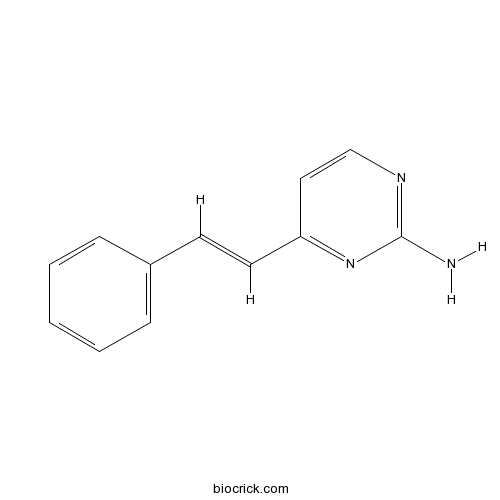
TCN 238
TCN238 is a positive allosteric mGlu4 receptor modulator with an EC50 of 1 μM.
-
BCC4596
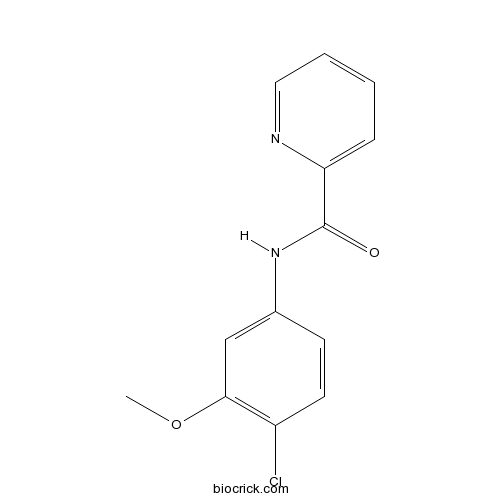
VU 0361737
VU 0361737 is a selective positive allosteric modulator (PAM) for mGlu4 receptor with EC50 of 240 nM and 110 nM at human and rat receptors, respectively, displays weak activity at mGlu5 and mGlu8 receptors, is inactive at mGlu1, mGlu2, mGlu3, mGlu6 and mGlu7 receptors.
-
BCC1239
VU 0364439
VU 0364439 is a mGlu4 positive allosteric modulator (PAM), with EC50 of 19.8 nM.

-
BCC4597
VU 0364770
VU0364770 is a selective and potent positive allosteric modulator (PAM) of mGlu4. VU0346770 exhibits EC50s of 290 nM and 1.1 μM at rat mGlu4 and human mGlu4 receptor, respectively. VU0364770 exhibits antagonist activity at mGlu5 with a potency of 17.9 μM and PAM activity at mGlu6 with a potency of 6.8 μM. VU0364770 also possesses activity at MAO with Ki values of 8.5 and 0.72 μM for human MAO-A and human MAO-B, respectively.

-
BCN5814
Artemisinin
Artemisinin (Qinghaosu), a sesquiterpene lactone, is an anti-malarial drug isolated from the aerial parts of Artemisia annua L. plants. Artemisinin inhibits AKT signaling pathway by decreasing pAKT in a dose-dependent manner. Artemisinin reduces cancer cell proliferation, migration, invasion, tumorigenesis and metastasis and has neuroprotective effects.

-
BCC6982
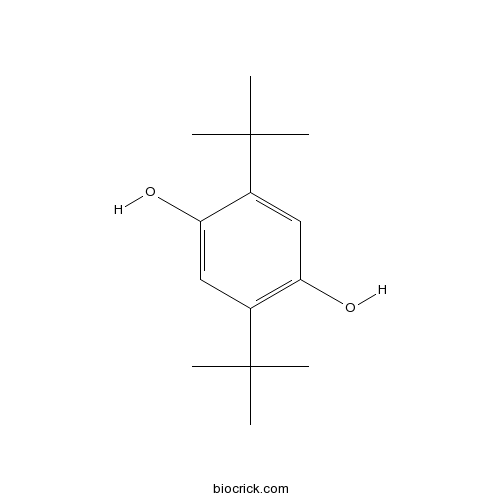
BHQ
Inhibitor of SERCA ATPase
-
BCC6981
Cyclopiazonic acid
Cyclopiazonic acid (CPA), a neurotoxic secondary metabolite (SM) made by A. flavus, is a nanomolar inhibitor of endoplasmic reticulum calcium ATPase (Ca2+ATPase; SERCA) and a potent inducer of cell death in plants.

-
BCC6952
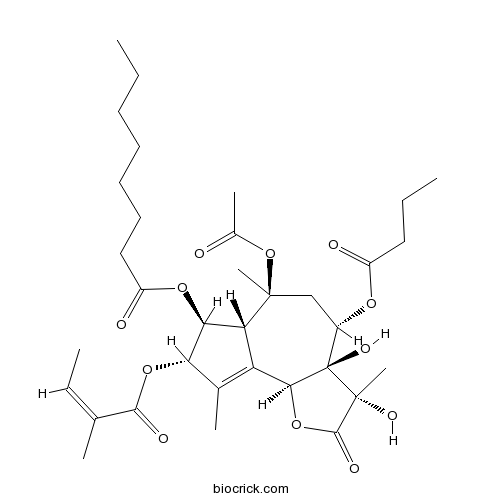
Thapsigargin
Thapsigargin is an inhibitor of microsomal Ca2+-ATPase. Thapsigargin is a well characterized Endoplasmic Reticulum (ER) stress inducing agent.
-
BCC2098
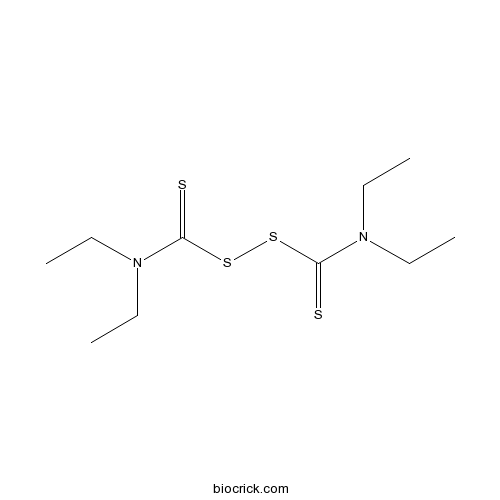
Disulfiram
Disulfiram (Tetraethylthiuram disulfide) is a specific inhibitor of aldehyde-dehydrogenase (ALDH1), used for the treatment of chronic alcoholism by producing an acute sensitivity to alcohol. Disulfiram inhibits gasdermin D (GSDMD) pore formation in liposomes and inflammasome-mediated pyroptosis and IL-1β secretion in human and mouse cells[1-4].
-
BCC7008
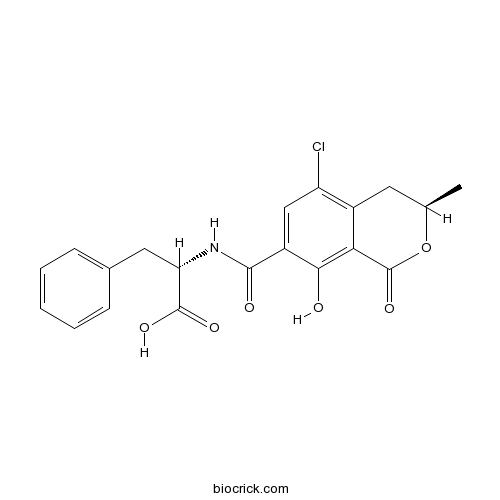
Ochratoxin A
303-47-9