Epilepsy Research
Epilepsy is a group of neurological conditions consisting of recurrent, usually unprovoked epileptic seizures. Epileptic seizures have recently been defined as "a transient occurrence of signs and/or symptoms due to abnormal, excessive or synchronous neuronal activity in the brain". Epilepsy is one of the most common disorders of the brain, with one in 10 people suffering at least one seizure in their lifetime. There are over 40 different types of epilepsy, each of which presents with its own unique combination of seizure type, typical age of onset, EEG findings, treatment, and prognosis.
Epilepsy Research Products Targets
- NHE (3)
- Monocarboxylate Transporter (3)
- VEGFR (16)
- FGFR (5)
- Voltage-gated Sodium (NaV) Channel (30)
- Voltage-gated Potassium (KV) Channel (38)
- Voltage-gated Calcium Channel (CaV) (38)
- Others (13)
- Epithelial Sodium Channel (3)
- STIM-Orai Channel (4)
- Ryanodine Receptor (6)
- Glutamate (Metabotropic) Group III Receptor (26)
- Glutamate (Metabotropic) Group II Receptor (33)
- Glutamate (Metabotropic) Group I Receptor (54)
- AMPA Receptor (45)
- GABAA-ρ Receptor (8)
- GABAA Receptor (66)
- NMDA Receptor (87)
- Kainate Receptor (22)
- IP3 Receptor (2)
- Gap Channel (7)
- Trk Receptor (13)
- Acid-Sensing Ion Channel (3)
- Calcium-Activated Potassium (KCa) Channel (19)
- Inward Rectifier Potassium (Kir) Channel (21)
- Sodium and Potassium ATPase (3)
- KCC2 (1)
- H+-ATPase (3)
- H+,K+-ATPase (4)
- Chloride Channel (17)
- NCX (5)
- Ca2+-ATPase (7)
- NKCC (2)
- Cytokine (15)
Products for Epilepsy Research - Page 45
- Cat.No. Product Name Information/Activity
-
BCC7235
Paxilline
Paxilline is an indole alkaloid mycotoxin from Penicillium paxilli, acts as a potent BK channels inhibitor by an almost exclusively closed-channel block mechanism. Paxilline also inhibits the sarco/endoplasmic reticulum Ca2+ ATPase (SERCA) with IC50s between 5 μM and 50 μM for differing isoforms. Paxilline possesses significant anticonvulsant activity.

-
BCC1058
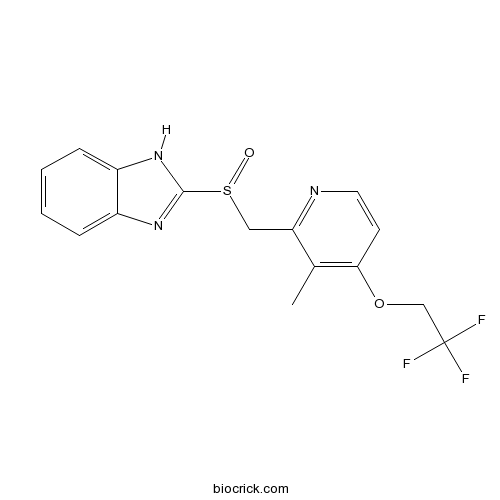
Lansoprazole
Lansoprazole(AG 1749) is a proton pump inhibitor which prevents the stomach from producing acid.
-
BCC1254
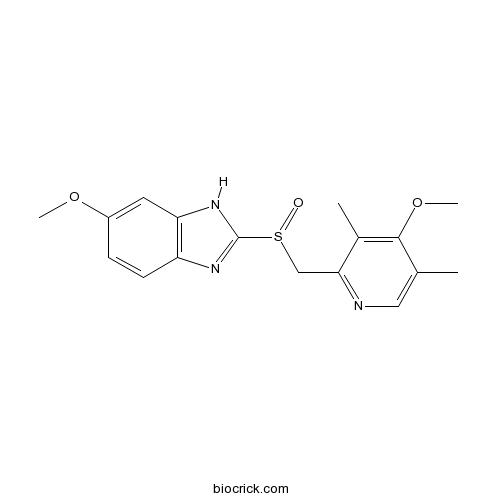
Omeprazole
Omeprazole (H 16868), a proton pump inhibitor (PPI), is available for treatment of acid-related gastrointestinal disorders. Omeprazole shows competitive inhibition of CYP2C19 activity with a Ki of 2 to 6 μM. Omeprazole also inhibits growth of Gram-positive and Gram-negative bacteria.
-
BCC2084
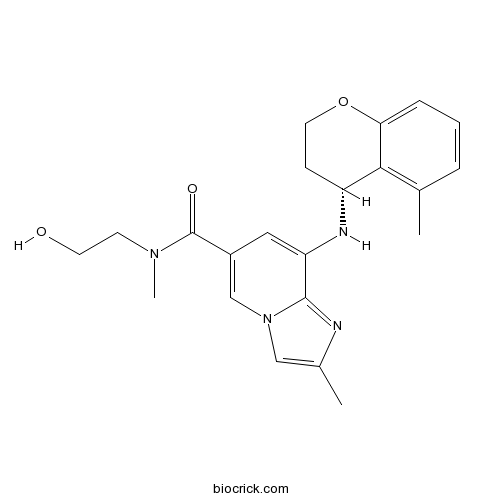
PF-03716556
PF 03716556 is a potent, and selective H+, K+-ATPase antagonist, with a pIC50 value of 6.009.
-
BCC7154
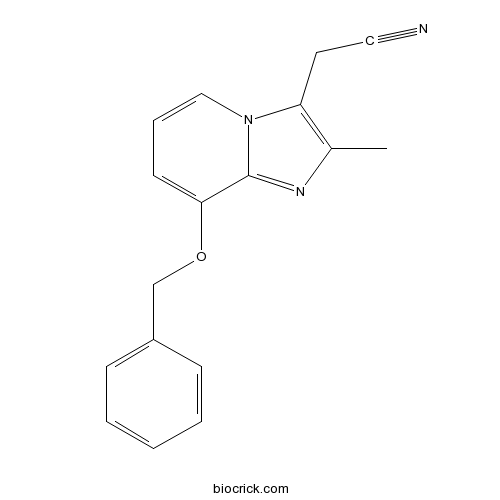
SCH 28080
SCH28080 inhibits gastric H+/K+-ATPase by K+-competitive binding, with an IC50 value of 20 nM in rabbit microsomal membranes. Antisecretory and cytoprotective activities.
-
BCC3914
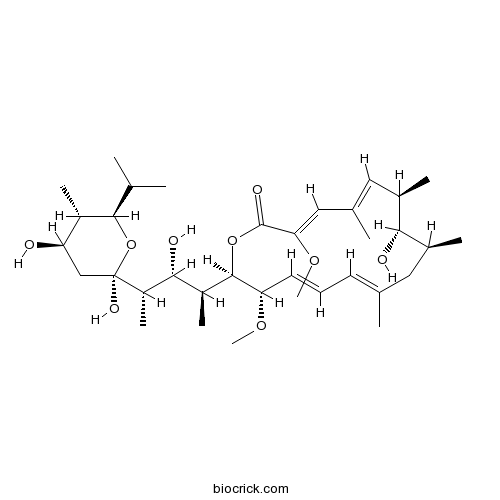
Bafilomycin A1
Bafilomycin A1, a macrolide antibiotic isolated from the Streptomyces species, is a specific inhibitor of vacuolar-type H+ ATPase (V-ATPase). Bafilomycin A1 inhibits autophagy and induces apoptosis.
-
BCC3919
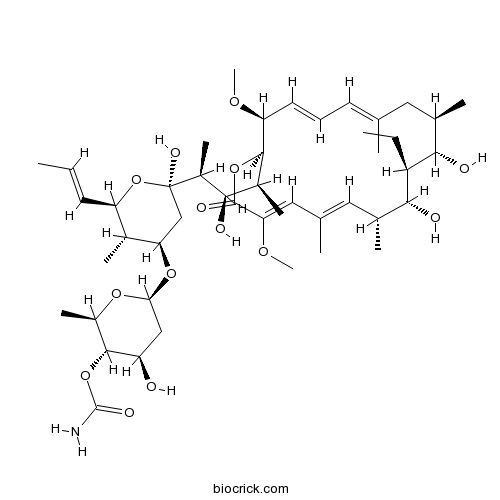
Concanamycin A
Concanamycin A (Antibiotic X 4357B) is a macrolide antibiotic and a specific vacuolar type H+-ATPase (V-ATPase) inhibitor.
-
BCC5424
VU 0240551
VU 0240551 is a small molecule inhibitor of the neuronal K-Cl cotransporter, KCC2 (IC50 = 560 nM for K+ uptake assay in KCC2-overexpressing cells).

-
BCC1367
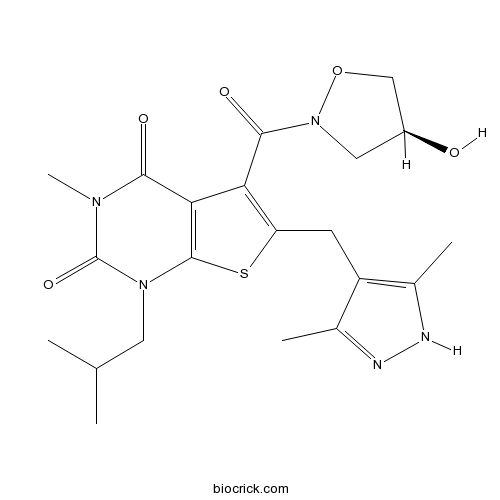
AR-C155858
AR-C155858 is a selective monocarboxylate transporter MCT1 and MCT2 inhibitor with Kis of 2.3 nM and 10 nM, respectively.
-
BCC7994
CHC
28166-41-8