Huntington's Disease Research
Huntington's disease is a neurodegenerative disease characterized by cognitive decline and motor dysfunction. It is a genetic disorder which results in the production of mutant huntingtin protein (mHtt). This protein aggregates in the cell cytoplasm and nucleus, affecting cellular function.
Huntington's Disease Research Products Targets
- Adenosine A2A Receptor (11)
- Caspase (9)
- Ubiquitin-activating Enzyme E1 (3)
- Ubiquitin E2 Conjugating Enzyme (3)
- Ubiquitin E3 Ligase (10)
- Deubiquitinating Enzyme (12)
- Hsp90 (10)
- Hsp70 (4)
- Glutamate (Metabotropic) Group III Receptor (26)
- Glutamate (Metabotropic) Group II Receptor (33)
- Glutamate (Metabotropic) Group I Receptor (54)
- Vesicular Monoamine Transporter (4)
- Sir 2-like Family Deacetylase (9)
- Post-Translational Modification (11)
- NMDA Receptor (87)
- Kainate Receptor (22)
- IP3 Receptor (2)
- ERK (6)
- D2 Receptor (14)
- D1 and D5 Receptor (16)
- Calpain (7)
- Trk Receptor (13)
- Autophagy (44)
- Antioxidant (19)
- Glutamate Transporter (18)
- Dopamine Transporter (20)
- Cathepsin (9)
- Mitochondrial Permeability Transition Pore (3)
- Proteasome (5)
- Histone Deacetylase (19)
- Histone Acetyltransferase (4)
Products for Huntington's Disease Research - Page 7
- Cat.No. Product Name Information/Activity
-
BCC4381
Nitrendipine
Nitrendipine is a calcium channel blocker with marked vasodilator action.

-
BCC6303
3-Nitropropionic acid
3-Nitropropanoic acid (β-Nitropropionic acid) is an irreversible inhibitor of succinate dehydrogenase. 3-Nitropropanoic acid exhibits potent antimycobacterial activity with a MIC value of 3.3 μM.

-
BCC1860
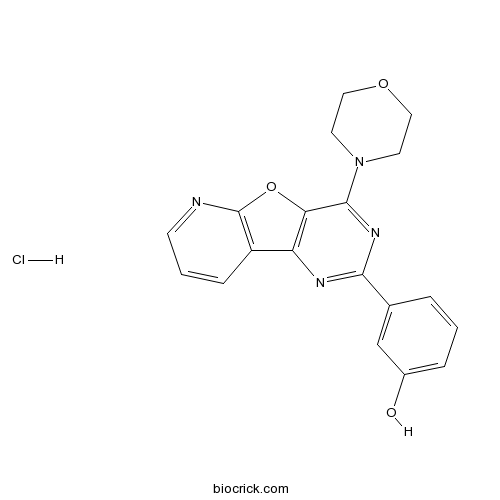
PI-103 Hydrochloride
PI-103 Hydrochloride is a dual PI3K and mTOR inhibitor with IC50s of 8 nM, 88 nM, 48 nM, 150 nM, 20 nM, and 83 nM for p110α, p110β, p110δ, p110γ, mTORC1, and mTORC2. PI-103 Hydrochloride also inhibits DNA-PK with an IC50 of 2 nM. PI-103 Hydrochloride induces autophagy.
-
BCC2241
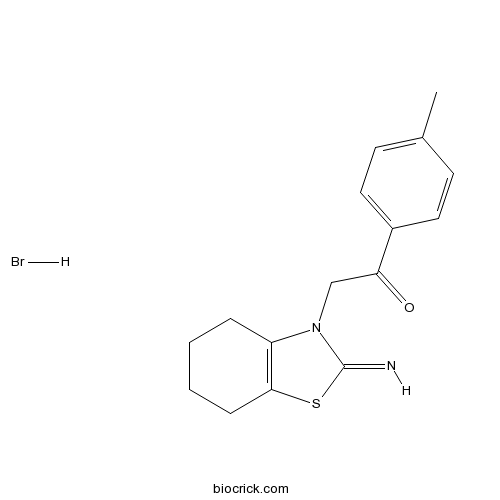
Pifithrin-α (PFTα)
Pifithrin-α hydrobromide is a p53 inhibitor which blocks its transcriptional activity and prevents cells from apoptosis. Pifithrin-α hydrobromide is also an aryl hydrocarbon receptor (AhR) agonist.
-
BCC3592
Rapamycin (Sirolimus)
Rapamycin (Sirolimus) is a potent and specific mTOR inhibitor with an IC50 of 0.1 nM in HEK293 cells. Rapamycin binds to FKBP12 and specifically acts as an allosteric inhibitor of mTORC1. Rapamycin is an autophagy activator, an immunosuppressant.

-
BCC7127
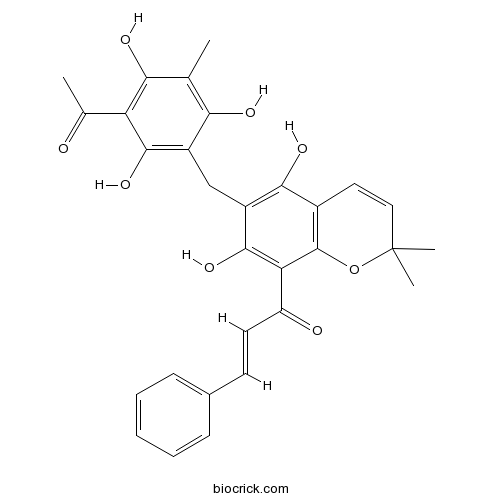
Rottlerin
Rottlerin, a natural product purified from Mallotus Philippinensis, is a specific PKC inhibitor, with IC50 values for PKCδ of 3-6 μM, PKCα,β,γ of 30-42 μM, PKCε,η,ζ of 80-100 μM. Rottlerin acts as a direct mitochondrial uncoupler, and stimulates autophagy by targeting a signaling cascade upstream of mTORC1. Rottlerin induces apoptosis via caspase 3 activation.
-
BCC1918
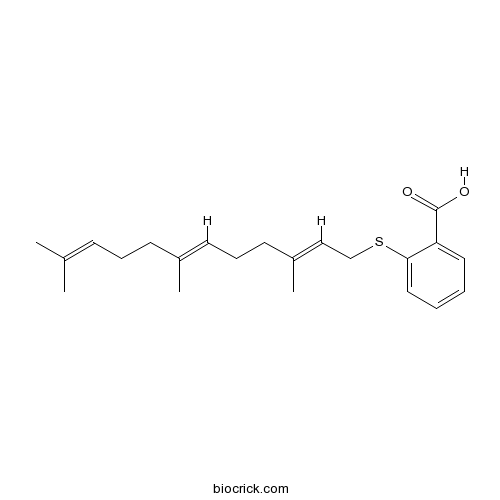
Salirasib
Salirasib is a Ras inhibitor that inhibits specifically both oncogenically activated Ras and growth factor receptor-mediated Ras activation, resulting in the inhibition of Ras-dependent tumor growth.
-
BCC7908
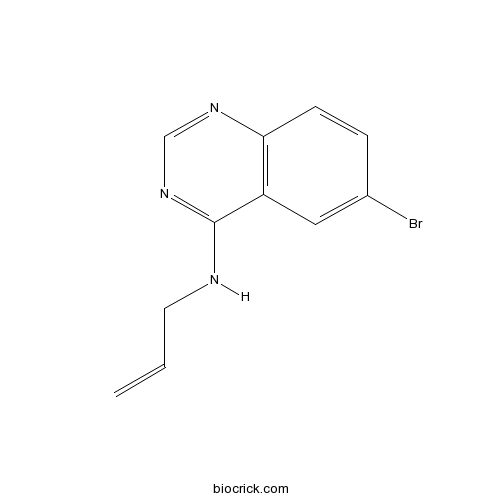
SMER 28
SMER28 is a positive regulator of autophagy acting via an mTOR-independent mechanism. SMER28 prevents the accumulation of amyloid beta peptide.
-
BCC4386
Temozolomide
Temozolomide (NSC 362856) is an oral active DNA alkylating agent that crosses the blood-brain barrier. Temozolomide is also a proautophagic and proapoptotic agent. Temozolomide is effective against tumor cells that are characterized by low levels of O6-alkylguanine DNA alkyltransferase (OGAT) and a functional mismatch repair system. Temozolomide has antitumor and antiangiogenic effects.

-
BCC6952
Thapsigargin
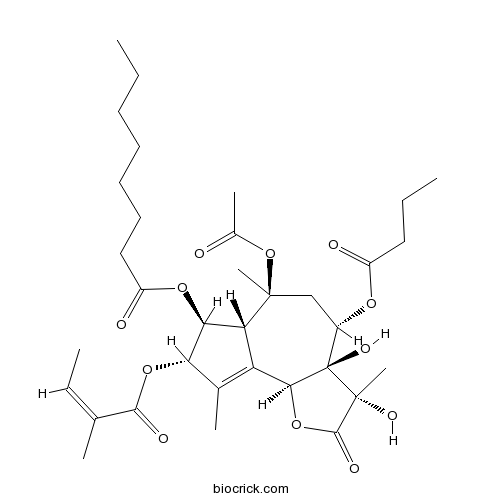
Thapsigargin is an inhibitor of microsomal Ca2+-ATPase. Thapsigargin is a well characterized Endoplasmic Reticulum (ER) stress inducing agent.