Huntington's Disease Research
Huntington's disease is a neurodegenerative disease characterized by cognitive decline and motor dysfunction. It is a genetic disorder which results in the production of mutant huntingtin protein (mHtt). This protein aggregates in the cell cytoplasm and nucleus, affecting cellular function.
Huntington's Disease Research Products Targets
- Adenosine A2A Receptor (11)
- Caspase (9)
- Ubiquitin-activating Enzyme E1 (3)
- Ubiquitin E2 Conjugating Enzyme (3)
- Ubiquitin E3 Ligase (10)
- Deubiquitinating Enzyme (12)
- Hsp90 (10)
- Hsp70 (4)
- Glutamate (Metabotropic) Group III Receptor (26)
- Glutamate (Metabotropic) Group II Receptor (33)
- Glutamate (Metabotropic) Group I Receptor (54)
- Vesicular Monoamine Transporter (4)
- Sir 2-like Family Deacetylase (9)
- Post-Translational Modification (11)
- NMDA Receptor (87)
- Kainate Receptor (22)
- IP3 Receptor (2)
- ERK (6)
- D2 Receptor (14)
- D1 and D5 Receptor (16)
- Calpain (7)
- Trk Receptor (13)
- Autophagy (44)
- Antioxidant (19)
- Glutamate Transporter (18)
- Dopamine Transporter (20)
- Cathepsin (9)
- Mitochondrial Permeability Transition Pore (3)
- Proteasome (5)
- Histone Deacetylase (19)
- Histone Acetyltransferase (4)
Products for Huntington's Disease Research - Page 3
- Cat.No. Product Name Information/Activity
-
BCC4913
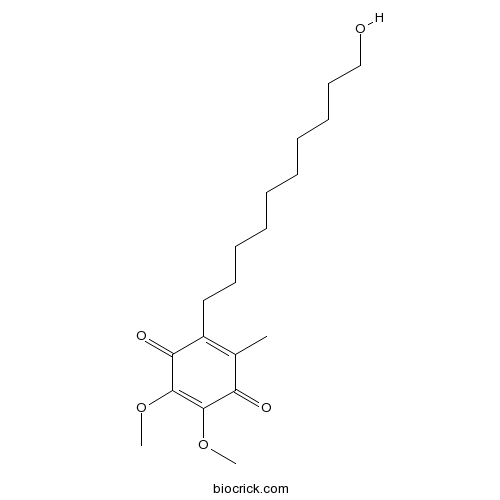
Idebenone
Idebenone is a synthetic variant of coenzyme Q10 (CoQ10), which initially developed for the treatment of Alzheimer's disease and other cognitive defects.
-
BCN5600
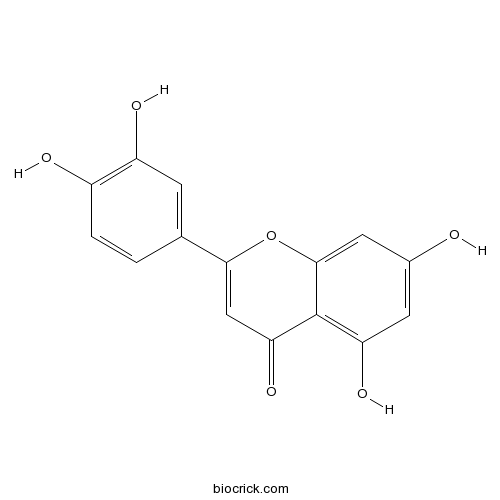
Luteolin
Luteolin (Luteolol) is a flavanoid with anti-inflammatory, anti-cancer properties, including the induction of apoptosis and cell cycle arrest, and the inhibition of metastasis and angiogenesis, in several cancer cell lines, including human non-small lung cancer cells.
-
BCC7005
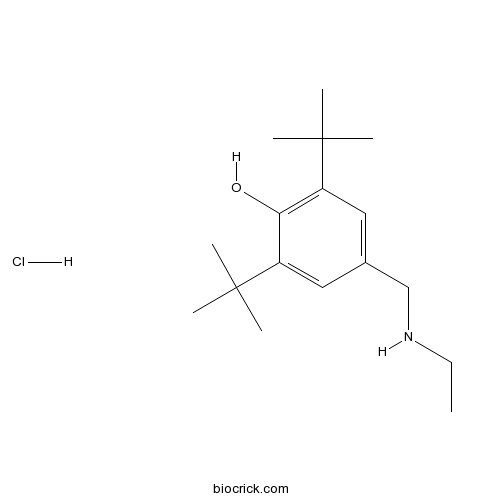
LY 231617
141545-89-3
-
BCC7941
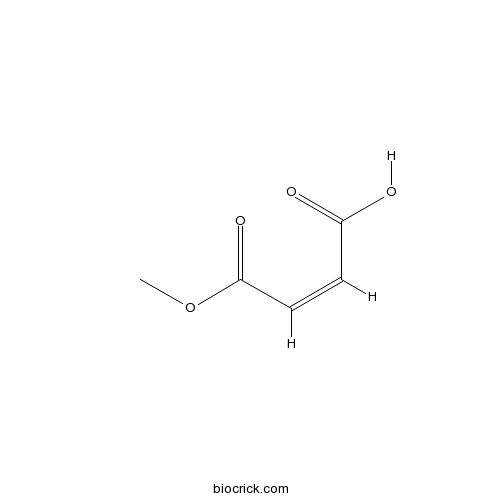
MMF
Monomethyl fumarate, an active metabolite of Dimethyl fumarate (DMF), is a potent GPR109A agonist. Monomethyl fumarate has the potential for multiple neuroprotective pathways and other models of retinal disease.
-
BCC4955
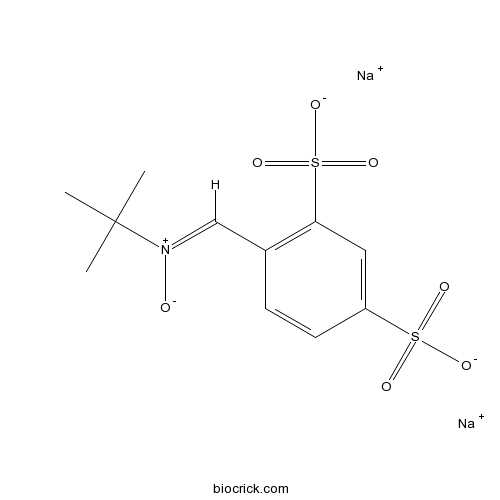
NXY-059
Disufenton sodium (NXY-059) is the disulfonyl derivative of the neuroprotective spin trap phenylbutynitrone(PBN), both NXY-059, its parent PBN and their hydrolysis/oxidation product MNT are very powerful scavengers of free radicals.
-
BCC4833
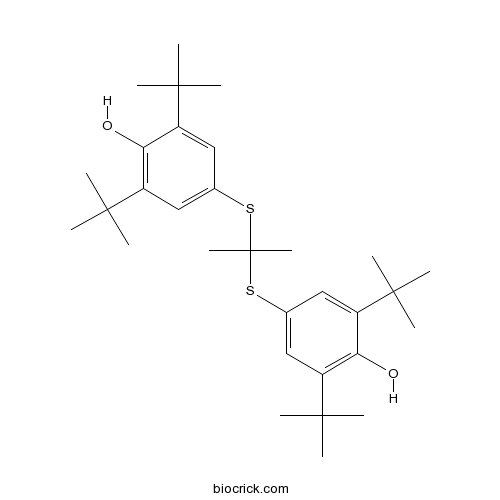
Probucol
Probucol (DH-581) is an anti-hyperlipidemic drug by lowering the level of cholesterol in the bloodstream by increasing the rate of LDL catabolism.
-
BCN5607
Resveratrol
Resveratrol (trans-Resveratrol; SRT501), a natural polyphenolic phytoalexin that possesses anti-oxidant, anti-inflammatory, cardioprotective, and anti-cancer properties. Resveratrol (SRT 501) has a wide spectrum of targets including mTOR, JAK, β-amyloid, Adenylyl cyclase, IKKβ, DNA polymerase. Resveratrol also is a specific SIRT1 activator. Resveratrol is a potent pregnane X receptor (PXR) inhibitor.

-
BCC6481
Sanguinarine chloride
Sanguinarine chloride, a benzophenanthridine alkaloid derived from the root of Sanguinaria Canadensis, can stimulate apoptosis via activating the production of reactive oxygen species (ROS). Sanguinarine-induced apoptosis is associated with the activation of JNK and NF-κB.

-
BCN5763
Tanshinone IIA
Tanshinone IIA (Tan IIA) is one of the main fat-soluble compositions in the root of red-rooted salvia. Tanshinone IIA may suppress angiogenesis by targeting the protein kinase domains of VEGF/VEGFR2.

-
BCC4862
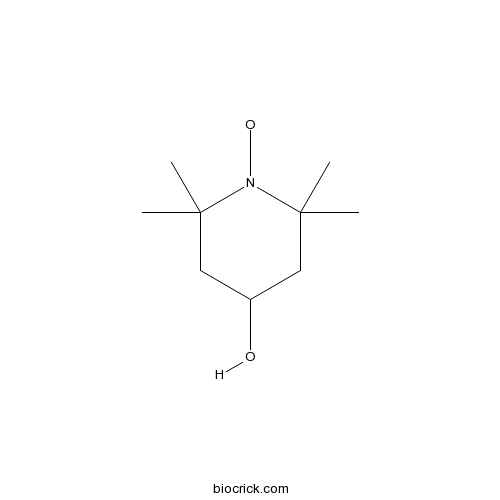
Tempol
Tempol is a general superoxide dismutase (SOD)-mimetic drug that efficiently neutralizes reactive oxygen species (ROS).