Schizophrenia Research
Schizophrenia is a chronic, debilitating mental disorder affecting 1-2% of the global population. Symptoms are split into two types; 'positive' symptoms, including delusions and hallucinations, and 'negative' symptoms, including anhedonia and lack of motivation. Studies suggest that genetics, early environment, neurobiology, psychological and social processes are important contributory factors; some recreational and prescription drugs appear to cause or worsen symptoms. Several neurobiological alterations in brain structure, physiology and neurochemistry have been documented, along with an ever-increasing list of susceptibility genes.
Schizophrenia Research Products Targets
- Others (13)
- Sigma2 Receptor (4)
- Sigma1 Receptor (16)
- D4 Receptor (12)
- 5-HT7 Receptor (11)
- 5-HT6 Receptor (14)
- 5-ht5 Receptor (2)
- 5-HT4 Receptor (17)
- Glutamate (Metabotropic) Group III Receptor (26)
- Glutamate (Metabotropic) Group II Receptor (33)
- Glutamate (Metabotropic) Group I Receptor (54)
- AMPA Receptor (45)
- GABAA-ρ Receptor (8)
- GABAA Receptor (66)
- GPR55 (8)
- CB2 Receptor (6)
- CB1 Receptor (17)
- Nicotinic (α7) Receptor (25)
- Nicotinic (α4β2) Receptor (14)
- D3 Receptor (12)
- NK3 Receptor (5)
- Carboxypeptidase (1)
- NMDA Receptor (87)
- Kainate Receptor (22)
- D2 Receptor (14)
- D1 and D5 Receptor (16)
- Trace Amine 1 Receptor (2)
- Glutamate Transporter (18)
- Histamine H3 Receptor (22)
- Neurotensin Receptor (7)
- Monoamine Oxidase (10)
- iNOS (11)
- M5 Receptor (2)
- M4 Receptor (3)
- M3 Receptor (4)
- M2 Receptor (5)
- M1 Receptor (8)
- Adrenergic α2 Receptor (33)
- Adrenergic α1 Receptor (22)
- Adrenergic β3 Receptor (12)
- Adrenergic β2 Receptor (6)
- Adrenergic β1 Receptor (7)
- Protein serine and threonine phosphatase (16)
- Protein Arginine Methyltransferase (2)
- Phosphodiesterase (34)
Products for Schizophrenia Research - Page 54
- Cat.No. Product Name Information/Activity
-
BCC7753
DL-AP5 Sodium salt
1303993-72-7

-
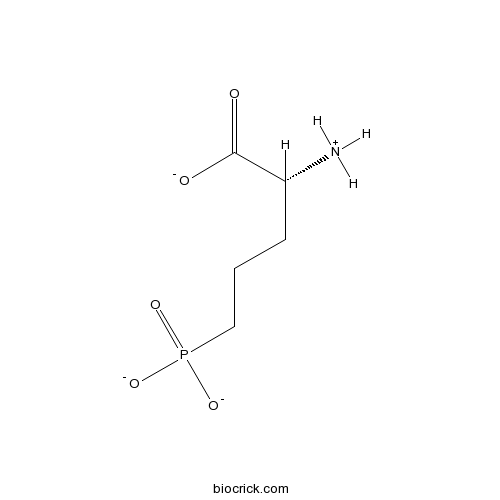
BCC6553
D-AP5
D-AP5 is a NMDA receptor antagonist.
-
BCC6552
DL-AP5
76326-31-3

-
BCC6554
L-AP5
79055-67-7

-
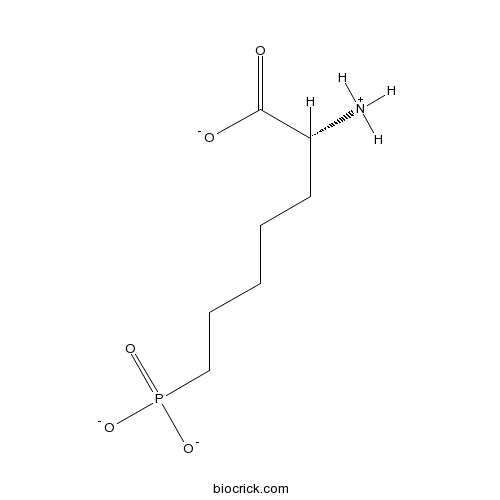
BCC6551
DL-AP7
78966-69-5
-
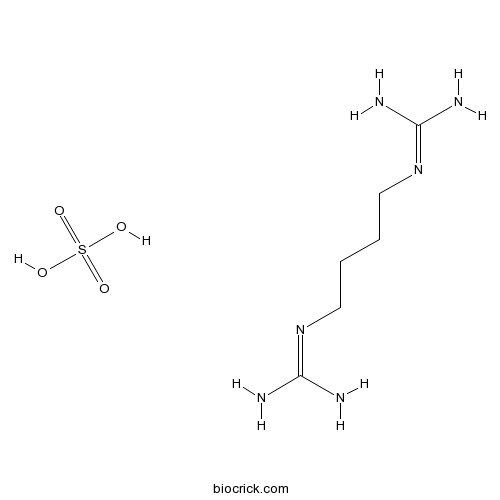
BCC6631
Arcaine sulfate
14923-17-2
-
BCC6602
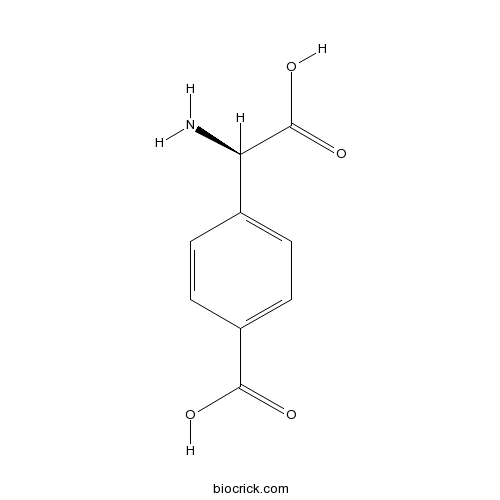
(R)-4-Carboxyphenylglycine
134052-68-9
-
BCC7078
CGP 37849
CGP 37849 is a potent, competitive and orally active N-methyl-D-aspartate (NMDA) receptor antagonist. CGP 37849 is an anticonvulsant in rodents and has antidepressant and anxiolytic-like effects.

-
BCC7053
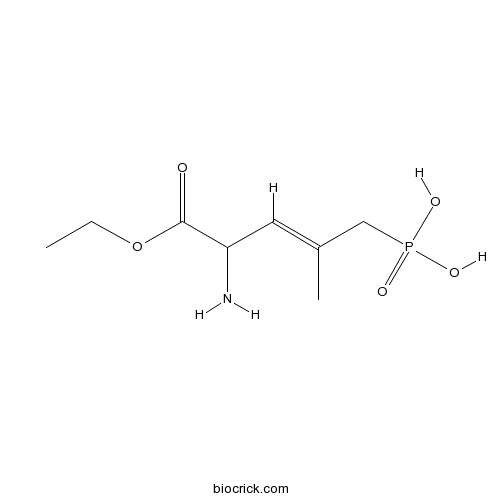
CGP 39551
127910-32-1
-
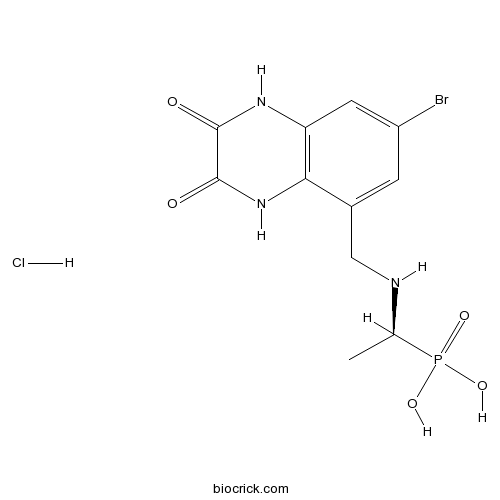
BCC7087
CGP 78608 hydrochloride
CGP 78608 hydrochloride is a highly potent and selective antagonist at the glycine-binding site of the NMDA receptor, with an IC50 of 6 nM. CGP 78608 acts as a potentiator of GluN1/GluN3A-mediated glycine currents, with an estimated EC50 in the low nM range (26.3 nM). Anticonvulsant activity.