
ArecolineCAS# 63-75-2 |
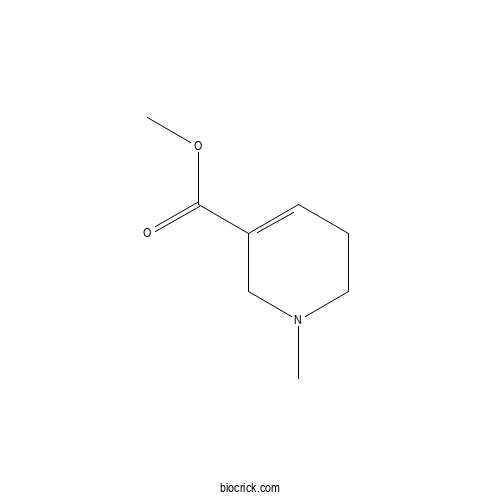
| Cas No. | 63-75-2 | SDF | File under preparation. |
| PubChem ID | 2230.0 | Appearance | Oil |
| Formula | C8H13NO2 | M.Wt | 155.2 |
| Type of Compound | N/A | Storage | Desiccate at -20°C |
| Solubility | Soluble in Chloroform,Dichloromethane,Ethyl Acetate,DMSO,Acetone,etc. | ||
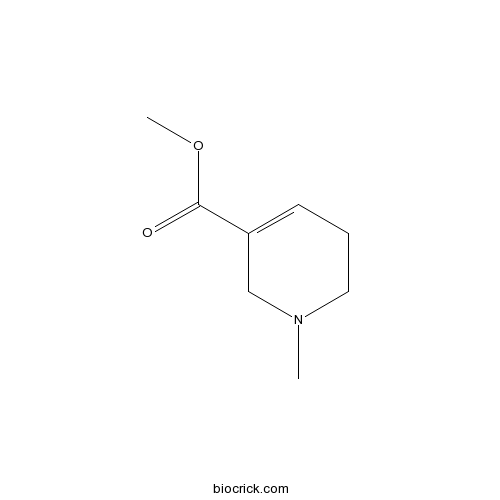
| Chemical Name | methyl 1-methyl-3,6-dihydro-2H-pyridine-5-carboxylate | ||
| SMILES | CN1CCC=C(C1)C(=O)OC | ||
| Standard InChIKey | HJJPJSXJAXAIPN-UHFFFAOYSA-N | ||
| Standard InChI | InChI=1S/C8H13NO2/c1-9-5-3-4-7(6-9)8(10)11-2/h4H,3,5-6H2,1-2H3 | ||
| General tips | For obtaining a higher solubility , please warm the tube at 37 ℃ and shake it in the ultrasonic bath for a while.Stock solution can be stored below -20℃ for several months. We recommend that you prepare and use the solution on the same day. However, if the test schedule requires, the stock solutions can be prepared in advance, and the stock solution must be sealed and stored below -20℃. In general, the stock solution can be kept for several months. Before use, we recommend that you leave the vial at room temperature for at least an hour before opening it. |
||
| About Packaging | 1. The packaging of the product may be reversed during transportation, cause the high purity compounds to adhere to the neck or cap of the vial.Take the vail out of its packaging and shake gently until the compounds fall to the bottom of the vial. 2. For liquid products, please centrifuge at 500xg to gather the liquid to the bottom of the vial. 3. Try to avoid loss or contamination during the experiment. |
||
| Shipping Condition | Packaging according to customer requirements(5mg, 10mg, 20mg and more). Ship via FedEx, DHL, UPS, EMS or other couriers with RT, or blue ice upon request. | ||
Quality Control & MSDS
3D structure
Package In Stock

Number of papers citing our products


Arecoline Dilution Calculator
Arecoline Molarity Calculator


| 1 mg | 5 mg | 10 mg | 20 mg | 25 mg | |
| 1 mM | 6.4433 mL | 32.2165 mL | 64.433 mL | 128.866 mL | 161.0825 mL |
| 5 mM | 1.2887 mL | 6.4433 mL | 12.8866 mL | 25.7732 mL | 32.2165 mL |
| 10 mM | 0.6443 mL | 3.2216 mL | 6.4433 mL | 12.8866 mL | 16.1082 mL |
| 50 mM | 0.1289 mL | 0.6443 mL | 1.2887 mL | 2.5773 mL | 3.2216 mL |
| 100 mM | 0.0644 mL | 0.3222 mL | 0.6443 mL | 1.2887 mL | 1.6108 mL |
| * Note: If you are in the process of experiment, it's necessary to make the dilution ratios of the samples. The dilution data above is only for reference. Normally, it's can get a better solubility within lower of Concentrations. | |||||
- (22R)-Hydroxycholesterol
Catalog No.:BCX2463
CAS No.:17954-98-2
- (±)-Tropic acid
Catalog No.:BCX2462
CAS No.:552-63-6
- 8-Methoxynaringenin
Catalog No.:BCX2461
CAS No.:94884-92-1
- Escin IVc
Catalog No.:BCX2460
CAS No.:249921-71-9
- Galangin 5-methyl ether
Catalog No.:BCX2459
CAS No.:104594-69-6
- Maltol glucoside
Catalog No.:BCX2458
CAS No.:20847-13-6
- Swertiajaponin 2''-O-rhamnoside
Catalog No.:BCX2457
CAS No.:75474-16-7
- Escin IVf
Catalog No.:BCX2456
CAS No.:249922-20-1
- Bisphenol A bis(2,3-dihydroxypropyl)ether
Catalog No.:BCX2455
CAS No.:5581-32-8
- Isodonhenrin D
Catalog No.:BCX2454
CAS No.:1392194-87-4
- Spirasine III
Catalog No.:BCX2453
CAS No.:112496-48-7
- Galanginin
Catalog No.:BCX2452
CAS No.:68592-14-3
- Isofouquierol
Catalog No.:BCX2465
CAS No.:53822-99-4
- Pyruvic acid
Catalog No.:BCX2466
CAS No.:127-17-3
- Azadirachtin B
Catalog No.:BCX2467
CAS No.:106500-25-8
- 5-(4-Hydroxyphenyl)pentanoic acid
Catalog No.:BCX2468
CAS No.:4654-08-4
- 2-Ethylbutyric acid
Catalog No.:BCX2469
CAS No.:1988-09-5
- 2-Ethylhexanoic acid
Catalog No.:BCX2470
CAS No.:149-57-5
- Propionic acid
Catalog No.:BCX2471
CAS No.:1979-09-4
- 11-Deoxymogrol
Catalog No.:BCX2472
CAS No.:2654048-89-0
- 2-Hydroxy-2-(2-methylpropyl)butanedioic acid
Catalog No.:BCX2473
CAS No.:60924-65-4
- Rhodojaponin VI
Catalog No.:BCX2474
CAS No.:37720-87-9
- Phytolaccagenic acid 28-O-β-D-glucopyranosyl ester
Catalog No.:BCX2475
CAS No.:288303-32-2
- Moracenin D
Catalog No.:BCX2476
CAS No.:78277-79-9
Cholinergic activation of HLH-30/TFEB promotes C. elegans infection resilience.[Pubmed:42818098]
bioRxiv [Preprint]. 2026 Sep 24:2026.09.18.752639.
Innate host defense depends on transcriptional programs, which support survival through two strategies that can vary independently. Resistance lowers pathogen burden, while resilience limits the damage a given burden causes. In Caenorhabditis elegans infected with Staphylococcus aureus , the highly conserved transcription factor HLH-30/TFEB drives most of the host response, which mediates infection resilience. We previously showed that EGL-30/Galphaq, PLC-1/PLCepsilon, and DKF-1/PRKD activate HLH-30/TFEB during infection. The same phospholipase C and protein kinase D step activates TFEB in mouse macrophages infected with Salmonella or S. aureus . However, the input that drives the EGL-30/Galphaq, PLC-1/PLCepsilon, and DKF-1/PRKD module to activate HLH-30/TFEB during infection remained unknown. Here we report that acetylcholine, acting on muscarinic receptors, is one such input. Atropine and scopolamine, two muscarinic antagonists in clinical use, as well as muscarinic receptor gene silencing blunted HLH-30/TFEB activation by infection. Moreover, a mutation of unc-17/SLC18A3 that lowers acetylcholine release from neurons impaired HLH-30/TFEB activation and induction of its target genes, while pathogen burden remained high. In uninfected animals, muscarinic agonist Arecoline was sufficient to activate HLH-30/TFEB, in a muscarinic receptor-dependent manner. Nicotine, in contrast, had no effect. The agonist also lengthened survival of infection without lowering pathogen burden, in an HLH-30/TFEB-dependent manner. Silencing egl-30/GNAQ , plc-1/PLCE1 , or dkf-1/PRKD1-3 cut activation by the agonist just as it cut activation by infection, showing that both stimuli require the same module. In mammals the link documented so far between acetylcholine and TFEB runs through nicotinic receptors, so whether the muscarinic route is conserved remains open. Thus, we favor a model in which infection drives neurons to release acetylcholine onto the intestinal epithelium, where muscarinic receptors acting through EGL-30/Galphaq, PLC-1/PLCepsilon, and DKF-1/PRKD activate HLH-30/TFEB and strengthen infection resilience. AUTHOR SUMMARY: Animals survive an infection in two ways, often at once. They can kill the microbe, and they can limit the harm it does while it is still there. We study the second mechanism in the roundworm Caenorhabditis elegans , which fights bacteria with many of the same genes people do. A protein called HLH-30, known as TFEB in humans, switches on most of the genes this animal needs to withstand infection by Staphylococcus aureus . Which signals switch HLH-30 on during an infection has been unclear. We found that one of the signals comes from the nervous system. During infection, neurons release acetylcholine, a common neurotransmitter. Acetylcholine reaches the gut lining, where receptors pass the message inward and switch HLH-30 on. Drugs used in the clinic to block those receptors keep HLH-30 off, and so does removing the receptors themselves. A drug that stimulates the same receptors switches HLH-30 on even with no infection, and it helps animals survive infection without killing any more bacteria. The same receptors and the same protein are present in people. Whether this signal can be tuned to help a patient tolerate an infection is an important question to research in the future.
Ion Channel-Targeting Modulators in Glioma: Pharmacological Advances and Therapeutic Perspectives.[Pubmed:42794597]
Int J Mol Sci. 2026 Sep 14;27(18):8167.
Highly aggressive gliomas remain difficult to treat because of their marked invasiveness, frequent recurrence, and association with glioma-related epilepsy. Increasing evidence suggests that ion channels expressed in glioma cells, including voltage-gated Na(+) channels, large-conductance Ca(2+)-activated K(+) (BK(Ca)) channels, intermediate-conductance Ca(2+)-activated K(+) (IK(Ca)) channels, and inwardly rectifying K(+) (Kir) channels, contribute to these malignant phenotypes and represent potential therapeutic targets. This perspective summarizes current evidence for eight representative drugs and phytoconstituents-perampanel, valproic acid, cilostazol, berberine, oxaliplatin, temozolomide, Arecoline, and triptolide-that modulate these ion channels. Perampanel and valproic acid suppress voltage-gated Na(+) current in glioma cells and may provide additional benefits in controlling glioma-associated epilepsy. Cilostazol activates BK(Ca) channels, whereas berberine, oxaliplatin, and temozolomide inhibit IK(Ca) channel activity. Arecoline suppresses IK(Ca) and Kir channel activity, while triptolide inhibits Kir channels. These observations suggest that ion channel modulation may influence glioma cell proliferation, migration, invasion, and excitability. To complement the available experimental evidence, we performed molecular docking analyses as a hypothesis-generating approach to explore potential ligand-channel interactions. Because these computational predictions have not been experimentally validated, they should be interpreted cautiously and viewed as a framework for future mechanistic studies rather than definitive evidence of binding. We also discuss important translational considerations, including the limited clinical evidence and the toxicity profiles of several compounds. In particular, Arecoline is associated with carcinogenicity and neurotoxicity, triptolide with significant systemic toxicity, berberine with poor oral bioavailability and potential drug interactions, and oxaliplatin with dose-limiting neurotoxicity. Overall, this perspective highlights ion channels as promising therapeutic targets in glioma while emphasizing the need for rigorous experimental validation and careful evaluation of safety before clinical translation.
Chronic exposure to areca alkaloids at environmentally relevant concentrations alters neurobehavior, gut microbiota and brain metabolism in adult zebrafish.[Pubmed:42722099]
Environ Res. 2026 Nov 1;308(Pt 2):125657.
Trace-level neuroactive contaminants in aquatic environments are increasingly recognized as ecological hazards, yet the neurotoxic potential of areca alkaloids remains largely unexplored. In this study, adult zebrafish were chronically exposed to Arecoline or arecaidine for 90 days to investigate long-term neurobehavioral toxicity and associated biological alterations. Behavioral assessments revealed persistent impairments in social interaction, reduced aggression, and altered exploratory activity following alkaloid exposure. Concomitantly, areca alkaloids induced intestinal injury characterized by villus atrophy, goblet cell depletion, epithelial alterations, and increased macrophage infiltration. Gut microbiota profiling revealed compositional shifts, with significant enrichment of inflammation-associated genera, including Acinetobacter, Pseudomonas and Rhodococcus, and depletion of several commensal taxa. At the central level, brain histopathology revealed neuronal damage and increased expression of apoptosis-associated markers. Brain metabolomic analysis further revealed extensive alterations in amino acid- and neurotransmitter-related metabolism, highlighted by alterations in glutamate, glycine, serine, N-acetyl-L-aspartic acid, and citrate, as well as enrichment of pathways related to alanine, aspartate and glutamate metabolism and aminoacyl-tRNA biosynthesis. Integrated correlation analyses revealed associations among altered gut bacterial genera, brain metabolic pathways, and behavioral endpoints, suggesting potential links among gut microbial alterations, brain metabolic changes, and behavioral outcomes following areca alkaloid exposure. In summary, these findings reveal that long-term exposure to areca alkaloids at environmental concentrations elicits neurobehavioral and neurotoxic effects in adult zebrafish accompanied by alterations in gut microbiota and brain metabolism, highlighting the potential of areca alkaloids as environmental neurotoxicants relevant to aquatic health risk assessment.
Betel nut sucking is the earliest recorded evidence for the habitual use of a neuroactive plant drug.[Pubmed:42715315]
Sci Adv. 2026 Sep 11;12(37):eaei1901.
The modern custom of chewing betel nuts is practiced by around 1 in 10 people worldwide, yet the earliest beginnings of this widespread drug use habit are unknown. We report rare skeletal remains of two preagricultural foragers from Sulawesi (Indonesia), both displaying a dental pathology that we establish was caused by a hitherto unknown precursor to betel chewing: habitual sucking of whole betel nuts. Previous reports suggested that the main neuroactive alkaloid in betel nut, Arecoline, is released by masticating the processed nut with slaked lime. However, our experiments demonstrate that simply keeping intact betel nuts in the oral cavity for prolonged periods releases Arecoline. Biomolecular analysis of the ancient human teeth is also consistent with this early form of ingesting betel nut. With the earliest forager dating to 25 to 16 thousand years ago, our findings suggest the use of betel nut as a drug has more ancient origins than previously supposed.
Isoliquiritigenin represses the pro-fibrotic TGF-beta/smad2 signaling and nuclear enriched abundant transcript 1 (NEAT1) in oral submucous fibrosis.[Pubmed:42688624]
J Dent Sci. 2026 Jul 1;21(3):1441-1448.
BACKGROUND/PURPOSE: Isoliquiritigenin (ISL) has shown anti-fibrotic potential in several organ systems, but its effects on oral submucous fibrosis (OSF) remain unclear. This study investigated whether ISL attenuates myofibroblast activities in buccal mucosal fibroblasts (BMFs) from OSF patients by modulating TGF-beta/Smad2 signaling and the long non-coding RNA NEAT1. MATERIALS AND METHODS: Primary normal BMFs and fibrotic BMFs (fBMFs) were isolated from human buccal mucosa, and cell viability, collagen gel contraction, migration, and wound closure were examined after ISL treatment with or without Arecoline. TGF-beta1 secretion was quantified, while protein expression of phosphorylated Smad2, COL1A1, and alpha-SMA was analyzed, and NEAT1 expression was assessed with gain-of-function experiments. RESULTS: ISL showed selective cytotoxicity toward fBMFs compared with normal BMFs. ISL (5 and 10 muM) significantly reduced collagen gel contraction and migration capacity of fBMFs, and reversed Arecoline-induced increases in contractility and migration. ISL also decreased TGF-beta1 secretion and suppressed phosphorylated Smad2, COL1A1, and alpha-SMA expression. Furthermore, ISL downregulated NEAT1 in fBMFs, and NEAT1 overexpression enhanced collagen gel contraction, whereas ISL partially but significantly abrogated this pro-contractile effect, suggesting that NEAT1 mediates, at least in part, ISL's anti-fibrotic actions. CONCLUSION: In conclusion, ISL selectively targets OSF-derived fibroblasts and attenuates myofibroblast-like phenotypes by disrupting TGF-beta1/Smad2 signaling and NEAT1-driven fibrogenic activity. These findings highlight ISL as a promising candidate for adjunctive therapy in OSF.
Dietary Arecoline Supplementation Enhances Flesh Quality, Muscle Growth, and Protein Deposition in Grass Carp (Ctenopharyngodon idella): Insights Into TOR and FOXO Signaling Pathways.[Pubmed:42656907]
Aquac Nutr. 2026 Aug 26;2026:1084008.
Arecoline is an alkaloid isolated from the plant betel nut, which exerts a wide range of physiological effects by stimulating muscarinic receptors. To explore the effect of Arecoline on the flesh quality of fish, grass carp were fed different levels of Arecoline (0, 0.5, 1.0, 1.5, 2.0, and 2.5 mg/kg diet) for 63 days. Key findings demonstrated that Arecoline significantly alleviated postmortem pH decline, reduced cooking losses, and decreased lactic acid content. It also enhanced the nutritional value of muscle by increasing the content of essential amino acids (EAAs) and polyunsaturated fatty acids (PUFAs). Moreover, it improved muscle flavor characteristics by increasing the content of amino acids associated with umami. Additionally, appropriate levels of Arecoline increased muscle fiber diameter, the frequency of fibers with diameters greater than 50 mum, and the mRNA levels of myogenic regulatory factors (MRFs). These findings suggest that Arecoline promotes muscle growth in grass carp. We further found that dietary Arecoline may promote muscle protein deposition through protein synthesis and the ubiquitin-proteasome pathway (UPP). Our findings provide novel evidence that Arecoline improves fish flesh quality. These findings offer practical insights for aquaculture nutrition and highlight Arecoline's potential as a functional feed additive.
Molecular mechanisms of therapeutic resistance in areca nut-associated oral squamous cell carcinoma: the interplay of chronic inflammation and epithelial-mesenchymal transition.[Pubmed:42639393]
Front Oncol. 2026 Aug 10;16:1906691.
Oral squamous cell carcinoma (OSCC) is a significant form of oral cancer prevalent in South and Southeast Asia, where areca nut chewing is widespread. Chronic exposure to areca nut alkaloids, such as Arecoline, contributes to oral carcinogenesis by inducing oxidative stress, DNA damage, chronic inflammation, fibrosis, and epithelial-mesenchymal transition (EMT). These pathological changes facilitate the development of potentially malignant lesions, including oral submucous fibrosis, and promote tumour progression, metastasis, immune evasion, and treatment resistance. Several molecular pathways, including NF-kappaB, MAPK/ERK, TGF-beta, Wnt/beta-catenin, and Notch signalling, are integral to areca nut-associated carcinogenesis. Persistent inflammatory signalling and EMT contribute to a tumour promoting microenvironment, characterised by extracellular matrix remodelling, stromal activation, and cancer stemness. Changes associated with EMT, such as the loss of E-cadherin and increased expression of N-cadherin and vimentin, enhance cellular migration and invasion and resistance to treatment. Chronic inflammation and EMT contribute to chemoresistance and radiotherapy resistance through mechanisms such as autophagy induction, hypoxia, anti-apoptotic signalling, and the maintenance of cancer stemness. Recent evidence indicates that targeting inflammatory mediators, reactive oxygen species (ROS), and EMT related pathways may enhance therapeutic outcomes in OSCC associated with areca nut consumption. This review summarises the molecular mechanisms linking areca nut exposure to OSCC progression, focusing on the interaction between chronic inflammation and EMT, and examines their implications for tumour aggressiveness, therapeutic resistance, and future targeted therapeutic strategies.
Beyond a dual role: how Purpureocillium lilacinum reprograms citrus metabolism for integrated biocontrol and growth promotion.[Pubmed:42596090]
J Sci Food Agric. 2026 Aug 13.
BACKGROUND: Plants harbor complex microbial communities that are fundamental to their health and productivity. Among them, endophytic fungi such as Purpureocillium lilacinum establish mutualistic associations, offering dual benefits as plant growth promoters and biocontrol agents. However, the potential of this fungus in citrus cultivation and the metabolic dynamics of its interaction with citrus hosts remain unexplored. This study employed an integrated dual metabolomics approach to investigate the symbiosis between P. lilacinum and Citrus aurantium. It was hypothesized that the fungus would enhance plant performance through its own bioactive metabolites, and also by systemically reprogramming the host metabolism. To test this hypothesis, the in vitro fungal metabolome was characterized, plant growth promotion was evaluated in vivo, and metabolomic shifts in host tissues were analyzed. RESULTS: The results reveal a multilayered mode of action. Purpureocillium lilacinum stimulated plant growth directly through nutrient solubilization and phytohormone modulation. Concurrently, the fungus engaged in active metabolic cross-talk with the host, reprogramming primary metabolism, as exemplified by the spatial redistribution of amino acids like proline and arginine, and activating secondary defense pathways. The fungal metabolome also revealed a direct biocontrol arsenal, including insect-modulating acetophenone and the insecticidal alkaloid Arecoline, underscoring its capacity for immediate antagonism. CONCLUSION: These findings provide novel insights into the biochemical mechanisms underlying P. lilacinum-citrus interactions. They confirm the role of the fungus in orchestrating a synergized growth-and-defense response in citrus, highlighting its strong potential as a sustainable, multi-functional bioinoculant for citrus production systems. (c) 2026 The Author(s). Journal of the Science of Food and Agriculture published by John Wiley & Sons Ltd on behalf of Society of Chemical Industry.
Multi-Targeted Neuroprotection by Areca catechu Against Cisplatin-Induced Neurotoxicity: Cellular, Caenorhabditis elegans, and Metabolomic Evidence.[Pubmed:42589658]
Int J Mol Sci. 2026 Aug 4;27(15):7004.
Cisplatin is an effective platinum-based chemotherapeutic agent used to treat a variety of cancers. However, its clinical utility is limited by dose-dependent neurotoxicity, yet no approved neuroprotective strategy currently exists. Our integrated cellular, metabolic, and in vivo approaches unraveled the neuroprotective potential of Areca catechu ethyl acetate extract (AC-EA) against cisplatin-induced neurotoxicity. Importantly, AC-EA did not reduce cisplatin-induced cytotoxicity in A549 lung cancer cells. In HT22 hippocampal neurons, AC-EA restored cell viability, suppressed reactive oxygen species generation, preserved mitochondrial-associated fluorescence, and attenuated phosphorylated histone H2AX (gammaH2AX)-marked DNA damage. AC-EA was associated with increased pNRF2 expression, consistent with activation of NRF2-dependent antioxidant signaling, suppressed inducible nitric oxide synthase iNOS (inducible nitric oxide synthase )-mediated neuroinflammation, and prevented the depletion of total AKT (protein kinase B) protein. Untargeted metabolomics and Caenorhabditis elegans survival assays were performed for mechanistic and in vivo validation. Metabolomics data showed restoration of several critical amino acids, including L-tyrosine and beta-alanine, disrupted by cisplatin. Moreover, C. elegans studies confirmed in vivo activation of antioxidants via the SKN-1/GST-4 (glutathione S-transferase 4) pathway. While AC-EA shows neuroprotective potential, Arecoline's toxicity demands caution. To our knowledge, this is the first study to demonstrate the neuroprotective activity of A. catechu against cisplatin-induced neurotoxicity, laying the foundation for developing plant-derived adjunct therapies for chemotherapy-associated neuropathy.
Terrestrial jumping assay for adult zebrafish as a potential tool to assess motor, affective and drug-evoked phenotypes.[Pubmed:42586488]
Behav Brain Res. 2026 Oct 18;515:116414.
Terrestrial jumping is a typical evolutionarily conserved 'survival' fish behavior. Zebrafish (Danio rerio) are widely used as a model organism in CNS research and drug discovery. Here, we explore the potential utility of the terrestrial jumping assay to characterize behavioral effects of a wide range of pharmacological and other experimental manipulations in adult zebrafish. For this, zebrafish were individually placed in a large glass tank and their jumping behavioral profile was assessed for 60 s by video-recording and subsequent off-line analyses of escape-like jumps and immobility episodes in a slow mode. Treatment groups including acute exposure to ethanol, Arecoline, caffeine, alarm pheromone and live predator (Nandus nandus), as well as chronic exposure to neuroactive drugs fluoxetine, reserpine, cuprizone and rotenone. Overall, the assay shows high sensitivity to various experimental manipulations, supporting the utility of the terrestrial jumping assay as a fast, low-cost and single-trial behavioral paradigm to assess both motor phenotypes and affective-like responses in zebrafish.
Arecoline promotes oral submucous fibrosis by enhancing epithelial cell cuproptosis through PUS1-mediated pseudouridylation.[Pubmed:42523757]
3 Biotech. 2026 Aug;16(8):357.
Oral submucous fibrosis (OSF) is a chronic, potentially malignant disorder strongly associated with areca nut chewing. Cuproptosis, a newly identified form of cell death, may play a role in OSF progression, but the mechanisms remain unclear. This study aimed to explore the involvement of cuproptosis in OSF. Here, we observed a significant increase in cuproptosis markers (FDX1 and LIAS) in OSF lesion tissues compared to normal oral mucosa. In vitro, Arecoline induced cuproptosis predominantly in epithelial cells, characterized by increased FDX1 and LIAS expression, disrupted lipoylation of DLAT, and elevated intracellular Cu(2)(+) accumulation. An epigenetic modification PCR array revealed that Arecoline most markedly upregulated PUS1, a pseudouridine (Psi) modification synthase. Functional knockdown of PUS1 alleviated Arecoline-induced cuproptosis, as evidenced by reduced Cu(2)(+) levels and restored lipoic acid expression. Dot blot and PA-psi-seq further demonstrated that Arecoline-induced PUS1 upregulation altered the global tRNA pseudouridylation landscape, with enrichment of Psi peaks in Wnt- and copper transport-related transcripts. PUS1 knockdown markedly attenuated Arecoline-induced beta-catenin nuclear localization and the upregulation of MYC, FZD6, CTNNB1, NFAT5, SLC25A39, and VDAC2. In conclusion, we reveal a previously unrecognized mechanism whereby Arecoline promotes OSF via PUS1-dependent pseudouridylation remodeling and epithelial cuproptosis, offering novel therapeutic targets for OSF intervention. SUPPLEMENTARY INFORMATION: The online version contains supplementary material available at 10.1007/s13205-026-04931-8.
Targeting monoamine oxidases for the treatment of betel quid dependence: a potential pharmacological and neurobiological approach.[Pubmed:42491089]
Front Pharmacol. 2026 Jul 3;17:1853911.
The trend of betel quid chewing has witnessed a gradual upsurge in recent years, indicating increased dependence on betel quid/betel-nut and complications of withdrawal. Dedicated efforts towards the development of effective cessation strategies are thus the need of the hour. This review examines the complex relationship between dependence on betel quid with or without tobacco and the activity of monoamine oxidase A, emphasizing a critical yet underexplored area in betel quid addiction. We have analyzed emerging evidence suggesting that Arecoline, betel quid's primary psychoactive constituent, functions as a monoamine oxidase A inhibitor, likely modulating dopaminergic and serotonergic pathways involved in addiction and mood regulation. This inhibitory effect may be pronounced in users who combine betel quid with tobacco, yielding synergistic neurochemical alterations that may enhance dependency. Current treatment approaches largely hinge on behavioral and educational strategies, with minimal pharmacological options available. We propose that understanding the role of monoamine oxidase A in betel quid addiction could pave the way to understanding the complexities of betel quid dependence, especially when consumed with tobacco, and monoamine oxidase A inhibition by the controlled administration of pharmacological inhibitors may serve as a potential strategy for treating withdrawal symptoms and dependence. Future research should include investigating specific monoamine oxidase A expression patterns in betel quid users, developing culturally. Appropriate interventions that integrate biological awareness, and exploring the need for carefully timed monoamine oxidase A inhibitors as cessation aids.
Genotype-dependent profile and developmental dynamics of pyridine alkaloids in Areca catechu L.[Pubmed:42436211]
Sci Rep. 2026 Jul 11.
Areca nut (Areca catechu L.) is a major tropical palm crop cultivated widely across South and Southeast Asia, with India being the largest producer. Despite its economic importance, systematic characterization of alkaloid dynamics across genotypes and developmental stages remains limited. This study quantified the temporal profiles of four key pyridine alkaloids-Arecoline, guvacoline, guvacine, and arecaidine- in 15 arecanut genotypes from 6 to 12 months post-anthesis. Arecoline levels generally declined with maturity, while the varieties 'Mangala', 'Sumangala', and 'Madhuramangala' consistently maintained higher concentrations throughout the developmental stages. Guvacoline exhibited progressive accumulation with a peak at 9-10 months, with 'Mangala' showing the highest content. Arecaidine followed a biphasic pattern, with varieties 'Mohitnagar' and 'Mangala' accumulating the greatest amounts. 'Shatamangala' and 'Sirsi' remained low in most alkaloids throughout development. Significant genotypic variation and distinct developmental trajectories were observed, identifying 'Mangala' as the most alkaloid-rich genotype. To contextualize these alkaloid patterns within overall seed composition, physicochemical properties, fatty acid profiles, antioxidant activity, and total polyphenol content were also evaluated across genotypes. These findings provide a biochemical basis for cultivar selection, value addition, and breeding strategies aimed at optimizing arecanut alkaloid composition.

Calcutta University

University of Minnesota

University of Maryland School of Medicine

University of Illinois at Chicago

The Ohio State University

University of Zurich

Harvard University

Colorado State University

Auburn University

Yale University

Worcester Polytechnic Institute

Washington State University

Stanford University

University of Leipzig

Universidade da Beira Interior

The Institute of Cancer Research

Heidelberg University

University of Amsterdam

University of Auckland

TsingHua University

The University of Michigan

Miami University

DRURY University

Jilin University

Fudan University

Wuhan University

Sun Yat-sen University

Universite de Paris

Deemed University

Auckland University

The University of Tokyo

Korea University



