
Pinoresinol monomethyl etherCAS# 95404-51-6 |
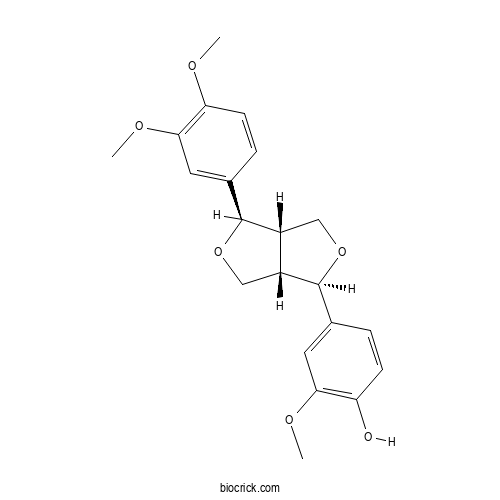
| Cas No. | 95404-51-6 | SDF | File under preparation. |
| PubChem ID | 12314161.0 | Appearance | Oil |
| Formula | C21H24O6 | M.Wt | 372.4 |
| Type of Compound | N/A | Storage | Desiccate at -20°C |
| Solubility | Soluble in Chloroform,Dichloromethane,Ethyl Acetate,DMSO,Acetone,etc. | ||
| Chemical Name | 4-[(3R,3aS,6R,6aS)-6-(3,4-dimethoxyphenyl)-1,3,3a,4,6,6a-hexahydrofuro[3,4-c]furan-3-yl]-2-methoxyphenol | ||
| SMILES | COC1=C(C=C(C=C1)C2C3COC(C3CO2)C4=CC(=C(C=C4)O)OC)OC | ||
| Standard InChIKey | CPJKKWDCUOOTEW-RPQNVMPDSA-N | ||
| Standard InChI | InChI=1S/C21H24O6/c1-23-17-7-5-13(9-19(17)25-3)21-15-11-26-20(14(15)10-27-21)12-4-6-16(22)18(8-12)24-2/h4-9,14-15,20-22H,10-11H2,1-3H3/t14-,15-,20+,21+/m1/s1 | ||
| General tips | For obtaining a higher solubility , please warm the tube at 37 ℃ and shake it in the ultrasonic bath for a while.Stock solution can be stored below -20℃ for several months. We recommend that you prepare and use the solution on the same day. However, if the test schedule requires, the stock solutions can be prepared in advance, and the stock solution must be sealed and stored below -20℃. In general, the stock solution can be kept for several months. Before use, we recommend that you leave the vial at room temperature for at least an hour before opening it. |
||
| About Packaging | 1. The packaging of the product may be reversed during transportation, cause the high purity compounds to adhere to the neck or cap of the vial.Take the vail out of its packaging and shake gently until the compounds fall to the bottom of the vial. 2. For liquid products, please centrifuge at 500xg to gather the liquid to the bottom of the vial. 3. Try to avoid loss or contamination during the experiment. |
||
| Shipping Condition | Packaging according to customer requirements(5mg, 10mg, 20mg and more). Ship via FedEx, DHL, UPS, EMS or other couriers with RT, or blue ice upon request. | ||
Quality Control & MSDS
3D structure
Package In Stock

Number of papers citing our products


Pinoresinol monomethyl ether Dilution Calculator
Pinoresinol monomethyl ether Molarity Calculator
-
 PhillygeninCatalog No.: BCN2653CAS No.: 487-39-8
-
 (+)-EpipinoresinolCatalog No.: BCN3255CAS No.: 24404-50-0
-
 (-)-EpipinoresinolCatalog No.: BCN3377CAS No.: 10061-38-8
-
 (-)-PinoresinolCatalog No.: BCN3254CAS No.: 81446-29-9
-
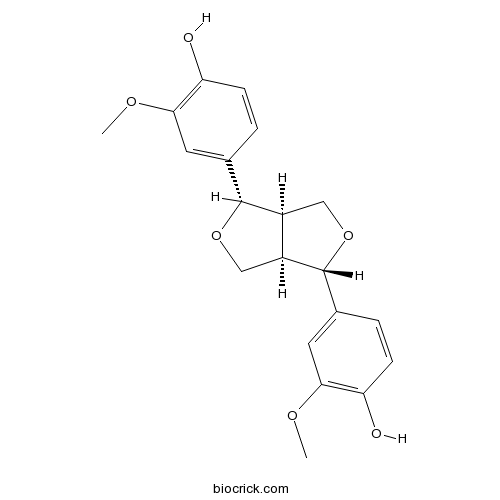 PinoresinolCatalog No.: BCN5591CAS No.: 487-36-5
-
 (±)-PinoresinolCatalog No.: BCN9179CAS No.: 4263-88-1
-
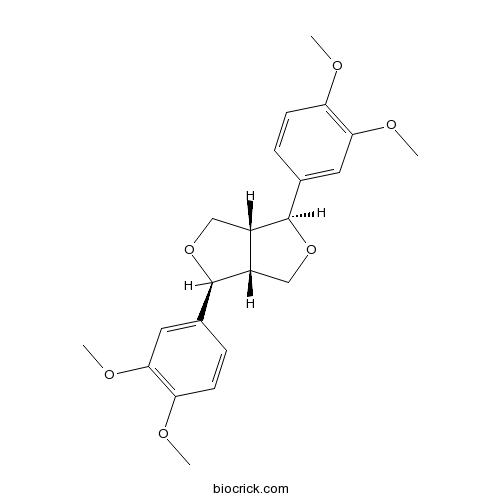 Pinoresinol dimethyl etherCatalog No.: BCN6767CAS No.: 29106-36-3
-
 EudesminCatalog No.: BCN6563CAS No.: 526-06-7
-
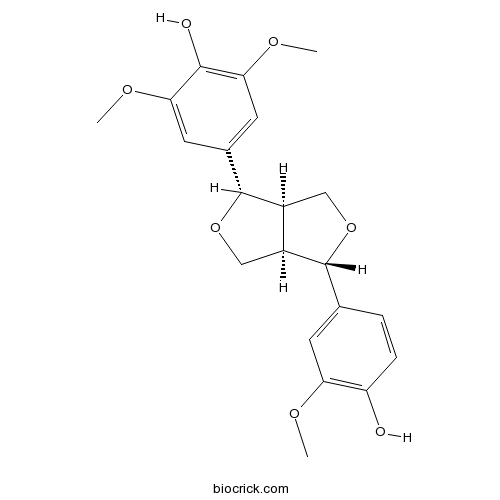 MedioresinolCatalog No.: BCN5462CAS No.: 40957-99-1
-
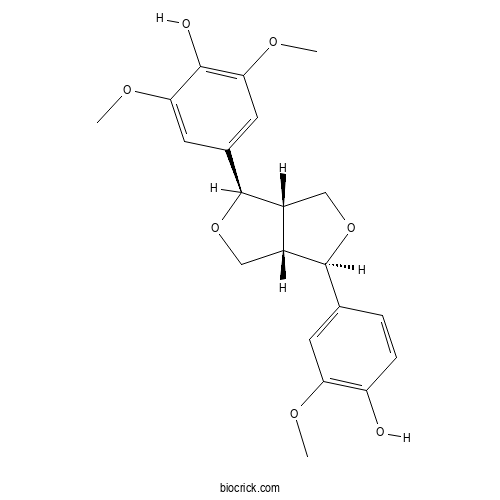 MedioresinolCatalog No.: BCX2694CAS No.: 125638-34-8
-
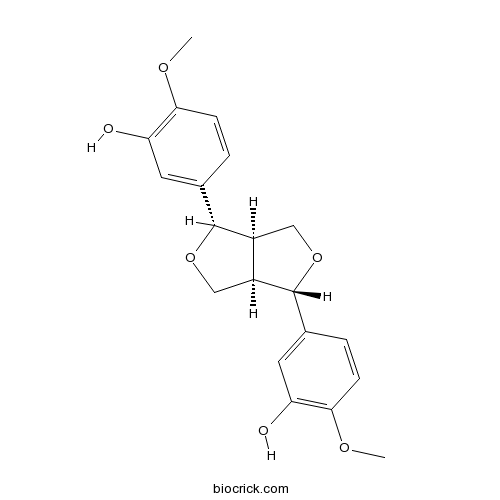 Clemaphenol ACatalog No.: BCN7834CAS No.: 362606-60-8
-
 MagnolinCatalog No.: BCN5224CAS No.: 31008-18-1
-
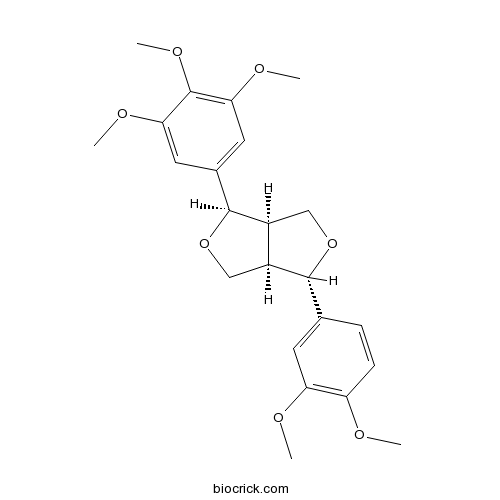 Epimagnolin ACatalog No.: BCN7831CAS No.: 41689-51-4
-
 (±)-MagnolinCatalog No.: BCN9663CAS No.: 1275595-33-9
-
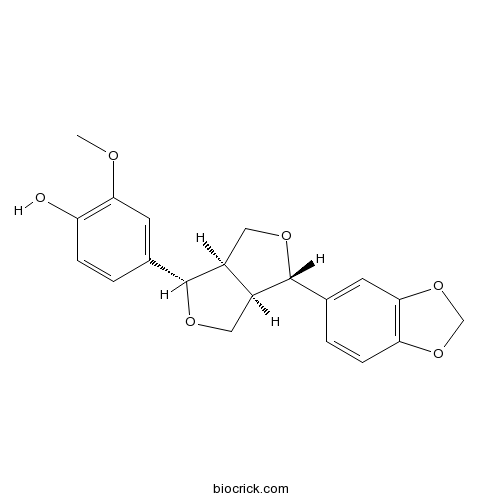 PiperitolCatalog No.: BCN3968CAS No.: 52151-92-5
-
 Pinoresinol diacetateCatalog No.: BCN5250CAS No.: 32971-25-8
-
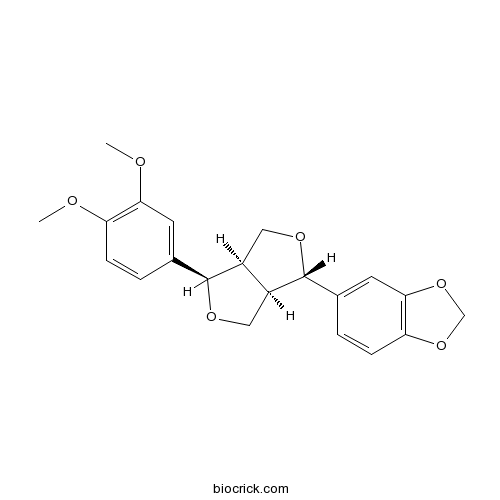 FargesinCatalog No.: BCN5022CAS No.: 31008-19-2
-
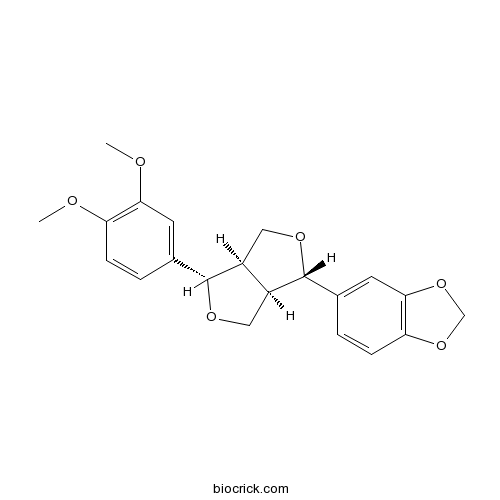 KobusinCatalog No.: BCN7563CAS No.: 36150-23-9
-
 PlanininCatalog No.: BCC8981CAS No.: 68296-27-5
-
 Balanophonin BCatalog No.: BCX0580CAS No.: 92216-41-6
-
 DL-SyringaresinolCatalog No.: BCN6053CAS No.: 1177-14-6
-
 (-)-SyringaresinolCatalog No.: BCN3417CAS No.: 6216-81-5
-
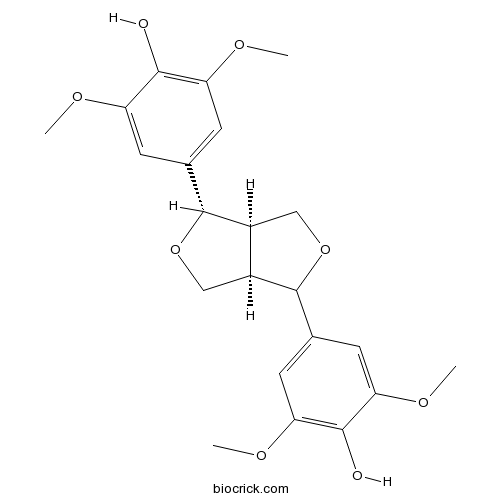 SyringaresinolCatalog No.: BCN3042CAS No.: 487-35-4
-
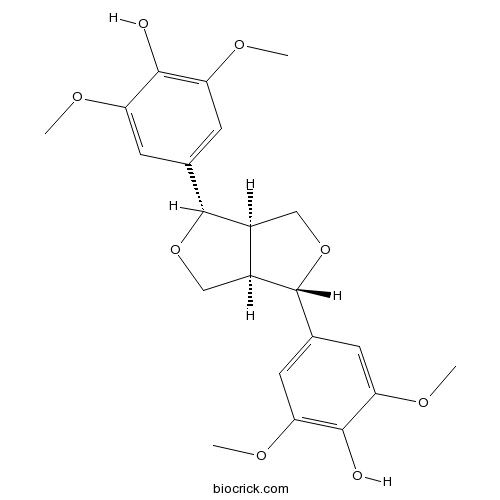 (+)-SyringaresinolCatalog No.: BCN7496CAS No.: 21453-69-0
-
 EpisyringaresinolCatalog No.: BCN7023CAS No.: 51152-20-6
-
 (-)-EpisyringaresinolCatalog No.: BCN9229CAS No.: 6216-82-6
-
 Pinoresinol 4-O-beta-D-glucopyranosideCatalog No.: BCN1376CAS No.: 69251-96-3
-
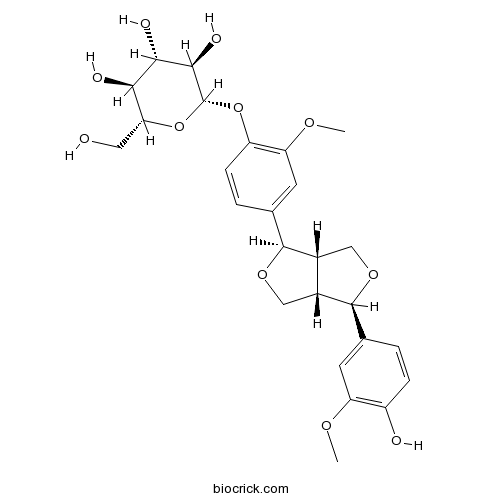 (-)-Pinoresinol 4-O-glucosideCatalog No.: BCN7251CAS No.: 41607-20-9
-
 3,4,5'-Trimethoxy-3',4'-methylenedioxy-7,9':7',9-diepoxylignanCatalog No.: BCN7238CAS No.: 873867-94-8
-
 4'-O-MethyllariciresinolCatalog No.: BCN9713CAS No.: 73354-09-3
| 1 mg | 5 mg | 10 mg | 20 mg | 25 mg | |
| 1 mM | 2.6853 mL | 13.4264 mL | 26.8528 mL | 53.7057 mL | 67.1321 mL |
| 5 mM | 0.5371 mL | 2.6853 mL | 5.3706 mL | 10.7411 mL | 13.4264 mL |
| 10 mM | 0.2685 mL | 1.3426 mL | 2.6853 mL | 5.3706 mL | 6.7132 mL |
| 50 mM | 0.0537 mL | 0.2685 mL | 0.5371 mL | 1.0741 mL | 1.3426 mL |
| 100 mM | 0.0269 mL | 0.1343 mL | 0.2685 mL | 0.5371 mL | 0.6713 mL |
| * Note: If you are in the process of experiment, it's necessary to make the dilution ratios of the samples. The dilution data above is only for reference. Normally, it's can get a better solubility within lower of Concentrations. | |||||
- α-Peltatin 5-O-glucoside
Catalog No.:BCX2591
CAS No.:11024-58-1
- 4'-Demethylpodophyllotoxin 7-O-glucoside
Catalog No.:BCX2590
CAS No.:40505-30-4
- 3-Methoxy-N-acetylnornantenine
Catalog No.:BCX2589
CAS No.:53452-28-1
- Gymnetinoside B
Catalog No.:BCX2588
CAS No.:1588477-86-4
- Juglanin B
Catalog No.:BCX2587
CAS No.:958365-42-9
- Methyl 4-acetamidobutanoate
Catalog No.:BCX2586
CAS No.:32039-11-5
- Cassumunene
Catalog No.:BCX2585
CAS No.:73573-81-6
- trans-Cassumunene
Catalog No.:BCX2584
CAS No.:76318-79-1
- 5-(3-Hydroxyphenyl)dihydrofuran-2(3H)-one
Catalog No.:BCX2583
CAS No.:1270584-13-8
- (E)-4-(3,4-Dimethoxyphenyl)but-3-en-1-yl acetate
Catalog No.:BCX2582
CAS No.:69768-98-5
- N-Formylanonaine
Catalog No.:BCX2581
CAS No.:83459-45-4
- (E)-1-(3,4-Dimethoxyphenyl)buta-1,3-diene
Catalog No.:BCX2580
CAS No.:75560-74-6
- Ferulacoumarin A
Catalog No.:BCX2593
CAS No.:263746-19-6
- Ferulacoumarin B
Catalog No.:BCX2594
CAS No.:263746-20-9
- 7,10-Dihydroxy-2,6,10-trimethyl-2,5,11-dodecatrien-4-one
Catalog No.:BCX2595
CAS No.:82901-07-3
- Shizukaol F
Catalog No.:BCX2596
CAS No.:165171-10-8
- 3,4-Bis(3,4-dimethoxyphenyl)cycloocta-1,5-diene
Catalog No.:BCX2597
CAS No.:146564-35-4
- Fukanedone B
Catalog No.:BCX2598
CAS No.:850621-98-6
- 2-epi-Baigene C
Catalog No.:BCX2599
CAS No.:263746-16-3
- Baigene C
Catalog No.:BCX2600
CAS No.:263746-17-4
- 5,7-Dimethoxyphenanthrene-2,6-diol
Catalog No.:BCX2601
CAS No.:72966-94-0
- 13βH-Malabarica-14(27),17,21-trien-3β-ol
Catalog No.:BCX2602
CAS No.:1159402-28-4
- Funingenoside J
Catalog No.:BCX2603
CAS No.:645411-82-1
- Tuliferoline
Catalog No.:BCX2604
CAS No.:60755-82-0
Chemical Compounds and Antioxidant Activity of Forsythia suspensa Leaves Black Tea.[Pubmed:42197240]
Molecules. 2026 May 16;31(10):1687.
Forsythia suspensa leaves black tea (FSLBT) is a fermented herbal tea traditionally consumed in Northern China, yet its bioactive constituents and antioxidant basis remain insufficiently understood. In this study, a phytochemical investigation of FSLBT led to the isolation and structural identification of nine compounds, including five lignans and four pentacyclic triterpenic acids, whose structures were elucidated by (1)H-NMR, (13)C-NMR, and HRESIMS spectral analysis. Notably, epipinoresinol and Pinoresinol monomethyl ether were isolated from Forsythia suspensa leaves (FSL) for the first time. Among the isolated lignans, phillygenin, epipinoresinol, Pinoresinol monomethyl ether, and pinoresinol were further evaluated for antioxidant activity using DPPH*, ABTS*+, and FRAP assays. The four lignans exhibited concentration-dependent antioxidant activities, with IC(50) (half maximal inhibitory concentration) values ranging from 20.32 to 46.40 mug/mL for DPPH* scavenging and 37.29 to 72.71 mug/mL for ABTS*+ scavenging, while FRAP EC(50) (half maximal effective concentration) values ranged from 1.53 to 1.90 mg/mL. Quantitative HPLC analysis showed that the contents of phillygenin, epipinoresinol, Pinoresinol monomethyl ether, and pinoresinol in FSLBT were 3.48 +/- 1.12 wt%, 0.39 +/- 0.21 wt%, 0.26 +/- 0.20 wt%, and 0.18 +/- 0.07 wt%, respectively. These results indicate that FSLBT is enriched in lignan aglycones, particularly phillygenin, and that these major lignans possess measurable chemical antioxidant activities, providing a phytochemical basis for further investigation of the functional properties of this fermented herbal tea.
In vitro and in silico studies of SARS-CoV-2 main protease M(pro) inhibitors isolated from Helichrysum bracteatum.[Pubmed:35799933]
RSC Adv. 2022 Jun 22;12(29):18412-18424.
Discovering SARS-CoV-2 inhibitors from natural sources is still a target that has captured the interest of many researchers. In this study, the compounds (1-18) present in the methanolic extract of Helichrysum bracteatum were isolated, identified, and their in vitro inhibitory activities against SARS-CoV-2 main protease (M(pro)) was evaluated using fluorescence resonance energy transfer assay (FRET-based assay). Based on 1D and 2D spectroscopic techniques, compounds (1-18) were identified as 24-beta-ethyl-cholesta-5(6),22(23),25(26)-triene-3-ol (1), alpha-amyrin (2), linoleic acid (3), 24-beta-ethyl-cholesta-5(6),22(23),25(26)-triene-3-O-beta-d-glucoside (4), 1,3-propanediol-2-amino-1-(3',4'-methylenedioxyphenyl) (5), (-)-(7R,8R,8'R)-acuminatolide (6), (+)-piperitol (7), 5,7,4'-trihydroxy-8,3'-dimethoxy flavanone (8), 5,7,4'-trihydroxy-6-methoxy flavanone (9), 4',5-dihydroxy-3',7,8-trimethoxyflavone (10), 5,7-dihydroxy-3',4',5',8-tetramethoxy flavone (11), 1,3-propanediol-2-amino-1-(4'-hydroxy-3'-methoxyphenyl) (12), 3',5',5,7-tetrahydroxy-6-methoxyflavanone (13), simplexoside (piperitol-O-beta-d-glucoside) (14), Pinoresinol monomethyl ether-beta-d-glucoside (15), orientin (16), luteolin-3'-O-beta-d-glucoside (17), and 3,5-dicaffeoylquinic acid (18). Compounds 6, 12, and 14 showed comparable inhibitory activities against SARS-CoV-2 M(pro) with IC(50) values of 0.917 +/- 0.05, 0.476 +/- 0.02, and 0.610 +/- 0.03 muM, respectively, compared with the control lopinavir with an IC(50) value of 0.225 +/- 0.01 muM. The other tested compounds showed considerable inhibitory activities. The molecular docking study for the tested compounds was carried out to correlate their binding modes and affinities for the SARS-CoV-2 M(pro) enzyme with the in vitro results. Analyzing the results of the in vitro assay together with the obtained in silico results led to the conclusion that phenylpropanoids, lignans, and flavonoids could be considered suitable drug leads for developing anti-COVID-19 therapeutics. Moreover, the phenylpropanoid skeleton oxygenated at C3, C4 of the phenyl moiety and at C1, C3 of the propane parts constitute an essential core of the SARS-CoV-2 M(pro) inhibitors, and thus could be proposed as a scaffold for the design of new anti-COVID-19 drugs.
Chemical constituents from Amentotaxus yunnanensis and Torreyayunnanensis.[Pubmed:12880325]
J Nat Prod. 2003 Jul;66(7):1002-5.
In a chemical study of taxonomically related Taxaceae plants of Yunnan Province, China, seven compounds, including a new amentoflavone biflavonoid, 2,3-dihydro-7,7' '-dimethoxyamentoflavone (1), were isolated from Amentotaxus yunnanensis, and 12 isolates were obtained from Torreya yunnanensis. From the latter plant, a new abietane diterpene, torreyayunnin (7), is reported for the first time. The known isolates from A. yunnanensis have been identified as sequoiaflavone (3), sotetsuflavone (4), 7,7' '-dimethoxyamentoflavone (5), lutein, beta-sitosterol, and sequoyitol. Amentoflavone (2), sotetsuflavone (4), sciadopitysin (6), 12-hydroxydehydroabietinol, meridinol, balanophonin, (+)-Pinoresinol monomethyl ether, (+)-Pinoresinol monomethyl ether glucoside, erythro-1-(4-hydroxy-3-methoxyphenyl)-2-[4-[2-formyl-(E)-vinyl]-2- methoxyphenoxy]propane-1,3-diol, threo-1-(4-hydroxy-3-methoxyphenyl)-2- [4-[2-formyl-(E)-vinyl]-2-methoxyphenoxy] propane-1,3-diol, and (E)-2-butenedioic acid were identified as known isolates from T. yunnanensis. The presence of the amentoflavone biflavonoids (1, 3-5) in A. yunnanensis supports its placement in the Taxaceae. The occurrence of the biflavonoid sotetsuflavone (4) in both A. yunnanensis and T. yunnanensis suggests that these two genera are closely related. The identification and structural elucidation of these isolates were based on spectral data analysis including 1D and 2D NMR.
New biflavanones and bioactive compounds from Stellera chamaejasme L.[Pubmed:12580104]
Yao Xue Xue Bao. 2001 Sep;36(9):669-71.
AIM: To study the chemical constituents of the root of Stellera chamaejasme L. METHODS: Various column chromatographies on silica gel and RP-18 were employed for isolation and purification. Structures of compounds were elucidated by spectral analysis. RESULTS: Eight lignans and three biflavonoids possessing a C-3/C-3" linkage were isolated. They are ruixianglangdusu A (1) and B (2), 4',4'",5,5",7,7"-hexahydroxy-3,3"-biflavone (3), (+)-kusunokinin (4), lirioresinol-B (5), magnolenin C (6), (-)-Pinoresinol monomethyl ether (7), (-)-pinoresinol (8), (+)-matairesinol (9), isohinokinin (10) and (-)-eudesmin (11). CONCLUSION: Compounds 1 and 2 are new biflavanones, 1 is enantiomeric to known chamaejasmenin C, 4, 6, 8, 9, 10 and 11 were isolated from this plant for the first time, and 7 was isolated from natural resources for the first time. In vitro bioassays showed that 3 and 8 exhibited antibacterial activity, and 1, 2, 9 and 11 exhibited immunomodulatory activity.
Short and stereoselective total synthesis of furano lignans (+/-)-dihydrosesamin, (+/-)-lariciresinol dimethyl ether, (+/-)-acuminatin methyl ether, (+/-)-sanshodiol methyl ether, (+/-)-lariciresinol, (+/-)-acuminatin, and (+/-)-lariciresinol monomethyl ether and furofuran lignans (+/-)-sesamin, (+/-)-eudesmin, (+/-)-piperitol methyl ether, (+/-)-pinoresinol, (+/-)-piperitol, and (+/-)-pinoresinol monomethyl ether by radical cyclization of epoxides using a transition-metal radical source.[Pubmed:12003531]
J Org Chem. 2002 May 17;67(10):3242-8.
Intramolecular radical cyclization of suitably substituted epoxy ethers 4a-g using bis(cyclopentadienyl)titanium(III) chloride as the radical source resulted in trisubstituted tetrahydrofurano lignans and 2,6-diaryl-3,7-dioxabicyclo[3.3.0]octane lignans depending on the reaction conditions. The titanium(III) species was prepared in situ from commercially available titanocene dichloride and activated zinc dust in THF. Upon radical cyclization followed by acidic workup, epoxy olefinic ethers 4a-g afforded furano lignans dihydrosesamin 1a, lariciresinol dimethyl ether 1b, acuminatin methyl ether 1e, and sanshodiol methyl ether 1g directly and lariciresinol 1h, acuminatin 1i, and lariciresinol monomethyl ether 1j after removal of the benzyl protecting group by controlled hydrogenolysis of the corresponding cyclized products. The furofuran lignans sesamin 2a, eudesmin 2b, and piperitol methyl ether 2e were also prepared directly by using the same precursors 4a-f on radical cyclization followed by treatment with iodine and pinoresinol 2h, piperitol 2i, and Pinoresinol monomethyl ether 2j after controlled hydrogenolysis of the benzyl protecting group of the corresponding cyclized products. Two naturally occurring acyclic lignans, secoisolariciresinol 5h and secoisolariciresinol dimethyl ether 5b, have also been prepared by exhaustive hydrogenolysis of 2h and 2b, respectively.

Calcutta University

University of Minnesota

University of Maryland School of Medicine

University of Illinois at Chicago

The Ohio State University

University of Zurich

Harvard University

Colorado State University

Auburn University

Yale University

Worcester Polytechnic Institute

Washington State University

Stanford University

University of Leipzig

Universidade da Beira Interior

The Institute of Cancer Research

Heidelberg University

University of Amsterdam

University of Auckland

TsingHua University

The University of Michigan

Miami University

DRURY University

Jilin University

Fudan University

Wuhan University

Sun Yat-sen University

Universite de Paris

Deemed University

Auckland University

The University of Tokyo

Korea University



