Blood-Brain Barrier
Blood–brain barrier Protective barriers of the brain.jpg Blood and CSF brain barriers Details System Neuroimmune system Identifiers Acronym(s) BBB The blood–brain barrier (BBB) is a highly selective semipermeable membrane barrier that separates the circulating blood from the brain and extracellular fluid in the central nervous system (CNS). The blood–brain barrier is formed by brain endothelial cells and it allows the passage of water, some gases, and lipid-soluble molecules by passive diffusion, as well as the selective transport of molecules such as glucose and amino acids that are crucial to neural function. Furthermore, it prevents the entry of lipophilic potential neurotoxins by way of an active transport mechanism mediated by P-glycoprotein. Astrocytes have been claimed to be necessary to create the blood–brain barrier. A few regions in the brain, including the circumventricular organs, do not have a blood–brain barrier.
Blood-Brain Barrier Products Targets
Products for Blood-Brain Barrier - Page 5
- Cat.No. Product Name Information/Activity
-
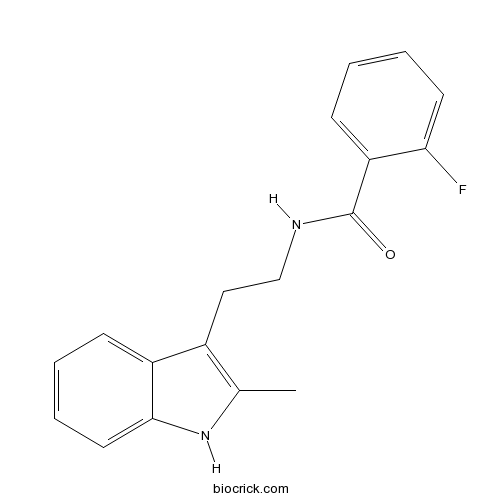
BCC1684
Ko 143
Ko 143 is a potent and selective ATP-binding cassette subfamily G member 2 (ABCG2/BCRP) inhibitor. Ko 143 displays >200-fold selectivity over P-gp and MRP-1 transporters.

-
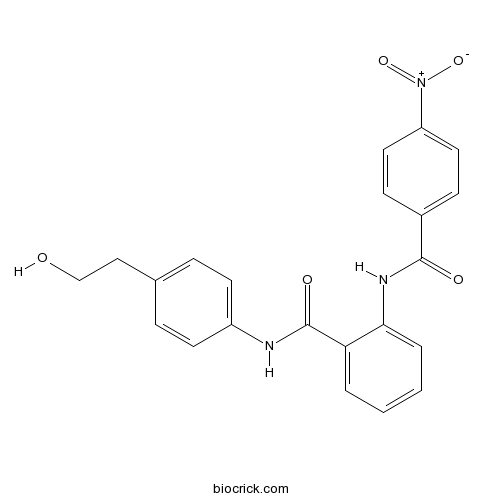
BCC7874
KS 176
KS176 is a potent and selective inhibitor of the breast cancer resistance protein (BCRP) multidrug transporter (IC50 values are 0.59 and 1.39 μM in Pheo A and Hoechst 33342 assays respectively). Displays no inhibitory activity against P-gp or MRP1.
-
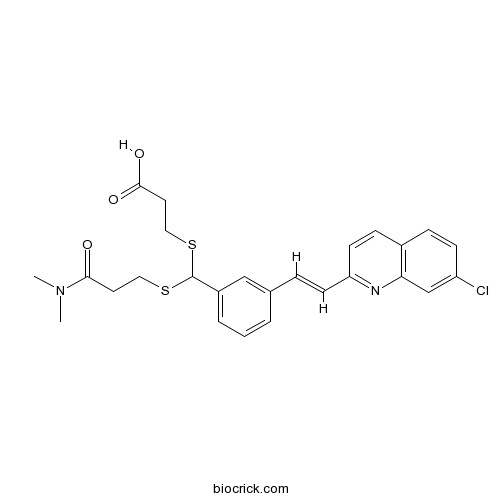
BCC7334
MK 571
MRP1 inhibitor; also CysLT<sub>1</sub> (LTD<sub>4</sub>) inverse agonist
-
BCC4832
Probenecid
Probenecid is a potent and selective agonist of transient receptor potential vanilloid 2 (TRPV2) channels. Probenecid also inhibits pannexin 1 channels.

-
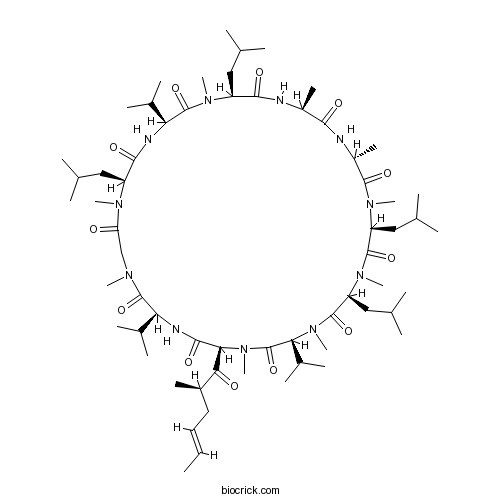
BCC2027
Valspodar
Valspodar is a selective P-glycoprotein inhibitor that has been used as an experimental cancer treatment and chemosensitizer.
-
BCC2307
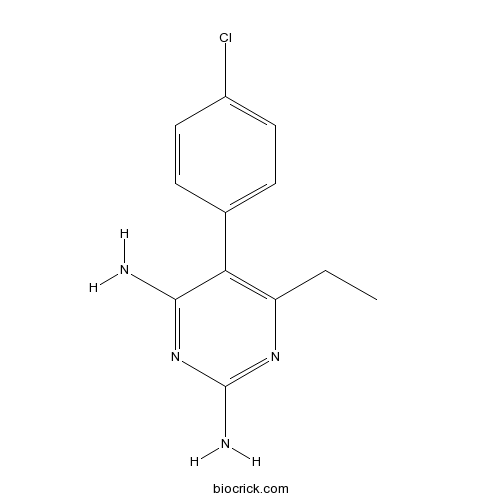
Pyrimethamine
Pyrimethamine(RP4753) is a medication used for protozoal infections; interferes with tetrahydrofolic acid synthesis from folic acid by inhibiting the enzyme dihydrofolate reductase (DHFR).
-
BCC7764
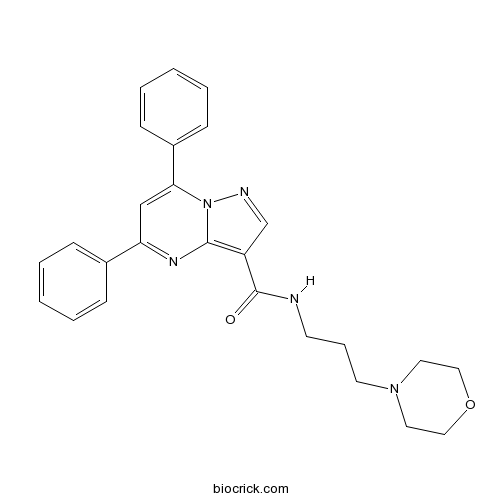
Reversan
Reversan (CBLC4H10) is a potent and nontoxic multidrug resistance-associated protein 1 (MRP1) and P-glycoprotein (Pgp) inhibitor.
-
BCC3878
LY335979 (Zosuquidar 3HCL)
Zosuquidar trihydrochloride is an inhibitor of P-glycoprotein with a Ki value of 59 nM.

-
BCN2961
Ingenol 3-Angelate
Ingenol Mebutate is an active ingredient in Euphorbia peplus, acts as a potent PKC modulator, with Kis of 0.3, 0.105, 0.162, 0.376, and 0.171 nM for PKC-α, PKC-β, PKC-γ, PKC-δ, and PKC-ε, respectively, and has antiinflammatory and antitumor activity.

-
BCC6088
CK 666
CK-666 is a cell-permeable inhibitor of actin-related protein Arp2/3 complex, and binds to Arp2/3 complex, stabilizes the inactive state of the complex, blocking movement of the Arp2 and Arp3 subunits into the activated filament-like (short pitch) conformation.