Blood-Brain Barrier
Blood–brain barrier Protective barriers of the brain.jpg Blood and CSF brain barriers Details System Neuroimmune system Identifiers Acronym(s) BBB The blood–brain barrier (BBB) is a highly selective semipermeable membrane barrier that separates the circulating blood from the brain and extracellular fluid in the central nervous system (CNS). The blood–brain barrier is formed by brain endothelial cells and it allows the passage of water, some gases, and lipid-soluble molecules by passive diffusion, as well as the selective transport of molecules such as glucose and amino acids that are crucial to neural function. Furthermore, it prevents the entry of lipophilic potential neurotoxins by way of an active transport mechanism mediated by P-glycoprotein. Astrocytes have been claimed to be necessary to create the blood–brain barrier. A few regions in the brain, including the circumventricular organs, do not have a blood–brain barrier.
Blood-Brain Barrier Products Targets
Products for Blood-Brain Barrier - Page 6
- Cat.No. Product Name Information/Activity
-
BCC6347
CK 869
CK-869 is an Actin-Related Protein 2/3 (ARP2/3) complex inhibitor, with an IC50 of 7 μM.

-
BCC7830
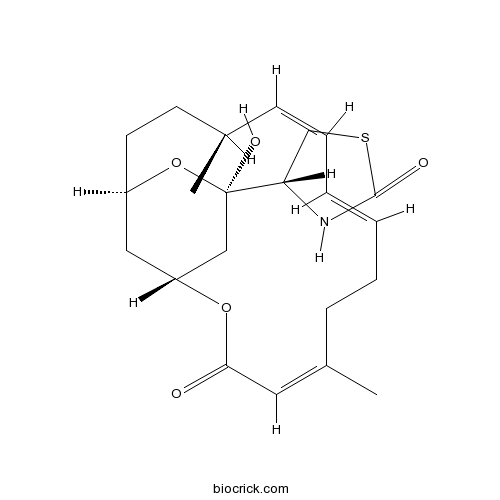
Latrunculin A
Latrunculin A (LAT-A) is a toxin isolated from the red sea sponge Latrunculia magnifica, binds to actin monomers, inhibits polymerization of actin, with Kds of 0.1, 0.4, 4.7 μM and 0.19 μM for ATP-actin, ADP-Pi-actin, ADP-actin and G-actin, respectively.
-
BCC5866
187-1, N-WASP inhibitor
380488-27-7

-
BCC7934
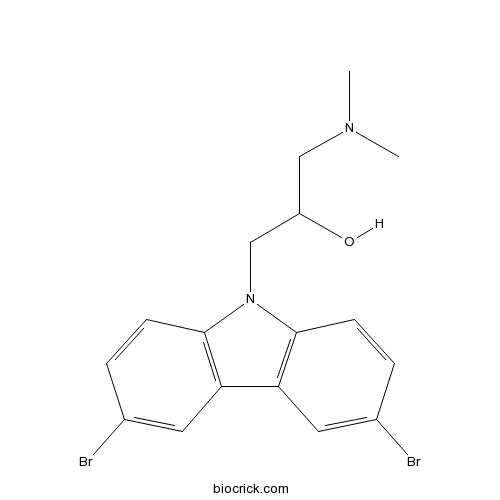
Wiskostatin
253449-04-6
-
BCN5049
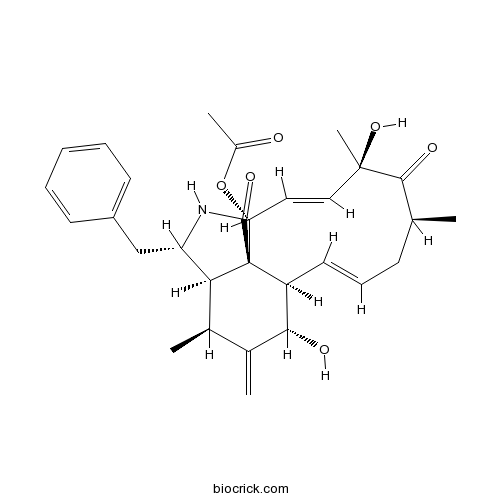
Cytochalasin D
Cytochalasin D (Zygosporin A; NSC 209835) is a potent and cell-permeable inhibitor of actin polymerization derived from fungus, inhibits the G-actin–cofilin interaction by binding to G-actin. Cytochalasin D (Zygosporin A; NSC 209835) also inhibits the binding of cofilin to F-actin and decreases the rate of both actin polymerization and depolymerization in living cells.
-
BCC7485
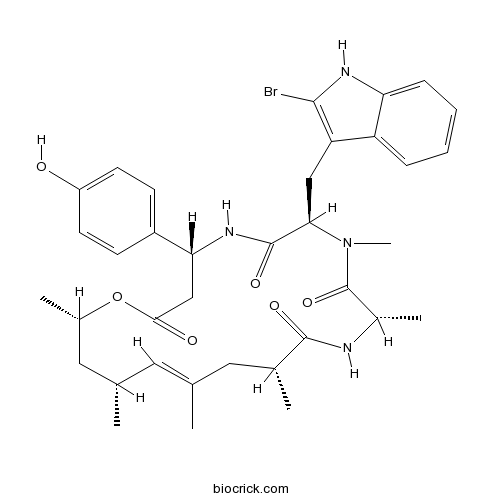
Jasplakinolide
Jasplakinolide is a potent actin polymerization inducer and stabilizes pre-existing actin filaments. Jasplakinolide binds to F-actin competitively with phalloidin with a Kd of 15 nM. Jasplakinolide, a naturally occurring cyclic peptide from the marine sponge, has both fungicidal and anti-cancer activity.
-
BCN4732
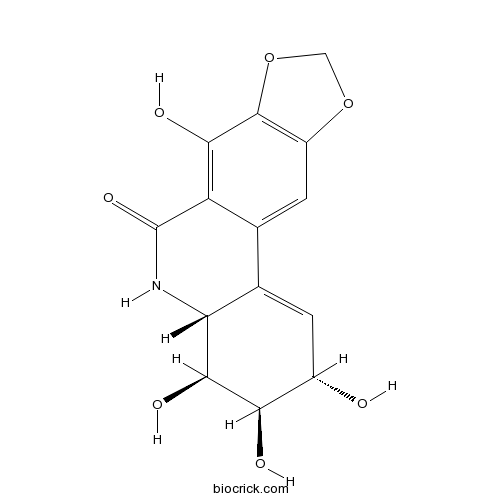
Narciclasine
Narciclasine is a plant growth modulator. Narciclasine modulates the Rho/Rho kinase/LIM kinase/cofilin signaling pathway, greatly increasing GTPase RhoA activity as well as inducing actin stress fiber formation in a RhoA-dependent manner.
-
BCC7945
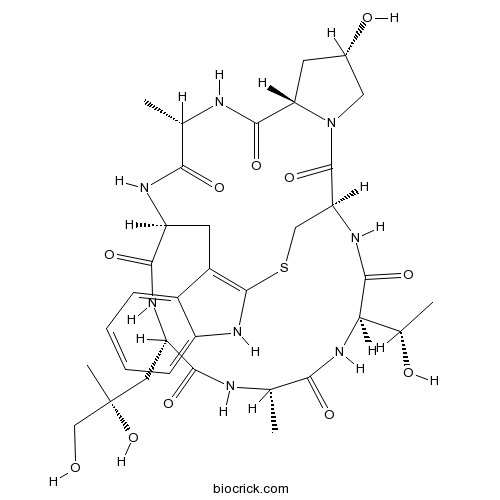
Phalloidin
Phalloidin is a mushroom-derived toxin which can be used to label F-actin of the cytoskeleton with fluorochrome (λex=495 nm, λem=520 nm).
-
BCC6162
SMIFH2
340316-62-3

-
BCC2391
ARRY 520 trifluoroacetate
Potent and selective kinesin spindle protein (KSP) inhibitor; induces Mcl-1 degradation,ARRY-520 is a synthetic kinesin spindle protein (<b>KSP</b>) inhibitor with <b>IC<sub>50</sub></b> of 6 nM.