Blood-Brain Barrier
Blood–brain barrier Protective barriers of the brain.jpg Blood and CSF brain barriers Details System Neuroimmune system Identifiers Acronym(s) BBB The blood–brain barrier (BBB) is a highly selective semipermeable membrane barrier that separates the circulating blood from the brain and extracellular fluid in the central nervous system (CNS). The blood–brain barrier is formed by brain endothelial cells and it allows the passage of water, some gases, and lipid-soluble molecules by passive diffusion, as well as the selective transport of molecules such as glucose and amino acids that are crucial to neural function. Furthermore, it prevents the entry of lipophilic potential neurotoxins by way of an active transport mechanism mediated by P-glycoprotein. Astrocytes have been claimed to be necessary to create the blood–brain barrier. A few regions in the brain, including the circumventricular organs, do not have a blood–brain barrier.
Blood-Brain Barrier Products Targets
Products for Blood-Brain Barrier - Page 8
- Cat.No. Product Name Information/Activity
-
BCN5342
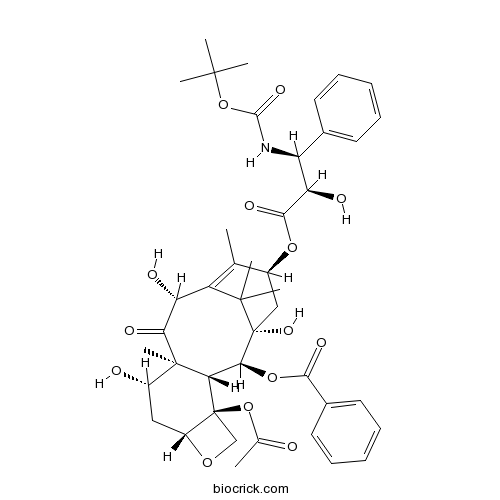
Docetaxel
Docetaxel (RP-56976) is an antineoplastic agent and inhibits microtubule depolymerization with an IC50 value of 0.2 μM. Docetaxel (RP-56976) is a semisynthetic analog of taxol and attenuates the effects of bcl-2 and bcl-xL gene expression. Docetaxel (RP-56976) arrests the cell cycle at G2/M and leads to cell apoptosis.
-
BCC1092
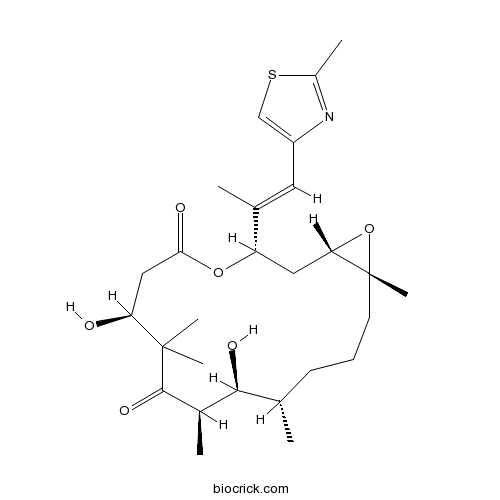
Epothilone B (EPO906, Patupilone)
Epothilone B is a microtubule stabilizer with a Ki of 0.71μM. It acts by binding to the αβ-tubulin heterodimer subunit which causes decreasing of αβ-tubulin dissociation.
-
BCC7298
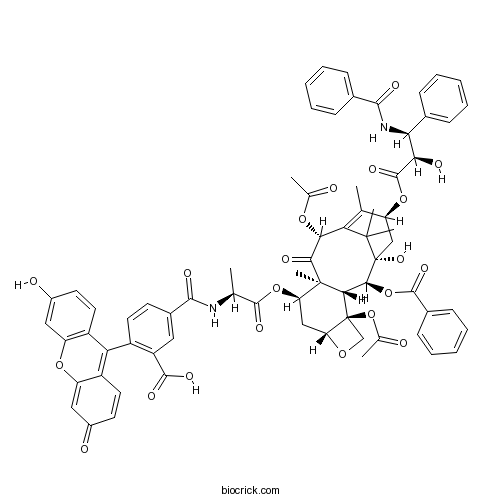
Flutax 1
191930-58-2
-
BCN5494
Harmine
Harmine is a natural dual-specificity tyrosine phosphorylation-regulated kinase (DYRK) inhibitor with anticancer and anti-inflammatory activities. Harmine has a high affinity of 5-HT2A serotonin receptor, with an Ki of 397 nM.

-
BCC6349
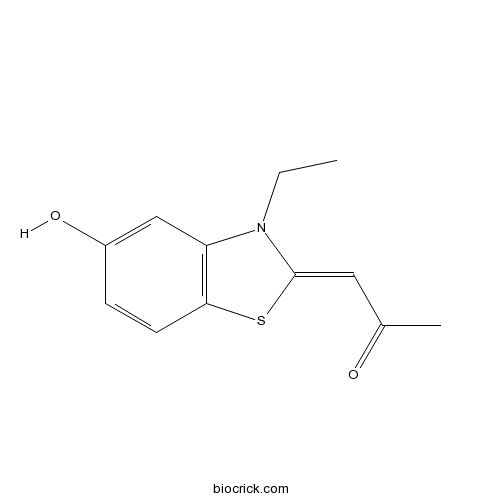
INDY
INDY is a potent and ATP-competitive Dyrk1A and Dyrk1B inhibitor with IC50s of 0.24 μM and 0.23 μM, respectively. INDY binds in the ATP pocket of the enzyme and has a Ki value of 0.18 μM for Dyrk1A. INDY sharply reduces the self-renewal capacity of normal and tumorigenic cells in primary Glioblastoma (GBM) cell lines and neural progenitor cells.
-
BCC1775
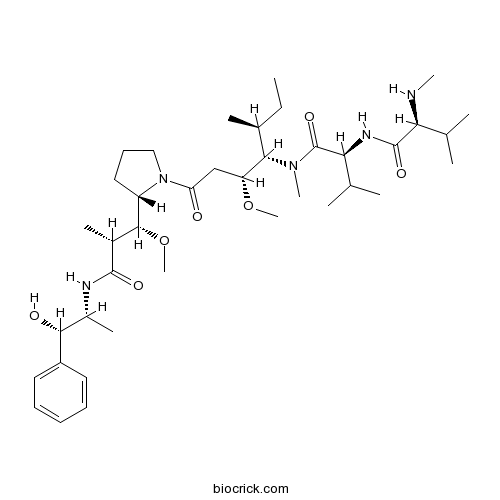
Monomethyl auristatin E
Monomethyl auristatin E (MMAE; SGD-1010) is a synthetic derivative of dolastatin 10 and functions as a potent mitotic inhibitor by inhibiting tubulin polymerization. MMAE is widely used as a cytotoxic component of antibody-drug conjugates (ADCs) to treat several different cancer types.
-
BCC8040
MPC 6827 hydrochloride
Verubulin hydrochloride (MPC-6827 hydrochloride) is a blood brain barrier permeable microtubule-disrupting agent, with potent and broad-spectrum in vitro and in vivo cytotoxic activities. Verubulin hydrochloride (MPC-6827 hydrochloride) exhibits potent anticancer activity in human MX-1 breast and other mouse xenograft cancer models. Verubulin hydrochloride (MPC 6827 hydrochloride) is a promising candidate for the treatment of multiple cancer types.

-
BCC3826
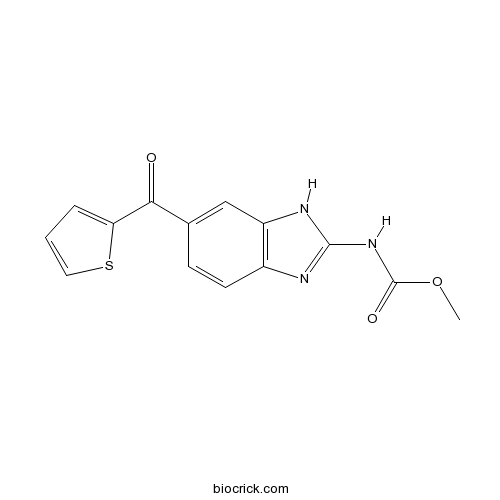
Nocodazole
Nocodazole is a rapidly-reversible inhibitor of microtubule. Nocodazole binds to β-tubulin and disrupts microtubule assembly/disassembly dynamics, which prevents mitosis and induces apoptosis in tumor cells. Nocodazole inhibits Bcr-Abl, and activates CRISPR/Cas9.
-
BCC3819
Noscapine HCl
Bradykinin antagonist. Also tubulin inhibitor

-
BCN4650
Paclitaxel
Paclitaxel is a naturally occurring antineoplastic agent and stabilizes tubulin polymerization. Paclitaxel can cause both mitotic arrest and apoptotic cell death. Paclitaxel also induces autophagy.