Huntington's Disease Research
Huntington's disease is a neurodegenerative disease characterized by cognitive decline and motor dysfunction. It is a genetic disorder which results in the production of mutant huntingtin protein (mHtt). This protein aggregates in the cell cytoplasm and nucleus, affecting cellular function.
Huntington's Disease Research Products Targets
- Adenosine A2A Receptor (11)
- Caspase (9)
- Ubiquitin-activating Enzyme E1 (3)
- Ubiquitin E2 Conjugating Enzyme (3)
- Ubiquitin E3 Ligase (10)
- Deubiquitinating Enzyme (12)
- Hsp90 (10)
- Hsp70 (4)
- Glutamate (Metabotropic) Group III Receptor (26)
- Glutamate (Metabotropic) Group II Receptor (33)
- Glutamate (Metabotropic) Group I Receptor (54)
- Vesicular Monoamine Transporter (4)
- Sir 2-like Family Deacetylase (9)
- Post-Translational Modification (11)
- NMDA Receptor (87)
- Kainate Receptor (22)
- IP3 Receptor (2)
- ERK (6)
- D2 Receptor (14)
- D1 and D5 Receptor (16)
- Calpain (7)
- Trk Receptor (13)
- Autophagy (44)
- Antioxidant (19)
- Glutamate Transporter (18)
- Dopamine Transporter (20)
- Cathepsin (9)
- Mitochondrial Permeability Transition Pore (3)
- Proteasome (5)
- Histone Deacetylase (19)
- Histone Acetyltransferase (4)
Products for Huntington's Disease Research - Page 46
- Cat.No. Product Name Information/Activity
-
BCC4449
TCID
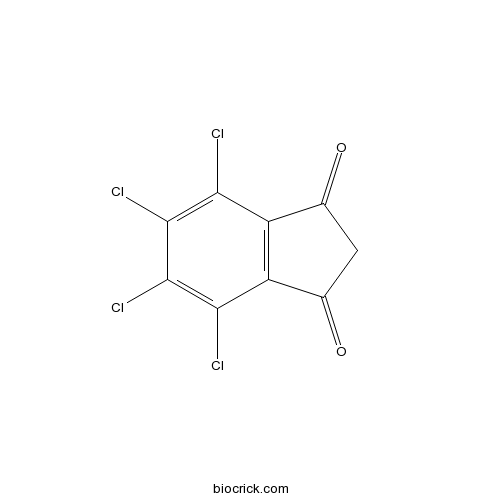
TCID (4,5,6,7-Tetrachloroindan-1,3-dione) is a potent and selective neuronal ubiquitin C-terminal hydrolase (UCH-L3) inhibitor with an IC50 of 0.6 μM. TCID diminishes glycine transporter GlyT2 ubiquitination in brainstem and spinal cord primary neurons.
-
BCC2367
Vialinin A
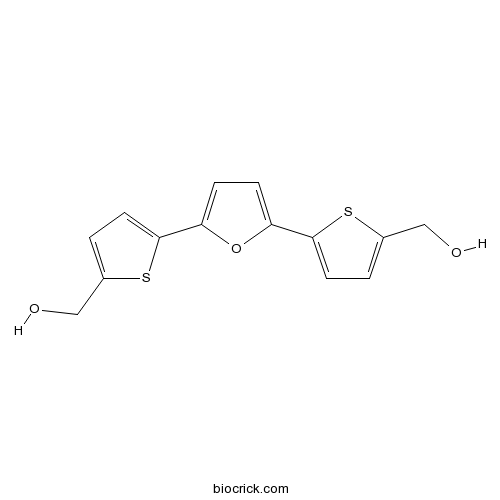
Inhibitor of USP4 and USP5/IsoT

-
BCC3589
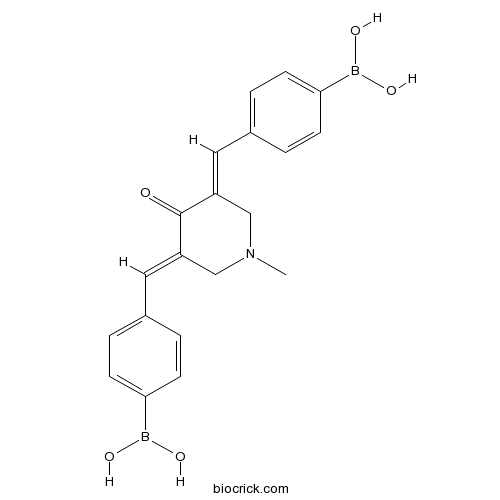
AM 114
856849-35-9
-
BCN1841
Lactacystin
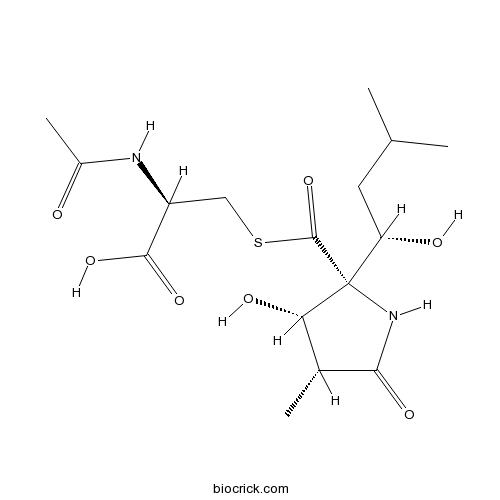
Lactacystin, an antibiotic Streptomyces spp. metabolite, is a potent and selective proteasome inhibitor with an IC50 of 4.8 μM for 20S proteasome. Lactacystin also inhibits the lysosomal enzyme cathepsin A. Lactacystin inhibits cell growth and induces neurite outgrowth.
-
BCC1124
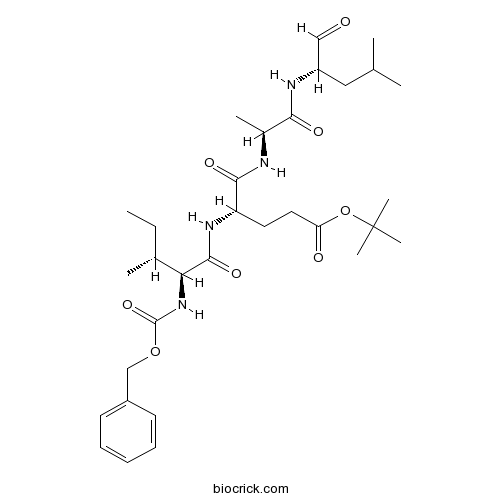
PSI
158442-41-2
-
BCC2408
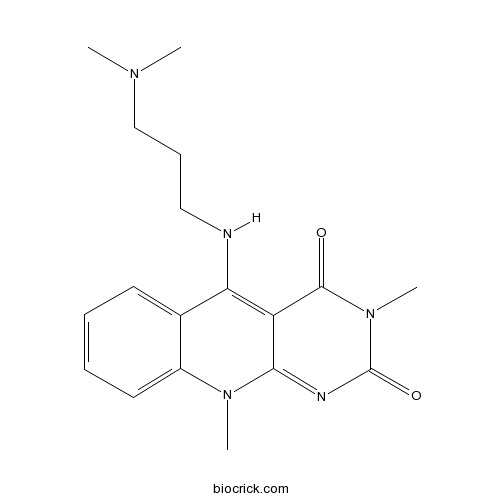
HLI 373
Hdm2 inhibitor; activates p53-dependent transcription
-
BCC2255
NSC 66811
MDM2 inhibitor. Disrupts MDM2-p53 interaction

-
BCC6354
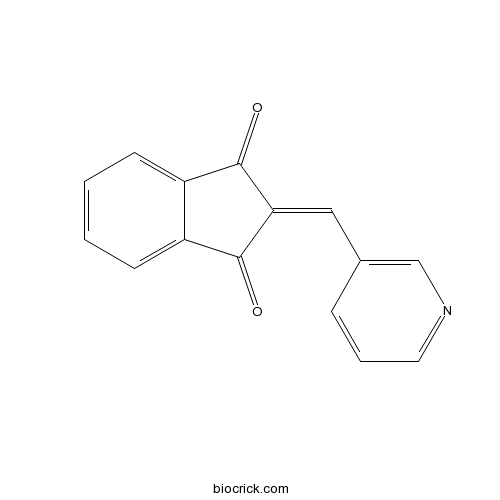
PRT 4165
PRT4165 is a potent inhibitor of PRC1 (Polycomb-repressive complex 1)-mediated H2A ubiquitylation.
-
BCC5111
PTC-209
PTC-209 is a specific BMI-1 inhibitor with an IC50 of 0.5 μM.

-
BCC2238
RITA (NSC 652287)
RITA is an inhibitor of p53-HDM-2 interaction, binds to p53dN, with a Kd of 1.5 nM, and also induces DNA-DNA cross-links.