Epilepsy Research
Epilepsy is a group of neurological conditions consisting of recurrent, usually unprovoked epileptic seizures. Epileptic seizures have recently been defined as "a transient occurrence of signs and/or symptoms due to abnormal, excessive or synchronous neuronal activity in the brain". Epilepsy is one of the most common disorders of the brain, with one in 10 people suffering at least one seizure in their lifetime. There are over 40 different types of epilepsy, each of which presents with its own unique combination of seizure type, typical age of onset, EEG findings, treatment, and prognosis.
Epilepsy Research Products Targets
- NHE (3)
- Monocarboxylate Transporter (3)
- VEGFR (16)
- FGFR (5)
- Voltage-gated Sodium (NaV) Channel (30)
- Voltage-gated Potassium (KV) Channel (38)
- Voltage-gated Calcium Channel (CaV) (38)
- Others (13)
- Epithelial Sodium Channel (3)
- STIM-Orai Channel (4)
- Ryanodine Receptor (6)
- Glutamate (Metabotropic) Group III Receptor (26)
- Glutamate (Metabotropic) Group II Receptor (33)
- Glutamate (Metabotropic) Group I Receptor (54)
- AMPA Receptor (45)
- GABAA-ρ Receptor (8)
- GABAA Receptor (66)
- NMDA Receptor (87)
- Kainate Receptor (22)
- IP3 Receptor (2)
- Gap Channel (7)
- Trk Receptor (13)
- Acid-Sensing Ion Channel (3)
- Calcium-Activated Potassium (KCa) Channel (19)
- Inward Rectifier Potassium (Kir) Channel (21)
- Sodium and Potassium ATPase (3)
- KCC2 (1)
- H+-ATPase (3)
- H+,K+-ATPase (4)
- Chloride Channel (17)
- NCX (5)
- Ca2+-ATPase (7)
- NKCC (2)
- Cytokine (15)
Products for Epilepsy Research - Page 27
- Cat.No. Product Name Information/Activity
-
BCC6013
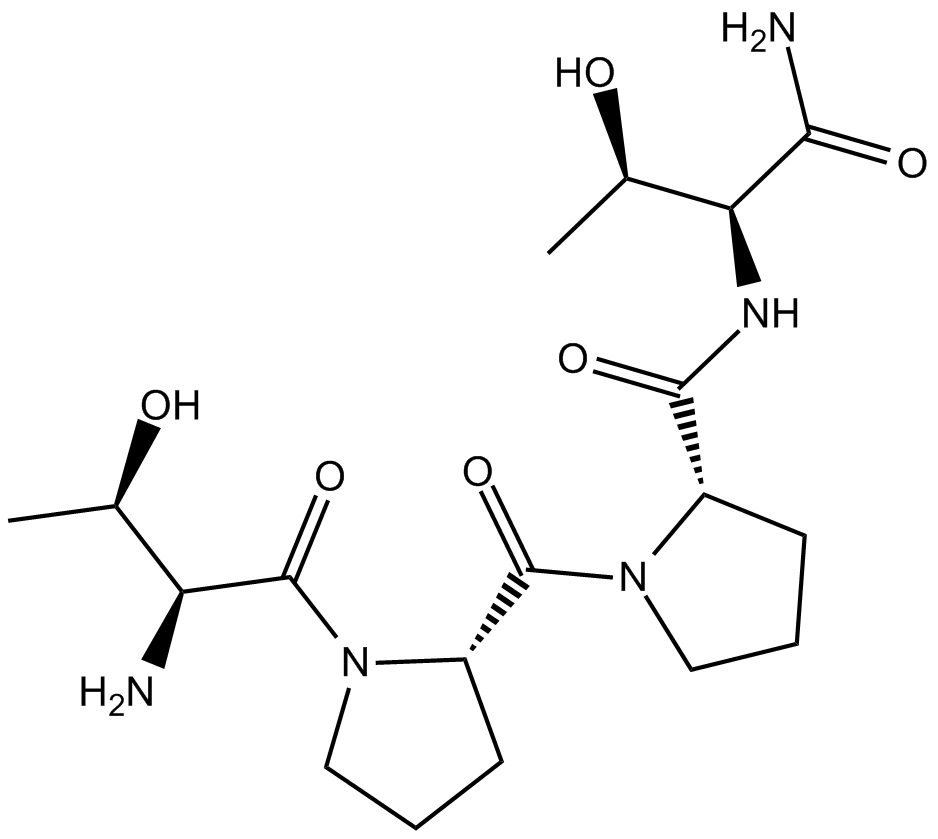
GLYX 13
Rapastinel (GLYX-13) is an N-methyl-D-aspartate receptor (NMDAR) modulator that has characteristics of a glycine site partial agonist.
-
BCC6588
(R)-(+)-HA-966
(R)-(+)-HA-966 ((+)-HA-966) is a partial agonist/antagonist of glycine site of the N-methyl-D-aspartate (NMDA) receptor complex. (R)-(+)-HA-966 selectively blocks the activation of the mesolimbic dopamine system by amphetamine. (R)-(+)-HA-966 can cross the blood-brain barrier and has the potential for neuropathic and acute pain.

-
BCC6570
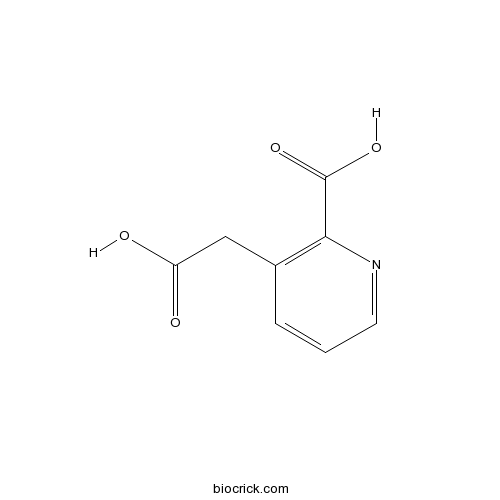
Homoquinolinic acid
490-75-5
-
BCC6591
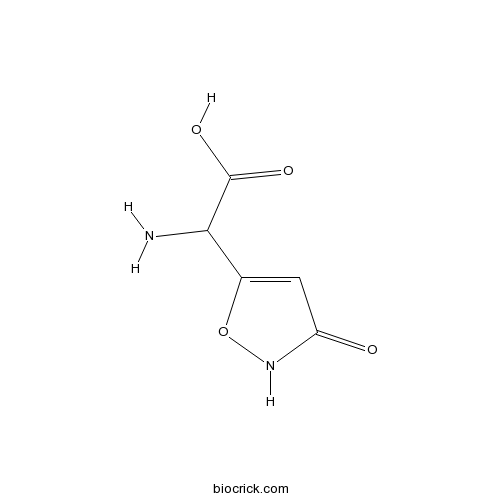
Ibotenic acid
Ibotenic acid has agonist activity at both the N-methyl-D-aspartate (NMDA) and trans-ACPD or metabolotropic quisqualate (Qm) receptor sites.
-
BCC5896
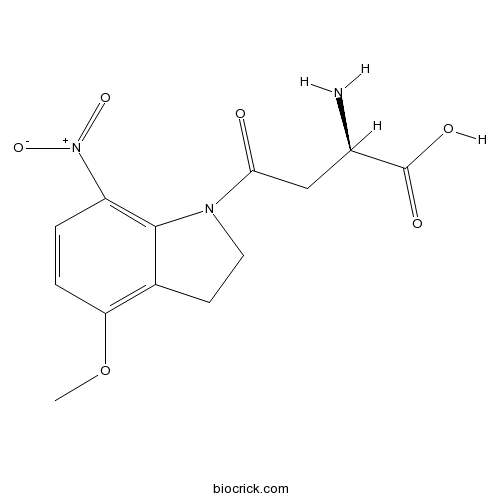
MNI-caged-D-aspartate
845555-94-4
-
BCC4590
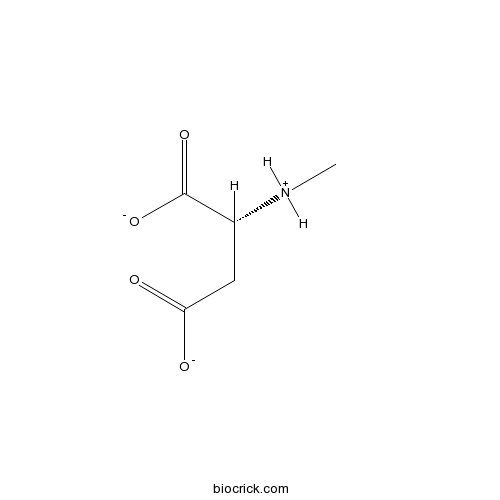
NMDA (N-Methyl-D-aspartic acid)
NMDA is a specific agonist for NMDA receptor mimicking the action of glutamate, the neurotransmitter which normally acts at that receptor.
-
BCC6573
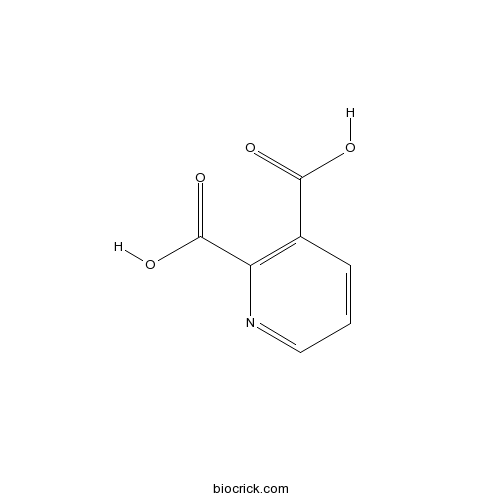
Quinolinic acid
Quinolinic acid is an endogenous N-methyl-D-aspartate (NMDA) receptor agonist synthesized from L-tryptophan via the kynurenine pathway and thereby has the potential of mediating N-methyl-D-aspartate neuronal damage and dysfunction.
-
BCC6865
Spermidine trihydrochloride
Spermidine trihydrochloride maintains cell membrane stability, increases antioxidant enzymes activities, improving photosystem II (PSII), and relevant gene expression. Spermidine trihydrochloride significantly decreases the H2O2 and O2.- contents.

-
BCC6599
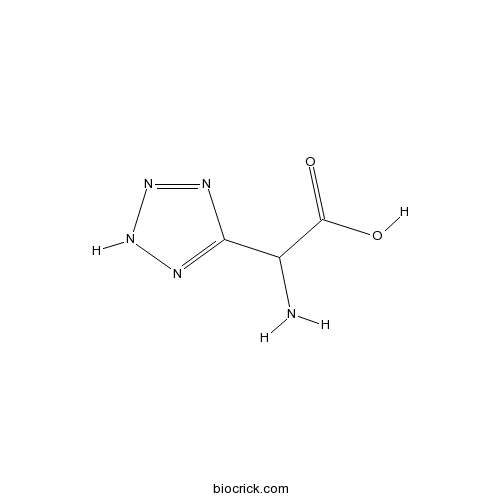
(RS)-(Tetrazol-5-yl)glycine
(RS)-(Tetrazol-5-yl)glycine (D,L-(tetrazol-5-yl)glycine) is a highly potent and selective N-methyl-D-aspartate (NMDA) receptor agonist. (RS)-(Tetrazol-5-yl)glycine has EC50s of 99 nM, 1.7 μM for GluN1/GluN2D and GluN1/GluN2A, respectively. (RS)-(Tetrazol-5-yl)glycine induces seizure responses and Fos in mice.
-
BCC6584
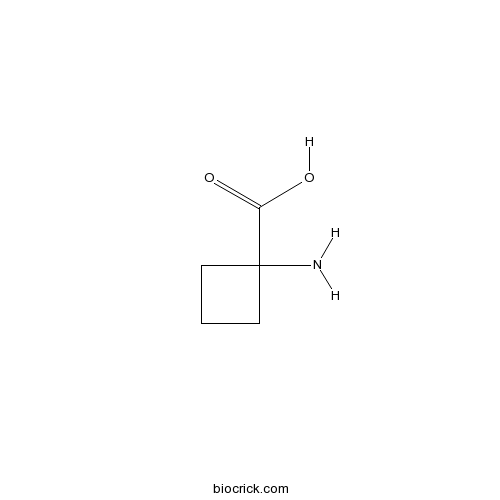
ACBC
22264-50-2