Products for Nicotinic Receptor
-
BCC7000
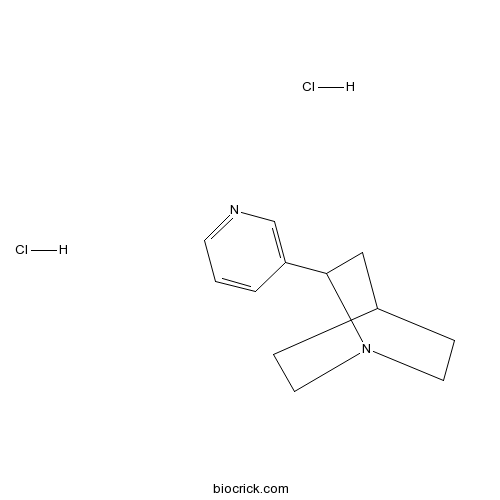
RJR 2429 dihydrochloride
-
BCC7264
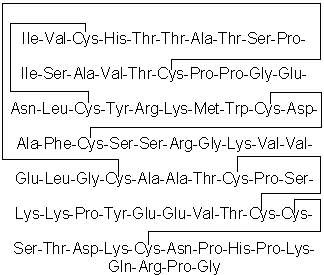
α-Bungarotoxin
-
BCC6897
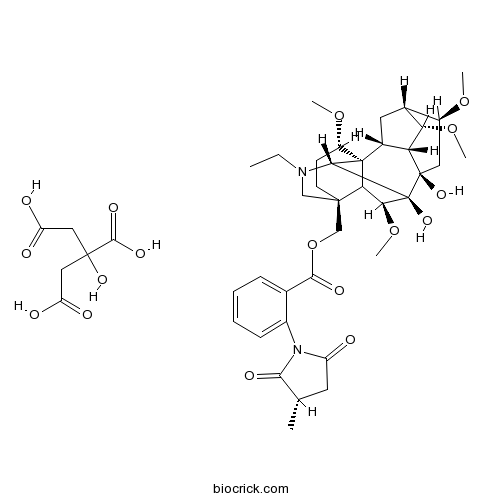
Methyllycaconitine citrate
-
BCC6176
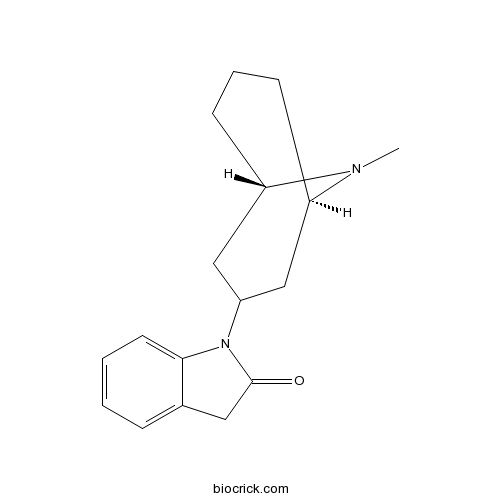
SR 16584
-
BCC7468
Sazetidine A dihydrochloride
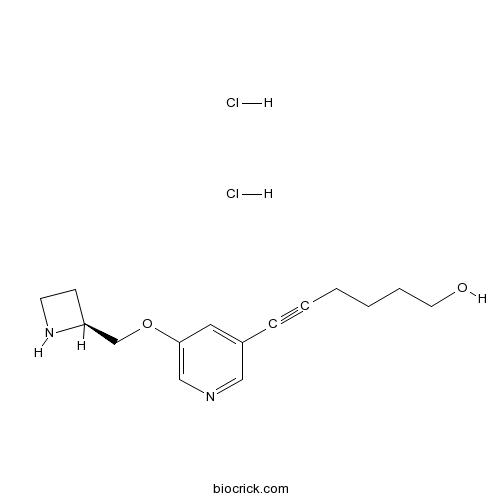
-
BCC7099
5-Iodo-A-85380 dihydrochloride
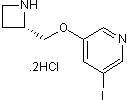
-
BCC6796
(±)-Anatoxin A fumarate

-
BCC7318
PNU 282987
PNU-282987 is a selective α7 nicotinic acetylcholine receptor(α7 nAChR) agonist with Ki of 26 nM; no affinity for α1β1γδ and α3β4 nAChRs (IC50 ≥ 60 μM).
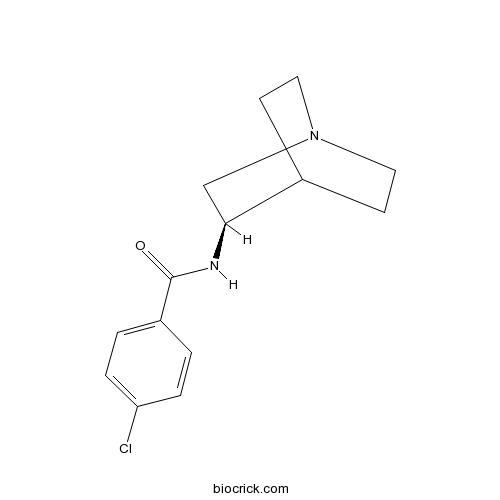
-
BCC7793
RuBi-Nicotine
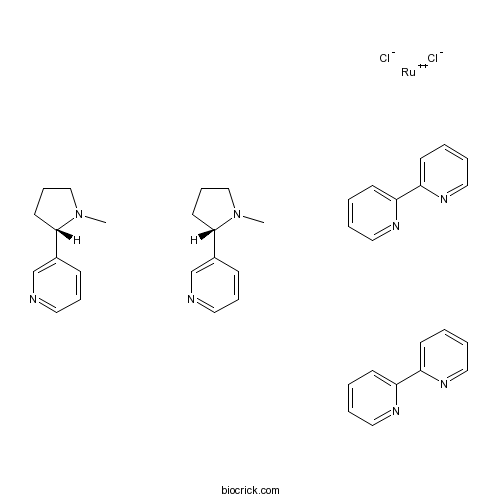
-
BCC6927
(-)-Lobeline hydrochloride
Lobeline hydrochloride, a nicotinic receptor agonist, acting as a potent antagonist at both α3β2 and α4β2 neuronal nicotinic receptor subtypes.

-
BCC5935
Catestatin

-
BCC6615
1-Acetyl-4-methylpiperazine hydrochloride

-
BCC6750
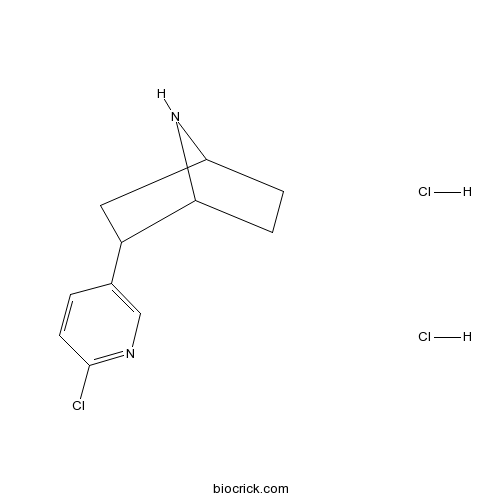
(±)-Epibatidine
(±)-Epibatidine is a nicotinic agonist. (±)-Epibatidine is a neuronal nAChR agonist.
-
BCC7301
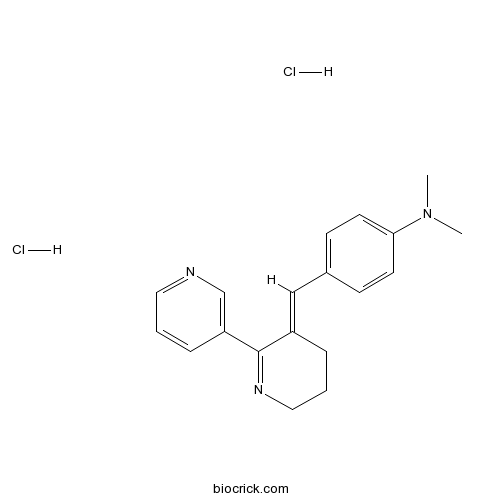
DMAB-anabaseine dihydrochloride
-
BCC1901
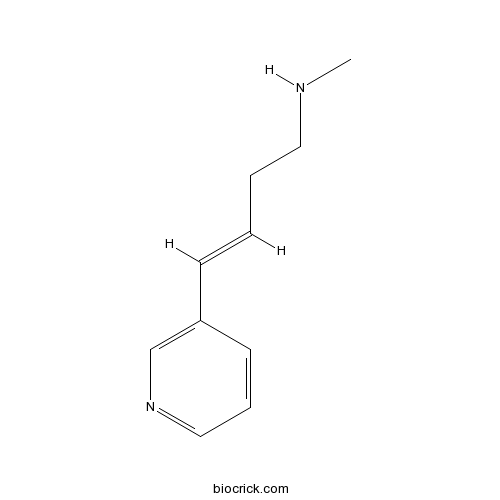
RJR-2403
Rivanicline (RJR-2403; (E)-Metanicotine) is a neuronal nicotinic receptor agonist, showing high selectivity for the α4β2 subtype (Ki=26 nM); > 1,000 fold selectivity than α7 receptors(Ki= 36000 nM).
-
BCC7948
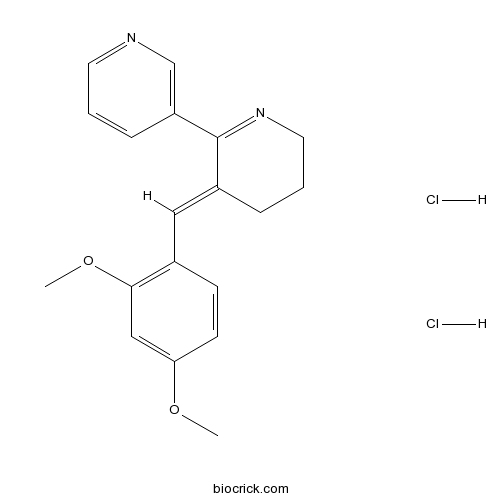
GTS 21 dihydrochloride
GTS-21 dihydrochloride is a selective α7 nicotinic acetylcholine receptor agonist, has recently been established as a promising treatment for inflammation.
-
BCC5974
α-Conotoxin ImI
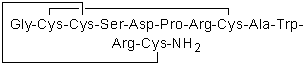
-
BCC5979
α-Conotoxin EI

-
BCC5743
α-Conotoxin MII
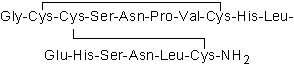
-
BCC7827
AR-R 17779 hydrochloride

-
BCC6284
SIB 1553A hydrochloride
SIB-1553A is an orally bioavailable nicotinic acetylcholine receptors (nAChRs) agonist, with selectivity for β4 subunit-containing nAChRs. SIB-1553A is also a selective neuronal nAChR ligand. SIB-1553A is a cognitive enhancer, and has therapeutic potential for the symptomatic treatment of Alzheimer’s disease and other cognitive disorders.

-
BCC7975
SIB 1508Y maleate
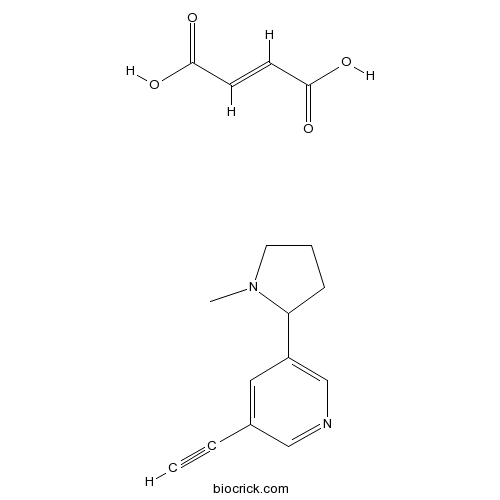
-
BCC5746
UB 165 fumarate

-
BCC7705
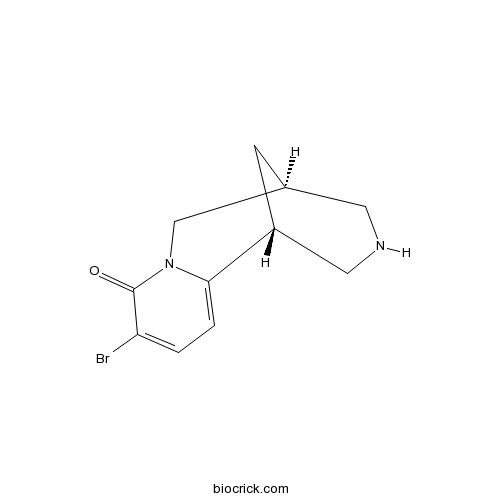
3-Bromocytisine
3-Bromocytisine (3-Br-cytisine) is a potent nACh receptors agonist, with IC50s are 0.28, 0.30 and 31.6 nM for hα4β4, hα4β2, and hα7-nACh, respectively. 3-Bromocytisine (3-Br-cytisine) shows different effects on high (HS) and low (LS) ACh sensitivity α4β2 nAChRs with EC50s are 8 and 50 nM, respectively.
-
BCC7469
TC 2559 difumarate

-
BCC7102
5-Iodo-A-85380, 5-trimethylstannyl N-BOC derivative

-
BCC5975
α-Conotoxin AuIB

-
BCC1902
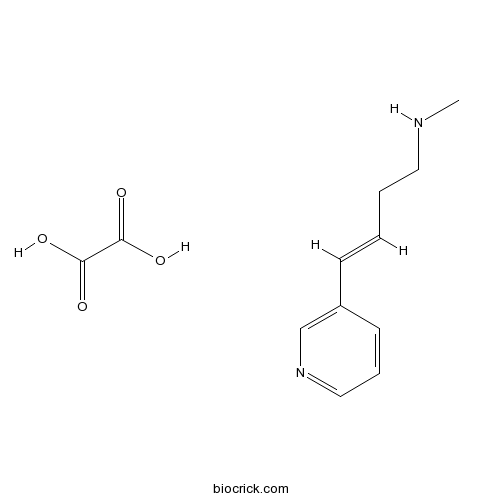
RJR-2403 oxalate
Rivanicline oxalate (RJR-2403 oxalate; (E)-Metanicotine oxalate) is a neuronal nicotinic receptor agonist, showing high selectivity for the α4β2 subtype (Ki=26 nM); > 1,000 fold selectivity than α7 receptors(Ki= 3.6 μM).
-
BCC4156
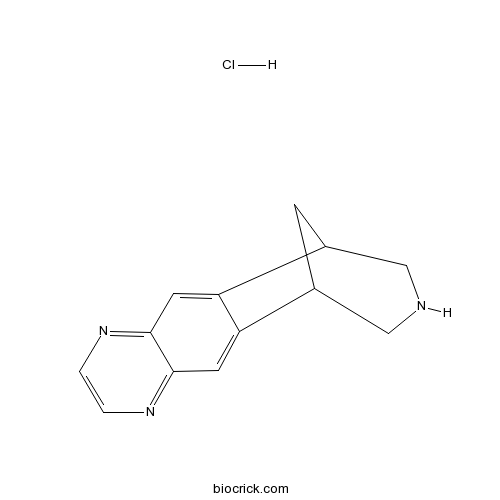
Varenicline Hydrochloride
Varenicline Hydrochloride (CP 526555 hydrochloride) is a high affinity, selective α4β2 nicotine acetylcholine receptor (nAChR) partial agonist and full α7 nAChR agonist. Varenicline Hydrochloride is also a potent partial agonist of α6β2 nAChR in striatum of rats with a Ki value of 0.12 nM.
-
BCC4155
Varenicline
Varenicline (CP 526555) is a potent partial agonist for α4β2 nicotinic acetylcholine receptor (nAChR) with an EC50 value of 2.3 μM. Varenicline is a full agonist for α3β4 and α7 nAChRs with EC50 values of 55 μM and 18 μM, respectively. Varenicline is a nicotinic ligand based on the structure of cytisine, has the potential for smoking cessation treatment.

-
BCC7341
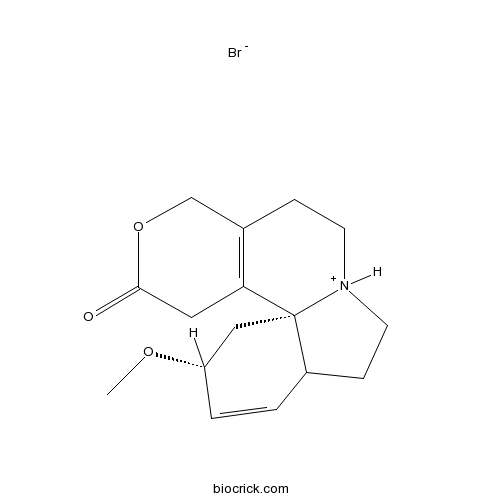
Dihydro-β-erythroidine hydrobromide
Dihydro-β-erythroidine (DHβE) hydrobromide is a potent, orally active and competitive antagonist of neuronal nicotinic acetyicholine receptors (nAChRs). Dihydro-β-erythroidine hydrobromide shows selectivity for α4β4 and α4β2 nAChRs, with IC50s of 0.19 and 0.37 μM, respectively. Antidepressant-like activities.
-
BCC7700
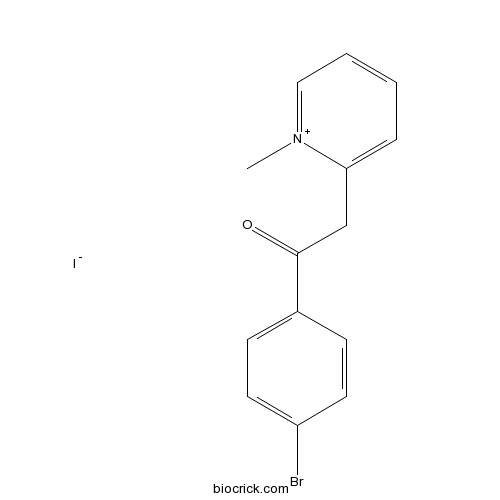
S 24795
-
BCC6641
Benzoquinonium dibromide
Nicotinic antagonist

-
BCC7896
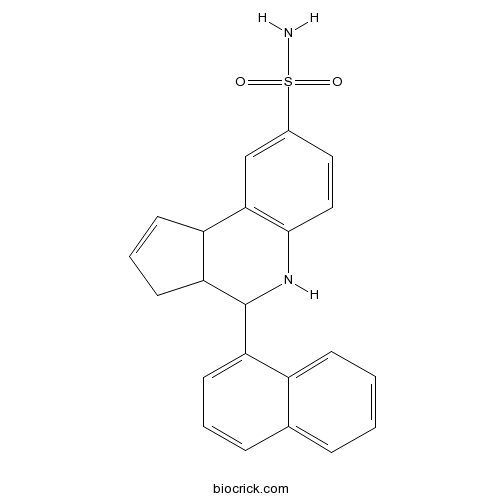
TQS
-
BCC5972
PHA 543613 hydrochloride

-
BCC7569
(-)-Cotinine
Cotinine is an alkaloid found in tobacco and is also the predominant metabolite of nicotine, used as a biomarker for exposure to tobacco smoke.

-
BCC7535
NS 1738
NS 1738 (NSC 213859) is a novel positive allosteric modulator of the α7 nAChR, with respect to positive modulation of α7 nAChR (EC50=3.4 μM in oocyte experiments).

-
BCC7492
Carbamoylcholine chloride
Carbamoylcholine chloride is used to study responses mediated by nAChR and mAChR, including smooth muscle contraction, gut motility, and neuronal signaling.

-
BCC7606
bPiDDB

-
BCC7574
PHA 568487

-
BCC7219
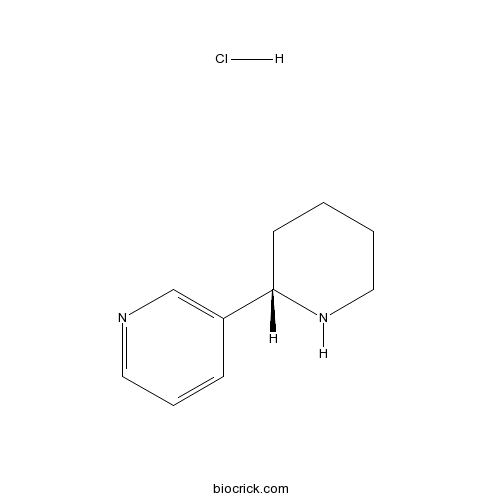
(+)-Anabasine hydrochloride
-
BCC1567
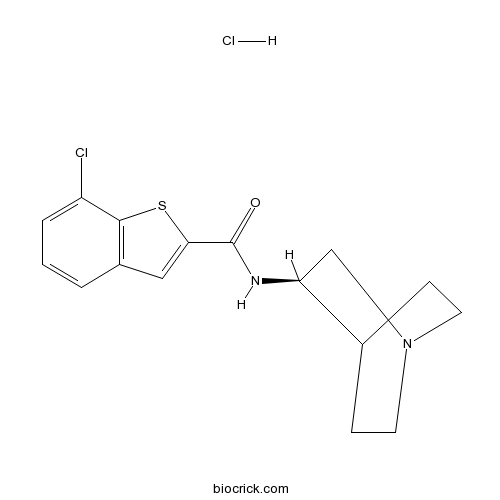
EVP-6124 hydrochloride
Encenicline hydrochloride (EVP-6124 hydrochloride) is a novel partial agonist of α7 neuronal nicotinic acetylcholine receptors (nAChRs).
-
BCC1566
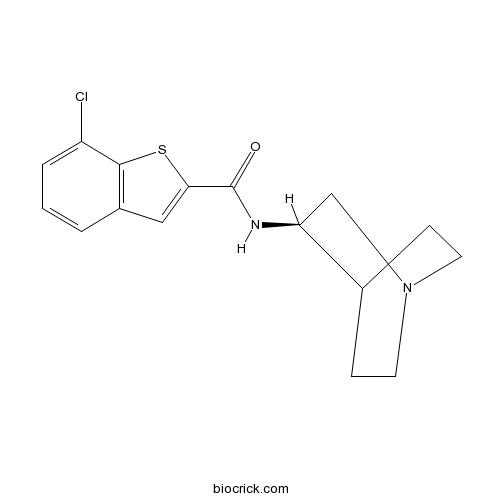
EVP-6124
Encenicline (EVP-6124) is a novel partial agonist of α7 neuronal nicotinic acetylcholine receptors (nAChRs).
-
BCC7496
(+)-Tubocurarine chloride

-
BCC5976
α-Conotoxin PIA

-
BCC5978
α-Conotoxin PnIA

-
BCC5989
ACV 1

-
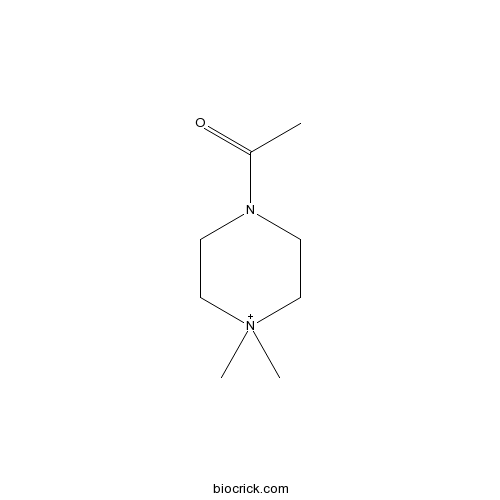
BCC6616
4-Acetyl-1,1-dimethylpiperazinium iodide
-
BCC7028
MG 624

-
BCC7394
TC 1698 dihydrochloride

-
BCC7501
Mecamylamine hydrochloride
Mecamylamine hydrochloride is an orally active, nonselective, noncompetitive nAChR antagonist that can treat various neuropsychiatric disorders. Mecamylamine hydrochloride is originally used as a ganglionic blocker in treating hypertension. Mecamylamine hydrochloride can easily crosses the blood-brain barrier.

-
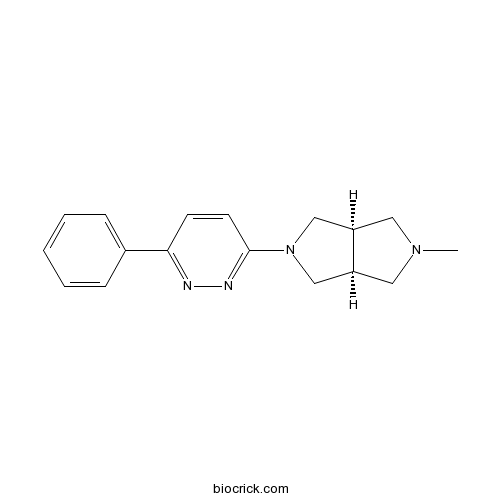
BCC7920
A 582941
-
BCC7360
TMPH hydrochloride

-
BCC6200
A 844606

-
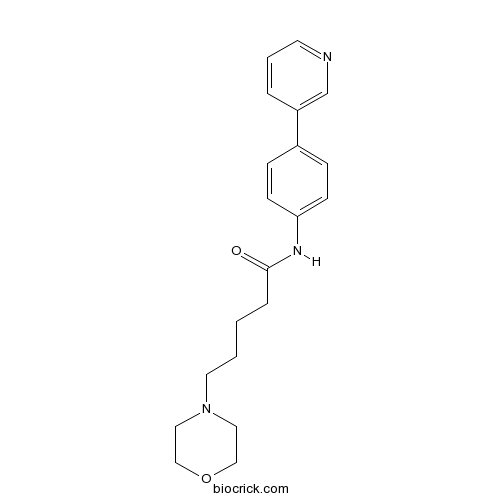
BCC6182
SEN 12333
-
BCC7869
LY 2087101

-
BCC7788
CCMI
CCMI is a potent and selective α7 nAChR-positive allosteric modulator, does not bind to or activate α7 nAChRs via the orthosteric site, and causes significant positive modulation of agonist-induced currents at α7 nAChRs. CCMI has potential in CNS diseases with cognitive dysfunction.

-
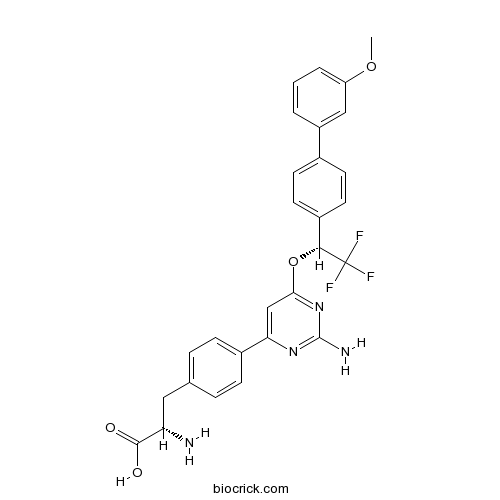
BCC1712
LX-1031
LX-1031 is a potent, orally available tryptophan 5-hydroxylase (TPH) inhibitor that reduces serotonin (5-HT) synthesis peripherally.
-
BCC6118
3-pyr-Cytisine

-
BCC7651
Desformylflustrabromine hydrochloride
Desformylflustrabromine hydrochloride is a selective agonist of α4β2 neuronal nicotinic acetylcholine receptor (nAChR) with a pEC50 of 6.48.

-
BCC6885
Chlorisondamine diiodide