
ChavicolCAS# 501-92-8 |
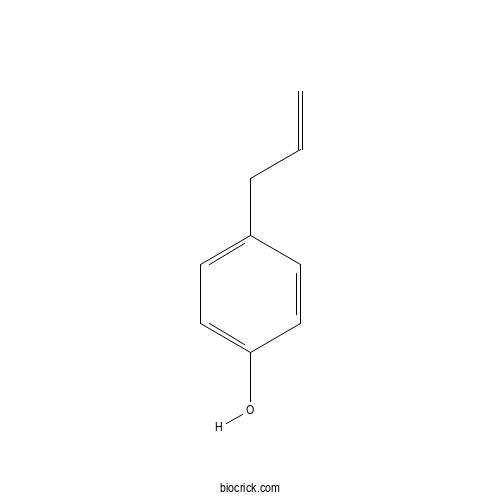
| Cas No. | 501-92-8 | SDF | File under preparation. |
| PubChem ID | 68148.0 | Appearance | Oil |
| Formula | C9H10O | M.Wt | 134.2 |
| Type of Compound | N/A | Storage | Desiccate at -20°C |
| Solubility | Soluble in Chloroform,Dichloromethane,Ethyl Acetate,DMSO,Acetone,etc. | ||
| Chemical Name | 4-prop-2-enylphenol | ||
| SMILES | C=CCC1=CC=C(C=C1)O | ||
| Standard InChIKey | RGIBXDHONMXTLI-UHFFFAOYSA-N | ||
| Standard InChI | InChI=1S/C9H10O/c1-2-3-8-4-6-9(10)7-5-8/h2,4-7,10H,1,3H2 | ||
| General tips | For obtaining a higher solubility , please warm the tube at 37 ℃ and shake it in the ultrasonic bath for a while.Stock solution can be stored below -20℃ for several months. We recommend that you prepare and use the solution on the same day. However, if the test schedule requires, the stock solutions can be prepared in advance, and the stock solution must be sealed and stored below -20℃. In general, the stock solution can be kept for several months. Before use, we recommend that you leave the vial at room temperature for at least an hour before opening it. |
||
| About Packaging | 1. The packaging of the product may be reversed during transportation, cause the high purity compounds to adhere to the neck or cap of the vial.Take the vail out of its packaging and shake gently until the compounds fall to the bottom of the vial. 2. For liquid products, please centrifuge at 500xg to gather the liquid to the bottom of the vial. 3. Try to avoid loss or contamination during the experiment. |
||
| Shipping Condition | Packaging according to customer requirements(5mg, 10mg, 20mg and more). Ship via FedEx, DHL, UPS, EMS or other couriers with RT, or blue ice upon request. | ||
Quality Control & MSDS
3D structure
Package In Stock

Number of papers citing our products


Chavicol Dilution Calculator
Chavicol Molarity Calculator
| 1 mg | 5 mg | 10 mg | 20 mg | 25 mg | |
| 1 mM | 7.4516 mL | 37.2578 mL | 74.5156 mL | 149.0313 mL | 186.2891 mL |
| 5 mM | 1.4903 mL | 7.4516 mL | 14.9031 mL | 29.8063 mL | 37.2578 mL |
| 10 mM | 0.7452 mL | 3.7258 mL | 7.4516 mL | 14.9031 mL | 18.6289 mL |
| 50 mM | 0.149 mL | 0.7452 mL | 1.4903 mL | 2.9806 mL | 3.7258 mL |
| 100 mM | 0.0745 mL | 0.3726 mL | 0.7452 mL | 1.4903 mL | 1.8629 mL |
| * Note: If you are in the process of experiment, it's necessary to make the dilution ratios of the samples. The dilution data above is only for reference. Normally, it's can get a better solubility within lower of Concentrations. | |||||
- Piperonylic acid
Catalog No.:BCX2309
CAS No.:94-53-1
- 2'-Deoxyadenosine
Catalog No.:BCX2308
CAS No.:958-09-8
- Diosbulbin A
Catalog No.:BCX2307
CAS No.:20086-05-9
- Allylbenzene
Catalog No.:BCX2306
CAS No.:300-57-2
- 4-Hydroxy-3,5-diisopropylbenzaldehyde
Catalog No.:BCX2305
CAS No.:10537-86-7
- Ganoderic acid F
Catalog No.:BCX2304
CAS No.:98665-15-7
- 11-Oxocucurbita-5,24-diene-3,20-diol
Catalog No.:BCX2303
CAS No.:2491640-86-7
- 7β,20-Epoxyabieta-8,11,13-triene-6α,11,12-triol
Catalog No.:BCX2302
CAS No.:1353042-00-8
- threo-Anethole glycol
Catalog No.:BCX2301
CAS No.:112018-74-3
- Chantriolide C
Catalog No.:BCX2300
CAS No.:1206850-19-2
- Plantagiolide C
Catalog No.:BCX2299
CAS No.:913263-86-2
- erythro-Anethole glycol
Catalog No.:BCX2298
CAS No.:103687-27-0
- Riboflavin sodium phosphate
Catalog No.:BCX2311
CAS No.:130-40-5
- Zeatin
Catalog No.:BCX2312
CAS No.:1637-39-4
- 4-Hydroxypyridine-2,6-dicarboxylic acid
Catalog No.:BCX2313
CAS No.:499-51-4
- Isatin
Catalog No.:BCX2314
CAS No.:91-56-5
- D-Galacturonic acid hydrate
Catalog No.:BCX2315
CAS No.:685-73-4
- Mandelic acid
Catalog No.:BCX2316
CAS No.:90-64-2
- 9-Nitrocamptothecin
Catalog No.:BCX2317
CAS No.:86639-62-5
- Laurolitsine
Catalog No.:BCX2318
CAS No.:904927-11-3
- N6-Isopentenyladenine
Catalog No.:BCX2319
CAS No.:2365-40-4
- Glutathione disulfide
Catalog No.:BCX2320
CAS No.:27025-41-8
- Naringenin chalcone
Catalog No.:BCX2321
CAS No.:73692-50-9
- Spilanthol
Catalog No.:BCX2322
CAS No.:25394-57-4
Comparative In Vitro Cytotoxicity of Piper betle Leaf Extracts in KRAS G12D-Mutant Pancreatic Cancer Cell Lines.[Pubmed:42793232]
Curr Issues Mol Biol. 2026 Aug 29;48(9):876.
Pancreatic ductal adenocarcinoma (PDAC) is among the most lethal cancers worldwide, with limited treatment options and a high prevalence of oncogenic KRAS mutations. Piper betle contains numerous bioactive phytochemicals with reported anticancer activities, although its activity against pancreatic cancer remains incompletely characterized. This study evaluated the phytochemical composition of P. betle leaf extracts and the cell viability effects of ethanolic extracts against human KRAS G12D-mutant pancreatic cancer cell lines (PANC-1, AsPC-1, Panc 02.03, Panc 04.03, Panc 08.13 and Panc 10.05). Phytochemical screening, total phenolic content (TPC), total flavonoid content (TFC) and gas chromatography-mass spectrometry (GC-MS) analyses were performed to characterize the extracts. The ethanolic extracts exhibited higher extraction yield (17.26%), TPC (395.94 +/- 0.010 mg GAE/g) and TFC (121.28 +/- 0.009 mg QE/g) than aqueous extracts. GC-MS analysis tentatively identified phenylpropanoid compounds, including Chavicol, chavibetol, and eugenol. Based on these findings, the ethanolic extract was selected for biological evaluation. Treatment significantly reduced cell viability in a concentration-dependent manner across all pancreatic cancer cell lines, with estimated IC(50) values ranging from 21.54 to 54.91 microg/mL. These findings suggest that ethanolic P. betle leaf extract possesses promising biological activity and support further studies to identify its active constituents and elucidate their mechanisms of action.
Exploring GC-MS-Based Phytochemistry and Network Pharmacology to Elucidate the Multi-Target Therapeutic Potential of Betel Leaf Oil as an Analgesic and Anti-Inflammatory Agent.[Pubmed:42530450]
Biomed Chromatogr. 2026 Sep;40(9):e70564.
Betel leaf (Piper betle L.) has been widely used in traditional medicine for treating pain, inflammation, and microbial infections due to its rich phytochemical content. However, the molecular mechanisms underlying its analgesic and anti-inflammatory effects remain incompletely understood. This study aimed to analyze the phytochemical composition of betel leaf oil using GC-MS and to explore its therapeutic mechanisms through network pharmacology targeting genes involved in pain and inflammation pathways. Betel leaf essential oil was extracted and analyzed with GC-MS to identify bioactive metabolites. The identified compounds were further examined using network pharmacology to predict target genes and develop compound-protein interaction networks. Gene ontology enrichment, DisGeNET disease enrichment, and gene-disease association analyses were conducted to investigate biological pathways and disease relevance. The GC-MS analysis revealed bioactive compounds including estragole, oleic acid, Chavicol acetate, and eugenol, interacting strongly with genes such as SCN9A, SCN10A, TRPV1, ICAM1, STAT3, TNF, and BDNF involved in pain and inflammatory responses. The findings suggest that the bioactive components of betel leaf oil may possess analgesic and anti-inflammatory properties, indicating its potential as a source of therapeutic agents. Molecular docking further demonstrated favorable binding of eugenol and oleic acid with TNF-alpha and TRPV1, supporting their potential anti-inflammatory and analgesic activities. These integrated findings suggest that the bioactive constituents of betel leaf oil possess potential analgesic and anti-inflammatory activities through multi-target interactions, although further experimental validation is required.
Integrated volatile metabolomics and transcriptomics reveal the regulation of odor components in celery exposed to supplementary blue light.[Pubmed:42401793]
BMC Plant Biol. 2026 Jul 4;26(1):1641.
Light regulates the biosynthesis of plant volatile flavor metabolites, yet how supplemental blue light modulates the accumulation of volatiles in distinct celery (Apium graveolens L.) tissues and the associated molecular mechanisms remain largely unclear. In the present study, volatile metabolomics and transcriptomics approaches were employed to analyze volatile organic compounds (VOCs) and gene expression levels in celery leaves and petioles under supplementary blue light. The results revealed that supplementary blue light induced 251 and 318 differentially abundant metabolites in celery leaves and petioles, respectively. The content of 16 compounds (4 upregulated and 12 downregulated) in celery leaves significantly changed, including those with fruity, sweet, green, popcorn, and vegetable notes. Furthermore, the content of 42 compounds (31 upregulated and 11 downregulated) associated with sweet, green, fruity, cucumber, and citrus notes in celery petioles significantly changed. The combined transcriptomic and metabolomic analysis results revealed significant enrichment in phenylpropanoid metabolic pathway in celery petioles. Specifically, supplementary blue light significantly reduced CAD and CCR gene expression levels in celery, potentially reducing the contents of methyl Chavicol and anethole. In conclusion, supplemental blue light significantly altered the accumulation profiles of flavor volatiles across different celery tissues, with metabolic changes concentrated in petioles and showing prominent tissue specificity. Moreover, blue light reprogrammed phenylpropanoid metabolism in petioles, driving the alterations of flavor-related volatiles. Our research clarifies the physiological basis of light-mediated flavor formation in vegetables and offers a foundation for elucidating the underlying metabolic pathways involved in plant secondary metabolism.
Chemical profiling and chemotypic diversity of basil (Ocimum basilicum L.) genotypes: a large-scale evaluation of bioactive compounds and antioxidant capacity.[Pubmed:42231174]
BMC Plant Biol. 2026 Jun 2;26(1):1319.
BACKGROUND: Basil (Ocimum basilicum L.) is an economically significant medicinal and aromatic species valued for its diverse phytochemical profile and essential oil (EO) composition. Despite its economic importance, there is a critical need to characterize genetic resources to identify stable, high-yielding genotypes adapted to specific environmental conditions. This study aimed to evaluate the phytochemical diversity and industrial potential of 90 basil genotypes under Mediterranean climatic conditions, focusing on identifying superior chemotypes for pharmaceutical and cosmetic applications. METHODS: A field experiment was conducted using an augmented randomized complete block design at the Cukurova University Research and Application Area during the 2023 and 2024 growing seasons. Phytochemical screening included the determination of total phenolic content (TPC) and antioxidant capacities via DPPH (2,2-diphenyl-1-picrylhydrazyl) and ABTS [2,2'-azino-bis (3-ethylbenzothiazoline-6-sulfonic acid)] radical scavenging assays. The chemical composition of the EOs was determined using gas chromatography-mass spectrometry (GC-MS). RESULTS: Significant biochemical variation was observed among the 90 genotypes. Genotypes MT08, MT86, MT38, and MT67 exhibited the highest bioactive potential, characterized by superior TPC and antioxidant activities. EO yields were notably higher in genotypes MT63 and MT74. Chemical profiling revealed five distinct chemotypes within the population: linalool, methyl Chavicol, citral, methyl cinnamate, and methyl eugenol. Pearson correlation, PCA, and cluster analyses supported that these genotypes represent a broad phytochemical basis for selection and breeding. CONCLUSIONS: This study provides a detailed characterization of basil germplasm, identifying specific genotypes with high industrial value. The classification of five major chemotypes offers a strategic foundation for targeted breeding programs aimed at developing high-quality cultivars. These findings contribute to the standardization of raw materials for the global pharmaceutical and fragrance industries.
Unraveling the regulatory role of kinetin (6-furfurylaminopurine) in modulating growth, physio-biochemical attributes, antioxidant defense, and essential oil biosynthesis in Ocimum basilicum L.[Pubmed:42222731]
Physiol Mol Biol Plants. 2026 May;32(5):1025-1039.
Kinetin (6-furfurylaminopurine; KN), a synthetic cytokinin, regulates various aspects of plant growth, physiology, and secondary metabolism. However, its potential role in enhancing essential oil (EO) biosynthesis in Ocimum basilicum L. remains largely unexplored. This study evaluated the effects of exogenous KN on growth performance, physio-biochemical attributes , antioxidant defense, and EO biosynthesis in O. basilicum. Plants were treated with five KN concentrations (0, 0.5, 1, 2.5, 5, and 10 microM). Morphological traits, gas exchange parameters, chlorophyll fluorescence, and SPAD-based chlorophyll content were measured. Biochemical assays were conducted to assess the antioxidant defense system and the activities of Rubisco, carbonic anhydrase, and nitrate reductase enzymes. Trichome size and area were analyzed microscopically, and EO composition was determined using GC-MS. Results demonstrated that the KN application significantly influenced growth, photosynthetic efficiency, and antioxidant responses. Among the tested concentrations, 5 microM KN was the most effective, leading to increased biomass, enhanced photosynthetic and enzymatic activities, and improved antioxidant defense. Scanning electron microscopy revealed substantial increases in trichome size and area, which correlated positively with EO accumulation. GC-MS analysis further confirmed elevated levels of major bioactive compounds, particularly linalool and methyl Chavicol. Collectively, these findings establish KN as a potent regulator of growth and EO biosynthesis in O. basilicum, bridging a key knowledge gap and highlighting its potential in enhancing agronomic productivity and pharmaceutical value. SUPPLEMENTARY INFORMATION: The online version contains supplementary material available at 10.1007/s12298-026-01749-9.
Phytochemical analysis, pharmacological screening, and molecular docking studies of fresh and dry Saudi Ocimum basilicum L.[Pubmed:41990275]
Nat Prod Res. 2026 Apr 16:1-11.
The volatile oil composition and ethanolic extracts of Ocimum basilicum L. grown in Saudi Arabia were examined, with emphasis on their antioxidant and antifungal properties. GC-MS analysis identified 111 volatile components in fresh basil and 125 in dried basil, representing 98% and 96% of the total essential oil content. Methyl Chavicol was the major volatile constituent in the whole plant, including leaves, flowers, and stems, showing higher percentages in fresh samples than in dried ones. Analysis of phenolic compounds in ethanolic extracts showed that rutin was the predominant compound in fresh whole plants. Rosmarinic acid was the main phenolic constituent in fresh flowers, leaves, and stems. In contrast, luteolin was the most abundant phenolic compound in extracts from the entire dried plant. Catechin was the dominant compound in dried flowers, while quercetin prevailed in dried leaves and stems. The ethanolic extracts exhibited stronger antioxidant activity than the essential oils, particularly in scavenging DPPH radicals. In addition, notable antifungal activity was recorded against Penicillium aurantiogriseum. Molecular docking analysis confirmed the experimental results, revealing strong interactions between flavonoids and fungal enzymes related to metabolic pathways and reactive oxygen species production. Quercetin and rutin demonstrated the highest binding affinities. These findings emphasize the potential use of Ocimum basilicum L. as a natural antioxidant, antifungal agent, and flavoring source.
Eugenol and Chavicol-Based Polyamides from Synthesis to Degradation: Moving Towards Closing the Circle.[Pubmed:41829286]
Polymers (Basel). 2026 Feb 27;18(5):589.
A new series of polyamides (PAs) employing two phenolic natural compounds as starting materials, eugenol and Chavicol, has been successfully prepared. The synthesis was carried out through a solvent-free protocol using the environmentally friendly organocatalyst 1,5,7-triazabicyclo[4.4.0]dec-3-ene (TBD). The obtained materials have been properly characterized. Moreover, the prepared materials, all of them amorphous, showed a wide range of transition temperatures (T(g)s) depending on the structure of the diester counterpart used in the polymerization reaction. In addition, the influence of the methoxy group present in eugenol on the thermal properties of the resulting polyamides was studied. The synthesized polyamides demonstrated excellent thermal stability, high hydrophobicity, and great dimensional integrity. Furthermore, the obtained polymers could be depolymerized under alkaline hydrolysis conditions to yield, with good to excellent recovery ratios, the corresponding starting diamine monomer, which could eventually be used in the synthesis of new polymers. Closed-loop chemical recycling emerges as a sustainable alternative to conventional end-of-life management strategies for discarded polymers, while also constituting a promising pathway to mitigate the accumulation of polyamide (PA) waste.
Enhancement of essential oil yield and quality of basil (Ocimum basilicum L.) via intercropping system, AMF and PGPR.[Pubmed:41667732]
Sci Rep. 2026 Feb 10;16(1):8164.
Basil (Ocimum basilicum L.) and fenugreek (Trigonella foenum-graecum L.) are essential oil-bearing medicinal plants that could be used for food spice, antimicrobial and antioxidant properties. Plant growth-promoting rhizobacteria (PGPR) and arbuscular mycorrhizal fungi (AMF) promote crop growth and yield through different mechanisms. A two-year study was conducted to investigate the effects of fertilizer treatments on growth characteristics, essential oil (EO) yield and compositions of basil in intercropping with fenugreek. A factorial experiment was arranged in a randomized complete block design with three replicates in 2021 and 2022 in West Azarbaijan, Iran. The first factor was cropping pattern including sole cropping of basil and fenugreek, strip intercropping of basil (B)-fenugreek (F) with replacement method in the ratios of 2B:2 F, 4B:2 F, 5B:3 F and an additive intercropping of 100% basil + 50% fenugreek (100B:50 F). The second factor was fertilizer at three levels including application of local recommended dose of chemical fertilizer (RDF), 50% RDF + biofertilizer of AMF + PGPR (50% RDF + Bio) and biofertilizer of AMF + PGPR (Bio). The greatest basil height was observed in 2B:2 F cropping pattern and 50% RDF + Bio treatment (50.39 cm). The greatest yield of dry herbage was observed in 5B:3B cropping pattern with RDF and 50% RDF + Bio treatments. The highest yields of EO were observed in sole basil (0.85 g m- 2) and 5B:3 F intercropping (0.72 g m- 2), in 50% RDF + Bio treatment. Methyl Chavicol, methyl eugenol, beta-caryophyllene and 1,8-cineole, were the main chemical constitutes of EO. The contents of major components of EO were affected differently by cropping pattern and fertilizer. The greatest content of methyl Chavicol (53.7%), was observed in 2B:2 F and Bio fertilizer treatment. Also, the highest content of methyl eugenol was obtained in 4B:2 F and 50% RDF + Bio fertilizer treatment. The results of EO compositions also were approved by principal component analysis (PCA). At all treatments, the land equivalent ratios (LERT) were more than 1.0 that indicates the advantage of intercropping patterns compared with sole crops. The highest LERT (1.99) was obtained in 2B:2 F intercropping with 50% RDF + Bio treatment. We can conclude that application of 50% RDF + Bio fertilizer treatment in 2B:2 F intercropping, increased the productivity of basil-fenugreek intercropping, improved the EO compositions and could be recommended to the growers in sustainable production of basil.
Day-time variations in essential oil contents of sweet basil (Ocimum basilicum L.) ecotypes in semi-arid climatic conditions.[Pubmed:41337521]
An Acad Bras Cienc. 2025 Nov 28;97(suppl 4):e20250116.
Sweet basil is a tropical herbaceous plant valued for essential oil containing over 200 compounds. This study aimed to determine the optimal harvest time to harvest maximum essential oil and linalool yields in hot Southeast Anatolian conditions of Turkey, using two ecotypes, Dicle and Silbe, planted in Medicinal Plants Collection Garden, of Dicle University. The plants were harvested at five intervals of three hours duration from 06:00 to 18:00. Their dried leaves were hydrodistilled for extraction of essential oil, which was subjected to GC-MS analysis to determine the variance in chemical compounds composition. The results showed significant variations in essential oil contents, which fluctuated due to diurnal changes in temperature and humidity. The Dicle ecotype exhibited the highest essential oil contents after the 2nd cutting, The Silbe ecotype had the minimum essential oil after first cutting. The interaction between harvest times and ecotypes significantly affected oil yields. A biplot analysis revealed a two-dimensional PCA score (51.15% and 25.29%) for the Dicle ecotype, indicating a total variation rate of 76.44%. The study underscores the responsible factors in maximizing basil essential oil. It also indicated presence of 50-65% linalool and methyl Chavicol in essential oil analyzed from the two O. basilicum ecotypes.
Biological and chemical characterization of Origanum vulgare and Ocimum Basilicum essential oils and their derived nanoemulsions.[Pubmed:41198724]
Sci Rep. 2025 Nov 6;15(1):38853.
To contest the disadvantages of synthetic pesticides, we investigated the essential oils (EOs) of Origanum vulgare and Ocimum basilicum and their nano-formulations as alternative tools for pest management. After conducting assays, we prepare nanoemulsions (Nano-Es) from these essential oils (EOs) and characterized them biologically and chemically. Both EOs and Nano-Es have remarkable suppression activity in the pre-emergence; however, they have fewer inhibition effects as post-emergence applications against Convolvulus arvensis, Lolium temulentum, Chenopodium album, and Cuscuta planiflora weeds. These treatments did not display any observed selectivity and negative effects in the T. alexandrine crop. When EOs and Nano-Es were applied on Fusarium oxysporum, they had EC(50) by 114.89 and 54.94 (O. basilicum) and 89.56 and 33.54 (O. vulgare) microl ml(1) respectively. Similarly, when applied to bacteria Erwinia carotovora, the EC(50) were 179.76 and 128.65 microl ml(-1) (O. basilicum) and 171.76 and 114.65 (O. vulgare) microl ml(-1), respectively. The GC/MS analyses identified the essential oil constituents, which the major compounds in O. basilicum were geranyl acetate (15.58%), linalool (13.68%), methyl Chavicol (9.56%), and terpinene-4-ol (9.10%), beta-myrcene (7.40%), and 1, 8-cineol (6.76%), respectively. The major constituents in O. vulgare of oils were carvacrol (13.565), thymol (11.78%), dihydrocarveol (11.36%), carvacrol methyl ether (7.60%), alpha-terpinene (7.09%), cymene (6.61%) and pinene (6.03%), respectively. The Nano-Es of O. basilicum and O. vulgare were characterized by their nanoparticle sizes of 13.45 +/- 6.3 and 22.4 +/- 8.0 nm, and the transmission electron microscopy (TEM) images of 46.76 and 57.32 nm, respectively. In general, the efficacy of EOs of O. vulgare and O. basilicum improved in their Nano-Es, and their characterizations were good for an application that offered promising formulations for pest management programs.
Methyl chavicol treatments of Brassica rapa enhance the performance of both the aphid Myzus persicae and its parasitoid Aphidius gifuensis.[Pubmed:41159365]
Bull Entomol Res. 2026 Apr;116(2):242-252.
Aphids pose a significant threat to crop production, highlighting the need for sustainable pest management strategies. Plant-derived compounds are well-known as eco-friendly alternatives to synthetic pesticides. However, the role of methyl Chavicol (MC), a phenylpropanoid found in several plant species, in inducing plant defence through exogenous application remains unexplored, despite its demonstrated insecticidal properties against various pests on direct exposure. This study aims to investigate the impact of exogenous MC applications on Brassica assessing performance and behaviour of Myzus persicae Sulzer (Aphididae) and its parasitoid Aphidius gifuensis Ashmead (Braconidae). Therefore, we assessed aphid survival and fecundity on MC-treated and untreated (control) plants using clip cages and evaluated behavioural responses through settlement and Y-tube olfactometer assays. Additionally, we conducted foraging and parasitism bioassays to examine performance of the natural enemy A. gifuensis on MC-treated plants. Our results showed that M. persicae exhibited higher fecundity on MC-treated plants compared to controls, indicating that MC treatment made the plants more favourable for aphid reproduction. Similarly, A. gifuensis demonstrated enhanced preference and parasitism behaviour towards MC-treated plants, suggesting that MC could help recruit the parasitoid. These findings suggest that MC may act as a modulator of plant defence, altering insect-plant interactions while maintaining compatibility with beneficial insects, offering a promising approach for Integrated Pest Management (IPM) programs in Brassica crops.
Assessing Acute and Subacute Toxicity and Phytochemical Screening of the Methanolic Extract of Foeniculum vulgare in Wistar Rats.[Pubmed:40958122]
J Appl Toxicol. 2026 Mar;46(3):877-885.
Foeniculum vulgare, commonly known as fennel, has a long history of use in traditional medicine, particularly for treating problems related to the digestive, endocrine, reproductive, and respiratory systems. The major constituents found in fennel seed extracts are trans-anethole (68.6%-75.0%), fenchone (8.40%-14.7%), and methyl Chavicol (5.09%-9.10%). However, before introducing this plant into the human environment, it is essential to understand its toxicological properties. In this study, we investigated the acute and sub-acute toxicity of methanolic extracts of F. vulgare. A phytochemical screening was performed to identify the major chemical constituents of the plant. For the acute toxicity study, female Wistar rats received a single dose of the methanolic extract of F. vulgare at doses of 1000, 2000, 3000, and 5000 mg/kg for 14 days. In the sub-acute toxicity study, the methanolic extract of F. vulgare was administered orally daily at doses of 125, 250, and 500 mg/kg for 28 days. Hematological, biochemical, and histological changes were evaluated. Phytochemical tests were also performed. The phytochemical analysis showed that the methanolic extract of F. vulgare is rich in flavonoids, catechic, gallic tannins, and total polyphenols. Toxicological tests showed no animal deaths, suggesting that the LD(50) was greater than 5000 mg/kg. In the sub-acute oral toxicity study, no significant differences were observed in body weight, food consumption, or water intake. Additionally, there were no significant changes in hematological and biochemical parameters or differences in the macroscopic and microscopic examination of organs. Therefore, this study concludes that the methanolic extract of F. vulgare, at the doses tested, is considered non-toxic under the conditions evaluated.
Seasonal Variation in Essential Oil Composition and Bioactivity of Three Ocimum Species from Nepal.[Pubmed:40942106]
Molecules. 2025 Sep 1;30(17):3581.
The plants from the Ocimum genus, belonging to the Labiatae family, serve as important bioresources of essential oils (EOs) rich in biologically active secondary metabolites, widely used in medicine, food, and cosmetics. This study explored the volatile composition, enantiomeric distribution, and in vitro biological activities of EOs from three Ocimum species native to Nepal: O. tenuiflorum L., O. basilicum L., and O. americanum L. EOs were extracted via hydro-distillation and analyzed using gas chromatography-mass spectrometry (GC-MS) for chemical profiling and chiral GC-MS for enantiomeric composition. Hierarchical cluster analysis was performed for major chemotypes. Antioxidant activity was assessed using DPPH and ABTS assays. Antimicrobial efficacy was evaluated using the microbroth dilution method, and cytotoxicity was tested on NIH-3T3 (normal) and MCF-7 (breast cancer) cell lines via the Cell Counting Kit-8 assay. EO yield was highest in O. tenuiflorum (1.67 +/- 0.13%) during autumn and lowest in O. americanum (0.35 +/- 0.02%) during winter among all Ocimum spp. The major compounds identified in O. tenuiflorum were eugenol (32.15-34.95%), trans-beta-elemene (29.08-32.85%), and beta-caryophyllene (19.85-21.64%). In O. americanum, the major constituents included camphor (51.33-65.88%), linalool (9.72-9.91%), germacrene D (7.75-1.83%), and beta-caryophyllene (6.35-3.97%). For O. basicilum, EO was mainly composed of methyl Chavicol (62.16-64.42%) and linalool (26.92-27.05%). The oxygenated monoterpenes were a dominant class of terpenes in the EOs except for O. tenuiflorum (sesquiterpene hydrocarbon). A hierarchical cluster analysis based on the compositions of EOs revealed at least three different chemotypes in Ocimum species. Chiral GC-MS analysis revealed beta-caryophyllene and germacrene D as enantiomerically pure, with linalool consistently dominant in its levorotatory form. O. tenuiflorum exhibited the strongest antimicrobial activity, particularly against Candida albicans, and showed notable anticancer activity against MCF-7 cells (IC(50) = 23.43 microg/mL), with lower toxicity to normal cells. It also demonstrated the highest antioxidant activity (DPPH IC(50) = 69.23 +/- 0.10 microg/mL; ABTS IC(50) = 9.05 +/- 0.24 microg/mL). The EOs from Ocimum species possess significant antioxidant, antimicrobial, and cytotoxic properties, especially O. tenuiflorum. These findings support their potential application as natural agents in medicine, food, and cosmetics, warranting further validation.
Clostridium dalinum: A Novel Lactic Acid Bacterium with Excellent Antioxidant and Anti-inflammatory Functions Through NF-kappaB, Keap1-Nrf2-ARE Signaling Pathways.[Pubmed:40679569]
Probiotics Antimicrob Proteins. 2026 Mar;18(2):2137-2154.
The health benefits of probiotics are widely acknowledged, and the development of probiotics with antioxidant and anti-inflammatory properties is expected to further advance the probiotic industry and enhance human health. This study reports a novel lactic acid strain, Clostridium dalinum, isolated from soil. As a member of the Clostridium genus, this strain demonstrates strong coagulation properties and a high safety profile. Notably, C. dalinum exhibits exceptional gastrointestinal tolerance, retaining viability under acidic conditions (pH 3.0 for 2 h) and high bile stress (3% bile for 3 h). Evaluation using Caco-2 cells confirmed that both the strain and the yogurt fermented with it exhibit antioxidant and anti-inflammatory functions mediated through the NF-kappaB and Keap1-Nrf2-ARE signaling pathways. Metabolomics analysis identified significantly elevated levels of antioxidant and anti-inflammatory metabolites including Chavicol, Neocnidilide, Procaine, and 6-Phosphogluconic acid in the C. dalinum group, functionally linked to amino acid, lipid, and cofactor metabolism pathways. Pathway enrichment analysis further demonstrated specific activation of butanoate metabolism by C. dalinum. In the D-yogurt group, key metabolites were similarly upregulated, while purine metabolism was uniquely downregulated. These findings confirm that C. dalinum is a safe probiotic with notable antioxidant and anti-inflammatory properties, demonstrating potential for immune modulation and therapeutic applications in intestinal damage and inflammation. Importantly, this discovery offers a novel perspective for probiotic development.
Treatment of fruit juices with beta-glucosidase for release of aroma precursors.[Pubmed:40580601]
Food Chem. 2025 Nov 1;491:145212.
Beta-glucosidase can diversify flavour by releasing aroma precursors from monosaccharide glucosides but is not yet applied in fruit juice processing. Here, we compare beta-glucosidase A (BglA) from the extremophile Halothermothrix orenii H168 expressed in Escherichia coli to a commercial product containing beta-glucosidase (Rapidase(R) Revelation Aroma) in enzymatic activity and effect on fruit juice aroma composition (apple, apple-mango, apple-raspberry, grape; identified via SPME GC-MS). While BglA demonstrated a higher tolerance against sugars (fructose, glucose, sucrose), Rapidase(R) demonstrated a higher tolerance against low pH. Juice treatment with Rapidase(R) led to a significant release of new aroma compounds, likely due to the presence of additional enzymes (arabinofuranosidase, rhamnosidase, apiosidase) which transferred disaccharide glucosides into monosaccharide glucosides. Only eugenol, Chavicol, and 2-methyl butyric acid were released in all apple-based juices following both enzymatic treatments, indicating that only they are present as potential aroma precursors bound in monosaccharide glucosides in untreated apple juice.

Calcutta University

University of Minnesota

University of Maryland School of Medicine

University of Illinois at Chicago

The Ohio State University

University of Zurich

Harvard University

Colorado State University

Auburn University

Yale University

Worcester Polytechnic Institute

Washington State University

Stanford University

University of Leipzig

Universidade da Beira Interior

The Institute of Cancer Research

Heidelberg University

University of Amsterdam

University of Auckland

TsingHua University

The University of Michigan

Miami University

DRURY University

Jilin University

Fudan University

Wuhan University

Sun Yat-sen University

Universite de Paris

Deemed University

Auckland University

The University of Tokyo

Korea University



