
Naringenin chalconeCAS# 73692-50-9 |
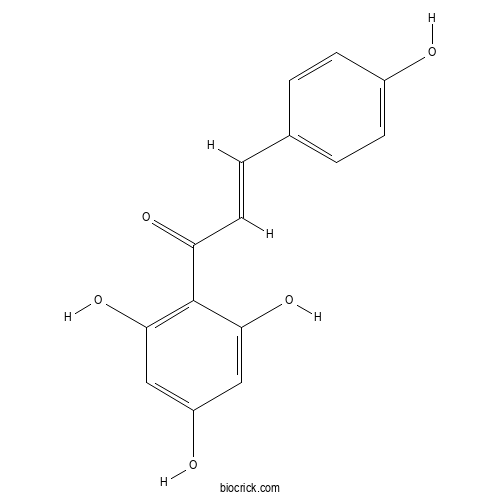
| Cas No. | 73692-50-9 | SDF | File under preparation. |
| PubChem ID | 5280960.0 | Appearance | Powder |
| Formula | C15H12O5 | M.Wt | 272.2 |
| Type of Compound | N/A | Storage | Desiccate at -20°C |
| Solubility | Soluble in Chloroform,Dichloromethane,Ethyl Acetate,DMSO,Acetone,etc. | ||
| Chemical Name | (E)-3-(4-hydroxyphenyl)-1-(2,4,6-trihydroxyphenyl)prop-2-en-1-one | ||
| SMILES | C1=CC(=CC=C1C=CC(=O)C2=C(C=C(C=C2O)O)O)O | ||
| Standard InChIKey | YQHMWTPYORBCMF-ZZXKWVIFSA-N | ||
| Standard InChI | InChI=1S/C15H12O5/c16-10-4-1-9(2-5-10)3-6-12(18)15-13(19)7-11(17)8-14(15)20/h1-8,16-17,19-20H/b6-3+ | ||
| General tips | For obtaining a higher solubility , please warm the tube at 37 ℃ and shake it in the ultrasonic bath for a while.Stock solution can be stored below -20℃ for several months. We recommend that you prepare and use the solution on the same day. However, if the test schedule requires, the stock solutions can be prepared in advance, and the stock solution must be sealed and stored below -20℃. In general, the stock solution can be kept for several months. Before use, we recommend that you leave the vial at room temperature for at least an hour before opening it. |
||
| About Packaging | 1. The packaging of the product may be reversed during transportation, cause the high purity compounds to adhere to the neck or cap of the vial.Take the vail out of its packaging and shake gently until the compounds fall to the bottom of the vial. 2. For liquid products, please centrifuge at 500xg to gather the liquid to the bottom of the vial. 3. Try to avoid loss or contamination during the experiment. |
||
| Shipping Condition | Packaging according to customer requirements(5mg, 10mg, 20mg and more). Ship via FedEx, DHL, UPS, EMS or other couriers with RT, or blue ice upon request. | ||
Quality Control & MSDS
3D structure
Package In Stock

Number of papers citing our products


Naringenin chalcone Dilution Calculator
Naringenin chalcone Molarity Calculator
-
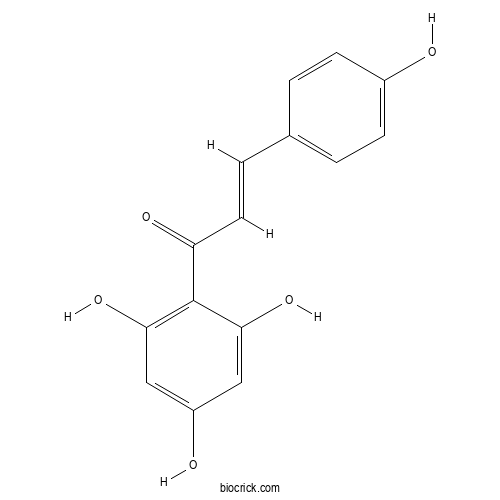 Naringenin chalconeCatalog No.: BCN0336CAS No.: 25515-46-2
-
 Pinocembrin chalconeCatalog No.: BCN7223CAS No.: 4197-97-1
-
 Eriodictyol chalconeCatalog No.: BCN8276CAS No.: 14917-41-0
-
 HelichrysetinCatalog No.: BCN4149CAS No.: 62014-87-3
-
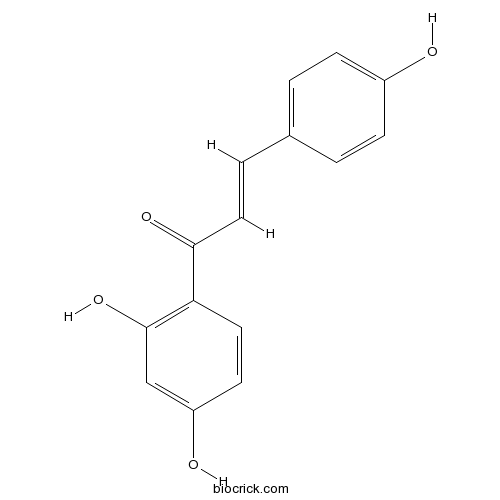 IsoliquiritigeninCatalog No.: BCN4512CAS No.: 961-29-5
-
 2'-O-MethylhelichrysetinCatalog No.: BCN4792CAS No.: 123316-64-3
-
 2',6'-Dihydroxy 4',4-dimethoxychalconeCatalog No.: BCN0316CAS No.: 94441-99-3
-
 2',6'-Dihydroxy-4,4'-dimethoxychalconeCatalog No.: BCN0062CAS No.: 20621-49-2
-
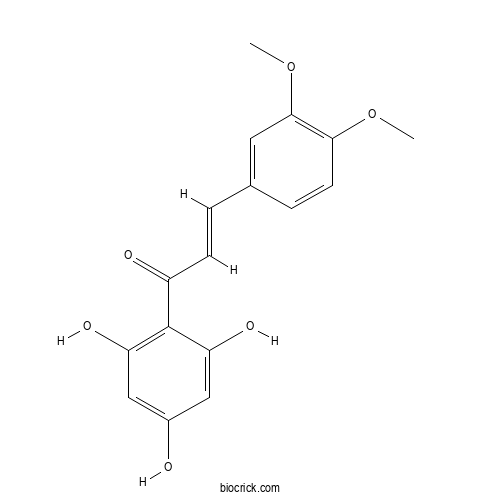 2',4',6'-Trihydroxy-3,4-dimethoxydihydrochalconeCatalog No.: BCX2759CAS No.: 29287-31-8
-
 Flavokawain CCatalog No.: BCN8456CAS No.: 37308-75-1
-
 4-O-MethylhelichrysetinCatalog No.: BCN3986CAS No.: 56121-44-9
| 1 mg | 5 mg | 10 mg | 20 mg | 25 mg | |
| 1 mM | 3.6738 mL | 18.3688 mL | 36.7377 mL | 73.4754 mL | 91.8442 mL |
| 5 mM | 0.7348 mL | 3.6738 mL | 7.3475 mL | 14.6951 mL | 18.3688 mL |
| 10 mM | 0.3674 mL | 1.8369 mL | 3.6738 mL | 7.3475 mL | 9.1844 mL |
| 50 mM | 0.0735 mL | 0.3674 mL | 0.7348 mL | 1.4695 mL | 1.8369 mL |
| 100 mM | 0.0367 mL | 0.1837 mL | 0.3674 mL | 0.7348 mL | 0.9184 mL |
| * Note: If you are in the process of experiment, it's necessary to make the dilution ratios of the samples. The dilution data above is only for reference. Normally, it's can get a better solubility within lower of Concentrations. | |||||
- Glutathione disulfide
Catalog No.:BCX2320
CAS No.:27025-41-8
- N6-Isopentenyladenine
Catalog No.:BCX2319
CAS No.:2365-40-4
- Laurolitsine
Catalog No.:BCX2318
CAS No.:904927-11-3
- 9-Nitrocamptothecin
Catalog No.:BCX2317
CAS No.:86639-62-5
- Mandelic acid
Catalog No.:BCX2316
CAS No.:90-64-2
- D-Galacturonic acid hydrate
Catalog No.:BCX2315
CAS No.:685-73-4
- Isatin
Catalog No.:BCX2314
CAS No.:91-56-5
- 4-Hydroxypyridine-2,6-dicarboxylic acid
Catalog No.:BCX2313
CAS No.:499-51-4
- Zeatin
Catalog No.:BCX2312
CAS No.:1637-39-4
- Riboflavin sodium phosphate
Catalog No.:BCX2311
CAS No.:130-40-5
- Chavicol
Catalog No.:BCX2310
CAS No.:501-92-8
- Piperonylic acid
Catalog No.:BCX2309
CAS No.:94-53-1
- Spilanthol
Catalog No.:BCX2322
CAS No.:25394-57-4
- Cathayanin C
Catalog No.:BCX2323
CAS No.:330195-61-4
- Taurodeoxycholic acid
Catalog No.:BCX2324
CAS No.:516-50-7
- Cathayanin B
Catalog No.:BCX2325
CAS No.:330195-60-3
- Sorocein H
Catalog No.:BCX2326
CAS No.:157382-82-6
- 3-Methyl-1-(3-methylfuran-2-yl)but-3-en-1-one
Catalog No.:BCX2327
CAS No.:78173-38-3
- Putrescine
Catalog No.:BCX2328
CAS No.:110-60-1
- L-Ornithine
Catalog No.:BCX2329
CAS No.:70-26-8
- Dopamine
Catalog No.:BCX2330
CAS No.:51-61-6
- Norcantharidin
Catalog No.:BCX2331
CAS No.:29745-04-8
- L-Arabinose
Catalog No.:BCX2332
CAS No.:5328-37-0
- L-Galactose
Catalog No.:BCX2333
CAS No.:15572-79-9
Melatonin and Selenium Enhance Strawberry Resistance to Botrytis cinerea via Integrated Transcriptome-Metabolome Analysis.[Pubmed:42794076]
Foods. 2026 Sep 17;15(18):3291.
This study fills a critical knowledge gap by elucidating the mechanisms of melatonin (MT) and selenium (Se) in enhancing strawberry resistance to Botrytis cinerea through integrated physiological, biochemical, transcriptomic, and metabolomic analyses, providing an eco-friendly strategy for postharvest disease management. Combined MT (0.5 mmol/L) and sodium selenite (25 mg/L) exhibited a strong inhibitory effect on B. cinerea, reducing colony diameter to 1.05 cm with an inhibition rate of 93.67%, compared with MT (14.08%) alone or sodium selenite alone (42.87%). MT+Se treatment significantly reduced gray mold incidence in strawberry fruits to <15% at 96 h, versus >75% in controls, while maintaining higher soluble sugar (13.25 vs. 7.01 mg/g) and protein (0.286 vs. 0.186 mg/g) contents. Moreover, MT+Se attenuated oxidative damage by lowering malondialdehyde (MDA) levels (7.47 vs. 11.63 nmol/g FW) and enhancing antioxidant enzyme activities (e.g., POD: 12.918 vs. 8.411 U/g FW). Integrated transcriptomic-metabolomic analyses revealed that MT+Se upregulated antioxidant enzyme genes (SOD, CAT, POD, and APX), resistance-related genes, and transcription factors, while enhancing flavonoid and phenylpropanoid biosynthesis and promoting secondary metabolite accumulation (e.g., epicatechin, Naringenin chalcone). Overall, combined MT+Se treatment enhanced strawberry resistance to B. cinerea by boosting antioxidant defense and resistance pathways, offering an eco-friendly strategy for postharvest disease control.
Flavonoid constituents contribute to the low diastase activity of Triadica cochinchinensis honey through in vitro enzyme inhibition and in vivo transcriptional regulation.[Pubmed:42774654]
Food Chem X. 2026 Sep 12;39:104452.
Diastase activity is a key international criterion for assessing honey quality, indicative of freshness and the absence of excessive heat treatment. This study found that the diastase activity of Triadica cochinchinensis honey (TCH) was only 3.45, significantly lower than other 11 common honeys with range of 9.96 to 23.06. Furthermore, its diastase activity abnormally decreased during honey ripening. Flavonoids have been reported to effectively inhibit diastase activity. The underlying mechanisms were investigated in vitro and in vivo based on the characteristic flavonoids in TCH identified by LC-MS/MS, i.e. unique (-)-gallocatechin gallate (GCG) and high-content Naringenin chalcone (NGC). In vitro enzymatic assays indicated that GCG and NGC inhibited alpha-amylase activity via mixed-type. The binding of GCG and NGC on alpha-amylase was further characterized by fluorescence quenching and molecular docking. In vivo studies revealed that dietary supplementation of GCG and NGC suppressed the alpha-amylase gene expression in the hypopharyngeal glands of honey-ripening bees (15-day-old) by 78.92% and 67.71%, respectively, and in foragers (25-day-old) by 91.14% and 56.48%, respectively. Network pharmacology analysis linked this suppression by interfering with four alpha-amylase-related pathways.
Integrative multi-omics analysis prioritizes compartment-specific candidate targets of gut microbiota metabolites in diabetic kidney disease.[Pubmed:42756821]
Front Immunol. 2026 Aug 31;17:1925910.
OBJECTIVE: The gut-kidney axis has emerged as a critical area of investigation. However, the compartment-specific regulatory mechanisms of gut microbiota metabolites within the glomerular and tubulointerstitial regions of diabetic kidney disease (DKD) remain incompletely understood. METHODS: The gutMGene, SEA, STP, GEO, Nephroseq v5, and KIT databases were interrogated. Multi-omics and experimental approaches were applied, involving differential expression analysis, Weighted Gene Co-expression Network Analysis (WGCNA), machine learning, Mendelian randomization (MR), Gene Set Enrichment Analysis (GSEA), immune infiltration, gene set variation analysis (GSVA), clinical correlation, single-cell profiling, molecular docking, molecular dynamics simulation, CCK-8 assay, and RT-qPCR. The "Microbiota-Substrate-Metabolite-Target" (M-S-M-T) network was constructed for each compartment. RESULTS: Machine learning identified six glomerular (IGFBP6, PLA2G4A, CTSK, HTR2B, PDGFRA, MMP7) and five tubulointerstitial (CA2, HSD11B2, NQO2, MMP7, CYP24A1) core genes. Mendelian randomization, single-cell profiling, and clinical cohorts provided supportive genetic and clinical evidence linking these genes to the estimated glomerular filtration rate (eGFR) and to DKD. Immune infiltration analysis and GSVA indicated a higher estimated proportion of M2 macrophages and a shift of the estimated mast cell composition from activated to resting states in both compartments, which correlated with core gene expression. Via the "M-S-M-T" network, drug-likeness and toxicity screening, caffeic acid and Naringenin chalcone were prioritized as shared candidate metabolites. Molecular docking and molecular dynamics simulations suggested favorable in silico binding to HTR2B and MMP7. Both metabolites attenuated high glucose (HG)-induced core gene dysregulation in HK-2 cells and podocytes. CONCLUSION: This study proposed a compartment-specific "M-S-M-T" regulatory network in the DKD glomerulus and tubulointerstitium. The shared metabolites caffeic acid and Naringenin chalcone, which targeted HTR2B and MMP7, produced a preliminary protective transcriptional response in vitro. These findings are hypothesis-generating and require validation in real-world microbiome, metabolomic and in vivo studies before any therapeutic inference can be drawn.
UVR8-mediated regulation of anthocyanin metabolism in plants: molecular mechanisms, signaling networks, and adaptive functions.[Pubmed:42648575]
Plant Sci. 2026 Nov;372:113403.
Ultraviolet-B (UV-B) radiation is both a potential stressor and an environmental signal that reshapes plant metabolism. Anthocyanins are among the most visible UV-B-responsive metabolites, linking photoprotection, stress acclimation, pigmentation, and crop quality. UV RESISTANCE LOCUS 8 (UVR8) is the primary UV-B photoreceptor in plants, but its connection with anthocyanin metabolism remains fragmented across molecular mechanisms, physiological contexts, and applied crop systems. This review develops an integrative framework for understanding UVR8-mediated anthocyanin regulation as a context-dependent signaling-metabolic interface rather than a simple linear response to UV-B. In this framework, UV-B-activated UVR8 engages CONSTITUTIVELY PHOTOMORPHOGENIC 1 (COP1)-associated signaling, enhances HY5/HYH-mediated transcriptional regulation, and connects light perception to MYB, B-box (BBX), and MYB-bHLH-WD40 (MBW) modules that control anthocyanin pathway genes. The magnitude and direction of this route are shaped by species, tissue identity, organ type, developmental stage, wavelength, UV-B dose, exposure duration, visible-light background, temperature, sugar status, phytohormones, and redox cues. Emerging evidence that Naringenin chalcone selectively binds to and stabilizes monomeric UVR8 reveals a reciprocal metabolite-to-photoreceptor input, although its relationship to the canonical COP1-HY5 pathway remains unresolved. By distinguishing UV-B-induced effects, UVR8-associated responses, and genetically demonstrated UVR8 dependence, this review clarifies the evidence boundaries of the field. It also identifies key gaps, including tissue-specific UVR8 responses, crop-specific downstream modules, and dose thresholds for balancing protection, growth, and quality. A refined understanding of this interface may improve the predictability of UV-B-based strategies for photoprotection, stress resilience, fruit coloration, and crop quality improvement.
Metabolomics and Transcriptomics Studies of the Differential Accumulation of Flavonoids in Different Organs in Emilia sonchifolia.[Pubmed:42589459]
Int J Mol Sci. 2026 Jul 29;27(15):6803.
Emilia sonchifolia (L.) DC is a medicinal and edible herb of Asteraceae with Lingnan characteristics. Flavonoids are its core pharmacodynamic substances, but the molecular regulation mechanism of differential accumulation of flavonoids in different organs of this species is still unclear. In this study, the molecular basis of tissue-specific synthesis of flavonoids was analyzed by integrating UPLC-MS broad-target metabolome and Illumina high-throughput transcriptome with four tissues of Emilia sonchifolia: root, stem, leaf, and flower. The results showed that a total of 73 flavonoid metabolites were identified in the metabolome, including Naringenin chalcone, luteolin, quercitrin, and other pharmacologically active substances. Multi-omics joint analysis showed that the floral organ was the core tissue for the synthesis and enrichment of flavonoids, and there were specific characteristic flavonoid subtypes in different tissues. A total of 211 differentially expressed genes related to the flavonoid synthesis pathway were screened by transcriptome analysis, including 16 flavonol synthases, five cinnamic acid 4-hydroxylases, and five chalcone synthases. The WGCNA and gene-metabolite association network showed that the transcription levels of key enzyme genes such as CHS, C4H, F3'H, and F3H were highly positively correlated with the accumulation of downstream flavonols. The qRT-PCR quantitative verification showed that the expression patterns of CHS1, CHI4, F3'H5, F3H, FLS4, and GT in the four tissues were highly consistent with the transcriptome sequencing results, which confirmed that the transcriptome data were reliable. For the first time, this study revealed the molecular regulatory network of tissue-specific accumulation of flavonoids in Emilia sonchifolia, and clarified that the flower organ was the optimal medicinal harvesting site of flavonoids. It provided key theoretical support for the breeding of high-efficacy Emilia sonchifolia germplasm, the development of flavonoid active ingredients, and the study of secondary metabolic evolution of Compositae plants.
Integrated Physiological, Transcriptomic, and Metabolomic Analyses Reveal the Mechanism Underlying the Response of Alfalfa to Combined Salt and Heat Stress.[Pubmed:42584142]
J Agric Food Chem. 2026 Aug 12;74(31):24702-24716.
Salt and heat stresses often occur simultaneously in arid regions, restricting the distribution and productivity of alfalfa (Medicago sativa L.). However, the mechanisms underlying alfalfa responses to combined salt and heat stress remain unclear. Here, we integrated phenotypic, physiological, transcriptomic, and metabolomic analyses to investigate the regulatory mechanisms involved in combined stress responses. Combined stress more strongly inhibited plant height, stem diameter, fresh weight, net photosynthetic rate, and transpiration rate than single stresses. Salt stress had a predominant effect on several agronomic and physiological traits, whereas heat stress mainly affected chloroplast ultrastructure. Multiomics analysis identified flavonoid metabolism, linoleic acid metabolism, and amino acid biosynthesis as key pathways associated with combined stress responses. Moreover, CHS, CHR, P5CS, and LOX genes expression was closely correlated with metabolites such as naringenin, Naringenin chalcone, and proline. These findings provide insights into alfalfa adaptation to multiple abiotic stresses.
An efficacy-linked strategy for the quality evaluation of traditional medicine: Chaenomeles speciosa as an example.[Pubmed:42551662]
J Ethnopharmacol. 2026 Aug 4:122261.
ETHNOPHARMACOLOGICAL RELEVANCE: Chaenomeles speciosa (Sweet) Nakai, a traditional remedy for "Bi-syndrome", possesses potent anti-inflammatory and analgesic activities. It is widely utilized in Traditional Chinese Medicine (TCM) and ethnic medical systems of Mongolian, Tibetan, and Miao nationalities. AIM OF THE STUDY: However, in practical application, Chaenomeles speciosa is frequently confused with its related species Chaenomeles sinensis. This study aims to establish a holistic strategy to screen and validate Quality Markers (Q-markers) for Chaenomeles speciosa by integrating metabolomics, GNPS-guided isolation, and in vivo anti-inflammatory assay. MATERIALS AND METHODS: Initially, a plant metabolomics strategy was employed to screen differential markers. Then, GNPS molecular networking was utilized for the targeted isolation of differential markers from the core active fractions. Next, the anti-inflammatory effects of candidates from Chaenomeles speciosa on LPS-induced Tg(fli1:EGFP) zebrafish were evaluated by confocal microscopy and assessment of inflammatory factor levels. Finally, the selected Q-markers were quantified across 26 batches using a validated HPLC method. RESULTS: A total of 134 components were characterized, with 15 differential markers prioritized to distinguish Chaenomeles speciosa from Chaenomeles sinensis. GNPS-guided targeted isolation successfully yielded 9 of the 15 differential markers, along with 8 additional constituents. Zebrafish screening identified oleanolic acid, chlorogenic acid, procyanidin B1, (-)-epicatechin, Naringenin chalcone, apigenin, and diosmetin as potential Q-markers. The established HPLC method proved rapid and robust for routine quality control across 26 batches of Chaenomeles speciosa.
Biosynthesis of Fluorinated Aromatic Polyketides Through Directed Evolution of Fused Type III Polyketide Synthase.[Pubmed:42531134]
Angew Chem Int Ed Engl. 2026 Sep 28;65(40):e3691732.
Aromatic polyketides have gained significant attention as prominent plant-derived polyphenol molecules in recent years owing to their multi-faceted therapeutic potentials against a variety of diseases. However, the introduction of unique fluorine atoms into the core structure of aromatic polyketides has received limited exploration thus far. In this study, a series of new-to-nature fluorinated aromatic polyketides, including resveratrol, Naringenin chalcone, bisnoyangonin, and benzalactone, were obtained from readily available fluoro-tyrosines in E. coli via a multi-enzyme cascade pathway. A series of combinational optimization strategies, including metabolic regulations, double protein fusion (4CL::III-PKS and MatB::III-PKS), and directed evolution of the rate-limiting enzymes, were conducted to improve the production of fluoro-aromatic polyketides, thus enhancing the titers to >200 mg/L from an initial approximately 10 mg/L. When both sides of the phenolic hydroxyl group of 4-coumaroyl-CoA contain fluorine atoms, a novel catalytic pathway of STS and CHS in synthesizing methyl ketone structures is unlocked, namely the "proximal fluorine-induced III-PKS catalytic truncation". Further post-functionalizations by enzymatic glycosylation reaction and chemocatalytic Friedel-Crafts-type reaction provided the corresponding fluorinated derivatives of polyphenolic natural products (piceid and arahypin).
Elucidating the Potential Therapeutic Role of Gut Microbiota Metabolites in Atrial Fibrillation Through Network Pharmacology Combined with Target Omics.[Pubmed:42517403]
Curr Comput Aided Drug Des. 2026 Jul 24.
INTRODUCTION: Atrial Fibrillation (AF) is a prevalent arrhythmia with complex pathogenesis and limited optimal treatments. This study aims to explore the possible protective effects of gut microbiota metabolites against AF and the underlying mechanisms. METHODS: This study integrated network pharmacology, molecular docking, and molecular dynamics simulations to explore gut microbiota metabolites' role in AF. Metabolite targets were retrieved from gutMGene, Swiss Target Prediction, and SEA; AF-related genes from Gene- Cards, OMIM, and CTD. SwissADME and ADMETlab screened metabolites for drug-likeness and toxicity, while molecular docking and 100 ns molecular dynamics simulations verified the binding stability between metabolites and core target binding stability. RESULTS: A total of 22 intersecting targets were identified; protein-protein interaction analysis showed AKT1, IL6, and JUN as core hub genes. GO/KEGG enrichment indicated enrichment in oxidative stress, miRNA transcriptional regulation, PI3K-Akt, and MAPK pathways. Six safe metabolites (e.g., linoleic acid, hesperetin dihydrochalcone) were screened. Molecular docking confirmed their stable binding to core targets (Naringenin chalcone-JUN and 5-(3,4- dihydroxyphenyl)-4-hydroxypentanoic acid-JUN had the strongest affinity), validated by 100 ns molecular dynamics simulations. CONCLUSION: Gut microbiota metabolites may regulate AF-related signaling pathways via AKT1, IL6, and JUN, supporting the gut-heart axis as an AF intervention framework. The six metabolites are promising lead molecules for gut-targeted AF therapy, pending further experimental validation.
Temporal multi-omics analysis of HSF-HSP and flavonoid pathways under heat stress in Iris.[Pubmed:42420872]
BMC Plant Biol. 2026 Jul 8;26(1):1684.
Heat stress poses a significant threat to the productivity of ornamental plants. Iris tectorum (Iris) is a highly valued ornamental species known for its diverse flower colors and architectural forms. However, heat‑induced physiological damage can substantially reduce its economic value. To investigate the temporal dynamics of the heat stress response in I. tectorum 'Hot Spicy', we conducted a time-series experiment at 40 degrees C for 0, 1, 3, 6, 9, and 24 h, integrating physiological measurements, transcriptomics, and metabolomics. Physiologically analyses showed that heat stress induced progressive membrane lipid peroxidation, as indicated by MDA accumulation, transient activation of antioxidant enzymes, with SOD and POD peaking at 6 h, and sustained proline accumulation, reflecting a phased stress response. Transcriptomic analysis showed temporally coordinated expression of heat stress factors-heat shock proteins (HSF-HSP) co-expression networks. Small HSPs genes, including HSP26.7, HSP16.0 and HSP22.0 were rapidly induced within 1-3 h, with increases of up to 39.46-fold. Broad activation of HSP genes peaked at 6-9 h, reaching up to 56.50-fold, whereas HSP70 expression persisted at 24 h, with increases of up to 7.77-fold. HSFs displayed hierarchical activation, with HSFA5 responded early, HSFA6b in the mid-phase, and HSFA3/HSFA4a in the late phase, suggesting a layered transcriptional temporal sequence. During the late phase (6-24 h), the ABA signaling pathway and flavonoid biosynthesis genes were upregulated, accompanied by the accumulation of flavonoids such as Naringenin chalcone and (-)-epigallocatechin. Weighted Gene Co-expression co-expression Analysis (WGCNA) identified a core module (MEbrown4) enriched in phenylpropanoid biosynthesis and hormone signaling, with KIN10 and HOP2 as highly connected candidate hub genes. Together these results provide a time-resolved multi-omics landscape of heat adaptation in Iris and suggests a phased temporal pattern response from early HSF-HSP activation to sustained flavonoid accumulation. The identified candidates, including HSFA5, HSP70-16, ABF3, KIN10, HOP2, provide candidate genetic resources for future functional validation in Iris.
Optimization of flavonoids extraction and elucidation of antioxidant mechanisms in Dendrobium flexicaule using metabolomics and machine learning.[Pubmed:42413305]
Ultrason Sonochem. 2026 Aug;131:107950.
Recent studies have demonstrated that flavonoids constitute a major class of bioactive compounds in Dendrobium species, contributing significantly to their pharmacological properties. However, the underutilization of flavonoids from Dendrobium is largely attributable to two interrelated bottlenecks: (1) the absence of systematic phytochemical screening to identify high-flavonoid germplasm resources, and (2) the lack of robust, scalable extraction protocols optimized for both yield and reproducibility. To address these limitations, this study first employed untargeted metabolomics to comparatively characterize the flavonoid profiles across four representative Dendrobium species. Subsequently, we developed an integrated optimization framework combining single-factor experimental screening, response surface methodology (RSM), and machine learning-based predictive modeling to rationally design and validate an efficient, high-yield flavonoid extraction protocol. Results revealed that Dendrobium flexicaule exhibited the highest total flavonoid content among the four investigated species. Under the optimized extraction conditions, 94 % (v/v) ethanol, 68 min extraction time, a material-to-liquid ratio of 1:50 (w/v), and 72 degrees C, the flavonoid yield reached 8.90 +/- 0.17 mg/g dry weight. Among the machine learning models evaluated, the support vector regression (SVR) model demonstrated the strongest predictive accuracy, achieving an R(2) of 0.9893, an RMSE of 0.082 mg/g, and an MAE of 0.058 mg/g. However, untargeted metabolomic profiling of the optimized extract identified 34 flavonoids, with rutin as the most abundant compound, followed by eriodictyol and Naringenin chalcone, both structurally confirmed by reference standards and spectral data. In vitro functional assays demonstrated that the extract exhibited dose-dependent antioxidant activity and significantly alleviated t-BHP induced oxidative stress in HepG2, mechanistically through activation of the Nrf2/ARE signaling pathway. Collectively, this study identifies Dendrobium flexicaule as a high-potential, flavonoid-rich botanical resource and establishes a robust, integrated framework combining untargeted metabolomics with machine learning-driven optimization to enhance both the efficiency of flavonoid extraction and the rigor of downstream bioactivity assessment.
Production of phloretin by multi-module carbon flux rewiring in Saccharomyces cerevisiae.[Pubmed:42331193]
Bioresour Technol. 2026 Nov;459:135217.
Phloretin has garnered significant interest due to its substantial value in the pharmaceutical, cosmetic, and food industries. However, its supply via plant extraction remains constrained by low yield and complex processing. In this study, an engineered Saccharomyces cerevisiae strain was constructed for high-level de novo phloretin biosynthesis via multi-module carbon-flux rewiring. In the downstream phloretin-forming module, an integrated three-route network was constructed, consisting of two direct phloretin-forming routes and a phloretic acid recycling route. Specifically, introduction of Naringenin chalcone reductase re-channeled flux at the chalcone node, while enzyme screening and copy-number optimization of 4-coumarate:coenzyme A ligase and chalcone synthase reduced phloretic acid accumulation, effectively recovering carbon otherwise lost to byproduct formation. In the aromatic amino-acid supply module, key pathway steps were reinforced and feedback regulation was relieved, with careful balancing of key pathway genes to prevent metabolic imbalance. In the malonyl-coenzyme A supply module, cytosolic acetyl-coenzyme A generation was enhanced and organelle-to-cytosol carbon partitioning was rewired, thereby expanding the cytosolic malonyl-coenzyme A pool required for chalcone synthase-mediated condensation. The resulting engineered strain achieved phloretin titers of 460.6 mg/L in shake-flask cultures and 1.817 g/L in 5-L fed-batch fermentation, representing the highest reported de novo titer in yeast to date. This study demonstrates that coordinated control of branch-point flux, byproduct recycling, and precursor supply is essential for high-level microbial phloretin production and provides a scalable framework for microbial production of phloretin and related derivatives.
Transcriptome Dynamics Reveal the Potential Roles of Long Non-Coding RNAs in Regulating Flower Color of Safflowers (Carthamus tinctorius).[Pubmed:42278662]
Int J Mol Sci. 2026 Jun 5;27(11):5142.
Safflower (Carthamus tinctorius L.) is an important medicinal plant widely used as a source of natural pigments. Flower color is a key trait affecting both ornamental and commercial value; however, the roles of long non-coding RNAs (lncRNAs) in safflower flower coloration remain largely unclear. In this study, strand-specific RNA sequencing was performed on three safflower varieties with distinct flower colors at different floral developmental stages. A total of 4851 lncRNAs were identified, including 940 natural antisense transcript (NAT) pairs. Among them, lncRNA MSTRG.28365 was identified as a natural antisense transcript paired with CtCHS.7, a chalcone synthase-like gene potentially involved in flavonoid biosynthesis. Expression analysis revealed that CtCHS.7 was highly expressed in the red-flowered variety, whereas MSTRG.28365 exhibited an opposite expression pattern, suggesting a potential regulatory association. Co-expression analysis further indicated that CtCHS.7 was associated with genes putatively involved in flavonoid modification, including UDP-glycosyltransferases and cytochrome P450 enzymes. Functional assays showed that the recombinant CtCHS.7 protein could catalyze the production of downstream flavonoid-related metabolites, although the detected product differed from canonical Naringenin chalcone. These findings suggest that lncRNAs may participate in flower color variation and flavonoid biosynthesis-related processes in safflower. This study provides candidate regulatory elements for future functional validation of safflower flower coloration mechanisms.
Functional characterization of type I chalcone isomerase AmCHI from Astragalus mongholicus and its response mechanism to exogenous hormones.[Pubmed:42263618]
J Plant Physiol. 2026 Aug;323:154814.
Flavonoids, as the principal bioactive constituents of Astragalus mongholicus, play key roles in multiple physiological processes including plant development and stress adaptation. Chalcone isomerase (CHI) is a key rate-limiting enzyme in the flavonoid biosynthetic pathway and directly determines the production efficiency of flavonoids. However, its catalytic mechanism and in vivo functions in A. mongholicus remain to be elucidated. Exogenous hormone treatments revealed that methyl jasmonate, auxin, and ethephon significantly promoted AmCHI expression and flavonoid accumulation, whereas salicylic acid exhibited an inhibitory effect. Subcellular localization analysis showed that AmCHI is predominantly localized to the plasma membrane and the nucleus. Yeast heterologous expression confirmed its specific catalytic activity in converting Naringenin chalcone to naringenin. In vivo functional validation in A. mongholicus demonstrated that overexpression of this gene in transgenic hairy roots significantly increased its transcript level by 2.9-3.5 fold compared with the control, and enhanced flavonoid accumulation by 1.3 fold, whereas gene silencing significantly reduced AmCHI expression by 30-50% and decreased total flavonoid content to 30-55% of the control level. In conclusion, this study systematically elucidates the core regulatory role of AmCHI in flavonoid biosynthesis in A. mongholicus, providing an important theoretical foundation for improving the quality of medicinal plants and for future metabolic engineering efforts.
Drynaria roosii-derived exosome-like nanovesicles promote alveolar socket healing via activation of ITPR3-mediated calcium flux.[Pubmed:42163262]
J Nanobiotechnology. 2026 May 20;24(1):659.
Alveolar socket healing post-extraction is accompanied by alveolar bone loss, which is negative to subsequent prosthetic rehabilitation. Plant-derived exosome-like nanovesicles are extracellular vehicles with great potential for disease treatment and are advantageous for drug delivery and absorption. Herein, we report the mineralization-promoting effects of Drynaria roosii-derived exosome-like nanovesicles (DRDENs) on osteoblasts and in a mouse alveolar socket healing model. DRDENs were isolated and characterized. Treatment with DRDENs increased the formation of calcium nodules and the expression of osteogenic differentiation markers (ALP, RUNX2, and OCN) in osteoblasts. Compounds analysis of DRDENs revealed a previously unexplored component, Naringenin chalcone. We evaluated the properties of Naringenin chalcone and its bioactivity on osteoblast differentiation. In vivo studies confirmed the safety and efficacy of DRDENs and Naringenin chalcone in bone regeneration. The mechanism was demonstrated in which DRDENs were endocytosed by cells, and Naringenin chalcone was released to interact with the inositol 1,4,5-trisphosphate receptor type 3 (ITPR3) in the endoplasmic reticulum (ER), thereby activating downstream calcium flux to enhance bone formation. Additionally, chalcone isomerase (CHI), a key enzyme involved in Naringenin chalcone production in Drynaria roosii, was purified and functionally identified as a type I CHI with weak II CHI activity. Our findings provided a novel strategy for alveolar socket healing and shed light on the function of CHI in Drynaria roosii.

Calcutta University

University of Minnesota

University of Maryland School of Medicine

University of Illinois at Chicago

The Ohio State University

University of Zurich

Harvard University

Colorado State University

Auburn University

Yale University

Worcester Polytechnic Institute

Washington State University

Stanford University

University of Leipzig

Universidade da Beira Interior

The Institute of Cancer Research

Heidelberg University

University of Amsterdam

University of Auckland

TsingHua University

The University of Michigan

Miami University

DRURY University

Jilin University

Fudan University

Wuhan University

Sun Yat-sen University

Universite de Paris

Deemed University

Auckland University

The University of Tokyo

Korea University



