
9-NitrocamptothecinCAS# 86639-62-5 |
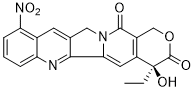
| Cas No. | 86639-62-5 | SDF | File under preparation. |
| PubChem ID | N/A | Appearance | Yellow powder |
| Formula | C20H15N3O6 | M.Wt | 393.4 |
| Type of Compound | N/A | Storage | Desiccate at -20°C |
| Solubility | Soluble in Chloroform,Dichloromethane,Ethyl Acetate,DMSO,Acetone,etc. | ||
| General tips | For obtaining a higher solubility , please warm the tube at 37 ℃ and shake it in the ultrasonic bath for a while.Stock solution can be stored below -20℃ for several months. We recommend that you prepare and use the solution on the same day. However, if the test schedule requires, the stock solutions can be prepared in advance, and the stock solution must be sealed and stored below -20℃. In general, the stock solution can be kept for several months. Before use, we recommend that you leave the vial at room temperature for at least an hour before opening it. |
||
| About Packaging | 1. The packaging of the product may be reversed during transportation, cause the high purity compounds to adhere to the neck or cap of the vial.Take the vail out of its packaging and shake gently until the compounds fall to the bottom of the vial. 2. For liquid products, please centrifuge at 500xg to gather the liquid to the bottom of the vial. 3. Try to avoid loss or contamination during the experiment. |
||
| Shipping Condition | Packaging according to customer requirements(5mg, 10mg, 20mg and more). Ship via FedEx, DHL, UPS, EMS or other couriers with RT, or blue ice upon request. | ||
Quality Control & MSDS
Package In Stock

Number of papers citing our products


9-Nitrocamptothecin Dilution Calculator
9-Nitrocamptothecin Molarity Calculator
| 1 mg | 5 mg | 10 mg | 20 mg | 25 mg | |
| 1 mM | 2.5419 mL | 12.7097 mL | 25.4194 mL | 50.8388 mL | 63.5486 mL |
| 5 mM | 0.5084 mL | 2.5419 mL | 5.0839 mL | 10.1678 mL | 12.7097 mL |
| 10 mM | 0.2542 mL | 1.271 mL | 2.5419 mL | 5.0839 mL | 6.3549 mL |
| 50 mM | 0.0508 mL | 0.2542 mL | 0.5084 mL | 1.0168 mL | 1.271 mL |
| 100 mM | 0.0254 mL | 0.1271 mL | 0.2542 mL | 0.5084 mL | 0.6355 mL |
| * Note: If you are in the process of experiment, it's necessary to make the dilution ratios of the samples. The dilution data above is only for reference. Normally, it's can get a better solubility within lower of Concentrations. | |||||
- Mandelic acid
Catalog No.:BCX2316
CAS No.:90-64-2
- D-Galacturonic acid hydrate
Catalog No.:BCX2315
CAS No.:685-73-4
- Isatin
Catalog No.:BCX2314
CAS No.:91-56-5
- 4-Hydroxypyridine-2,6-dicarboxylic acid
Catalog No.:BCX2313
CAS No.:499-51-4
- Zeatin
Catalog No.:BCX2312
CAS No.:1637-39-4
- Riboflavin sodium phosphate
Catalog No.:BCX2311
CAS No.:130-40-5
- Chavicol
Catalog No.:BCX2310
CAS No.:501-92-8
- Piperonylic acid
Catalog No.:BCX2309
CAS No.:94-53-1
- 2'-Deoxyadenosine
Catalog No.:BCX2308
CAS No.:958-09-8
- Diosbulbin A
Catalog No.:BCX2307
CAS No.:20086-05-9
- Allylbenzene
Catalog No.:BCX2306
CAS No.:300-57-2
- 4-Hydroxy-3,5-diisopropylbenzaldehyde
Catalog No.:BCX2305
CAS No.:10537-86-7
- Laurolitsine
Catalog No.:BCX2318
CAS No.:904927-11-3
- N6-Isopentenyladenine
Catalog No.:BCX2319
CAS No.:2365-40-4
- Glutathione disulfide
Catalog No.:BCX2320
CAS No.:27025-41-8
- Naringenin chalcone
Catalog No.:BCX2321
CAS No.:73692-50-9
- Spilanthol
Catalog No.:BCX2322
CAS No.:25394-57-4
- Cathayanin C
Catalog No.:BCX2323
CAS No.:330195-61-4
- Taurodeoxycholic acid
Catalog No.:BCX2324
CAS No.:516-50-7
- Cathayanin B
Catalog No.:BCX2325
CAS No.:330195-60-3
- Sorocein H
Catalog No.:BCX2326
CAS No.:157382-82-6
- 3-Methyl-1-(3-methylfuran-2-yl)but-3-en-1-one
Catalog No.:BCX2327
CAS No.:78173-38-3
- Putrescine
Catalog No.:BCX2328
CAS No.:110-60-1
- L-Ornithine
Catalog No.:BCX2329
CAS No.:70-26-8
9-Nitro-20(S)-carbonate-camptothecin (NCP4), a novel prodrug of 9-nitrocamptothecin (9-NC), exhibits potent chemotherapeutic efficacy and improved safety against hepatocarcinoma.[Pubmed:35305999]
Eur J Pharmacol. 2022 May 15;923:174898.
9-Nitrocamptothecin (9-NC), an active derivative of camptothecin (CPT), demonstrated antitumor effect on experimental tumors in mice by topoisomerase I (Topo I) inhibition. However, under human physiological conditions, the rapid opening of lactone ring of 9-NC resulting in the formation of inactive and high toxic carboxylate limited its clinical efficacy. Therefore, strategies aimed to maintain the active closed-lactone form of 9-NC in the plasma were developed, such as prodrugs. In our study, 9-nitro-20(S)-carbonate-camptothecin (NCP4), a novel prodrug of 9-NC, was designed and synthesized. A preclinical evaluation of the chemotherapeutic potential of NCP4 was performed in vitro and in vivo. In cytotoxicity assay against six human cancer cells, the cytotoxic effect of NCP4 was slightly weaker than 9-NC. In addition, our data showed that 9-NC can be converted from NCP4 in vivo, and that the intracellular conversion of NCP4 to its active metabolites was correlated well with its cytotoxicity, demonstrating that NCP4 could serve as a prodrug of 9-NC. In human hepatoma Bel-7402 xenografts, NCP4 by intravenous injection showed more potent antitumor efficacy than 9-NC. Mechanistically, NCP4 induced cell apoptosis by increasing the expressions of caspase-3 and Bax in tumor tissues. In human hepatoma Hep G2 xenografts, NCP4 by oral administration significantly inhibited tumor growth. Importantly, the toxic effect of NCP4 on mice was much lower than 9-NC, demonstrating improved safety of NCP4. Overall, our study indicated that NCP4 would be a promising anticancer candidate and worthy of further investigation.
The development and validation of an LC-MS/MS method for the quantification of CZ112, a prodrug of 9-Nitrocamptothecin in rat plasma.[Pubmed:31848079]
J Pharm Biomed Anal. 2020 Feb 5;179:112963.
9-Nitrocamptothecin-20-O-propionate (CZ112) and 9-Nitrocamptothecin (9NC) are the bioactive derivatives of camptothecin (CPT), an alkaloid isolated from Camptotheca acuminata, and have been confirmed to possess high anti-cancer properties. In the present study, 9NC was identified as the major metabolite of CZ112 in rat plasma through HPLC/photodiode array detection (PDA) and liquid chromatography tandem mass spectrometry (LC-MS/MS) analysis. A highly sensitive LC-MS/MS method was developed and validated for the simultaneous analysis of CZ112 and 9NC in rat plasma, and camptothecin-20-O-acetate (CZ44) was used as an internal standard (IS). The calibration curves were linear (r(2) > 0.999) over concentrations from 2.5 to 320 ng/mL for both CZ112 and 9NC. The method had an accuracy of 96.7-109.6%, and the intra- and inter-day precision (RSD%) were 10.9% or less for CZ112 and 9NC. The stability data showed no significant degradation occurred under the experimental conditions. This method was successfully applied to the pharmacokinetic study of CZ112 and its metabolite 9NC in rat plasma after intravenous and intragastric administration. The oral bioavailability of CZ112 was 6.2 +/- 3.3% (n = 6).
Effects of borneol on the pharmacokinetics of 9-nitrocamptothecin encapsulated in PLGA nanoparticles with different size via oral administration.[Pubmed:27174642]
Drug Deliv. 2016 Nov;23(9):3417-3423.
CONTEXT: Although nanocarriers provide promising potential for oral drug delivery, the delivery efficiency remains unsatisfactory and needs to be improved. Size is considered to be the most important characteristic of nanoparticles related to their oral absorption. Borneol has been proved to have the ability to enhance the penetration and transport of many drugs through various physical barriers. OBJECTIVE: To investigate the effect of the particle size and coadministration of borneol on the pharmacokinetics and bioavailability of entrapped drug in different size poly(lactic-co-glycolic acid) (PLGA) nanoparticles. MATERIALS AND METHODS: 9-Nitrocamptothecin (9-NC)-loaded PLGA nanoparticles with three different range of size (50-100 nm, 100-200 nm, 200-300 nm) were prepared by emulsion solvent-evaporation method. The pharmacokinetic study in rats of these nanoparticles with borneol was carried out. RESULTS: The experiments showed that the encapsulation drug in nanoparticles with size below 200 nm could improve the oral bioavailability of 9-NC. The small size nanoparticles (50-100 nm) had a better improvement efficacy. As for borneol, it played a significant promotion effect only on the small nanoparticles. Moreover, there was no significant influence on the nanoparticles with size more than 100 nm. DISCUSSION AND CONCLUSION: The study indicated that both entrapping drug in nanoparticles with the size below 100 nm and coadministrating with borneol could enhance the gastrointestinal absorption of water insoluble drug. The combination of the two strategies provides a potential approach to improve the oral bioavailability of drug.
The inhibitory effects of camptothecin (CPT) and its derivatives on the substrate uptakes mediated by human solute carrier transporters (SLCs).[Pubmed:26744836]
Xenobiotica. 2016 Sep;46(9):831-40.
1. Camptothecin (CPT) and its derivatives are potent candidate compounds in treating cancers. However, their clinical applications are largely restricted by severe toxicities. 2. The solute carrier transporters (SLCs), particularly the organic anion transporting polypeptides and organic anion/cation transporters (OATs/OCTs) are widely expressed in human key organs and responsible for the cellular influx of many substances including endogenous substrates and many clinically important drugs. Drug-drug interactions through SLCs often result in unsatisfied therapeutic outcomes and/or unexpected toxicities. 3. This study investigated the inhibitory effects of CPT and its eight derivatives on the cellular uptake of specific substrates mediated by the essential SLCs in over-expressing Human embryonic kidney 293 cells. 4. Our data revealed that CPT, 10-hydroxycamptothecin (HCPT), 10-methoxycamptothecin (MCPT) and 9-Nitrocamptothecin (9NC) significantly inhibit the uptake activity of OAT3. 9NC also inhibited the substrate transport mediated by OAT1. The substrate uptakes of OAT1, OCTN1 and OCTN2 were significantly decreased in the presence of CZ112, while CPT-11 potently down-regulated the transport activity of OCT1 and OCT3. 5. In summary, our study demonstrated that CPT and its eight derivatives selectively inhibit the substrate uptakes mediated by the essential SLCs. This information contributes to understanding the localized toxicity of CPTs and provides novel molecular targets for the therapeutic optimization of CPTs in the future.
Encapsulation in PLGA-PEG enhances 9- nitro-camptothecin cytotoxicity to human ovarian carcinoma cell line through apoptosis pathway.[Pubmed:26487893]
Res Pharm Sci. 2015 Mar-Apr;10(2):161-8.
Ovarian cancer is the fifth leading cause of the cancer-related death among women. 9-Nitrocamptothecin (9-NC) is a water-insoluble derivative of camptothecin used for the treatment of patients with advanced ovarian cancer. Previous studies showed that the encapsulation of 9-NC in poly (lactic-co-glycolic acid, PLGA) nanoparticles increased the cytotoxic effect of the drug on different cancer cell lines. In the present study, the cytotoxic effects of 9-NC, 9-NC-loaded PLGA and PLGA-polyethylene glycol (PLGA-PEG) nanoparticles with varying degree of PEG (5, 10, and 15%) were evaluated on human ovarian carcinoma cell line. Furthermore, the mode of cell death induced by 9-NC and the optimized 9-NC-loaded PLGA-PEG nanoparticles on A2780 cell line were investigated. 9-NC incorporating nanoparticles were prepared by nanopercipitation method and their physicochemical characteristics were evaluated using standard methods. The results showed that activation of caspase-3 and -9 significantly increased by free 9-NC and PLGA-PEG loaded nanoparticles in A2780 cells. In contrast to the free drug which increased the activation of caspase-8, 9-NC-loaded PLGA-PEG nanoparticles did not alter the activation of caspase-8. Collectively, it appears that apoptosis induced by 9-NC incorporated in PLGA-PEG 5% occurred through the activation of caspase-9 rather than activation of caspase-8 which is the mediator of extrinsic pathway. Moreover, our results confirmed that 9-NC in nanoparticles at the level of gene expression potentiated down-regulation of Bcl-2, up regulation of Bax, and Smac/DIABLO leading to a decrease in mitochondrial membrane potential. Taken together, our results showed that 9-NC incorporated in PLGA-PEG 5% nanoparticles is able to induce apoptosis in A2780 human ovarian carcinoma cells and has the potential for the treatment of ovarian carcinoma.
Characterization of 9-nitrocamptothecin-in-cyclodextrin-in-liposomes modified with transferrin for the treating of tumor.[Pubmed:26004006]
Int J Pharm. 2015 Jul 25;490(1-2):219-28.
Encapsulation of hydrophobic drugs in the form of drug-cyclodextrin (CD) complex in liposomes has been applied as a novel strategy to combine the relative advantages of CDs and liposomes into one system, naming drug-in-CD-in-liposome (DCL). In the present study, soluble 9-NC/hydroxypropyl-beta-cyclodextrin (HP-beta-CD) inclusion complexes were prepared using the freeze-drying technique. Then 9-NC inclusion complexes were further encapsulated into liposomes by ethanol injection method and transferrin (Tf) was conjugated to the surface of 9-NC DCL to obtain Tf modified 9-NC DCL (Tf-9-NC-CL). Compared to PEGylated 9-NC DCL (P-9-NC-CL), the lactone stability and vesicle stability of Tf-9-NC-CL were significantly increased. Both 9-NC and HP-beta-CD were found to release from the DCL and Tf modification resulted in reduced release of them. The enhanced targeting efficiency of the Tf-modified liposomes was demonstrated by flow cytometry and confocal microscopy. In vivo pharmacokinetics in rats showed improved lactone stability of 9-NC following intravenous injection of Tf-9-NC-CL. The cytotoxicity of Tf-9-NC-CL against tumor cells and normal cells was investigated in vitro and the antitumor efficacy was evaluated in S180 tumor-bearing mice in vivo. Compared with free 9-NC, 9-NC inclusion complexes and P-9-NC-CL, Tf-9-NC-CL demonstrated the strongest cytotoxicity to tumor cells. And the inhibitory rate of tumor (IRT) values were determined to be 43.08%, 56.92%, 67.69% and 80.00% for 9-NC solution, inclusion complexes, P-9-NC-CL and Tf-9-NC-CL, respectively. In conclusion, Tf modification can be useful in increasing vesicle stability, targeting drug delivery efficiency and antitumor efficacy of DCL containing hydrophobic antitumor drugs, such as 9-NC.
Soluplus((R)) based 9-nitrocamptothecin solid dispersion for peroral administration: preparation, characterization, in vitro and in vivo evaluation.[Pubmed:25445521]
Int J Pharm. 2014 Dec 30;477(1-2):399-407.
Our study aimed to develop an amorphous 9-Nitrocamptothecin solid dispersion (9-NC-SD) using polyvinyl caprolactam-polyvinyl acetate-polyethylene glycol graft copolymer (Soluplus((R))) for improving its oral bioavailability and antitumor efficacy in vivo. Freeze-dried 9-NC-SD with an optimized drug/polymer ratio at 1:15 (w/w) was characterized by powder X-ray diffraction, scanning electron microscopy and Fourier transform infrared spectroscopy. The amorphous form of 9-NC was obtained by freeze-drying and the aqueous solubility of 9-NC was increased to 1.42 mg/mL. Upon dilution, 9-NC-SD was proven to form micellar structures with an average size distribution around 58 nm +/- 5 nm (PDI=0.107 +/- 0.016). Moreover, 9-NC-SD showed significantly increased intracellular uptake efficiency in Caco-2 cells compared to free 9-NC. Furthermore, the AUC0-8h of 9-NC-SD following oral administration showed a 2.68-fold increase in the lactone form of 9-NC compared to that of free 9-NC in Sprague-Dawley rats. The 9-NC-SD did not show obvious inflammatory responses and gastrointestinal toxicity following oral administration as demonstrated by the histological analysis of the rat intestinal sections. Thus, 9-NC-SD represents a promising approach for improving the solubility and oral bioavailability of drugs with poor solubility.
Synergism of cyclin-dependent kinase inhibitors with camptothecin derivatives in small cell lung cancer cell lines.[Pubmed:24549232]
Molecules. 2014 Feb 17;19(2):2077-88.
Advanced small cell lung cancer (SCLC) has a dismal prognosis. Modulation of the camptothecin topotecan, approved for second-line therapy, may improve response. Our recent finding of synergistic enhancement of the cytotoxic activity of camptothecin (CPT) by cyclin-dependent kinase 4 inhibitors is extended here to a panel of camptothecin analogs comprising 10-hydroxy-CPT (HOCPT), topotecan (TPT; 9-[(dimethylamino)-methyl]-10-hydroxy-CPT), 9-amino-CPT (9AC), 9-Nitrocamptothecin (rubitecan), SN38 (7-ethyl-10-hydroxycamptothecin) and 10-hydroxy-9-Nitrocamptothecin (CPT109) in combination with PD0332991, CDK4I, roscovitine and olomoucine. SCLC cell lines employed are chemoresistant NCI-H417 and DMS153 and the chemosensitive SCLC26A line established at our institution. The CPT analogs exhibiting highest cytotoxicity towards the three SCLC lines tested were SN38 and 9AC, followed by rubitecan, HOCPT, TPT and CPT109. NCI-H417 and DMS153 revealed an approximately 25-fold and 7-fold higher resistance compared to the chemosensitive SCLC26A cell line. Whereas the CDK4/6 inhibitor PD0332991 proved less effective to chemosensitize SCLC cells to CPT analogs, the CDK inhibitors CDK4I, roscovitine and olomoucine gave comparable chemosensitization effects in combination with 9AC, SN38, rubitecan and to a lesser extent with TPT and CPT109, not directly related with topoisomerase mRNA expression. In conclusion, small chemical modifications of the parent CPT structure result in differing cytotoxicities and chemomodulatory effects in combination with CDKIs of the resulting analogs.

Calcutta University

University of Minnesota

University of Maryland School of Medicine

University of Illinois at Chicago

The Ohio State University

University of Zurich

Harvard University

Colorado State University

Auburn University

Yale University

Worcester Polytechnic Institute

Washington State University

Stanford University

University of Leipzig

Universidade da Beira Interior

The Institute of Cancer Research

Heidelberg University

University of Amsterdam

University of Auckland

TsingHua University

The University of Michigan

Miami University

DRURY University

Jilin University

Fudan University

Wuhan University

Sun Yat-sen University

Universite de Paris

Deemed University

Auckland University

The University of Tokyo

Korea University



