
Taurodeoxycholic acidCAS# 516-50-7 |
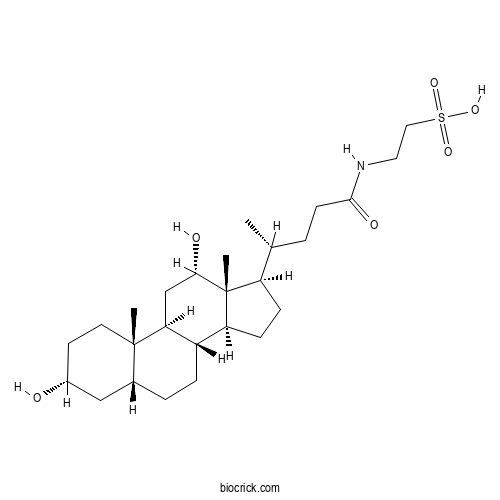
| Cas No. | 516-50-7 | SDF | File under preparation. |
| PubChem ID | 2733768.0 | Appearance | Powder |
| Formula | C26H45NO6S | M.Wt | 499.7 |
| Type of Compound | N/A | Storage | Desiccate at -20°C |
| Solubility | Soluble in Chloroform,Dichloromethane,Ethyl Acetate,DMSO,Acetone,etc. | ||
| Chemical Name | 2-[[(4R)-4-[(3R,5R,8R,9S,10S,12S,13R,14S,17R)-3,12-dihydroxy-10,13-dimethyl-2,3,4,5,6,7,8,9,11,12,14,15,16,17-tetradecahydro-1H-cyclopenta[a]phenanthren-17-yl]pentanoyl]amino]ethanesulfonic acid | ||
| SMILES | CC(CCC(=O)NCCS(=O)(=O)O)C1CCC2C1(C(CC3C2CCC4C3(CCC(C4)O)C)O)C | ||
| Standard InChIKey | AWDRATDZQPNJFN-VAYUFCLWSA-N | ||
| Standard InChI | InChI=1S/C26H45NO6S/c1-16(4-9-24(30)27-12-13-34(31,32)33)20-7-8-21-19-6-5-17-14-18(28)10-11-25(17,2)22(19)15-23(29)26(20,21)3/h16-23,28-29H,4-15H2,1-3H3,(H,27,30)(H,31,32,33)/t16-,17-,18-,19+,20-,21+,22+,23+,25+,26-/m1/s1 | ||
| General tips | For obtaining a higher solubility , please warm the tube at 37 ℃ and shake it in the ultrasonic bath for a while.Stock solution can be stored below -20℃ for several months. We recommend that you prepare and use the solution on the same day. However, if the test schedule requires, the stock solutions can be prepared in advance, and the stock solution must be sealed and stored below -20℃. In general, the stock solution can be kept for several months. Before use, we recommend that you leave the vial at room temperature for at least an hour before opening it. |
||
| About Packaging | 1. The packaging of the product may be reversed during transportation, cause the high purity compounds to adhere to the neck or cap of the vial.Take the vail out of its packaging and shake gently until the compounds fall to the bottom of the vial. 2. For liquid products, please centrifuge at 500xg to gather the liquid to the bottom of the vial. 3. Try to avoid loss or contamination during the experiment. |
||
| Shipping Condition | Packaging according to customer requirements(5mg, 10mg, 20mg and more). Ship via FedEx, DHL, UPS, EMS or other couriers with RT, or blue ice upon request. | ||
Quality Control & MSDS
3D structure
Package In Stock

Number of papers citing our products


Taurodeoxycholic acid Dilution Calculator
Taurodeoxycholic acid Molarity Calculator
-
 SodiumtaurodeoxylateCatalog No.: BCX0901CAS No.: 1180-95-6
-
 Taurocholic acidCatalog No.: BCN6954CAS No.: 81-24-3
-
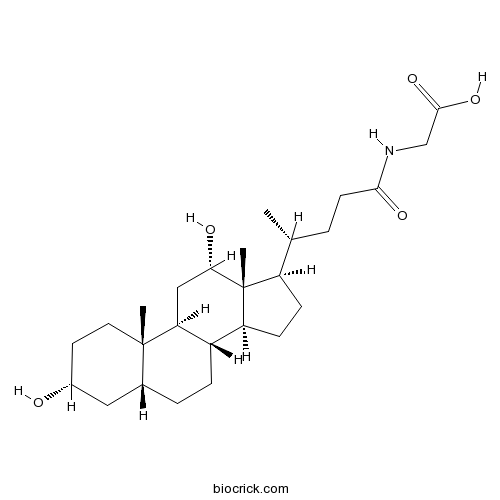 Glycodeoxycholic acidCatalog No.: BCN7250CAS No.: 360-65-6
-
 Deoxycholic acidCatalog No.: BCN1288CAS No.: 83-44-3
-
 Sodium deoxycholateCatalog No.: BCN9079CAS No.: 302-95-4
-
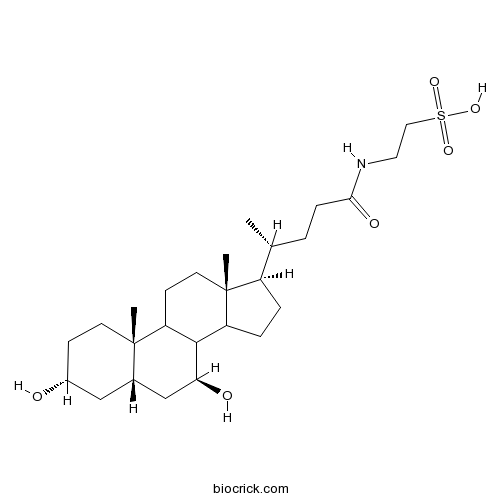 Tauroursodeoxycholic acidCatalog No.: BCN6953CAS No.: 14605-22-2
-
 Taurochenodeoxycholic AcidCatalog No.: BCN8419CAS No.: 516-35-8
-
 Sodium taurocholateCatalog No.: BCN9078CAS No.: 145-42-6
-
 TaurohyodeoxycholicAcidCatalog No.: BCX0902CAS No.: 2958-04-5
| 1 mg | 5 mg | 10 mg | 20 mg | 25 mg | |
| 1 mM | 2.0012 mL | 10.006 mL | 20.012 mL | 40.024 mL | 50.03 mL |
| 5 mM | 0.4002 mL | 2.0012 mL | 4.0024 mL | 8.0048 mL | 10.006 mL |
| 10 mM | 0.2001 mL | 1.0006 mL | 2.0012 mL | 4.0024 mL | 5.003 mL |
| 50 mM | 0.04 mL | 0.2001 mL | 0.4002 mL | 0.8005 mL | 1.0006 mL |
| 100 mM | 0.02 mL | 0.1001 mL | 0.2001 mL | 0.4002 mL | 0.5003 mL |
| * Note: If you are in the process of experiment, it's necessary to make the dilution ratios of the samples. The dilution data above is only for reference. Normally, it's can get a better solubility within lower of Concentrations. | |||||
- Cathayanin C
Catalog No.:BCX2323
CAS No.:330195-61-4
- Spilanthol
Catalog No.:BCX2322
CAS No.:25394-57-4
- Naringenin chalcone
Catalog No.:BCX2321
CAS No.:73692-50-9
- Glutathione disulfide
Catalog No.:BCX2320
CAS No.:27025-41-8
- N6-Isopentenyladenine
Catalog No.:BCX2319
CAS No.:2365-40-4
- Laurolitsine
Catalog No.:BCX2318
CAS No.:904927-11-3
- 9-Nitrocamptothecin
Catalog No.:BCX2317
CAS No.:86639-62-5
- Mandelic acid
Catalog No.:BCX2316
CAS No.:90-64-2
- D-Galacturonic acid hydrate
Catalog No.:BCX2315
CAS No.:685-73-4
- Isatin
Catalog No.:BCX2314
CAS No.:91-56-5
- 4-Hydroxypyridine-2,6-dicarboxylic acid
Catalog No.:BCX2313
CAS No.:499-51-4
- Zeatin
Catalog No.:BCX2312
CAS No.:1637-39-4
- Cathayanin B
Catalog No.:BCX2325
CAS No.:330195-60-3
- Sorocein H
Catalog No.:BCX2326
CAS No.:157382-82-6
- 3-Methyl-1-(3-methylfuran-2-yl)but-3-en-1-one
Catalog No.:BCX2327
CAS No.:78173-38-3
- Putrescine
Catalog No.:BCX2328
CAS No.:110-60-1
- L-Ornithine
Catalog No.:BCX2329
CAS No.:70-26-8
- Dopamine
Catalog No.:BCX2330
CAS No.:51-61-6
- Norcantharidin
Catalog No.:BCX2331
CAS No.:29745-04-8
- L-Arabinose
Catalog No.:BCX2332
CAS No.:5328-37-0
- L-Galactose
Catalog No.:BCX2333
CAS No.:15572-79-9
- L-Mannose
Catalog No.:BCX2334
CAS No.:10030-80-5
- 5-Methoxytryptamine
Catalog No.:BCX2335
CAS No.:608-07-1
- Doxofylline
Catalog No.:BCX2336
CAS No.:69975-86-6
Dietary porcine bile acids alleviate lipid deposition and remodel ileal bile acid and microbiota profiles in laying hens fed a high-fat soybean meal-based diet.[Pubmed:42777371]
Poult Sci. 2026 Sep 16;105(12):107788.
This study was conducted to evaluate whether dietary porcine bile acids (PBA) alleviate lipid metabolic burden in laying hens fed a high-fat soybean meal-based diet. A total of 270 Hy-Line Brown laying hens at 60 wk of age were assigned to 3 dietary treatments for 12 wk: a corn-soybean meal basal diet (CON), a diet containing 20% high-fat soybean meal (HFSBM), and HFSBM supplemented with 60 mg/kg PBA (HFSBM+PBA). HFSBM reduced egg production during wk 9 to 12 and throughout the 12-wk feeding period (P = 0.001), whereas HFSBM+PBA maintained egg production at a level comparable with CON. Most conventional egg-quality traits, including egg shape index, albumen height, Haugh unit, yolk proportion, and eggshell strength, were not affected (P > 0.05). HFSBM increased serum triglyceride (TG), abdominal fat rate, hepatic TG, yolk total cholesterol (TC), and yolk TG, whereas PBA supplementation reduced serum TG (P = 0.005), prevented abdominal fat accumulation (P = 0.043), lowered hepatic TG (P < 0.001), restored yolk TC to a level comparable with CON (P = 0.041), and produced an intermediate response in yolk TG. Histological staining showed more apparent hepatocellular vacuolation and neutral lipid staining in HFSBM-fed hens, both of which appeared less prominent after PBA supplementation. Compared with HFSBM, HFSBM+PBA downregulated hepatic acetyl-CoA carboxylase, fatty acid synthase, and lipoprotein lipase expression (P < 0.05). Ileal bile acid profiling showed that PBA supplementation increased hyocholic acid, glycohyocholic acid, hyodeoxycholic acid, taurohyodeoxycholic acid, murideoxycholic acid, and Taurodeoxycholic acid (P < 0.05), while tauroursodeoxycholic acid was reduced by HFSBM and partially restored by PBA. Ileal microbiota analysis showed increased Simpson diversity (P < 0.05), distinct community separation, enrichment of Ligilactobacillus, and reduced Enterococcus abundance in HFSBM+PBA hens. In conclusion, 60 mg/kg PBA prevented the decline in egg production observed with HFSBM and attenuated lipid deposition in laying hens, accompanied by downregulation of hepatic lipid metabolism-related genes and remodeling of ileal bile acid and microbial profiles.
Associations of Plasma Deoxycholic Acid and Its Conjugates With the Clinical Outcomes After Ischemic Stroke.[Pubmed:42757936]
J Am Heart Assoc. 2026 Sep 18:e048565.
BACKGROUND: Deoxycholic acid (DCA) and its conjugates glycodeoxycholic acid (GDCA), Taurodeoxycholic acid, and 23-nordeoxycholic acid (NorDCA) were implicated in anti-inflammation and energy metabolism, but their prognostic values in ischemic stroke remained unclear. We aimed to investigate the associations of plasma DCA and its conjugates with outcomes after ischemic stroke in a multicenter prognostic cohort study. METHODS: Our multicenter prognostic cohort study included 3405 Chinese patients with hypertensive stroke from the China Antihypertensive Trial in Acute Ischemic Stroke. The primary outcome was a composite outcome of death and major disability (modified Rankin Scale score, 3-6) at 3 months after ischemic stroke. RESULTS: After adjustment for age, sex, and other important covariates, elevated plasma DCA (odds ratio [OR], 0.65 [95% CI, 0.53-0.80]), GDCA (OR, 0.76 [95% CI, 0.61-0.93]), and NorDCA (OR, 0.73 [95% CI, 0.59-0.89]) were associated with a decreased risk of primary outcome when 2 extreme tertiles were compared. Multiple-adjusted spline regression model showed linear associations of DCA, GDCA, and NorDCA with the primary outcome (all P value for linearity<0.05). Adding DCA, GDCA, NorDCA, or DCA metabolite score to conventional prognostic factors significantly improved the risk reclassification for the primary outcome, as evidenced by net reclassification improvement and integrated discrimination index (all P<0.05). CONCLUSIONS: High DCA, GDCA, and NorDCA at baseline were associated with decreased risks of adverse outcomes at 3 months after ischemic stroke, indicating that DCA, GDCA, and NorDCA might be implicated in the development of ischemic stroke and could be valuable intervention targets for ischemic stroke.
Energy-sparing effect of oregano essential oil-lauric acid complex in broilers: Insights from serum metabolomics and 16S rRNA sequencing.[Pubmed:42736220]
Poult Sci. 2026 Aug 22;105(12):107677.
Dietary energy restriction typically impairs growth performance in broilers, whereas supplementation with an oregano essential oil-lauric acid complex (OEL) has been shown to improve feed efficiency under low‑energy conditions. However, the underlying mechanisms remain poorly understood. This study integrated serum untargeted metabolomics with cecal 16S rRNA sequencing to elucidate the energy‑sparing mechanism of OEL. A total of 600 one‑day‑old Arbor Acres broilers were randomly allocated to five dietary treatments, three of which were selected for multi‑omics analysis: a normal‑energy control (CON), a low‑energy control (LC, with a 210 kJ/kg reduction in metabolizable energy), and a low‑energy diet supplemented with 1000 mg/kg OEL (EXP). Serum metabolomics revealed that OEL profoundly reshaped the serum metabolome, yielding 238 differential metabolites (56 up‑regulated, 182 down‑regulated). Up‑regulated metabolites were enriched in aminoacyl‑tRNA biosynthesis, amino acid biosynthesis, and ABC transporter pathways, whereas down‑regulated metabolites were enriched in histidine metabolism, purine metabolism, and the mTOR and FoxO signaling pathways. Key differential metabolites included elevated tauroursodeoxycholic acid and L‑threonine, and decreased Taurodeoxycholic acid, argininosuccinate, adenine, and S‑methyl‑5'‑thioadenosine. Cecal microbiota analysis showed that OEL enriched butyrate‑producing genera such as Lactobacillus, Ruminococcus, and Anaerostipes, while reducing opportunistic pathogens. PICRUSt2 functional prediction further indicated enhanced homolactic fermentation and short‑chain fatty acid synthesis pathways. Collectively, these findings suggest that OEL is associated with improved feed efficiency under energy restriction, which may be linked to a systematic remodeling of host amino acid, bile acid, and nucleotide metabolism, as well as a shift in gut microbiota composition toward butyrate‑producing bacteria and reduced opportunistic pathogens.
Sex differences in gallstone formation in mice on a lithogenic diet are driven by gut microbiota-mediated bile acid metabolism.[Pubmed:42715739]
Biochim Biophys Acta Mol Basis Dis. 2027 Jan;1873(1):168449.
Sex differences in gallstone formation involve the gut microbiota, but the specific mediating mechanisms remain unclear. This study established gallstone and pseudo-germ-free mouse models and found that male mice maintained higher gut microbiota diversity, whereas females showed an increased Firmicutes/Bacteroidota ratio, with enrichment of Clostridium_sensu_stricto_13 and Lactobacillus. This shift led to increased production of toxic secondary bile acids-deoxycholic acid and lithocholic acid-resulting in elevated bile hydrophobicity and higher cholesterol saturation, which significantly increased gallstone susceptibility in females. Following antibiotic-induced microbiota depletion, male mice exhibited higher levels of glycodeoxycholic acid and Taurodeoxycholic acid, along with reduced hepatic Cyp7a1 expression. These changes promoted cholesterol absorption and impaired bile acid synthesis, thereby increasing gallstone risk in males compared to females. Gut microbiota eradication further revealed that hepatic Abcc4, Sult2a5, Slco1a1, and Slco1a4 are regulated not only by sex hormones but also exhibit sex-specific responses to microbial modulation. Collectively, these results highlight gut microbiota-mediated bile acid metabolism as a key modifiable driver of sex differences in gallstone formation under a lithogenic diet.
Blood Bile Acids for Inflammatory Bowel Disease Diagnosis and Disease Activity Assessment: A Metabolomics Meta-Analysis.[Pubmed:42695907]
J Proteome Res. 2026 Sep 4;25(9):4847-4858.
Alterations in circulating bile acids (BAs) have been reported in inflammatory bowel disease (IBD), but the consistency of these changes across clinically relevant comparisons remains unclear. Our goal was to investigate systemic BA alterations in IBD using a metabolomics meta-analysis with an exploratory analysis of BA-related gene expression as a supporting context. A systematic review and meta-analysis of 28 metabolomics studies examined blood BA profiles associated with IBD, IBD diagnosis, and disease activity assessment. Univariate analysis and logistic regression modeling of two independent IBD cohorts explored the blood BA-related genes and IBD. Across 28 studies that comprised 5056 IBD patients, 1721 healthy controls, and 314 non-IBD patients, 131 BAs were reported. Eight predefined clinical comparisons were eligible for the meta-analysis. Lower secondary BA levels were consistently observed in IBD patients compared with controls, between UC and CD, and in active versus remission patients. Deoxycholic acid, glycodeoxycholic acid, and Taurodeoxycholic acid were frequently decreased, whereas glycocholic acid was increased in certain comparisons. Transcriptomics analyses revealed differential expression of several BA-related genes in blood, including SLC51A, ABCB4, and ACOT8, across the comparisons. Our findings identify consistent circulating BA alterations in IBD and highlight the relevance of blood BA for future biomarker research in the diagnosis and disease activity assessment.
Metabolic-Brain Functional Coupling Mechanism Underlying iTBS Treatment for Adolescent Depression.[Pubmed:42694547]
Alpha Psychiatry. 2026 Aug 6;27(4):48591.
BACKGROUND: Adolescents with depression pose a significant public health challenge, yet individual variability in treatment response to accelerated intermittent theta-burst stimulation (iTBS) for depression remains substantial. This study aims to integrate metabolomics with multimodal neuroimaging techniques to identify objective biomarkers of response to iTBS treatment and investigate the relationship between brain and metabolism. METHODS: Patients received an accelerated iTBS protocol targeting the left dorsolateral prefrontal cortex. Assessments included plasma metabolomic profiling, resting-state and naturalistic functional magnetic resonance imaging, and clinical scale evaluations conducted at baseline and post-treatment. RESULTS: The study enrolled 85 adolescents with depression and 48 healthy controls. 53 adolescent patients with depression completed the full course of iTBS treatment and provided blood samples for biomarker detection and analysis. Seventeen differential metabolites were identified that distinguished patients from controls and changed significantly after iTBS treatment. The area under the curve (AUC) for the metabolites 3-hydroxymethylglutaric acid, malonic acid, N-acetylphenylalanine, norepinephrine and tryptophanamide exceeds 0.8. The metabolites isovalerylcarnitine, taurochenodeoxycholic acid, Taurodeoxycholic acid, and valerylcarnitine were significantly correlated with the reduction in scores on the Hamilton Depression Rating scale (HAMD). Furthermore, alterations in the metabolites 3-Indolepropionic acid, N-acetylphenylalanine, 3-Methylhistidine, Norepinephrine, Ortho-hydroxyphenylacetic acid, 3-Hydroxymethylglutaric acid and Indole-3-carboxaldehyde were associated with functional changes in key prefrontal regions, specifically, the Amplitude of Low-Frequency Fluctuations (ALFF) and Regional Homogeneity (ReHo) in the left superior frontal gyrus, and ReHo in the left middle frontal gyrus. CONCLUSIONS: This study uncovers preliminary evidence of a distinct metabolic signature in adolescent depression that normalizes following iTBS treatment and correlates with both prefrontal functional recovery and clinical improvement. The identified metabolites serve as potential candidate biomarkers and shed light on the brain-metabolism relationship. These findings offer preliminary candidate biomarkers for future investigations into interindividual variability in iTBS treatment response and offer a tentative framework for developing personalized neuromodulation strategies for adolescent depression. CLINICAL TRIAL REGISTRATION: The study has been registered on https://www.chictr.org.cn/ (registration number: ChiCTR2500106503 and ChiCTR2500113926; registration link: https://www.chictr.org.cn/showproj.html?proj=279390 and https://www.chictr.org.cn/showproj.html?proj=279455).
Application of metabolomics in drug-induced liver injury: A systematic review.[Pubmed:42657106]
J Transl Int Med. 2026 Aug 12;14(4):547-562.
Drug-induced liver injury (DILI) is one of the most common adverse reactions in clinical settings, and drug hepatotoxicity is also a primary factor contributing to the suspension and withdrawal of drug development. Currently, there are no specific biomarkers available for the early diagnosis and monitoring of DILI in clinical practice. In recent years, metabolomics has emerged as a powerful tool for identifying small molecule biomarkers in DILI, owing to its unique advantages. In this article, we comprehensively reviewed the metabolomics studies related to DILI to investigate the pathophysiological changes in DILI and to assess the potential application of metabolomics in its prediction and diagnosis. Relevant literature published before 30 April 2024 was retrieved from four online databases (PubMed, EMbase, Cochrane Library, and Web of Science). Research data were systematically collected, and the metabolites involved were analyzed. Metabolic pathway analysis related to DILI was conducted using the online software MetaboAnalyst 5.0. A total of 55 studies were included, identifying significantly altered metabolic pathways and valuable metabolic biomarkers. The most frequently reported biomarkers included glycocholic acid, taurochenodeoxycholic acid, taurocholic acid, creatine, glycochenodeoxycholic acid, Taurodeoxycholic acid, glycodeoxycholic acid, and alpha-ketoglutaric acid. The disrupted metabolic pathways were mainly related to bile acid metabolism, lipid metabolism, and the tricarboxylic acid cycle, among which bile acid metabolism showing the most prominent alterations. Lipid metabolism-related pathways included fatty acid biosynthesis, glycerophospholipid metabolism, and sphingolipid metabolism. This article provides a systematic review of metabolomics in DILI, deepening our understanding of the metabolic disturbances caused by DILI.
Dietary Acidifier Modulates the Gut Microbiota-Metabolic Axis to Improve Intestinal Health, Yolk Fatty Acid Profiles, and Egg Quality in Laying Hens.[Pubmed:42589516]
Int J Mol Sci. 2026 Jul 30;27(15):6859.
Acidifiers are functional feed additives that may improve egg quality by modulating intestinal microbiota and host metabolism. This study investigated the effects of dietary acidifier supplementation on laying performance, yolk fatty acid composition, eggshell ultrastructure, intestinal function, cecal microbiota, serum metabolome, and antioxidant status in laying hens. Sixty 52-week-old Jingfen No. 6 laying hens were randomly assigned to either a control group or an acidifier-supplemented group for 6 weeks. Acidifier supplementation increased laying rate and egg mass while reducing the feed-to-egg ratio. It also increased the concentrations of seven yolk fatty acids, including tetradecanoic acid, myristoleic acid, palmitic acid, palmitoleic acid, stearic acid, cis-vaccenic acid, and arachidic acid. In addition, acidifier supplementation resulted in a denser eggshell microstructure, improved cecal mucosal morphology, and enhanced the activities of lipase, chymotrypsin, amylase, and trypsin. Although cecal microbial alpha diversity remained unchanged, acidifier supplementation altered the overall microbial community structure and enriched several genera, including Slackia_A, Megasphaera_A, Veillonella_A, Merdimonas, and Caccocola. Serum metabolomic analysis identified 395 differential metabolites, primarily associated with lipid, amino acid, energy, and bile acid metabolism. Representative altered metabolites included Taurodeoxycholic acid 3-glucuronide, LysoPE (0:0/20:0), 15-HETE, cholic acid, malic acid, and succinic acid. Acidifier supplementation also favorably affected serum HDL-C, LDL-C, and calcium concentrations and enhanced antioxidant capacity. Collectively, these findings indicate that dietary acidifier supplementation improves laying performance, yolk fatty acid deposition, eggshell structure, intestinal function, and antioxidant status, accompanied by alterations in cecal microbiota and serum metabolism. These coordinated changes may contribute to the observed improvements in egg quality.
Resveratrol Ameliorated Hyperlipidemia: Association with Modulation of the Gut Microbiota and Bile Acid Metabolism.[Pubmed:42514453]
Nutrients. 2026 Jul 21;18(14):2384.
Background: Hyperlipidemia represents a pivotal risk factor for multiple cardiovascular and metabolic diseases, creating an urgent demand for safe, effective novel therapeutic interventions. Resveratrol (RES), a natural plant polyphenol, has exhibited great potential as a hypolipidemic agent for hyperlipidemia treatment. Methods: In this work, we established a high-fat diet (HFD)-induced hyperlipidemic mouse model to systematically investigate the lipid-regulating efficacy of RES. Results: Oral administration of RES significantly decreased serum levels of total cholesterol and low-density lipoprotein cholesterol, while markedly increasing high-density lipoprotein cholesterol concentrations. Histopathological analyses further demonstrated that RES alleviated HFD-induced hepatic and ileal injury. Moreover, RES significantly decreased the circulating levels of several bile acids (BAs), including Taurodeoxycholic acid, taurolithocholic acid, lithocholic acid, and tauro-(alpha + beta)-muricholic acid. RES also ameliorated HFD-induced gut microbial dysbiosis, as evidenced by a reduction in the Firmicutes/Bacteroidetes ratio, increased relative abundances of non_f_Muribaculaceae, Lactobacillus, Ileibacterium, and Bacteroides, and decreased abundances of Lachnospiraceae_NK4A136_group and unclassified f_Lachnospiraceae. Spearman correlation analysis revealed significant associations between gut microbial taxa and BA profiles, suggesting that coordinated regulation of the gut microbiota and BA metabolism contributes to the hypolipidemic effects of RES. Conclusions: Collectively, RES alleviates HFD-induced hyperlipidemia by remodeling gut microbiota composition and restoring bile acid metabolic homeostasis.
An orthogonal mammalian gene circuit for selective sensing of taurine-conjugated bile acids.[Pubmed:42492193]
Biochem Biophys Res Commun. 2026 Sep 17;831:154326.
Beyond their traditional role as dietary lipid emulsifiers, bile acids (BAs) function as pleiotropic signaling molecules that regulate metabolism, inflammation, and diverse disease processes. Taurine-conjugated bile acids (Tau-BAs) and the glycine-to-taurine conjugation ratio (G/T ratio) have emerged as sensitive biomarkers of multiple pathological conditions, including chronic liver diseases, metabolic disorders, and neurodegenerative diseases. However, existing bile acid-responsive sensors and synthetic circuits largely rely on endogenous receptors or signaling pathways, thereby lacking true orthogonality. Importantly, no engineered sensing module has been shown to selectively detect Tau-BAs over their unconjugated or glycine-conjugated counterparts. To address these challenges, we repurposed VC1372, a Vibrio cholerae-derived bile acid-inducible diguanylate cyclase (DGC), to engineer an orthogonal Tau-BA-responsive gene circuit in mammalian cells. The circuit coupled bile acid-triggered production of cyclic di-GMP (c-di-GMP), a bacterial second messenger absent in higher eukaryotes, with a synthetic BldD-dependent transcriptional module to control gene expression. The engineered system exhibited robust, dose-dependent activation in response to the major circulating Tau-BAs-taurocholic acid (TCA), Taurodeoxycholic acid (TDCA), and taurochenodeoxycholic acid (TCDCA)-while showing minimal responsiveness to unconjugated and glycine-conjugated bile acids. Targeted mutagenesis of the GGDEF domain further reduced basal activity and improved circuit dynamic range, achieving low-micromolar sensitivity (1-10 muM) that is relevant to pathological Tau-BA elevations in human diseases. Collectively, this work established VC1372 as a versatile orthogonal metabolite sensor for mammalian synthetic biology and provided a modular platform for developing Tau-BA-responsive gene circuits for future diagnostic and therapeutic applications.
Enhancing poultry health and food safety with probiotics: A study on Bacillus velezensis against Salmonella Heidelberg in broilers.[Pubmed:42476199]
Microb Pathog. 2026 Oct;219:108717.
The growing concern over antibiotic use and foodborne pathogens such as Salmonella Heidelberg (SH) highlights the need for effective alternative strategies in poultry production. This study evaluated the probiotic potential of Bacillus velezensis (BV) to control SH colonization and modulate gut microbiota and metabolism in broilers. In vitro, BV exhibited inhibitory activity against SH. In vivo, a total of 100 one-day-old broiler chicks were randomly assigned to four treatments (n = 25/group): NC (negative control), PC (positive control, challenged with SH), BV-Neg (BV supplementation without SH challenge), and BV-SH (BV supplementation with SH challenge). Birds were orally challenged at 4 days of age with 0.2 mL of SH (6 x 10(9) CFU/mL). Cecal SH counts, microbial diversity, and fecal metabolomic profiles were evaluated at 7, 14, 21, and 28 days. Data were analyzed using ANOVA, chi-square tests, and multivariate approaches, including principal component analysis (PCA) and multivariate analysis of variance (MANOVA), with significance set at P < 0.05. BV supplementation significantly reduced SH colonization in the cecum at 28 days, with a reduction of 3.53 log CFU/g ( approximately 99.9%) compared to the positive control (P < 0.01), indicating a time-dependent probiotic effect. Microbial diversity was influenced by treatment and age, with BV-supplemented and SH-challenged groups showing higher diversity than NC (P < 0.05). Metabolomic analysis identified 60 analytes across multiple metabolic classes, with BV increasing beneficial compounds such as fatty acyl glucosides, lignin, artemisinin, and Taurodeoxycholic acid, while reducing metabolites associated with SH infection. Overall, BV demonstrated a cumulative effect in reducing SH colonization and modulating gut microbiota and metabolism, supporting its potential as a probiotic strategy to improve poultry health and food safety.

Calcutta University

University of Minnesota

University of Maryland School of Medicine

University of Illinois at Chicago

The Ohio State University

University of Zurich

Harvard University

Colorado State University

Auburn University

Yale University

Worcester Polytechnic Institute

Washington State University

Stanford University

University of Leipzig

Universidade da Beira Interior

The Institute of Cancer Research

Heidelberg University

University of Amsterdam

University of Auckland

TsingHua University

The University of Michigan

Miami University

DRURY University

Jilin University

Fudan University

Wuhan University

Sun Yat-sen University

Universite de Paris

Deemed University

Auckland University

The University of Tokyo

Korea University



