
L-MannoseCAS# 10030-80-5 |
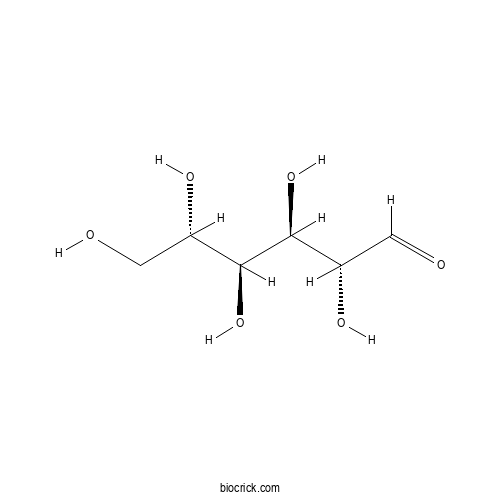
| Cas No. | 10030-80-5 | SDF | File under preparation. |
| PubChem ID | 82308.0 | Appearance | Powder |
| Formula | C6H12O6 | M.Wt | 180.2 |
| Type of Compound | N/A | Storage | Desiccate at -20°C |
| Solubility | Soluble in Chloroform,Dichloromethane,Ethyl Acetate,DMSO,Acetone,etc. | ||
| Chemical Name | (2R,3R,4S,5S)-2,3,4,5,6-pentahydroxyhexanal | ||
| SMILES | C(C(C(C(C(C=O)O)O)O)O)O | ||
| Standard InChIKey | GZCGUPFRVQAUEE-BXKVDMCESA-N | ||
| Standard InChI | InChI=1S/C6H12O6/c7-1-3(9)5(11)6(12)4(10)2-8/h1,3-6,8-12H,2H2/t3-,4-,5-,6-/m0/s1 | ||
| General tips | For obtaining a higher solubility , please warm the tube at 37 ℃ and shake it in the ultrasonic bath for a while.Stock solution can be stored below -20℃ for several months. We recommend that you prepare and use the solution on the same day. However, if the test schedule requires, the stock solutions can be prepared in advance, and the stock solution must be sealed and stored below -20℃. In general, the stock solution can be kept for several months. Before use, we recommend that you leave the vial at room temperature for at least an hour before opening it. |
||
| About Packaging | 1. The packaging of the product may be reversed during transportation, cause the high purity compounds to adhere to the neck or cap of the vial.Take the vail out of its packaging and shake gently until the compounds fall to the bottom of the vial. 2. For liquid products, please centrifuge at 500xg to gather the liquid to the bottom of the vial. 3. Try to avoid loss or contamination during the experiment. |
||
| Shipping Condition | Packaging according to customer requirements(5mg, 10mg, 20mg and more). Ship via FedEx, DHL, UPS, EMS or other couriers with RT, or blue ice upon request. | ||
Quality Control & MSDS
3D structure
Package In Stock

Number of papers citing our products


L-Mannose Dilution Calculator
L-Mannose Molarity Calculator
-
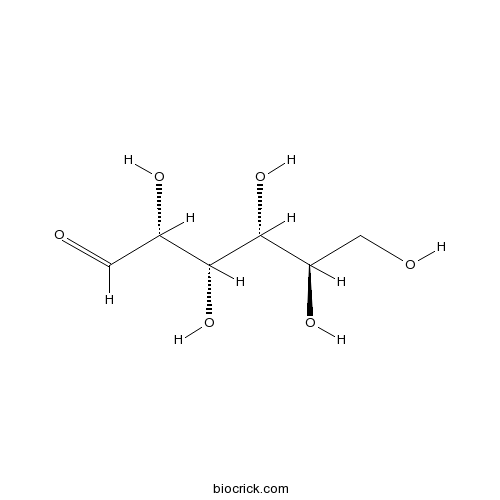 D-(+)-GlucoseCatalog No.: BCN1259CAS No.: 50-99-7
-
 β-D-AlloseCatalog No.: BCN0445CAS No.: 2595-97-3
-
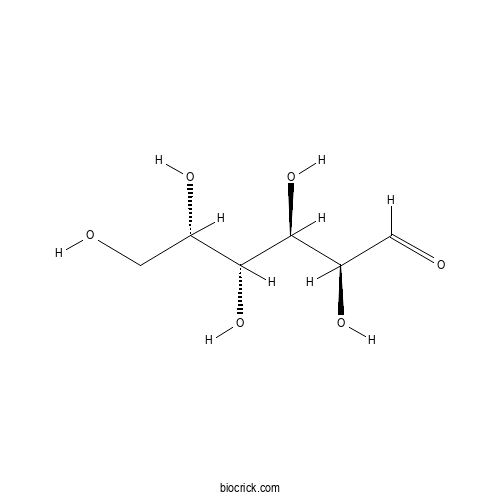 L-GalactoseCatalog No.: BCX2333CAS No.: 15572-79-9
-
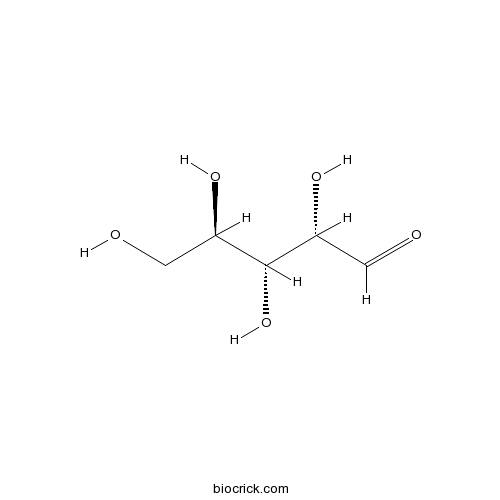 D-ArabinoseCatalog No.: BCN3791CAS No.: 10323-20-3
-
 D-(+)-XyloseCatalog No.: BCN1010CAS No.: 58-86-6
-
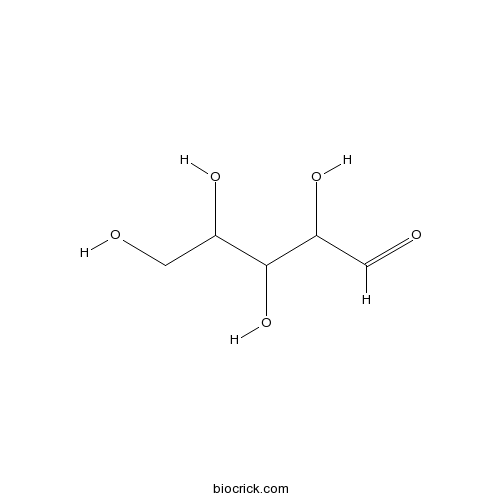 DL-ArabinoseCatalog No.: BCN8541CAS No.: 147-81-9
-
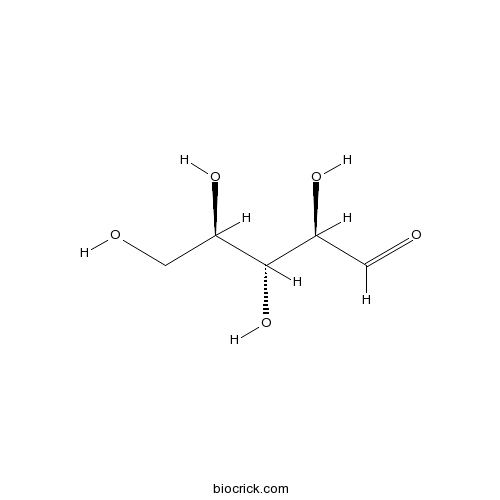 D-RiboseCatalog No.: BCN9063CAS No.: 50-69-1
-
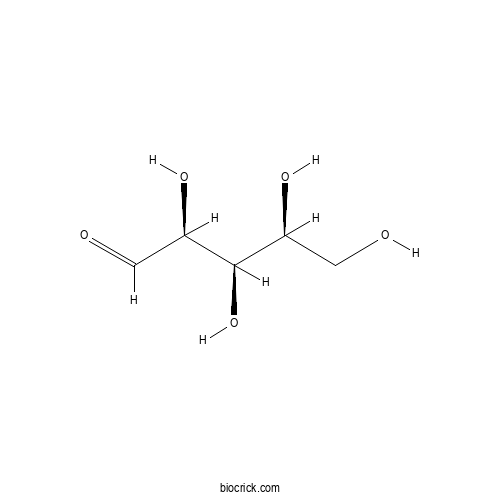 L-xyloseCatalog No.: BCX0644CAS No.: 609-06-3
-
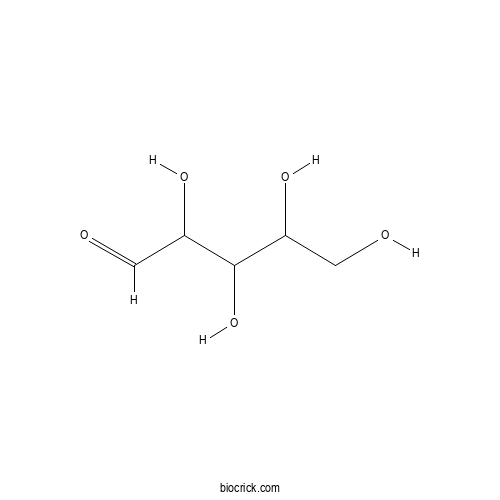 D-LyxoseCatalog No.: BCX0719CAS No.: 1114-34-7
-
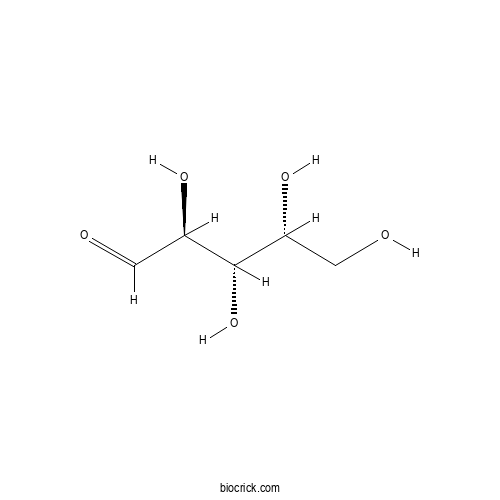 LyxoseCatalog No.: BCX2252CAS No.: 65-42-9
| 1 mg | 5 mg | 10 mg | 20 mg | 25 mg | |
| 1 mM | 5.5494 mL | 27.7469 mL | 55.4939 mL | 110.9878 mL | 138.7347 mL |
| 5 mM | 1.1099 mL | 5.5494 mL | 11.0988 mL | 22.1976 mL | 27.7469 mL |
| 10 mM | 0.5549 mL | 2.7747 mL | 5.5494 mL | 11.0988 mL | 13.8735 mL |
| 50 mM | 0.111 mL | 0.5549 mL | 1.1099 mL | 2.2198 mL | 2.7747 mL |
| 100 mM | 0.0555 mL | 0.2775 mL | 0.5549 mL | 1.1099 mL | 1.3873 mL |
| * Note: If you are in the process of experiment, it's necessary to make the dilution ratios of the samples. The dilution data above is only for reference. Normally, it's can get a better solubility within lower of Concentrations. | |||||
- L-Galactose
Catalog No.:BCX2333
CAS No.:15572-79-9
- L-Arabinose
Catalog No.:BCX2332
CAS No.:5328-37-0
- Norcantharidin
Catalog No.:BCX2331
CAS No.:29745-04-8
- Dopamine
Catalog No.:BCX2330
CAS No.:51-61-6
- L-Ornithine
Catalog No.:BCX2329
CAS No.:70-26-8
- Putrescine
Catalog No.:BCX2328
CAS No.:110-60-1
- 3-Methyl-1-(3-methylfuran-2-yl)but-3-en-1-one
Catalog No.:BCX2327
CAS No.:78173-38-3
- Sorocein H
Catalog No.:BCX2326
CAS No.:157382-82-6
- Cathayanin B
Catalog No.:BCX2325
CAS No.:330195-60-3
- Taurodeoxycholic acid
Catalog No.:BCX2324
CAS No.:516-50-7
- Cathayanin C
Catalog No.:BCX2323
CAS No.:330195-61-4
- Spilanthol
Catalog No.:BCX2322
CAS No.:25394-57-4
- 5-Methoxytryptamine
Catalog No.:BCX2335
CAS No.:608-07-1
- Doxofylline
Catalog No.:BCX2336
CAS No.:69975-86-6
- Turanose
Catalog No.:BCX2337
CAS No.:547-25-1
- 3-Methyl-4-isopropylphenol
Catalog No.:BCX2338
CAS No.:3228-02-2
- 3-Amino-3-(3,4-dimethoxyphenyl)propionic acid
Catalog No.:BCX2339
CAS No.:54160-63-3
- Guanidinoacetic acid
Catalog No.:BCX2340
CAS No.:352-97-6
- 6-Hydroxyflavanone
Catalog No.:BCX2341
CAS No.:190831-08-4
- D-Glucuronic acid
Catalog No.:BCX2342
CAS No.:6556-12-3
- Bryodulcosigenin
Catalog No.:BCX2343
CAS No.:88930-16-9
- Lactose
Catalog No.:BCX2344
CAS No.:63-42-3
- Acridone
Catalog No.:BCX2345
CAS No.:578-95-0
- Caffealdehyde
Catalog No.:BCX2346
CAS No.:141632-15-7
Enzymatic Upgrading of Biomass-Derived Aldoses to Rare Deoxy Ketoses Catalyzed by Transketolase Variants.[Pubmed:39629705]
ChemSusChem. 2025 Apr 14;18(8):e202401834.
A sustainable, convenient, scalable, one-step method for the two-carbon chain elongation of cheap and biomass-derived pentoses (l-arabinose, and 2-deoxy-d-ribose) and hexose l-rhamnose was developed to produce C(n+2) deoxy ketoses (C-7 and C-8) using transketolase, an enzyme catalyzing the quasi-irreversible transfer of a ketol group from an alpha-keto acid to an aldehyde. Deoxygenated ketoses - commonly obtained by chemical synthesis - were afforded through a suitable combination of both nucleophile and electrophile substrates in the presence of rationally designed TK variants. Pyruvate as nucleophile with pentose l-arabinose (C-5) as electrophile gave 1-deoxy-L-gluco-heptulose (C-7), while ss-hydroxypyruvate (HPA) as nucleophile with acceptors 2-deoxy-d-ribose (C-5) and 6-deoxy-L-Mannose (l-rhamnose) (C-6) led to formation of 4-deoxy-d-altro-heptulose (C-7) and 8-deoxy-l-glycero-l-galacto-octulose (C-8), respectively. These three deoxy ketoses were easily obtained with efficient TK variants under mild conditions with complete or high substrate conversions, good to excellent yields and high diastereoselectivities. This strategy offers interesting prospects to study the biological activities of these three rare and valuable deoxy ketoses on various cellular targets.
Physicochemical Characterization of Fucoidans from Sargassum henslowianum C.Agardh and Their Antithrombotic Activity In Vitro.[Pubmed:35621950]
Mar Drugs. 2022 Apr 28;20(5):300.
Sargassum fucoidan is a kind of sulfated heteropolysaccharide with a variety of biological activities. The aim of this study was to investigate the extraction, purification, physicochemical characterization and in vitro antithrombotic activity of fucoidan from Sargassum henslowianum C.Agardh. Hot-water-assisted ultrasound was used to extract fucoidan (F). Fucoidan was purified by DEAE cellulose 52 (F1), Vc-H(2)O(2) (FD1) and Superdex 75 gel (FDS1). The physical and chemical properties of fucoidans were analyzed by chemical composition, monosaccharide composition, average molecular weight (Mw) and FTIR. The sulfate contents of F, F1, FD1 and FDS1 were 11.45%, 16.35% and 17.52%, 9.66%, respectively; the Mw was 5.677 x 10(5), 4.393 x 10(5), 2.176 x 10(4) and 6.166 x 10(3), respectively. The results of monosaccharide composition showed that the four fucoidans contained l-fucose, d-galactose, L-Mannose, d-xylose, l-rhamnose and d-glucose, but the mass fraction ratio was different. The results of FTIR showed that fucoidan contained characteristic peaks of sugar and sulfate. In vitro, F1, FD1 and FDS1 could alleviate HUVEC damage induced by adrenaline (Adr). F1, FD1 and FDS1 decreased vWF and TF and increased the ratio of t-PA/PAI-1 in Adr-induced HUVEC.
New total synthesis and structure confirmation of putative (+)-hyacinthacine C(3) and (+)-5-epi-hyacinthacine C(3).[Pubmed:35496868]
RSC Adv. 2021 Sep 24;11(50):31621-31630.
A unique synthesis of polyhydroxylated pyrrolizidine alkaloids, namely (+)-hyacinthacine C(3) and (+)-5-epi-hyacinthacine C(3) is presented. The strategy relies on a 1,3-dipolar cycloaddition of an L-Mannose derived nitrone, which owing to its great syn-stereoselectivity builds up the majority of the required stereocenters. The following key steps include Wittig olefination and iodine-mediated aminocyclisation, that provide two epimeric pyrrolizidines with the appropriate configuration. As a result, structure and steric arrangement of the first synthetically prepared (+)-hyacinthacine C(3) are proved to be correct, clearly confirming the inconsistency with the stereochemistry assigned to the natural sample. With respect to the previously proven glycosidase inhibitory activities, the antiproliferative effect of (+)-hyacinthacine C(3) and (+)-5-epi-hyacinthacine C(3) was evaluated using several cell line models.
Sustainable production and characterization of medium-molecular weight welan gum produced by a Sphingomonas sp. RW.[Pubmed:35483844]
Carbohydr Polym. 2022 Aug 1;289:119431.
Welan gum is widely used in food, concrete, and oil recovery for its excellent stability and unique rheological properties. This study describes an engineered Sphingomonas sp. RW strain deficient in the lyase gene (welR) and outlines its application in an industrial by-product fermentation strategy to produce welan gum. The yield of the engineered strain was enhanced to 25.11 +/- 0.05 g/L, whereas the broth viscosity (2110 mPas) increased by 281.81%. The welan gum produced by Sphingomonas sp. RW was named medium-molecular weight welan gum (MMWG, ~350 kDa). FT-IR and monosaccharide composition analysis revealed that the MMWG was composed of L-Mannose, l-rhamnose, glucuronic acid, and glucose (with mole ratios of 1:4.46:1.26:2.82). Significantly, MMWG had favorable hydroxyl radical scavenging activity and emulsifying capacity. These results provide a strategy for cost-effective welan gum production and enrich the properties of welan gum with different molecular weight.
Structural analysis of Edwardsiella tarda PCM 1155 O-polysaccharide revealed the presence of unique beta-L-RhapNAc3NAc derivative.[Pubmed:34507179]
Carbohydr Res. 2021 Nov;509:108423.
The chemical structure of the lipopolysaccharide O-polysaccharide repeating unit of Edwardsiella tarda strain PCM 1155 was studied for the first time. The complete structure of repeating unit was investigated by chemical methods, (1)H and (13)C nuclear magnetic resonance (NMR) spectroscopy, and matrix-assisted laser-desorption/ionization time-of-flight mass spectrometry (MALDI-TOF MS). The rarely occurring monosaccharide, 2,3-diacetamido-2,3,6-trideoxy-L-Mannose (L-RhapNAc3NAc) was identified. The following structure was established.
Microbial alpha-L-Rhamnosidases of Glycosyl Hydrolase Families GH78 and GH106 Have Broad Substrate Specificities toward alpha-L-Rhamnosyl- and alpha-L-Mannosyl-Linkages.[Pubmed:34354534]
J Appl Glycosci (1999). 2020 Sep 3;67(3):87-93.
alpha-L-Rhamnosidases (alpha-L-Rha-ases, EC 3.2.1.40) are glycosyl hydrolases (GHs) that hydrolyze a terminal alpha-linked L-rhamnose residue from a wide spectrum of substrates such as heteropolysaccharides, glycosylated proteins, and natural flavonoids. As a result, they are considered catalysts of interest for various biotechnological applications. alpha-L-rhamnose (6-deoxy-L-Mannose) is structurally similar to the rare sugar alpha-L-Mannose. Here we have examined whether microbial alpha-L-Rha-ases possess alpha-L-mannosidase activity by synthesizing the substrate 4-nitrophenyl alpha-L-mannopyranoside. Four alpha-L-Rha-ases from GH78 and GH106 families were expressed and purified from Escherichia coli cells. All four enzymes exhibited both alpha-L-rhamnosyl-hydrolyzing activity and weak alpha-L-mannosyl-hydrolyzing activity. SpRhaM, a GH106 family alpha-L-Rha-ase from Sphingomonas paucimobilis FP2001, was found to have relatively higher alpha-L-mannosidase activity as compared with three GH78 alpha-L-Rha-ases. The alpha-L-mannosidase activity of SpRhaM showed pH dependence, with highest activity observed at pH 7.0. In summary, we have shown that alpha-L-Rha-ases also have alpha-L-mannosidase activity. Our findings will be useful in the identification and structural determination of alpha-L-Mannose-containing polysaccharides from natural sources for use in the pharmaceutical and food industries.
Two RmlC homologs catalyze dTDP-4-keto-6-deoxy-D-glucose epimerization in Pseudomonas putida KT2440.[Pubmed:34099824]
Sci Rep. 2021 Jun 7;11(1):11991.
L-Rhamnose is an important monosaccharide both as nutrient source and as building block in prokaryotic glycoproteins and glycolipids. Generation of those composite molecules requires activated precursors being provided e. g. in form of nucleotide sugars such as dTDP-beta-L-rhamnose (dTDP-L-Rha). dTDP-L-Rha is synthesized in a conserved 4-step reaction which is canonically catalyzed by the enzymes RmlABCD. An intact pathway is especially important for the fitness of pseudomonads, as dTDP-L-Rha is essential for the activation of the polyproline specific translation elongation factor EF-P in these bacteria. Within the scope of this study, we investigated the dTDP-L-Rha-biosynthesis route of Pseudomonas putida KT2440 with a focus on the last two steps. Bioinformatic analysis in combination with a screening approach revealed that epimerization of dTDP-4-keto-6-deoxy-D-glucose to dTDP-4-keto-6-deoxy-L-Mannose is catalyzed by the two paralogous proteins PP_1782 (RmlC1) and PP_0265 (RmlC2), whereas the reduction to the final product is solely mediated by PP_1784 (RmlD). Thus, we also exclude the distinct RmlD homolog PP_0500 and the genetically linked nucleoside diphosphate-sugar epimerase PP_0501 to be involved in dTDP-L-Rha formation, other than suggested by certain databases. Together our analysis contributes to the molecular understanding how this important nucleotide-sugar is synthesized in pseudomonads.

Calcutta University

University of Minnesota

University of Maryland School of Medicine

University of Illinois at Chicago

The Ohio State University

University of Zurich

Harvard University

Colorado State University

Auburn University

Yale University

Worcester Polytechnic Institute

Washington State University

Stanford University

University of Leipzig

Universidade da Beira Interior

The Institute of Cancer Research

Heidelberg University

University of Amsterdam

University of Auckland

TsingHua University

The University of Michigan

Miami University

DRURY University

Jilin University

Fudan University

Wuhan University

Sun Yat-sen University

Universite de Paris

Deemed University

Auckland University

The University of Tokyo

Korea University



