
Mandelic acidCAS# 90-64-2 |
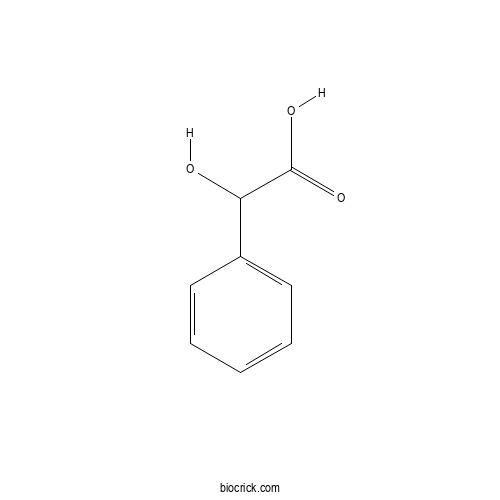
| Cas No. | 90-64-2 | SDF | File under preparation. |
| PubChem ID | 1292.0 | Appearance | Cryst. |
| Formula | C8H8O3 | M.Wt | 152.2 |
| Type of Compound | N/A | Storage | Desiccate at -20°C |
| Solubility | Soluble in Chloroform,Dichloromethane,Ethyl Acetate,DMSO,Acetone,etc. | ||
| Chemical Name | 2-hydroxy-2-phenylacetic acid | ||
| SMILES | C1=CC=C(C=C1)C(C(=O)O)O | ||
| Standard InChIKey | IWYDHOAUDWTVEP-UHFFFAOYSA-N | ||
| Standard InChI | InChI=1S/C8H8O3/c9-7(8(10)11)6-4-2-1-3-5-6/h1-5,7,9H,(H,10,11) | ||
| General tips | For obtaining a higher solubility , please warm the tube at 37 ℃ and shake it in the ultrasonic bath for a while.Stock solution can be stored below -20℃ for several months. We recommend that you prepare and use the solution on the same day. However, if the test schedule requires, the stock solutions can be prepared in advance, and the stock solution must be sealed and stored below -20℃. In general, the stock solution can be kept for several months. Before use, we recommend that you leave the vial at room temperature for at least an hour before opening it. |
||
| About Packaging | 1. The packaging of the product may be reversed during transportation, cause the high purity compounds to adhere to the neck or cap of the vial.Take the vail out of its packaging and shake gently until the compounds fall to the bottom of the vial. 2. For liquid products, please centrifuge at 500xg to gather the liquid to the bottom of the vial. 3. Try to avoid loss or contamination during the experiment. |
||
| Shipping Condition | Packaging according to customer requirements(5mg, 10mg, 20mg and more). Ship via FedEx, DHL, UPS, EMS or other couriers with RT, or blue ice upon request. | ||
Quality Control & MSDS
3D structure
Package In Stock

Number of papers citing our products


Mandelic acid Dilution Calculator
Mandelic acid Molarity Calculator

| 1 mg | 5 mg | 10 mg | 20 mg | 25 mg | |
| 1 mM | 6.5703 mL | 32.8515 mL | 65.703 mL | 131.406 mL | 164.2576 mL |
| 5 mM | 1.3141 mL | 6.5703 mL | 13.1406 mL | 26.2812 mL | 32.8515 mL |
| 10 mM | 0.657 mL | 3.2852 mL | 6.5703 mL | 13.1406 mL | 16.4258 mL |
| 50 mM | 0.1314 mL | 0.657 mL | 1.3141 mL | 2.6281 mL | 3.2852 mL |
| 100 mM | 0.0657 mL | 0.3285 mL | 0.657 mL | 1.3141 mL | 1.6426 mL |
| * Note: If you are in the process of experiment, it's necessary to make the dilution ratios of the samples. The dilution data above is only for reference. Normally, it's can get a better solubility within lower of Concentrations. | |||||
- D-Galacturonic acid hydrate
Catalog No.:BCX2315
CAS No.:685-73-4
- Isatin
Catalog No.:BCX2314
CAS No.:91-56-5
- 4-Hydroxypyridine-2,6-dicarboxylic acid
Catalog No.:BCX2313
CAS No.:499-51-4
- Zeatin
Catalog No.:BCX2312
CAS No.:1637-39-4
- Riboflavin sodium phosphate
Catalog No.:BCX2311
CAS No.:130-40-5
- Chavicol
Catalog No.:BCX2310
CAS No.:501-92-8
- Piperonylic acid
Catalog No.:BCX2309
CAS No.:94-53-1
- 2'-Deoxyadenosine
Catalog No.:BCX2308
CAS No.:958-09-8
- Diosbulbin A
Catalog No.:BCX2307
CAS No.:20086-05-9
- Allylbenzene
Catalog No.:BCX2306
CAS No.:300-57-2
- 4-Hydroxy-3,5-diisopropylbenzaldehyde
Catalog No.:BCX2305
CAS No.:10537-86-7
- Ganoderic acid F
Catalog No.:BCX2304
CAS No.:98665-15-7
- 9-Nitrocamptothecin
Catalog No.:BCX2317
CAS No.:86639-62-5
- Laurolitsine
Catalog No.:BCX2318
CAS No.:904927-11-3
- N6-Isopentenyladenine
Catalog No.:BCX2319
CAS No.:2365-40-4
- Glutathione disulfide
Catalog No.:BCX2320
CAS No.:27025-41-8
- Naringenin chalcone
Catalog No.:BCX2321
CAS No.:73692-50-9
- Spilanthol
Catalog No.:BCX2322
CAS No.:25394-57-4
- Cathayanin C
Catalog No.:BCX2323
CAS No.:330195-61-4
- Taurodeoxycholic acid
Catalog No.:BCX2324
CAS No.:516-50-7
- Cathayanin B
Catalog No.:BCX2325
CAS No.:330195-60-3
- Sorocein H
Catalog No.:BCX2326
CAS No.:157382-82-6
- 3-Methyl-1-(3-methylfuran-2-yl)but-3-en-1-one
Catalog No.:BCX2327
CAS No.:78173-38-3
- Putrescine
Catalog No.:BCX2328
CAS No.:110-60-1
Urinary metabolomics profile in children with ureteropelvic junction obstruction.[Pubmed:42773370]
Metabolomics. 2026 Sep 22;22(5):154.
INTRODUCTION: Fetal hydronephrosis (HN) is detected in about 0.25-1% of fetuses, where ureteropelvic junction obstruction (UPJO) is the most commonly found congenital urinary tract anomaly, remaining the leading cause of kidney failure in infants and children. Since it is a spectral disease, UPJO represents a particularly challenging management. Severe UPJO must be treated surgically to avoid impairment of renal function, but children with non-obstructive hydronephrosis can be treated conservatively. There has been controversy regarding the indication for surgical intervention in asymptomatic patients. OBJECTIVES: This pilot study aimed at investigating urine samples from children with UPJO using gas- and high-performance liquid-chromatography coupled to mass spectrometry (GC- and HPLC-MS) via untargeted metabolomics to prospect discriminatory metabolites indicative of hydronephrosis spectral progression that may contribute to optimize clinical decision-making. METHODS: Thirty-seven patients, whose clinical characteristics were recorded upon visits, had urinary samples collected, processed and analyzed by both GC- and HPLC-MS analytical platforms. Three distinct age-matched groups (2-12 years old) were inspected: 10 children with obstructive HN (OHN) established at initial imaging diagnosis, 15 asymptomatic children with non-obstructive HN (NOHN), and 12 children without any urinary tract problems as control group (CTR). Univariate analysis (including distribution checking and goodness-of-fit testing using ANOVA, Tukey test, and Benjamini-Hochberg procedure for FDR estimation) and multivariate analysis (PLS-DA, using cross-validation and permutation testing) were applied to the metabolomics data. Exploratory ROC curve analyses were performed using combinations of PLS-DA ranked features with VIP > 1 to assess their discriminatory performance. RESULTS: Metabolomics profiling revealed distinct expression patterns upon selected group comparisons. The inspection of discriminatory metabolites across the different study groups allowed a clear visualization of the disease progression at the molecular level. Moreover, the discrimination of asymptomatic patients (NOHN group) from those requiring surgical intervention (OHN group) is of upmost relevance and could also be delineated here. All univariate and multivariate methods applied to both GC- and HPLC-MS data exhibited good statistical performance (adjusted p-values < 0.05, 0.04 < q-values < 0.1, and 0.662 < AUC < 0.882 for univariate analysis; p-value < 0.03, 3 < F < 11.4, 0.984 < R(2)<0.996, 0.714 < Q(2)<0.859, and 0.923 < AUC < 0.995 for multivariate analysis) resulting in a total of 94 discriminatory metabolites, suggesting strong potential clinical value as a diagnostic/prognostic signature. Worth mentioning cystine and methionine sulfoxide exhibiting the largest positive fold change scores, 156% and 152%, respectively (both from OHN vs. CTR group comparison). From the total of 94 discriminatory metabolites, 17 metabolites had particular statistical relevance since they were confirmed by both univariate and multivariate methods combined. Three metabolites, 1-methylhistidine-3-methylhistidine, 1-methyhistamine-3methylhistamine, and glutamyl-hydroxyproline (dipeptide), discriminate NOHN vs. CTR groups whereas nine metabolites, Mandelic acid, pantothenic acid, furoylglicine, gluconic acid, 3-hydroxyphenylacetate, 4-hydroxyphenylacetate, glutamylhydroxyproline, 3-hydroxy-3-methylglutaric acid, ribitol/arabitol/xylitol (pentose alcohols) and tagalose discriminate OHN vs. CTR groups; those metabolites may serve as diagnostics purposes, being the first group comparison (NOHN vs. CTR) indicative of the initial metabolic perturbation caused by the UPJO and the latter group comparison (OHN vs. CTR) indicative of the impact UPJO had exerted on the children metabolism at long term. More importantly, five metabolites, ascorbic acid, furoylglycine, gluconic acid, and ribose/arabinose/xylose (pentoses), already discriminating OHN vs. CTR groups, appear again in the OHN vs. NOHN group comparison, in addition to threitol; those metabolites might be useful to support clinical decisions whether a patient should undergo surgery. Metabolomic pathway analyses revealed an alteration of the beta-alanine metabolism at early stages of HN, progressing to further compromising of tyrosine, phenylalanine, alanine/aspartate/glutamate, and amino sugar/nucleotide sugar metabolisms. Several other important metabolic pathways were further compromised at advanced stages of HN revealing the overall impact of UPJO at the basal metabolism of healthy children. CONCLUSION: Despite the limited size and age spanning of the cohort evaluated here, the statistical quality of the present study, that certified 17 metabolites by both univariate and multivariate methods among 94 discriminant metabolites, deriving from NOHN, OHN, and CTR group comparisons, may contribute to pave the way into searching valuable biomarkers for the obstructive HN setting up and progression.
Application of threo-2-amino-1,2-diphenylethanol as a Resolving Agent for Racemic Carboxylic Acids via Diastereomeric Salt Formation.[Pubmed:42722387]
Chirality. 2026 Sep;38(9):e70149.
The ability of threo-2-amino-1,2-diphenylethanol (1t) as a resolving agent for the enantioseparation of carboxylic acids via diastereomeric salt formation was investigated. Although (-)-1t was not applicable to the enantioseparation of racemic 2-arylalkanoic acids and Mandelic acid, enantiomers of tropic acid and 2-haloMandelic acids were efficiently separated by salt formation with (-)-1t. This resolving ability was complementary to that of the corresponding erythro-isomer (1e). The hydrogen-bonding patterns and molecular packing mode of the less-soluble diastereomeric salts of (-)-1t were revealed based on the crystallographic analysis.
A Novel Moisturizer Formulated With Micronized Centella asiatica and Mandelic Acid Improves Mature, Crepey Skin.[Pubmed:42696337]
J Drugs Dermatol. 2026 Sep 1;25(9):833-838.
BACKGROUND: Dermatoporosis is a condition of fragile, aging skin that manifests as altered pH, wrinkles, laxity, easy bruising, and hyperpigmentation. This study evaluated efficacy, safety, and subject perception after the use of a novel cream, GC (Galderma Laboratories, LP, Fort Worth, TX), on subjects with mature, aging skin. METHODS: A 12-week multicenter, randomized, blinded, in-use study enrolled female and male subjects aged 40 to 60 years of all races, ethnicities, and Fitzpatrick skin types. Subjects were required to have a history of fragile skin and dry, crepey skin on the knees and thighs. GC cream was applied to knee and upper thigh skin twice daily. Assessments included clinical grading, digital photography, bioinstrumentation (skin texture, pH, and heatmap hydration), standard safety assessments, and satisfaction. RESULTS: Use of GC cream for 12 weeks resulted in significant improvements in skin crepiness, photodamage, and firmness, as well as decreased skin pH and early improvements in skin roughness and smoothness from baseline. Corneometer heatmapping documented improved skin hydration over baseline. No adverse events were reported; the GC cream was well tolerated, and subjects reported high satisfaction. CONCLUSION: Twice-daily application of the novel GC skin cream significantly improved the overall skin quality of mature, aging skin, including crepiness, photodamage, firmness, texture, pH, and hydration. GC cream was well tolerated with high subject satisfaction. These data are intended to help guide healthcare providers and patients in choosing an effective moisturizer that was specifically designed for patients with fragile, mature skin.
Macrocycle Conformational Flexibility as a Key to Enantioselective Recognition.[Pubmed:42529362]
JACS Au. 2026 Jul 13;6(7):4128-4137.
The differentiation and assignment of absolute configurations of enantiomers in mixtures remain a significant challenge for both experimental and computational methods. In recent years, diffusion-NMR (DOSY) experiments using chiral resolving agents have emerged as a promising approach for enantiodiscrimination. While many resolving agents demonstrate strong enantioselective capabilities, limitations remain in reliably assigning absolute configurations and elucidating the molecular basis of chiral recognition. In this study, we combine NMR experiments and computational approaches to investigate the differentiation of Mandelic acid (MA), alpha-methylbenzylamine, methyl mandelate, Mosher's acid, 2-butanol, and camphor enantiomers by a chiral macrocycle (MAC) assembled from N,N'-bis-(6-acylamino-2-pyridinyl)-isophthalamide units and BINOL derivatives. NMR measurements reveal a stereopreference of MAC for the (S)-enantiomer, as evidenced by its lower diffusion coefficient compared to the (R)-enantiomer. Our computational modeling indicates that this enantioselectivity arises when the MAC adopts a closed conformation, rather than the expected open form. Temperature-dependent (1)H and selective ROESY measurements further support an equilibrium between open and closed MAC conformers in solution, as also suggested by extensive conformational searches. Our combined experimental and computational approach demonstrates that only the closed MAC-enantiomer complexation simultaneously accounts for the observed diffusion-NMR and shielding differences and can rationalize the observed enantiodifferentiation. The results show that the macrocyclic receptor exhibits conformational flexibility that must be considered in chiral recognition events. Therefore, these insights advance our understanding of enantioselective interactions and provide a framework for the future design of chiral resolving agents for differentiation by diffusion-NMR and computational methods.
Sensitive determination of mandelic acid in urine samples by D-muSPE using an H-ZSM-5@UiO-66 composite.[Pubmed:42497756]
Talanta. 2027 Feb 1;312(Pt A):130328.
A zeolite@metal-organic framework composite, H-ZSM-5@UiO-66, was synthesized and applied as a novel adsorbent for the rapid and sensitive dispersive micro-solid phase extraction (D-muSPE) of Mandelic acid (MA) from human urine samples, followed by HPLC-UV analysis. The synthesized composite was characterized using X-ray diffraction (XRD), Fourier transform infrared spectroscopy (FT-IR), and field emission scanning electron microscopy (FE-SEM). The main experimental variables influencing the D-muSPE procedure were systematically investigated and optimized using a central composite design (CCD). Under the optimized conditions (sample volume: 8.5 mL; pH: 5.75; adsorbent mass: 35 mg; extraction time: 5 min; elution with water-methanol (5:5, v/v), 7 mL; desorption time: 5 min), the method exhibited high sensitivity, with limits of detection (LOD) and quantification (LOQ) of 0.04 and 0.09 mug mL(-1), respectively. Excellent extraction efficiency (93.8%), a wide linear dynamic range (0.30-120 mug mL(-1), R(2) > 0.9992), and satisfactory precision (RSD <3.9%) were achieved. The developed D-muSPE:H-ZSM-5@UiO-66-HPLC-UV method proved to be a reliable and effective approach for the determination of trace levels of MA in real urine samples.
The functionality of the cysteinyl leukotriene receptor 1 (CysLTR1) in the lung by metabolomics analysis of bronchoalveolar lavage fluid.[Pubmed:42418110]
Metabolomics. 2026 Jul 8;22(4):121.
INTRODUCTION: The cysteinyl leukotriene receptor 1 (CysLTR1) is known as a potent lipid mediator with a well-established role in inflammatory regulation and lung disease. While its involvement in immune cell recruitment has been previously reported, its broader impact on pulmonary metabolism remains poorly understood. OBJECTIVES: The study aims to investigate the metabolic consequences of a CysLTR1 deletion in mice to elucidate its role in pulmonary metabolic homeostasis. METHODS: Bronchoalveolar lavage fluid (BALF) was collected from CysLTR1 knockout (KO) and wild-type (WT) mice (n = 4 per group), and analysed using standardized untargeted gas chromatography-time-of-flight mass spectrometry (GC-TOFMS) metabolomics. RESULTS: Metabolomics analyses of the BALF collected from the CysLTR1 KO mice presented significantly reduced levels of glucose, glucosamine, and glyceric acid, indicating the role of the CysLTR in lung glucose uptake and consequently lung glycolysis and gluconeogenesis. This is further supported by reductions in myo-inositol and D-chiro-inositol, also supporting previous findings that this occurs due to insulin resistance. Consequential disruption of various glucose-dependent pathways, including the pentose phosphate pathway (reduced gluconic acid, sedoheptulose and xylose) and purine metabolism (reduced 1-methylinosine) indicates a consequential altered nucleotide turnover, and the significantly reduced concentrations of butanoic acid, decan-2-ol, and 1-hexadecanol, indicate changes to fatty acid metabolism in the lung, as a compensatory response to the initial glucose deficiency induced by the CysLTR1 KO. Lastly, the changes to Mandelic acid, glutaric acid, tricarballylic acid, and decan-2-ol, furthermore, indicate the role of CysLTR1 in the composition/metabolism of the microbiome. CONCLUSION: This study expands our knowledge on the role of CysLTR1 beyond its role in immune regulation, which may contribute to a better understanding of CysLTR1 associated lung diseases and in the development of improved therapeutic strategies.
Resolution of chiral drug cocrystals: complementary roles of NMR, low-frequency Raman and vibrational circular dichroism.[Pubmed:42413296]
Talanta. 2027 Jan 1;311:130238.
Reliable discrimination of diastereomeric pharmaceutical cocrystals remains a significant analytical challenge, particularly when structural differences are subtle or when monocrystals suitable for X-ray diffraction are not available or difficult to prepare. Here, we compare the performance of four spectroscopic techniques, solid-state nuclear magnetic resonance (ssNMR), Raman spectroscopy, infrared (IR) absorption, and solid-state vibrational circular dichroism (ssVCD), in terms of the resolution of model diastereomeric cocrystals. The first pair of diastereomeric cocrystals, (S)-naproxen with (R)- and (S)-alanine, represents an example of systems with pronounced packing differences, whereas the cocrystals of (R)-ivabradine hydrochloride with (R)- and (S)-Mandelic acid are nearly isostructural diastereomers. The NMR and vibrational spectra were interpreted based on density functional theory (DFT) simulations, allowing for a detailed spectra-structure assignment and analysis. Although all techniques detected cocrystal formation, their practical discriminatory power toward diastereomers varied. VCD spectroscopy provided reliable differentiation, even for nearly isostructural systems, although the data were hampered by the experimental noise. Raman spectroscopy, especially in the low-frequency region, was effective for a rapid detection of distinct packing motifs but less sensitive for the closely related structures. ssNMR provides a complementary localized insight. The results indicate the advantages and drawbacks of using Raman spectroscopy, ssNMR, and VCD for screening, structural studies, and chiral identification of pharmaceutical cocrystals and other chiral complex solid-state systems.
Urinary Volatile Organic Compound Metabolites Are Associated With MASLD/MASH in Humans and Induce Steatosis in Liver Organoids.[Pubmed:42411650]
Liver Int. 2026 Aug;46(8):e70783.
BACKGROUND: Volatile organic compound (VOC) exposure is an environmental health concern and could, through the liver exposome, be associated with metabolic dysfunction associated steatotic liver disease (MASLD) progression. METHODS: We analysed NHANES 2017-2020, a U.S. population-based cohort with controlled attenuation parameter (CAP), liver stiffness measurement (LSM) and urinary VOC metabolites. Participants with viral hepatitis, excess alcohol use or missing urine creatinine were excluded. MASLD was defined as CAP >/= 275 dB/m with metabolic dysfunction, at-risk MASH as FAST >/= 0.35 and increased LSM as >/= 8 kPa. Weighted quantile sum (WQS) regression assessed associations between VOC metabolites and outcomes, adjusting for age, sex, smoking and alcohol. Phenylglyoxylic acid (PGA) and Mandelic acid (MA) were further examined using logistic regression for the MA/(MA and PGA) ratio and human liver organoids. RESULTS: The cohort comprised 2004 participants (41.4% MASLD, 5.4% at-risk MASH, 9.7% LSM >/= 8 kPa). Higher VOC metabolite levels were associated with increased risk of MASLD (aOR 1.47 per quartile, 95% CI 1.06-2.04) and at-risk MASH (aOR 2.69 per quartile, 95% CI 1.23-5.87), primarily driven by N-Acetyl-S-(2-carboxyethyl)-L-cysteine (CEMA) and N-Acetyl-S-(3-hydroxy-1-methylpropyl)-L-cysteine (HMPMA), with inverse associations driven by PGA. No significant associations were found for increased LSM, yet a higher MA/(MA + PGA) ratio was associated with increased risk for at-risk MASH and LSM >/= 8 kPa. In human liver organoids, PGA exposure increased lipid droplet number and size. CONCLUSION: Urinary VOC metabolites show distinct associations with MASLD and at-risk MASH in the general population. CEMA and HMPMA were associated with increased risk, consistent with prior links to metabolic dysfunction. PGA induced steatosis in liver organoids, suggesting poor metabolising of styrene and ethylbenzene and intracellular PGA accumulation.
Novel Mandelic Acid Derivatives Containing 1,3,4-Oxadiazolyl Thioether for Enhancing Antibacterial Potential against Ralstonia solanacearum.[Pubmed:42406912]
J Agric Food Chem. 2026 Jul 15;74(27):20944-20953.
Bacterial wilt caused by Ralstonia solanacearum causes severe crop losses, yet effective agrochemicals remain scarce. Here, we designed a T3SS-targeting antivirulence agent that attenuates the pathogen virulence without inhibiting growth. Two series of Mandelic acid and 2-amino-2-phenylacetic acid derivatives containing 1,3,4-oxadiazolyl thioethers were synthesized. High-throughput screening identified W40 (2-(4-chlorophenyl)-2-hydroxy-N-(5-((4-methylbenzyl)thio)-1,3,4-oxadiazol-2-yl)acetamide), which strongly inhibited hrpY expression without affecting bacterial growth. W40 exhibited significant protective activity against R. solanacearum infection in tomato and casuarina. qRT-PCR analysis showed that W40 suppressed T3SS-associated regulatory networks by downregulating key regulators, including prhG, phcA, prhA, and prhR. Phenotypic assays revealed that W40 impaired swimming motility but did not affect the extracellular cellulase activity, biofilm formation, or exopolysaccharide production. These findings highlight W40 as a promising lead compound for antivirulence therapy against bacterial wilt.
Short-Term Consumption of Hot Beverages in Polystyrene Cups and Early Biomarkers of Biological Effect: A Single-Arm Longitudinal Human Biomonitoring Pilot Study.[Pubmed:42201079]
J Xenobiot. 2026 May 15;16(3):84.
Styrene, a constituent of polystyrene food-contact materials, can migrate into hot beverages, but data on short-term consumer exposure and associated biological responses remain limited. In this single-arm longitudinal human biomonitoring pilot study, 40 healthy adults consumed tea or coffee daily in Styrofoam cups for approximately two weeks. Biomarkers were measured at baseline, day 6, and day 11, including urinary Mandelic acid (MA) and phenylglyoxylic acid (PGA), salivary malondialdehyde (MDA), comet assay parameters in peripheral blood lymphocytes, and micronucleus (MN) frequency in buccal cells. Measured styrene migration into beverages ranged from 3.3 to 7.1 mug/L, below the World Health Organization guideline value. Urinary metabolites and salivary MDA showed substantial interindividual variability and no consistent temporal pattern. In contrast, generalized estimating equation models showed progressive increases in comet assay indicators over the exposure period. Tail intensity and tail moment increased over time, with stronger changes among participants consuming two cups daily. MN frequency did not change significantly. These findings suggest that repeated short-term consumption of hot beverages in polystyrene cups was associated with modest changes in selected early biomarkers of biological effect under consumer-use conditions. The results should be interpreted cautiously in light of the modest sample size, short follow-up, and absence of more specific mechanistic endpoints, but they support further study of repeated low-level exposure to food-contact materials.
Harnessing Gluconobacter oxydans DSM2003 for enantioselective diol oxidation: Substrate scope, stereochemical control, and bioreactor application.[Pubmed:42190438]
Enzyme Microb Technol. 2026 Sep;200:110902.
The substrate specificity and synthetic applicability of Gluconobacter oxydans DSM2003 were systematically examined. G. oxydans DSM2003 catalyzed the oxidation of both aromatic and aliphatic primary alcohols to the corresponding carboxylic acids in high yields. The catalytic process proceeded through sequential action of membrane-bound alcohol dehydrogenase (mADH), which is pyrroloquinoline quinone (PQQ)-dependent, and membrane-bound aldehyde dehydrogenase (mALDH), which is molybdopterin-dependent; both enzymes are membrane-bound with their active sites facing the periplasmic space. Electrons are transferred via the ubiquinone pool to a terminal oxidase, driving the incomplete but highly selective oxidation reactions. Furthermore, stereoselective oxidation of phenyl 1,2-ethanediols to (R)-Mandelic acids with excellent enantiomeric excess (up to 95% e.e.) and selective oxidation of alpha,omega-diols with four or fewer methylene groups to omega-hydroxy carboxylic acids were achieved. This biocatalytic approach offered mild reaction conditions, excellent enantioselectivity, and environmentally friendly processing, making it highly attractive for sustainable synthesis.
TENG with SMIP nanocatalytic probes for au nanosol SERS/abs quantitative analysis of ultratrace 4-methylimidazole.[Pubmed:42176608]
Spectrochim Acta A Mol Biomol Spectrosc. 2026 Nov 15;361:128088.
The triboelectric nanogenerator (TENG) is an innovative energy harvesting technology. There are no reports two nanoprobes TENG in liquid phase for nanosol surface enhanced Raman scattering/absorption (SERS/Abs) quantitative analysis. In this article, two new surface molecular imprinted polymer (SMIP) nanocatalytic probes were synthesized using Cu single atom catalyst (CuSAC) and polyethylene glycol 10,000 (PEG(10000)) as nanosubstrates respectively and 4-methylimidazole (MI) as the template. It was found that these two nanoprobes not only recognize MI but also catalyze the HAuCl(4)-Mandelic acid (MA) indicator reaction. The in situ generation of gold nanoparticles (AuNP) exhibit SERS and surface plasmonic resonance (SPR) Abs effects. Under the ultrasonic irradiation, a nanoscale TENG constructed with CuSAC@MIP as the positive electrode and PEG(10000)@MIP as the negative electrode. Which exhibit the strongest catalytic effect. After adding MI, the catalysis enhanced greatly, and 0.05-0.3 nmol/L MI and 0.1-1.0 nmol/L can be determined by SERS/Abs dual-mode method. In addition, the ultrasonic driven TENG catalytic mechanism was proposed.
Esters of Mandelic Acid as a Basis for Chiral Eutectic Solvents: An Investigation of Physical Properties and Enantioselectivity.[Pubmed:42172576]
J Phys Chem B. 2026 Jun 4;130(22):5588-5600.
Deep eutectic solvents (DES) are mixtures of two or more components with a large depression in the freezing point due to strong intermolecular interactions such as hydrogen bonding. If one or more of the components are chiral, the DES is a chiral solvent that can be used in chirality-dependent applications, such as asymmetric catalysis or chiral separations. In this study, esters of Mandelic acid were utilized as hydrogen bond donors (HBD) in the formation of 16 chiral DES with a variety of hydrogen bond acceptors. A common chiral HBD, (R/S) ethyl mandelate, is prepared in ionic DES with tetraalkylammonium (alkyl = ethyl, propyl, and butyl) chlorides, and tetrabutylammonium bromide and nonionic DES with thymol and 1,8-cineole. The density, viscosity, conductivity, and Kamlet-Taft parameters are measured and compared for each of the 16 chiral DES. The enantioselectivity of the ionic DES is measured by measuring the circularly polarized luminescence induced when a racemic mixture of lanthanide complexes is dissolved in the chiral DES. The thermodynamics show that the chiral DES with tetrabutylammonium bromide are most effective as enantioselective solvents. This correlates with the Kamlet-Taft measurements that show the bromide DES are the most effective hydrogen bond donors. Molecular dynamics (MD) simulations were performed for a subset of the DES to understand the molecular level interactions. MD results are analyzed to compare specific hydrogen bonding interactions in ionic and nonionic ethyl mandelate DES.
Inducing a chiral twist in achiral porphyrins: tailoring molecular interactions for circularly polarized luminescence from chiral microflowers.[Pubmed:42111246]
Chem Sci. 2026 May 8;17(24):11865-11873.
Circularly polarized luminescent (CPL) materials are gaining prominence in next-generation optoelectronic technologies, including 3D displays, optical data storage, smart sensors and chiroptical light sources for asymmetric synthesis. The inherent limitations associated with tedious synthetic protocols has limited the use of a wide variety of organic systems as CPL emitters. In this work, we report a novel and facile strategy to achieve chiral light emission from achiral porphyrin supramolecular assemblies, thereby overcoming the inherent challenges associated with the use of this class of molecules in CPL investigations. A series of porphyrin derivatives appended with four dipicolylamine units, in the presence of l/d-Mandelic acid and zinc(ii) ions, formed supramolecular aggregates exhibiting chiroptical responses. The porphyrin undergoes self-assembly following an isodesmic model of polymerization, resulting in uniform chiral microflowers exhibiting high CPL activity. Systematic investigations on the specific interactions at the molecular level helped probe the mechanism of ground and excited-state optical activity. Notably, when incorporated in polymeric films, the self-assembled structures retained their CPL activity, showcasing the potential application of the microflowers as chiral light emitting materials. The fundamental molecular understanding of chiral induction in achiral porphyrin derivatives paves the way for the development of CPL-active materials across a broader range of organic fluorophores.
Biomonitoring Equivalents for interpreting mandelic and phenylglyoxylic acid in urine resulting from exposures to styrene and ethylbenzene.[Pubmed:42097489]
Regul Toxicol Pharmacol. 2026 Sep;170:106108.
Styrene and ethylbenzene are chemicals used in the plastic and rubber industry and are present in cigarette smoke. Regulatory authorities have developed toxicological reference values to conduct risk assessments for potential exposures. The extent of exposures to ST and ETB can be assessed via biomonitoring of shared metabolites Mandelic acid and phenylglyoxylic acid in urine. The metabolism of ST and ETB and the excretion of MA and PGA in urine following controlled inhalation exposures in humans has been studied. In this evaluation, we derive Biomonitoring Equivalents (BEs) for interpretation of general population biomonitoring data. BEs are defined as the concentration or range of concentrations of a chemical or its metabolite in a biological medium (blood, urine, human milk, etc.) that is consistent with existing health-based TRVs such as a reference concentration. The BE values derived in this manuscript are screening values that can help public health officials and regulators interpret biomonitoring data for styrene and ethylbenzene. Examples of interpretating existing biomonitoring data available from the National Health And Nutrition Examination Survey are provided, with additional considerations given to understanding potential sources of confounding associated with body mass index and sex.

Calcutta University

University of Minnesota

University of Maryland School of Medicine

University of Illinois at Chicago

The Ohio State University

University of Zurich

Harvard University

Colorado State University

Auburn University

Yale University

Worcester Polytechnic Institute

Washington State University

Stanford University

University of Leipzig

Universidade da Beira Interior

The Institute of Cancer Research

Heidelberg University

University of Amsterdam

University of Auckland

TsingHua University

The University of Michigan

Miami University

DRURY University

Jilin University

Fudan University

Wuhan University

Sun Yat-sen University

Universite de Paris

Deemed University

Auckland University

The University of Tokyo

Korea University



