Nociception
Nociception is the sensory process that provides the signals that lead to pain. This occurs through nociceptors, primary sensory neurons that are activated by stimuli that cause tissue damage. Stimuli can include tissue injury, extremes of heat and noxious chemicals. Unlike other sensory neurons that detect vision or taste, nociceptors are located all around the body, particularly under the skin, however, they are notably absent from the brain.
Nociception Products Targets
- Others (20)
- Nucleoside Transporter (5)
- Glycine Transporter (6)
- GABA (10)
- Cannabinoid Transporter (10)
- Acetylcholine Transporter (1)
- D4 Receptor (12)
- 5-HT7 Receptor (11)
- 5-HT6 Receptor (14)
- 5-ht5 Receptor (2)
- 5-HT4 Receptor (17)
- NK2 Receptor (7)
- NK1 Receptor (15)
- NOP Receptor (21)
- Mu-Opioid Receptors (15)
- Kappa Opioid Receptors (14)
- Glutamate (Metabotropic) Group III Receptor (26)
- Glutamate (Metabotropic) Group II Receptor (33)
- Glutamate (Metabotropic) Group I Receptor (54)
- AMPA Receptor (45)
- GABAA-ρ Receptor (8)
- GABAA Receptor (66)
- GPR55 (8)
- CB2 Receptor (6)
- CB1 Receptor (17)
- Voltage-gated Sodium (NaV) Channels (30)
- Voltage-gated Potassium (KV) Channels (38)
- Voltage-gated Calcium Channels (CaV) (38)
- Neurotensin Receptors (7)
- Glycine Receptors (6)
- Fatty Acid Amide Hydrolase (15)
- Cyclooxygenases (24)
- Bradykinin Receptors (12)
- D3 Receptor (12)
- NK3 Receptor (5)
- Vesicular Monoamine Transporter (4)
- NMDA Receptor (87)
- Kainate Receptor (22)
- D2 Receptor (14)
- D1 and D5 Receptor (16)
- Glutamate Transporter (18)
- Dopamine Transporter (20)
- Histamine H4 Receptor (12)
- Histamine H3 Receptor (22)
- Histamine H2 Receptor (10)
- Histamine H1 Receptor (17)
- Adrenergic Transporter (23)
- 5-HT Transporter (30)
- NO donors and precursors (9)
- nNOS (5)
- iNOS (11)
- eNOS (1)
- M5 Receptor (2)
- M4 Receptor (3)
- M3 Receptor (4)
- M2 Receptor (5)
- M1 Receptor (8)
- Delta opioid receptor (16)
- Adrenergic α2 Receptor (33)
- Adrenergic α1 Receptor (22)
- Adrenergic β3 Receptor (12)
- Adrenergic β2 Receptor (6)
- Adrenergic β1 Receptor (7)
Products for Nociception - Page 10
- Cat.No. Product Name Information/Activity
-
BCC3823
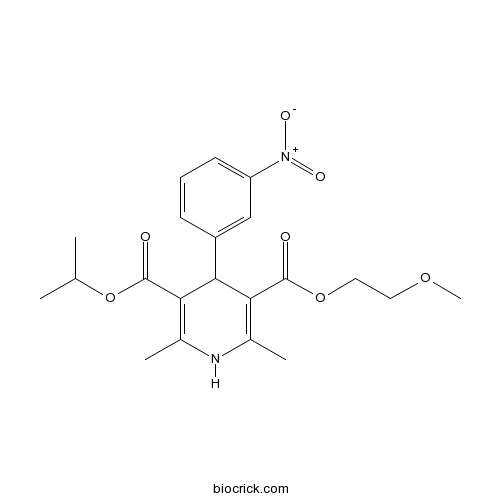
Nimodipine
Nimodipine(Nimotop) is a dihydropyridine derivative and an analogue of the calcium channel blocker nifedipine, with antihypertensive activity.
-
BCC4381
Nitrendipine
Nitrendipine is a calcium channel blocker with marked vasodilator action.

-
BCC1803
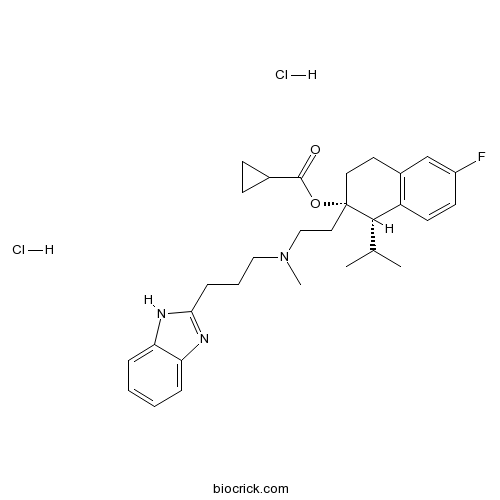
NNC 55-0396
NNC 55-0396, Mibefradil derivative, is a highly selective T-type calcium channel blocker; displays IC50 values of 6.8 and > 100 μM for inhibition of Cav3.1 T-type channels and HVA currents respectively in INS-1 cells.
-
BCC7706
PD 173212
PD173212 is a selective N-type voltage sensitive calcium channel (VSCC) blocker, with an IC50 of 36 nM in IMR-32 assays.

-
BCC6255
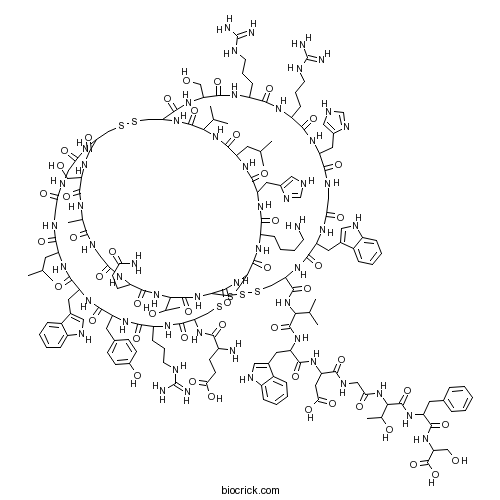
ProTx I
484598-35-8
-
BCC7067
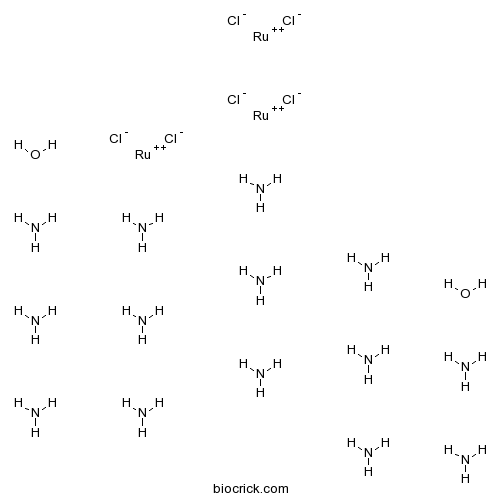
Ruthenium Red
11103-72-3
-
BCC5952
SNX 482
203460-30-4

-
BCC7181
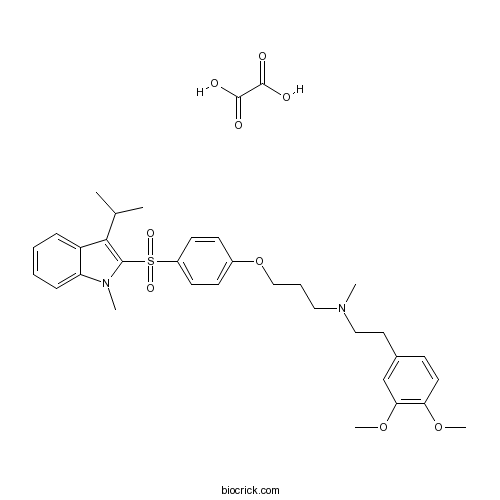
SR 33805 oxalate
121346-33-6
-
BCC4747
Verapamil HCl
Verapamil hydrochloride ((±)-Verapamil hydrochloride) is a calcium channel antagonist.

-
BCN2207
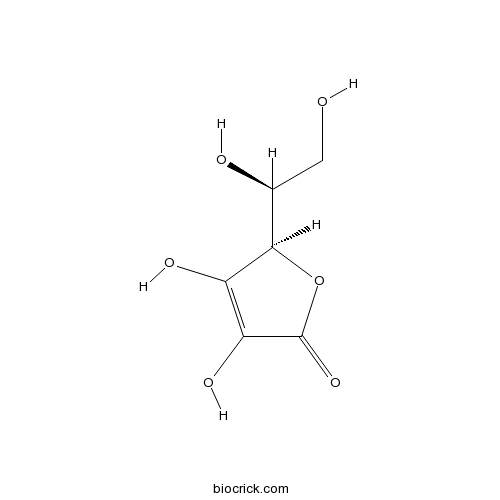
Ascorbic acid
PROTAC EED degrader-1 is a PROTAC targeting EED with a pKD of 9.02. PROTAC EED degrader-1 is a polycomb repressive complex 2 (PRC2) inhibitor (pIC50=8.17) targeting the EED subunit.