Nociception
Nociception is the sensory process that provides the signals that lead to pain. This occurs through nociceptors, primary sensory neurons that are activated by stimuli that cause tissue damage. Stimuli can include tissue injury, extremes of heat and noxious chemicals. Unlike other sensory neurons that detect vision or taste, nociceptors are located all around the body, particularly under the skin, however, they are notably absent from the brain.
Nociception Products Targets
- Others (20)
- Nucleoside Transporter (5)
- Glycine Transporter (6)
- GABA (10)
- Cannabinoid Transporter (10)
- Acetylcholine Transporter (1)
- D4 Receptor (12)
- 5-HT7 Receptor (11)
- 5-HT6 Receptor (14)
- 5-ht5 Receptor (2)
- 5-HT4 Receptor (17)
- NK2 Receptor (7)
- NK1 Receptor (15)
- NOP Receptor (21)
- Mu-Opioid Receptors (15)
- Kappa Opioid Receptors (14)
- Glutamate (Metabotropic) Group III Receptor (26)
- Glutamate (Metabotropic) Group II Receptor (33)
- Glutamate (Metabotropic) Group I Receptor (54)
- AMPA Receptor (45)
- GABAA-ρ Receptor (8)
- GABAA Receptor (66)
- GPR55 (8)
- CB2 Receptor (6)
- CB1 Receptor (17)
- Voltage-gated Sodium (NaV) Channels (30)
- Voltage-gated Potassium (KV) Channels (38)
- Voltage-gated Calcium Channels (CaV) (38)
- Neurotensin Receptors (7)
- Glycine Receptors (6)
- Fatty Acid Amide Hydrolase (15)
- Cyclooxygenases (24)
- Bradykinin Receptors (12)
- D3 Receptor (12)
- NK3 Receptor (5)
- Vesicular Monoamine Transporter (4)
- NMDA Receptor (87)
- Kainate Receptor (22)
- D2 Receptor (14)
- D1 and D5 Receptor (16)
- Glutamate Transporter (18)
- Dopamine Transporter (20)
- Histamine H4 Receptor (12)
- Histamine H3 Receptor (22)
- Histamine H2 Receptor (10)
- Histamine H1 Receptor (17)
- Adrenergic Transporter (23)
- 5-HT Transporter (30)
- NO donors and precursors (9)
- nNOS (5)
- iNOS (11)
- eNOS (1)
- M5 Receptor (2)
- M4 Receptor (3)
- M3 Receptor (4)
- M2 Receptor (5)
- M1 Receptor (8)
- Delta opioid receptor (16)
- Adrenergic α2 Receptor (33)
- Adrenergic α1 Receptor (22)
- Adrenergic β3 Receptor (12)
- Adrenergic β2 Receptor (6)
- Adrenergic β1 Receptor (7)
Products for Nociception - Page 5
- Cat.No. Product Name Information/Activity
-
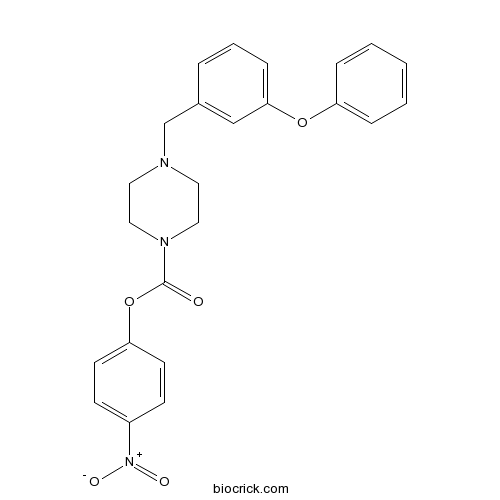
BCC7966
JZL 195
JZL195 is a selective and efficacious dual fatty acid amide hydrolase (FAAH) and monoacylglycerol lipase (MAGL) inhibitor with IC50s of 2 and 4 nM, respectively.
-
BCC1718
LY2183240
LY2183240 is a novel and highly potent blocker of anandamide uptake (IC50 = 270 pM).

-
BCC7187
Palmitoylisopropylamide
189939-61-5

-
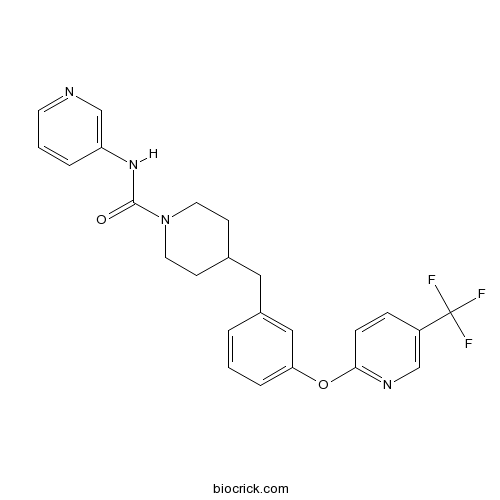
BCC2326
PF-3845
PF-3845 is a selective fatty acid amide hydrolase (FAAH) inhibitor (Ki = 0.23 μM); showing negligible activity against FAAH2.
-
BCC7641
PF 750
PF 750 is a selective and covalent fatty acid amide hydrolase (FAAH) inhibitor, with IC50s varied from 16.2-595 nM in different pre-incubation times. Covalently modifies the enzyme’s active site serine nucleophile.

-
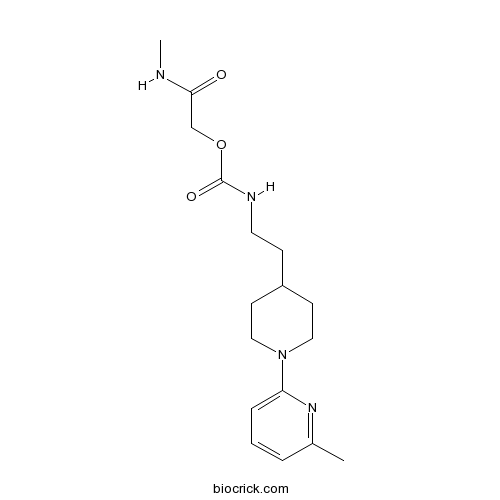
BCC6289
SA 47
SA 47 is a selective and potent inhibitor of fatty acid amide hydrolase (FAAH) and carbamate.
-
BCC6280
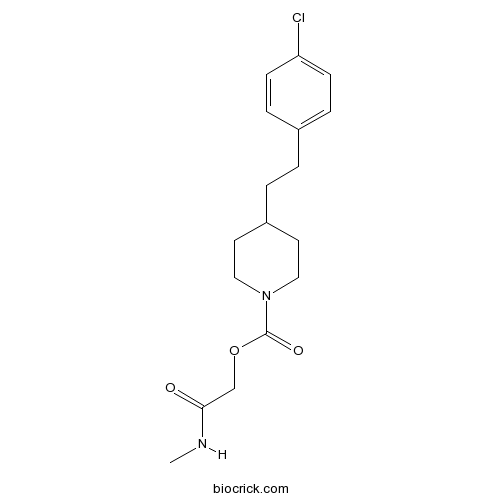
SA 57
SA57 is a potent, selective FAAH inhibitor with IC50s of 3.2 nM and 1.9 nM for mouse and human FAAH. SA57 also inhibits the 2-arachidonoylglycerol hydrolases MAGL (IC50s of 410 nM and 1.4 μM for mouse and human MAGL) and mouse α/β-hydrolase domain-containing protein 6 (mABHD6; IC50 of 850 nM), but not other brain serine hydrolases.
-
BCC5609
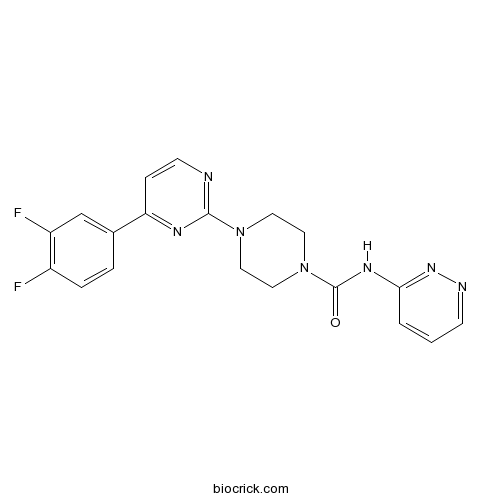
TAK 21d
1143578-94-2
-
BCC6147
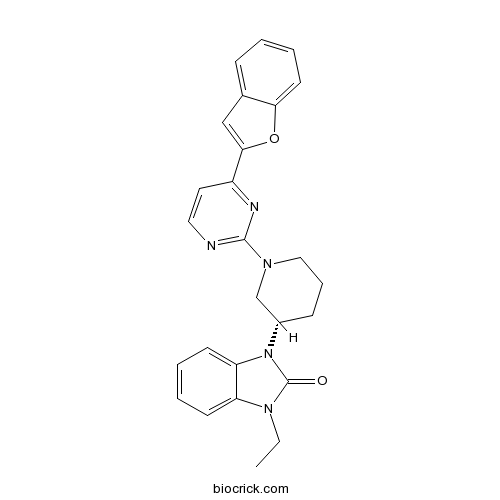
TC-F 2
1304778-15-1
-
BCC2324
URB597
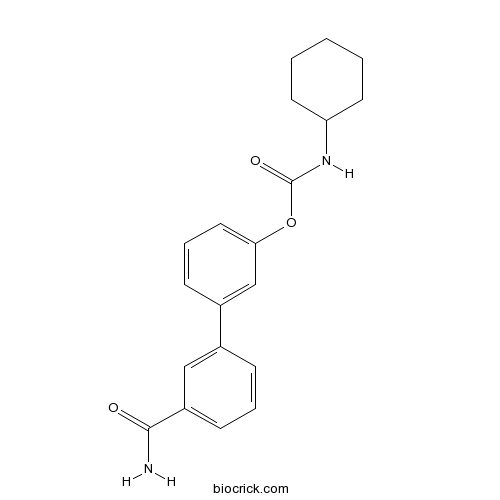
URB597 is a potent, orally bioavailable FAAH inhibitor with IC50 of 4.6 nM, with no activity on other cannabinoid-related targets.