Apoptosis
Apoptosis is a mechanism of cell death that occurs after sufficient cellular damage. It occurs normally during development and aging and is considered a vital component of cell turnover, cell development and function of the immune system. It occurs as a defense mechanism such as in immune reactions or when cells are damaged by disease or noxious agents.Apoptosis, in general, confers advantages during an organism's life cycle. Between 50 billion and 70 billion cells die each day due to apoptosis in the average human adult. In a year, this amounts to the proliferation and subsequent destruction of a mass of cells equal to an individual's body weight. Inappropriate apoptosis is a factor in many human conditions including neurodegenerative diseases, ischemic damage, autoimmune disorders and many types of cancer. The ability to modulate the life or death of a cell is recognized for its profound therapeutic potential, and research continues to focus on the elucidation of the cell cycle machinery and signaling pathways that control cell cycle arrest and apoptosis.
Apoptosis Products Targets
Products for Apoptosis - Page 4
- Cat.No. Product Name Information/Activity
-
BCN4037
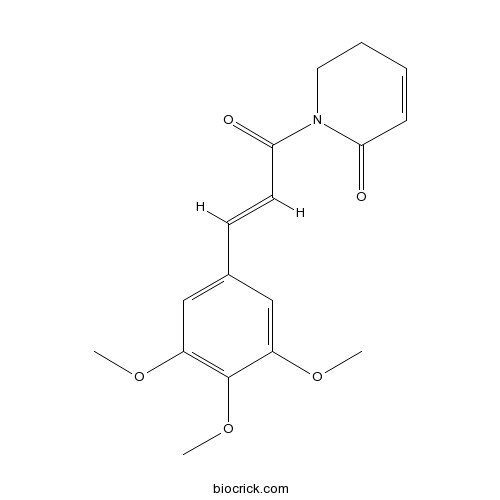
Piplartine
Piperlongumine is a natural alkaloid isolated from Piper longum Linn, possesses ant-inflammatory, antibacterial, antiangiogenic, antioxidant, antitumor, and antidiabetic activities. Piperlongumine induces ROS, and induces apoptosis in cancer cell lines. Piperlongumine shows anti-cardiac fibrosis activity, suppresses myofibroblast transformation via suppression of the ERK1/2 signaling pathway.
-
BCN2586
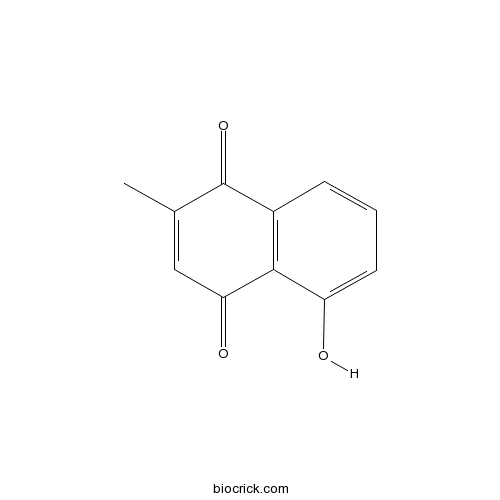
Plumbagin
Plumbagin (2-Methyljuglone) is a naphthoquinone isolated from Plumbago zeylanica L, exhibits anticancer and antiproliferative activities.
-
BCC3848
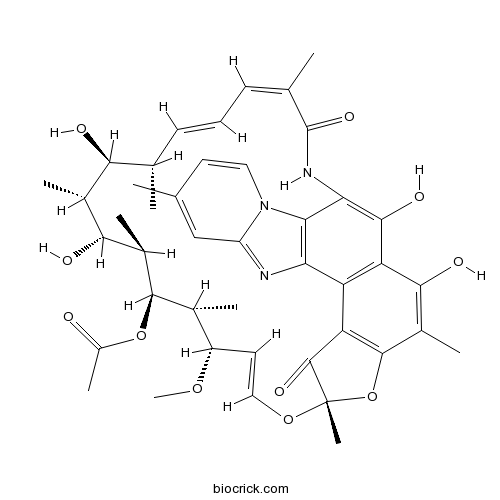
Rifaximin (Xifaxan)
Rifaximin(Xifaxan) is an orally administered, semi-synthetic, nonsystemic antibiotic derived from rifamycin SV with antibacterial activity.
-
BCN3834
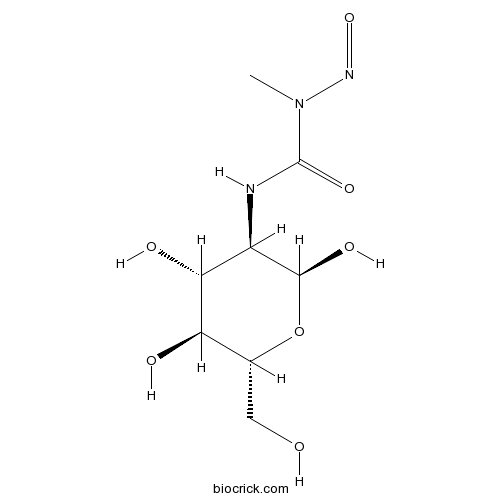
Streptozotocin
Streptozocin is a potent DNA-methylating antibiotic. Streptozotocin causes methylation of liver and kidney and pancreatic DNA, but no methylation in brain DNA.
-
BCC4386
Temozolomide
Temozolomide (NSC 362856) is an oral active DNA alkylating agent that crosses the blood-brain barrier. Temozolomide is also a proautophagic and proapoptotic agent. Temozolomide is effective against tumor cells that are characterized by low levels of O6-alkylguanine DNA alkyltransferase (OGAT) and a functional mismatch repair system. Temozolomide has antitumor and antiangiogenic effects.

-
BCC2005
Toceranib
Toceranib phosphate (SU11654 phosphate) is an orally active receptor tyrosine kinase (RTK) inhibitor, and it potently inhibits PDGFR, VEGFR, and Kit with Kis of 5 and 6 nM for PDGFRβ and Flk-1/KDR, respectively. Toceranib phosphate (SU11654 phosphate) has antitumor and antiangiogenic activity, and used in the treatment of canine mast cell tumors.

-
BCC2257
TW-37
TW-37 is a potent Bcl-2 inhibitor with Ki values of 260, 290 and 1110 nM for Mcl-1, Bcl-2 and Bcl-xL, respectively.

-
BCC2391
ARRY 520 trifluoroacetate
Potent and selective kinesin spindle protein (KSP) inhibitor; induces Mcl-1 degradation,ARRY-520 is a synthetic kinesin spindle protein (<b>KSP</b>) inhibitor with <b>IC<sub>50</sub></b> of 6 nM.

-
BCC2394
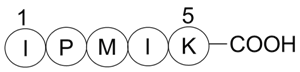
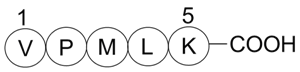
Bax inhibitor peptide V5
Bax inhibitor peptide V5 (BIP-V5) is a Bax-mediated apoptosis inhibitor, used for cancer treatment.
-
BCC2395
Bax inhibitor peptide, negative control
Negative control peptide for Bax inhibitor peptide V5