Schizophrenia Research
Schizophrenia is a chronic, debilitating mental disorder affecting 1-2% of the global population. Symptoms are split into two types; 'positive' symptoms, including delusions and hallucinations, and 'negative' symptoms, including anhedonia and lack of motivation. Studies suggest that genetics, early environment, neurobiology, psychological and social processes are important contributory factors; some recreational and prescription drugs appear to cause or worsen symptoms. Several neurobiological alterations in brain structure, physiology and neurochemistry have been documented, along with an ever-increasing list of susceptibility genes.
Schizophrenia Research Products Targets
- Others (13)
- Sigma2 Receptor (4)
- Sigma1 Receptor (16)
- D4 Receptor (12)
- 5-HT7 Receptor (11)
- 5-HT6 Receptor (14)
- 5-ht5 Receptor (2)
- 5-HT4 Receptor (17)
- Glutamate (Metabotropic) Group III Receptor (26)
- Glutamate (Metabotropic) Group II Receptor (33)
- Glutamate (Metabotropic) Group I Receptor (54)
- AMPA Receptor (45)
- GABAA-ρ Receptor (8)
- GABAA Receptor (66)
- GPR55 (8)
- CB2 Receptor (6)
- CB1 Receptor (17)
- Nicotinic (α7) Receptor (25)
- Nicotinic (α4β2) Receptor (14)
- D3 Receptor (12)
- NK3 Receptor (5)
- Carboxypeptidase (1)
- NMDA Receptor (87)
- Kainate Receptor (22)
- D2 Receptor (14)
- D1 and D5 Receptor (16)
- Trace Amine 1 Receptor (2)
- Glutamate Transporter (18)
- Histamine H3 Receptor (22)
- Neurotensin Receptor (7)
- Monoamine Oxidase (10)
- iNOS (11)
- M5 Receptor (2)
- M4 Receptor (3)
- M3 Receptor (4)
- M2 Receptor (5)
- M1 Receptor (8)
- Adrenergic α2 Receptor (33)
- Adrenergic α1 Receptor (22)
- Adrenergic β3 Receptor (12)
- Adrenergic β2 Receptor (6)
- Adrenergic β1 Receptor (7)
- Protein serine and threonine phosphatase (16)
- Protein Arginine Methyltransferase (2)
- Phosphodiesterase (34)
Products for Schizophrenia Research - Page 2
- Cat.No. Product Name Information/Activity
-
BCC6804
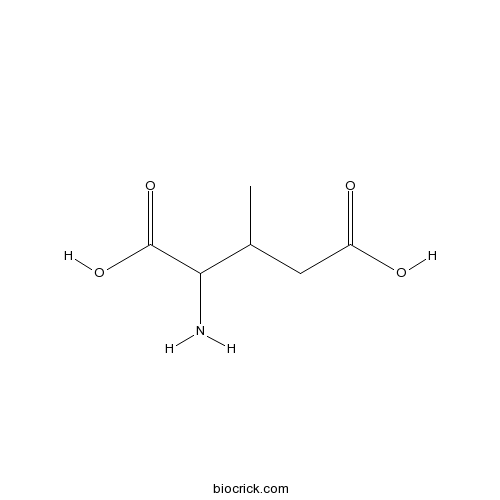
(±)-threo-3-Methylglutamic acid
63088-04-0
-
BCC6873
MPDC
MPDC is a potent and competitive inhibitor of the Na+-dependent high-affinity glutamate transporter in forebrain synaptosomes.

-
BCC6595
L-trans-2,4-PDC
64769-66-0

-
BCC6840
SYM 2081
SYM 2081 is a high-affinity ligand and potent, selective agonist of kainate receptors, inhibits [3H]-kainate binding with an IC50 of 35 nM, almost 3000- and 200-fold selectivity for kainate receptors over AMPA and NMDA receptors respectively.

-
BCC5735
DL-TBOA
DL-TBOA is a potent non-transportable inhibitor of excitatory amino acid transporters with IC50s of 70 μM, 6 μM and 6 μM for excitatory amino acid transporter-1 (EAAT1), EAAT2 and EAAT3, respectively. DL-TBOA inhibits the uptake of [14C]glutamate in COS-1 cells expressing the human EAAT1 and EAAT2 with Ki valuesof 42 μM and 5.7 μM, respectively. DL-TBOA blocks EAAT4 and EAAT5 in a competitive manner with Ki values of 4.4 μM and 3.2 μM, respectively.

-
BCC5919
TFB-TBOA
480439-73-4

-
BCC7692
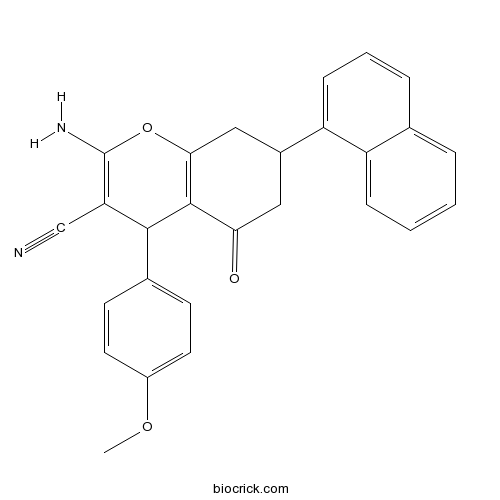
UCPH 101
UCPH-101 is an excitatory amino acid transporter subtype 1 (EAAT1) inhibitor with an IC50 of 0.66 μM.
-
BCC7442
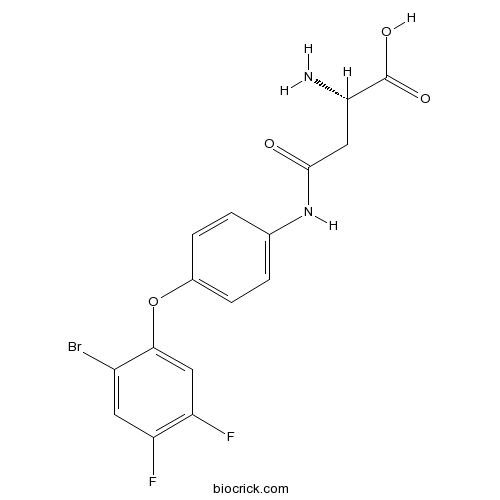
WAY 213613
WAY-213613 is a potent, selective nonsubstrate reuptake inhibitor of GLT-1/EAAT2 with IC50 of 85 nM EAAT2. It displays 59- and 44-fold selectivity over EAAT1 and EAAT3 (IC50s are 5 and 3.8 μM, respectively). WAY-213613 shows no activity at ionotropic and metabotropic glutamate receptors. It is a potential tool for the elucidation of EAAT2 function.
-
BCC5896
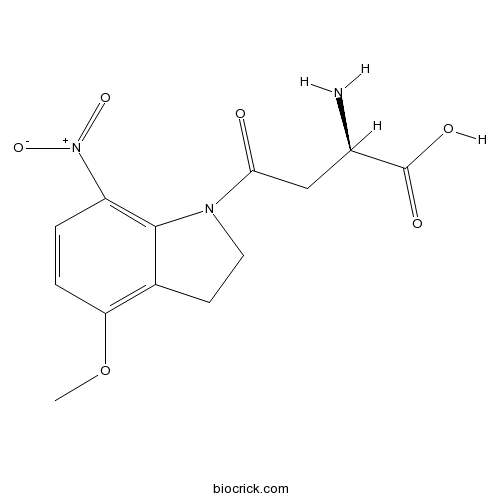
MNI-caged-D-aspartate
845555-94-4
-
BCC4530
Histamine 2HCl
Histamine dihydrochloride is an endogenous metabolite.