Hypertension Research
Hypertension is defined as a chronic elevation in blood pressure with a systolic pressure over 140 mmHg and a diastolic pressure over 90 mmHg.The majority of hypertension is primary - that is, an increase in blood pressure with no underlying cause - yet pathologies that affect the kidney or endocrine system may also trigger hypertension. This is known as secondary hypertension. The exact mechanism of primary hypertension is yet to be elucidated, though dysfunctions in mechanisms that regulate vascular tone, both directly and indirectly, have been identified as having a major influence on hypertension.
Hypertension Research Products Targets
- Adenosine A2B Receptor (7)
- Adenosine A2A Receptor (11)
- Lipoxygenase (8)
- Leukotriene and Related Receptor (13)
- Bradykinin Receptor (12)
- Others (10)
- Cyclooxygenase (24)
- Apelin Receptor (5)
- 5-HT1F Receptor (2)
- 5-HT1E Receptor (1)
- 5-HT1D Receptor (13)
- 5-HT1B Receptor (20)
- 5-HT1A Receptor (25)
- 5-HT2C Receptor (23)
- 5-HT2B Receptor (12)
- 5-HT2A Receptor (25)
- Natriuretic Peptide Receptor (4)
- Mineralocorticoid Receptor (7)
- Angiotensin-Converting Enzyme (8)
- 5-HT7 Receptor (11)
- 5-HT6 Receptor (14)
- 5-ht5 Receptor (2)
- 5-HT4 Receptor (17)
- Histamine H4 Receptor (12)
- Histamine H3 Receptor (22)
- Histamine H2 Receptor (10)
- Histamine H1 Receptor (17)
- Adenosine A3 Receptor (8)
- Adenosine A1 Receptor (12)
- Calcitonin and Related Receptor (10)
- VIP Receptor (7)
- Vasopressin Receptor (6)
- NO donors and precursors (9)
- nNOS (5)
- iNOS (11)
- eNOS (1)
- Urotensin-II Receptor (8)
- ETB Receptor (6)
- ETA Receptor (5)
- Angiotensin AT2 Receptor (3)
- Angiotensin AT1 Receptor (9)
- M5 Receptor (2)
- M4 Receptor (3)
- M3 Receptor (4)
- Purinergic (P2Y) Receptor (31)
- M2 Receptor (5)
- M1 Receptor (8)
- Neuromedin U (2)
- NKCC (2)
- Adrenergic α2 Receptor (33)
- Adrenergic α1 Receptor (22)
- Adrenergic β3 Receptor (12)
- Adrenergic β2 Receptor (6)
- Adrenergic β1 Receptor (7)
- Protease-Activated Receptor (23)
- Prostanoid Receptor (24)
- Sphingosine-1-Phosphate Receptor (13)
- Phosphodiesterase (34)
Products for Hypertension Research - Page 12
- Cat.No. Product Name Information/Activity
-
BCC6004
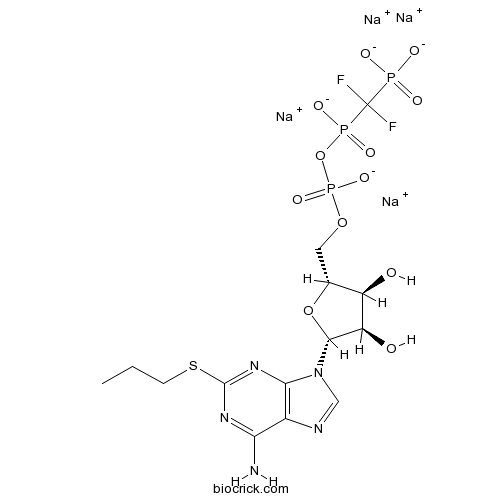
AR-C 66096 tetrasodium salt
Potent and selective P2Y<sub>12</sub> antagonist
-
BCC2497
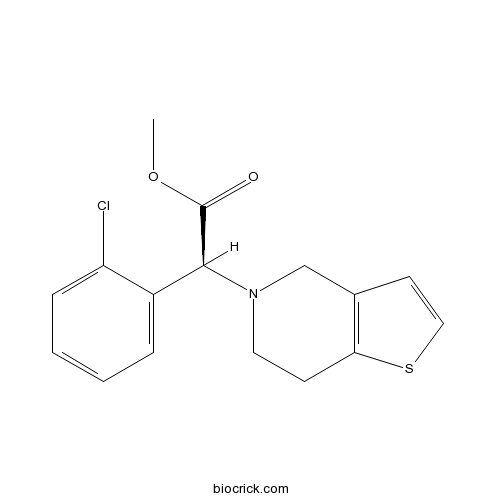
Clopidogrel
Clopidogrel hydrogen sulfate is an antiplatelet agent which works by blocking platelets from sticking together and prevents them from forming harmful clots.
-
BCC5685
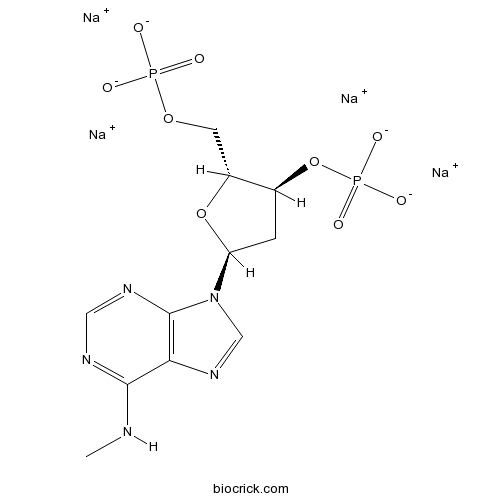
MRS 2179 tetrasodium salt
1454889-37-2
-
BCC5880
MRS 2279
367909-40-8

-
BCC5881
MRS 2500 tetraammonium salt
630103-23-0

-
BCC4976
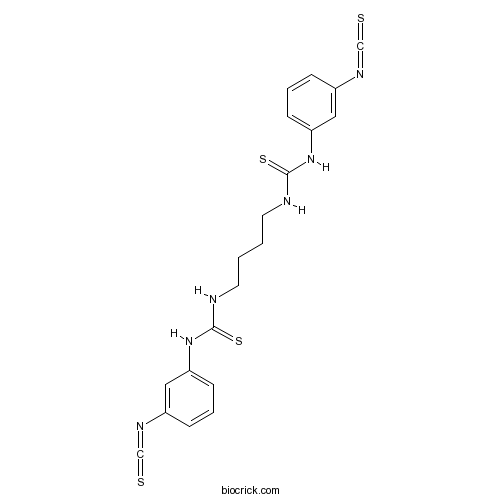
MRS 2578
MRS 2578 is a selective and potent P2Y6 receptor antagonist with IC50s of 37 nM (human) and 98 nM (rat). MRS 2578 exhibits insignificant activity at P2Y1, P2Y2, P2Y4, and P2Y11 receptors.
-
BCC7367
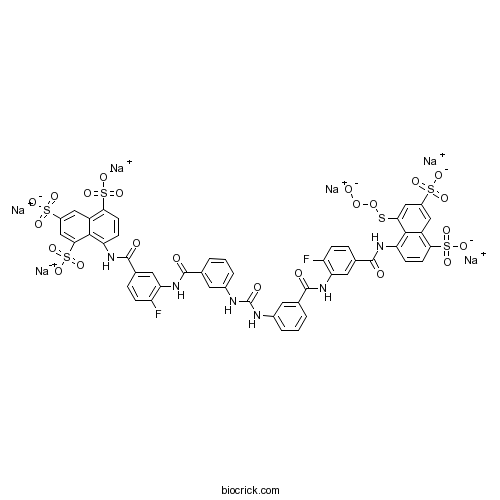
NF 157
NF157 is a highly selective nanomolar P2Y11 antagonist with a pKi of 7.35. The IC50s are 463 nM, 1811 µM, 170 µM for P2Y11 (Ki=44.3 nM), P2Y1 (Ki=187 µM), P2Y2 (Ki=28.9 µM), respectively. NF157, significantly reduces expression of metalloproteinase (MMP)-3, MMP-13, can be used in the treatment of osteoarthritis (OA).
-
BCC7785
NF 340
202982-98-7

-
BCC6725
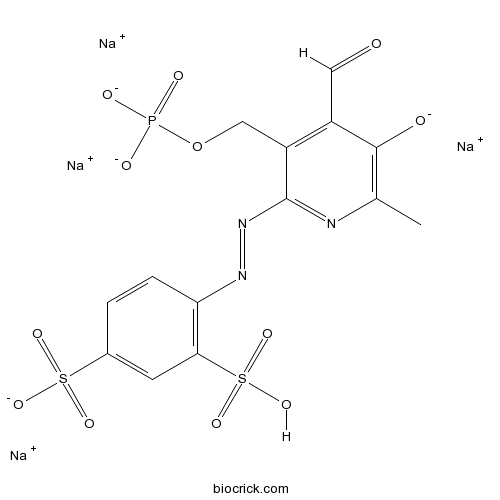
PPADS tetrasodium salt
PPADS tetrasodiuma is a non-selective P2X receptor antagonist. PPADS tetrasodiuma blocks recombinant P2X1, -2, -3, -5 with IC50s ranging from 1 to 2.6 μM. PPADS tetrasodiuma blocks native P2Y2-like (IC50~0.9 mM) and recombinant P2Y4 (IC50~15 mM) receptors. PPADS tetrasodiuma is an inhibitor of the reverse mode of the Na/Ca²⁺exchanger in guinea pig airway smooth muscle.
-
BCC6095
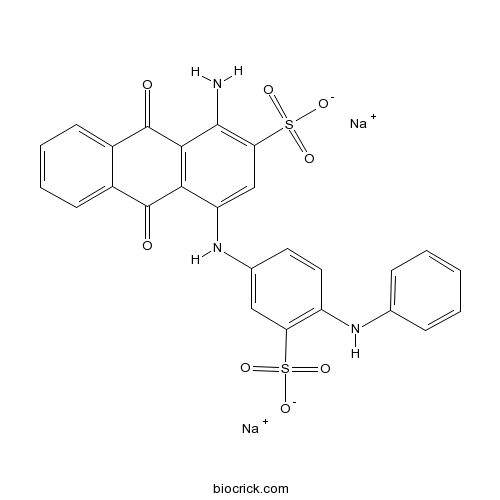
PSB 0739
1052087-90-7