Nociception
Nociception is the sensory process that provides the signals that lead to pain. This occurs through nociceptors, primary sensory neurons that are activated by stimuli that cause tissue damage. Stimuli can include tissue injury, extremes of heat and noxious chemicals. Unlike other sensory neurons that detect vision or taste, nociceptors are located all around the body, particularly under the skin, however, they are notably absent from the brain.
Nociception Products Targets
- Others (20)
- Nucleoside Transporter (5)
- Glycine Transporter (6)
- GABA (10)
- Cannabinoid Transporter (10)
- Acetylcholine Transporter (1)
- D4 Receptor (12)
- 5-HT7 Receptor (11)
- 5-HT6 Receptor (14)
- 5-ht5 Receptor (2)
- 5-HT4 Receptor (17)
- NK2 Receptor (7)
- NK1 Receptor (15)
- NOP Receptor (21)
- Mu-Opioid Receptors (15)
- Kappa Opioid Receptors (14)
- Glutamate (Metabotropic) Group III Receptor (26)
- Glutamate (Metabotropic) Group II Receptor (33)
- Glutamate (Metabotropic) Group I Receptor (54)
- AMPA Receptor (45)
- GABAA-ρ Receptor (8)
- GABAA Receptor (66)
- GPR55 (8)
- CB2 Receptor (6)
- CB1 Receptor (17)
- Voltage-gated Sodium (NaV) Channels (30)
- Voltage-gated Potassium (KV) Channels (38)
- Voltage-gated Calcium Channels (CaV) (38)
- Neurotensin Receptors (7)
- Glycine Receptors (6)
- Fatty Acid Amide Hydrolase (15)
- Cyclooxygenases (24)
- Bradykinin Receptors (12)
- D3 Receptor (12)
- NK3 Receptor (5)
- Vesicular Monoamine Transporter (4)
- NMDA Receptor (87)
- Kainate Receptor (22)
- D2 Receptor (14)
- D1 and D5 Receptor (16)
- Glutamate Transporter (18)
- Dopamine Transporter (20)
- Histamine H4 Receptor (12)
- Histamine H3 Receptor (22)
- Histamine H2 Receptor (10)
- Histamine H1 Receptor (17)
- Adrenergic Transporter (23)
- 5-HT Transporter (30)
- NO donors and precursors (9)
- nNOS (5)
- iNOS (11)
- eNOS (1)
- M5 Receptor (2)
- M4 Receptor (3)
- M3 Receptor (4)
- M2 Receptor (5)
- M1 Receptor (8)
- Delta opioid receptor (16)
- Adrenergic α2 Receptor (33)
- Adrenergic α1 Receptor (22)
- Adrenergic β3 Receptor (12)
- Adrenergic β2 Receptor (6)
- Adrenergic β1 Receptor (7)
Products for Nociception - Page 54
- Cat.No. Product Name Information/Activity
-
BCC2894
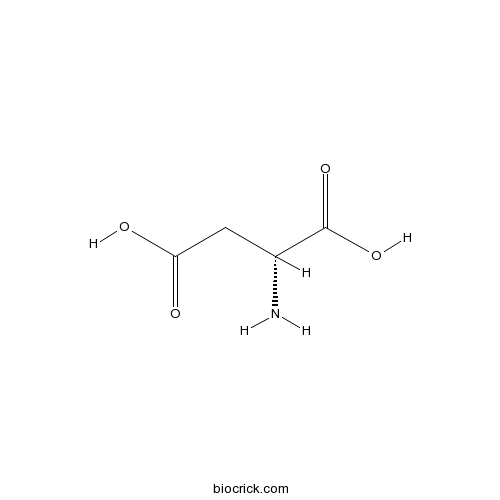
H-D-Asp-OH
(-)-Aspartic acid is an endogenous NMDA receptor agonist.
-
BCC2881
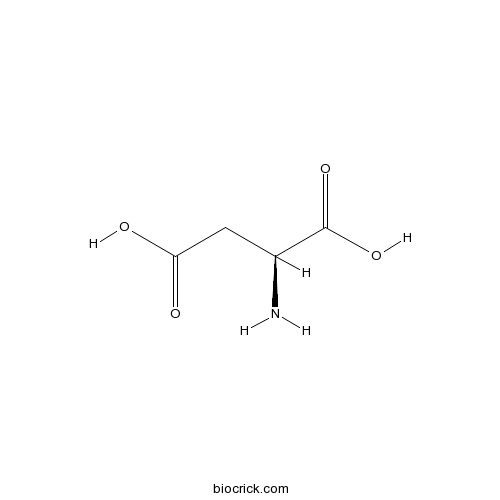
H-Asp-OH
L-Aspartic acid is is an amino acid, shown to be a suitable prodrug for colon-specific drug deliverly.
-
BCC6571
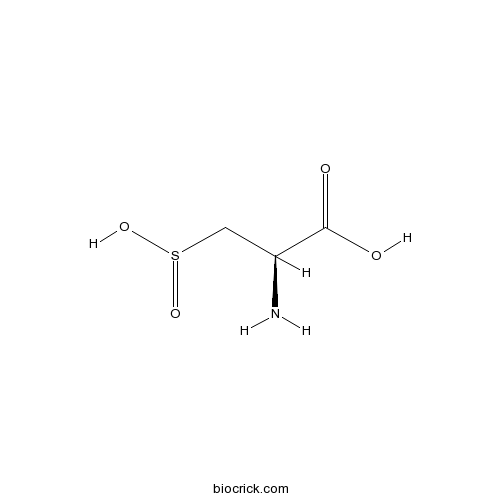
L-Cysteinesulfinic acid
L-Cysteinesulfinic acid is a potent agonist at several rat metabotropic glutamate receptors (mGluRs) with pEC50s of 3.92±0.03, 4.6±0.2, 3.9±0.2, 2.7±0.2, 4.0±0.2, and 3.94±0.08 for mGluR1, mGluR5, mGluR2, mGluR4, mGluR6, and mGluR8, respectively.
-
BCC6013
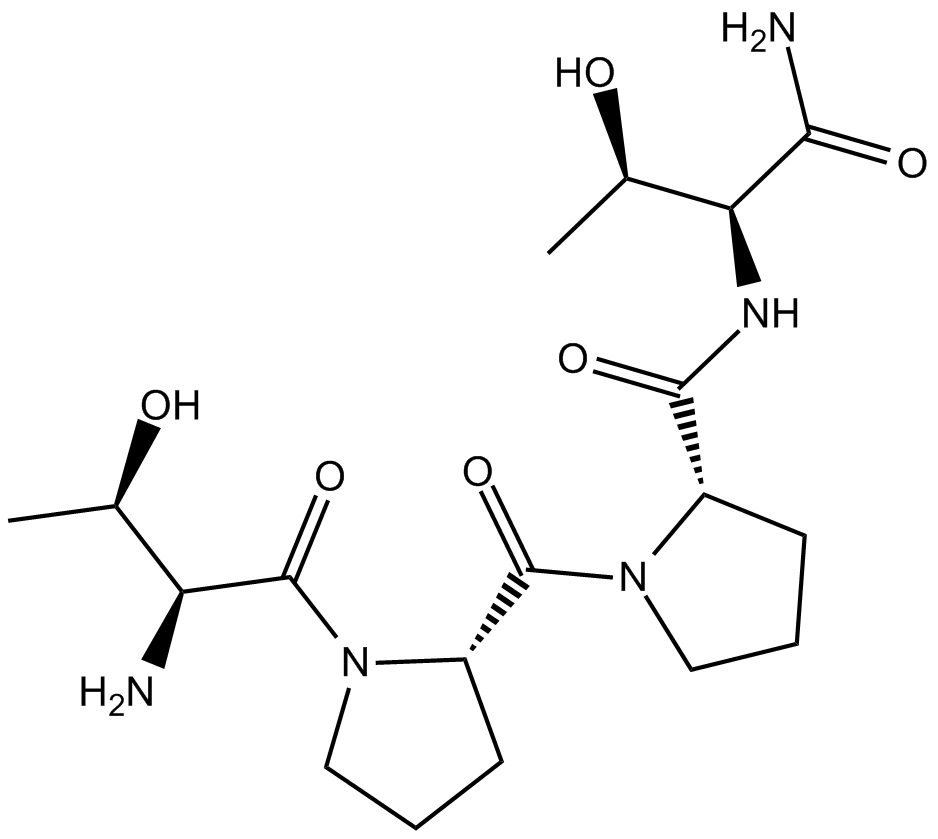
GLYX 13
Rapastinel (GLYX-13) is an N-methyl-D-aspartate receptor (NMDAR) modulator that has characteristics of a glycine site partial agonist.
-
BCC6588
(R)-(+)-HA-966
(R)-(+)-HA-966 ((+)-HA-966) is a partial agonist/antagonist of glycine site of the N-methyl-D-aspartate (NMDA) receptor complex. (R)-(+)-HA-966 selectively blocks the activation of the mesolimbic dopamine system by amphetamine. (R)-(+)-HA-966 can cross the blood-brain barrier and has the potential for neuropathic and acute pain.

-
BCC6570
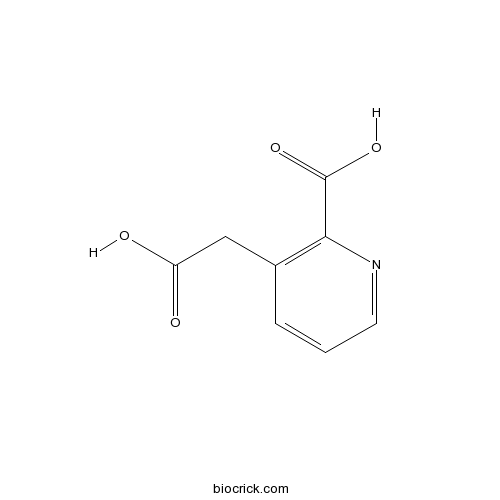
Homoquinolinic acid
490-75-5
-
BCC6591
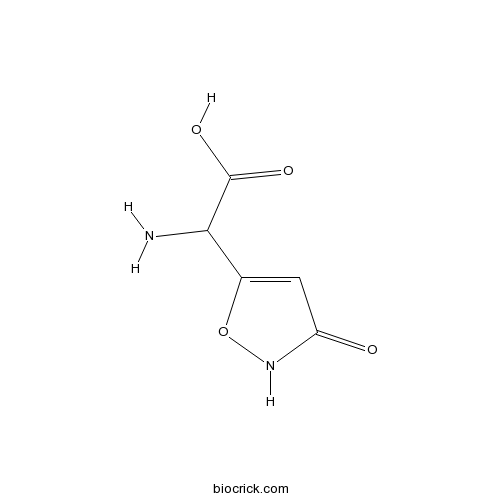
Ibotenic acid
Ibotenic acid has agonist activity at both the N-methyl-D-aspartate (NMDA) and trans-ACPD or metabolotropic quisqualate (Qm) receptor sites.
-
BCC5896
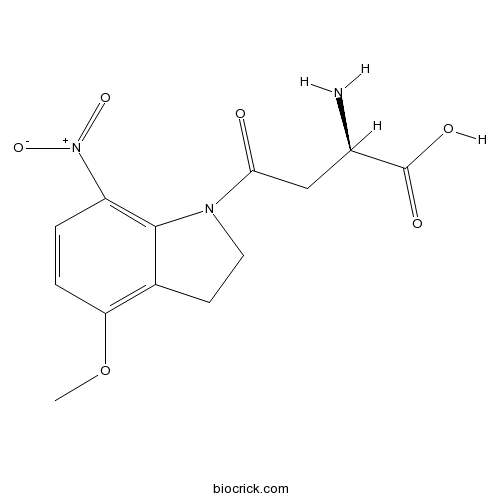
MNI-caged-D-aspartate
845555-94-4
-
BCC4590
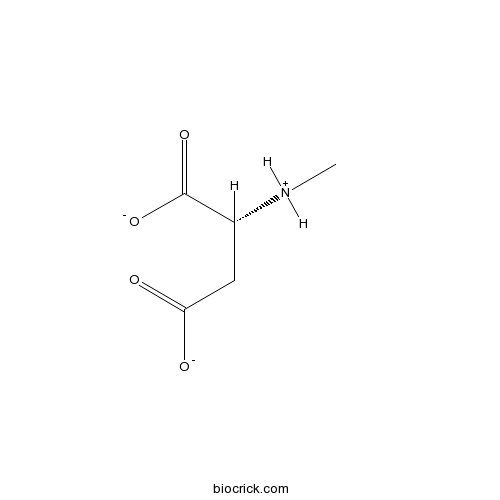
NMDA (N-Methyl-D-aspartic acid)
NMDA is a specific agonist for NMDA receptor mimicking the action of glutamate, the neurotransmitter which normally acts at that receptor.
-
BCC6573
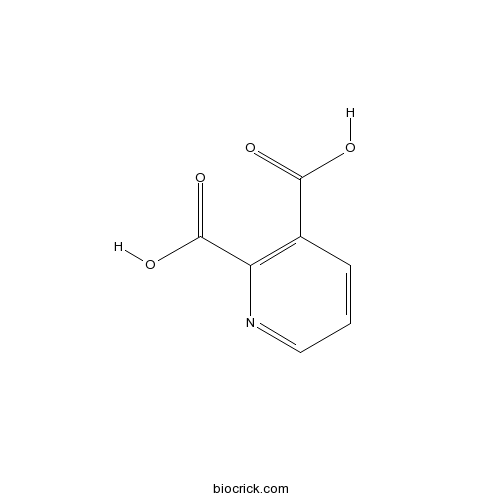
Quinolinic acid
Quinolinic acid is an endogenous N-methyl-D-aspartate (NMDA) receptor agonist synthesized from L-tryptophan via the kynurenine pathway and thereby has the potential of mediating N-methyl-D-aspartate neuronal damage and dysfunction.