
PicropodophyllinCAS# 477-47-4 |
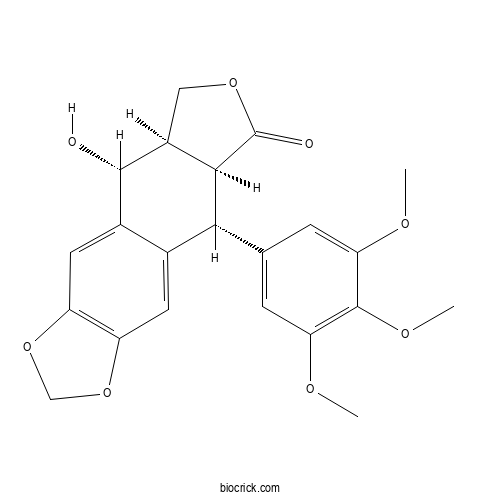
| Cas No. | 477-47-4 | SDF | File under preparation. |
| PubChem ID | 72435.0 | Appearance | Powder |
| Formula | C22H22O8 | M.Wt | 414.4 |
| Type of Compound | N/A | Storage | Desiccate at -20°C |
| Solubility | Soluble in Chloroform,Dichloromethane,Ethyl Acetate,DMSO,Acetone,etc. | ||
| Chemical Name | (5R,5aR,8aS,9R)-5-hydroxy-9-(3,4,5-trimethoxyphenyl)-5a,6,8a,9-tetrahydro-5H-[2]benzofuro[5,6-f][1,3]benzodioxol-8-one | ||
| SMILES | COC1=CC(=CC(=C1OC)OC)C2C3C(COC3=O)C(C4=CC5=C(C=C24)OCO5)O | ||
| Standard InChIKey | YJGVMLPVUAXIQN-HAEOHBJNSA-N | ||
| Standard InChI | InChI=1S/C22H22O8/c1-25-16-4-10(5-17(26-2)21(16)27-3)18-11-6-14-15(30-9-29-14)7-12(11)20(23)13-8-28-22(24)19(13)18/h4-7,13,18-20,23H,8-9H2,1-3H3/t13-,18+,19+,20-/m0/s1 | ||
| General tips | For obtaining a higher solubility , please warm the tube at 37 ℃ and shake it in the ultrasonic bath for a while.Stock solution can be stored below -20℃ for several months. We recommend that you prepare and use the solution on the same day. However, if the test schedule requires, the stock solutions can be prepared in advance, and the stock solution must be sealed and stored below -20℃. In general, the stock solution can be kept for several months. Before use, we recommend that you leave the vial at room temperature for at least an hour before opening it. |
||
| About Packaging | 1. The packaging of the product may be reversed during transportation, cause the high purity compounds to adhere to the neck or cap of the vial.Take the vail out of its packaging and shake gently until the compounds fall to the bottom of the vial. 2. For liquid products, please centrifuge at 500xg to gather the liquid to the bottom of the vial. 3. Try to avoid loss or contamination during the experiment. |
||
| Shipping Condition | Packaging according to customer requirements(5mg, 10mg, 20mg and more). Ship via FedEx, DHL, UPS, EMS or other couriers with RT, or blue ice upon request. | ||
Quality Control & MSDS
3D structure
Package In Stock

Number of papers citing our products


Picropodophyllin Dilution Calculator
Picropodophyllin Molarity Calculator
-
 PicropodophyllotoxinCatalog No.: BCN2585CAS No.: 17434-18-3
-
 PodophyllotoxinCatalog No.: BCN5957CAS No.: 518-28-5
-
 5-Hydroxy-9-(3,4,5-trimethoxyphenyl)-5a,6,8a,9-tetrahydro-5H-[2]benzofuro[5,6-f][1,3]benzodioxol-8-oneCatalog No.: BCC8350CAS No.: 4354-76-1
-
 (-)-EpipodophyllotoxinCatalog No.: BCX0796CAS No.: 4375-07-9
-
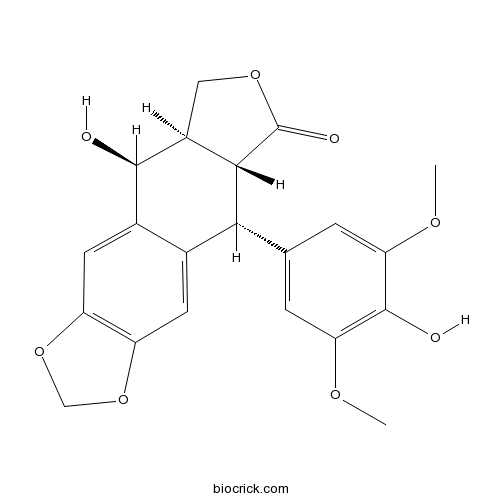 4'-DemethylepipodophyllotoxinCatalog No.: BCN5918CAS No.: 6559-91-7
-
 4'-DemethylpodophyllotoxinCatalog No.: BCN2625CAS No.: 40505-27-9
-
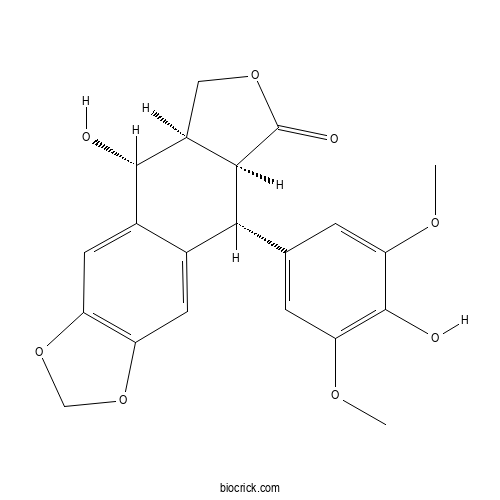 4'-demethylpicropodophyllinCatalog No.: BCX2726CAS No.: 112066-16-7
-
 AcetylepipodophyllotoxinCatalog No.: BCN6056CAS No.: 1180-35-4
-
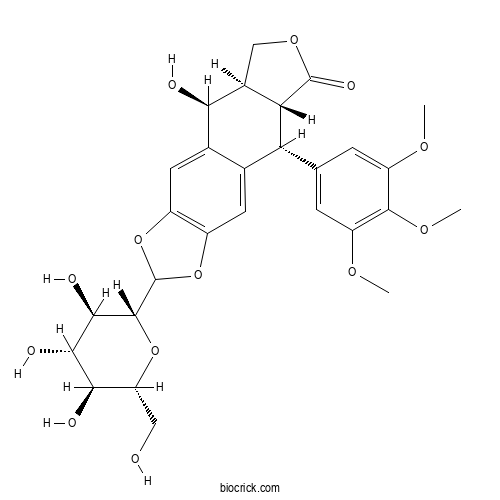 Epipodophyllotoxin glucosideCatalog No.: BCX2573CAS No.: 22352-79-0
-
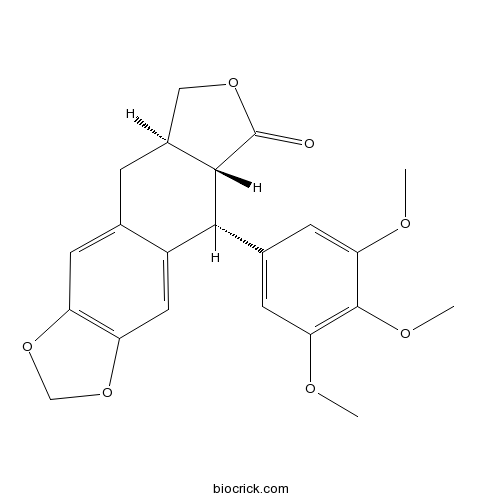 DeoxypodophyllotoxinCatalog No.: BCN1182CAS No.: 19186-35-7
-
 IsoanthricinCatalog No.: BCN3531CAS No.: 17301-70-5
-
 PicropodopyllotoxoneCatalog No.: BCN7574CAS No.: 477-48-5
-
 PodophyllotoxinoneCatalog No.: BCN8063CAS No.: 477-49-6
-
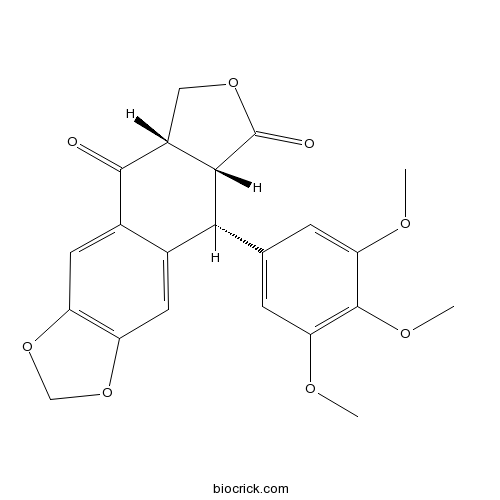 IsopicropodophylloneCatalog No.: BCN8316CAS No.: 60660-50-6
-
 Furo[3',4':6,7]naphtho[2,3-d]-1,3-dioxol-6(5aH)-one,5,8,8a,9-tetrahydro-5-(3,4,5-trimethoxyphenyl)- (9CI)Catalog No.: BCX0958CAS No.: 69222-20-4
-
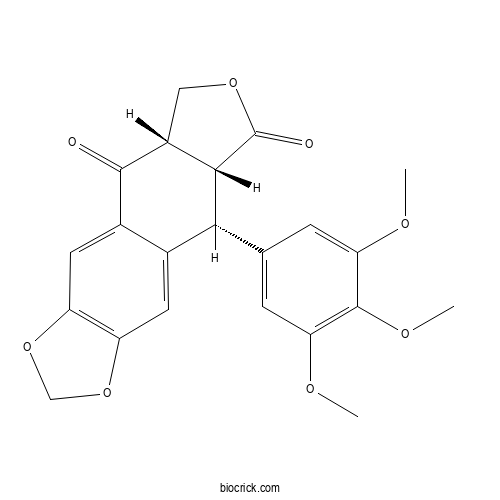 IsopicropodophylloneCatalog No.: BCX2560CAS No.: 55515-07-6
-
 Podophyllotoxin 4-O-glucosideCatalog No.: BCN8064CAS No.: 16481-54-2
| 1 mg | 5 mg | 10 mg | 20 mg | 25 mg | |
| 1 mM | 2.4131 mL | 12.0656 mL | 24.1313 mL | 48.2625 mL | 60.3282 mL |
| 5 mM | 0.4826 mL | 2.4131 mL | 4.8263 mL | 9.6525 mL | 12.0656 mL |
| 10 mM | 0.2413 mL | 1.2066 mL | 2.4131 mL | 4.8263 mL | 6.0328 mL |
| 50 mM | 0.0483 mL | 0.2413 mL | 0.4826 mL | 0.9653 mL | 1.2066 mL |
| 100 mM | 0.0241 mL | 0.1207 mL | 0.2413 mL | 0.4826 mL | 0.6033 mL |
| * Note: If you are in the process of experiment, it's necessary to make the dilution ratios of the samples. The dilution data above is only for reference. Normally, it's can get a better solubility within lower of Concentrations. | |||||
- Malic acid
Catalog No.:BCX2261
CAS No.:636-61-3
- 4,5-Di-O-caffeoylquinic acid
Catalog No.:BCX2260
CAS No.:89886-30-6
- 4-(2-(Carboxymethyl)-3,5-dihydroxyphenoxy)benzoic acid
Catalog No.:BCX2259
CAS No.:2193189-82-9
- Lobetyolin
Catalog No.:BCX2258
CAS No.:129277-38-9
- Benzil
Catalog No.:BCX2257
CAS No.:134-81-6
- Tryptamine
Catalog No.:BCX2256
CAS No.:61-54-1
- Coniferyl acetate
Catalog No.:BCX2255
CAS No.:94930-81-1
- Scinamine C
Catalog No.:BCX2254
CAS No.:2184979-75-5
- 3''-Hydroxypyrrolezanthine
Catalog No.:BCX2253
CAS No.:2647391-04-4
- Lyxose
Catalog No.:BCX2252
CAS No.:65-42-9
- 3'-O-Methylhesperidin
Catalog No.:BCX2251
CAS No.:28034-80-2
- Benzoic acid,2-[(5,10-dihydro-3,7,8-trihydroxy-5,10-dioxo...
Catalog No.:BCX2910
CAS No.:60202-70-2
- α-Santalene
Catalog No.:BCX2263
CAS No.:512-61-8
- Valerianol
Catalog No.:BCX2264
CAS No.:20489-45-6
- 7-epi-Teucrenone
Catalog No.:BCX2265
CAS No.:165898-48-6
- Isosyringinoside
Catalog No.:BCX2266
CAS No.:152686-85-6
- Taccalonolide Q
Catalog No.:BCX2267
CAS No.:488791-19-1
- 7-O-Galloyltricetiflavan
Catalog No.:BCX2268
CAS No.:889447-89-6
- (2E,7E)-6,9-Dihydroxy-N-isobutyldeca-2,7-dienamide
Catalog No.:BCX2269
CAS No.:1492015-24-3
- (2E,7E)-6,9-Dihydroxy-N-isobutyldeca-2,7-dienamide
Catalog No.:BCX2270
CAS No.:1383715-05-6
- (2E,6Z)-8,9-Dihydroxy-N-isobutyldeca-2,6-dienamide
Catalog No.:BCX2271
CAS No.:1492015-25-4
- 1β,4β-Dihydroxy-11,12,13-trinoreudesm-5-en-7-one
Catalog No.:BCX2272
CAS No.:2170107-68-1
- 1,2-Di-O-linolenoylglycerol 3-O-β-D-galactopyranoside
Catalog No.:BCX2273
CAS No.:111187-16-7
- Taccafurostanoside A
Catalog No.:BCX2274
CAS No.:290809-76-6
Disruption of GABAergic and GH/IGF-related signaling is associated with growth inhibition induced by dibutyl phthalate and dibutyl adipate in zebrafish.[Pubmed:42442644]
Comp Biochem Physiol C Toxicol Pharmacol. 2026 Oct;308:110625.
Dibutyl phthalate (DBP) and dibutyl adipate (DBA) are commonly used plasticizers that may pose risks to aquatic organisms. This study investigated whether DBP and DBA disrupt larval growth through neuroendocrine pathways using zebrafish (Danio rerio) as an in vivo model. Embryos were continuously exposed to DBP or DBA for 96 h, and growth-related morphological, transcriptional, and protein-level endpoints were assessed. DBP significantly reduced larval body length and increased locomotor activity, accompanied by decreased growth hormone (GH), insulin-like growth factor-1 (IGF-1), and gamma-aminobutyric acid-A (GABA) receptor alpha 2 protein levels, as well as marked suppression of gh1, igf1, gad2, gabrb2, and gabrg2 expression. DBA produced qualitatively similar but consistently weaker effects, primarily affecting growth endpoints and selected neuroendocrine markers. Continuous co-exposure with the GABA(A) receptor antagonist bicuculline or the IGF-1 receptor inhibitor Picropodophyllin did not further exacerbate growth inhibition or IGF signaling suppression compared with DBP or DBA exposure alone, revealing a non-additive interaction pattern. These findings suggest that DBP and DBA may impair larval growth through disruption of GABAergic and GH/IGF-related neuroendocrine regulation. Together, the results provide insight into the potential neuroendocrine mechanisms underlying plasticizer-induced developmental toxicity.
Small-molecule IGF1R inhibitors extend healthspan in a mouse model.[Pubmed:42039448]
bioRxiv [Preprint]. 2026 Apr 15:2026.04.13.718278.
Antagonistic pleiotropy of the IGF-1 signaling cascade is well recognized, as it promotes growth and development at younger ages and delays aging later in life. The goal of this study is to test in a mouse longevity experiment whether orally delivered small-molecule IGF1R inhibitors have promise as an anti-aging therapy. C57BL/6 mice (25 male and 25 female mice per treatment) were treated with selective IGF1R inhibitors, Picropodophyllin (PPP) or 5-[3-(phenylmethoxy)phenyl]-7-[trans-3-(1-pyrrolidinylmethyl)cyclobutyl]-7H-pyrrolo[3-d]pyrimidin-4-amine (NVP-ADW742), via powdered diets starting at 13 months of age, and physiological and behavioral parameters, as well as survival, were assessed. Both compounds protected both sexes from short-term memory decline; reduced systolic blood pressure in males and pulse rate in both sexes; rescued declining glucose tolerance in males; and abolished grey hair development, reduced frailty, and protected against decline in grip strength in female mice. There were no sex differences in survival curves within groups. No significant differences between groups were observed in the Kaplan-Meier analysis. However, the survival curve in the NVP-ADW742 group was "squarer" than in controls, indicating a 93-day longer healthspan (p = 0.02). PPP treatment was associated with toxicity (GI bleeding). Additional analysis of the drug likeness of NVP-ADW742 demonstrated potential cardiotoxicity and brain bioaccumulation. To conclude, small-molecule IGF1R inhibitors hold promise as a therapy that may improve human health span and lifespan; however, both molecules tested in this study have side effects that may outweigh their anti-aging effects.
Ferric ion-crosslinked hydrogel patch loaded with IGF-1R inhibitor for the treatment of heterotopic ossification through microenvironment multifaceted regulation.[Pubmed:41881891]
Biomaterials. 2026 Sep;332:124149.
Heterotopic ossification (HO), characterized by pathological bone formation in soft tissues, leads to joint dysfunction and pain, with limited clinical treatments available. The post-injury microenvironmental dyshomeostasis, including the aberrant inflammatory response and imbalanced osteoblast/osteoclast differentiation, serves as a critical factor in the pathogenesis of HO. In this study, excessive insulin-like growth factor (IGF-1) was demonstrated to participate in the process of HO by inducing the abnormal differentiation of tendon-derived stem cells (TDSCs). Herein, we fabricated a targeted drug delivery system by loading Picropodophyllin (PPP), an IGF-1 receptor (IGF-1R) inhibitor, into mesoporous silica nanoparticles (MSNs). This MSN-based system was then integrated into a multifunctional hydrogel patch (PCL@HA-ADH@PA/Fe) to produce the composite system PCL@HA-ADH@PA/Fe@MSNP, aiming to remodel the microenvironment in HO. The composite hydrogel patch exerted multifaceted therapeutic effects. It not only restored immune homeostasis but also suppressed osteogenesis while enhancing osteoclastogenesis, which was attributed to the sustained release of PPP and ferric ions. Mechanistically, these regulatory effects were mediated through the suppression of the PI3K-Akt signaling pathway and the activation of mitophagy. In conclusion, the PCL@HA-ADH@PA/Fe@MSNP patch developed based on the "microenvironment multifaceted regulation" strategy enables synergistic HO prevention, providing a promising and translatable therapeutic approach for tendon repair.
Dual targeting of IGF-1R and K-RAS with natural phytochemicals for lung cancer therapy: an in-silico study.[Pubmed:41839684]
J Genet Eng Biotechnol. 2026 Mar;24(1):100662.
Lung cancer remains one of the leading causes of cancer-related mortality worldwide, and the limitations and adverse effects of conventional chemotherapy necessitate the exploration of alternative therapeutic strategies. In this study, we used in-silico methods to identify bioactive compounds from medicinal plants with potential anti-lung cancer activity. We aimed to find potential inhibitors for the prevention of lung cancer, which can target two important proteins-insulin-like growth factor receptor (IGF-1R) and Kirsten rat sarcoma viral oncogene homologue (KRAS). A library of 1584 phytochemicals derived from 12 medicinal plants was retrieved from the IMPPAT 2.0 database and virtually screened using PyRx 0.8 software. According to the results, 17Beta-Hydroxywithanolide K and Ginkgolide A demonstrated strong binding affinity to IGF-1R (-9.4 Kcal/mol) and KRAS (-6.9 Kcal/mol), respectively, compared to the synthetic inhibitors Picropodophyllin (-7.7 Kcal/mol) and Sotorasib (-5.9 Kcal/mol). Pharmacokinetic (ADME) and toxicity analysis indicated favorable characteristics, including high gastrointestinal absorption and non-toxicity. Molecular dynamics (MD) simulations of 100 ns duration confirmed the stability of the protein-ligand complex. Overall, 17Beta-Hydroxywithanolide K and Ginkgolide A have potential as natural therapeutic agents for the treatment of lung cancer. However, additional in vitro and in vivo experiments are needed to validate these computational results.
Isoliensinine ameliorates postoperative neurocognitive disorder in aged mice by restoring hippocampal IGF-1 receptor signaling and suppressing oxidative stress and neuroinflammation.[Pubmed:41655685]
Eur J Pharmacol. 2026 Feb 28;1016:178651.
Postoperative neurocognitive disorder (PND) is a significant complication in elderly surgical patients, primarily driven by hippocampal neuroinflammation and oxidative stress. This study investigated the role of Insulin-like Growth Factor-1 Receptor (IGF1R) signaling in the pathogenesis of PND and evaluated the therapeutic potential of isoliensinine (ISL). Using a tibial surgery model in aged mice, we assessed cognitive function, hippocampal IGF-1/IGF1R pathway activity, and the effects of daily intraperitoneal ISL administration (5 or 10 mg/kg). Surgery induced significant cognitive deficits and anxiety-like behaviors, accompanied by a marked reduction in hippocampal IGF-1 protein levels and IGF1R phosphorylation, which were predominantly localized in neurons. Daily high-dose ISL administration effectively reversed these behavioral impairments and restored hippocampal IGF-1 expression and IGF1R phosphorylation. These neuroprotective effects were causally linked to IGF1R activation, as co-administration of the selective IGF1R inhibitor Picropodophyllin (PPP) completely abolished ISL's therapeutic benefits. Mechanistically, ISL's effects were mediated by robust antioxidant and anti-inflammatory actions. ISL treatment reversed surgery-induced oxidative stress by promoting the nuclear translocation of NRF2 and restoring antioxidant defenses. Furthermore, ISL suppressed neuroinflammation by reducing hippocampal microglial activation and inhibiting the phosphorylation of p38 MAPK. Critically, these antioxidant and anti-inflammatory effects were also blocked by PPP. In conclusion, our findings demonstrate that ISL ameliorates PND by reactivating the neuronal IGF-1/IGF1R signaling pathway, which in turn suppresses downstream oxidative stress and microglial-driven neuroinflammation. This highlights ISL as a promising therapeutic candidate for the prevention and treatment of PND.
An Integrated Approach Combining Surface Plasmon Resonance Screening with Proteomics Enables Discovery of Natural Molecular Glue Degraders.[Pubmed:41614187]
JACS Au. 2026 Jan 8;6(1):483-496.
Targeted protein degradation, particularly through molecular glue degraders (MGDs), offers a promising strategy for targeting "undruggable" proteins. However, existing fluorescence-based screening approaches, such as time-resolved fluorescence resonance energy transfer, may be constrained by conformational changes or inefficient labeling of targets, necessitating more efficient screening approaches. Here, we present a MGDs screening approach based on surface plasmon resonance (SPR) coupled with degradomics and interactomics (SPR-DI). This approach leverages the high-throughput and label-free SPR for screening E3 ligands, followed by an unbiased "dual filter" of degradomics and interactomics to identify candidate proteins of interests (POIs). The feasibility of SPR-DI was validated using previously established MGD VH032, which can drive VHL to induce CDO1 degradation. Employing VHL and Keap1 as drivers E3, we then screened a natural product library and successfully identified triptolide and pycropodophyllin as potential MGDs. Subsequent investigations demonstrated that triptolide facilitates VHL-mediated degradation of IMP3, whereas Picropodophyllin promotes Keap1-mediated degradation of DDX52 and LDHB. These degradation events were confirmed to depend on the respective E3 and ubiquitin-proteasome system, underscoring the capacity of these compounds to induce ternary complex formation. In conclusion, the establishment of SPR-DI provides a promising tool for the discovery of MGDs and their corresponding POIs, offering instructive insights to advance future MGD screening methodologies.
Unveiling bioactive compounds in kola nut seeds: GC-MS identification and computational analysis for anticancer potential.[Pubmed:41586220]
Front Nutr. 2026 Jan 9;12:1706709.
INTRODUCTION: Cancer continues to pose a critical global health challenge, with conventional therapies often limited by efficacy and adverse side effects. In search of safer and more effective treatments, medicinal plants offer a treasure trove of bioactive compounds with therapeutic potential. Kola nut (Cola spp.), a tropical evergreen native to the African rainforests, has long been valued in traditional medicine and as a natural stimulant. METHODS: This study explores the anticancer potential of kola nut seeds extract by first identifying its chemical constituents through gas chromatography-mass spectrometry (GC-MS), followed by molecular docking of selected compounds against the cancer-associated target PI3Kalpha. A methanolic extract was fractionated using column chromatography, yielding nine distinct fractions. The first four fractions were analyzed directly by GC-MS, while the remaining five were derivatized (silylated) prior to analysis. RESULTS AND DISCUSSION: A total of 78 diverse compounds were identified, spanning alkaloids, flavonoids, fatty acids, and carbohydrates. From these, 15 bioactive compounds, including scopolin, Picropodophyllin, catechin, yohimbine, squalene, campesterin, epicatechin, stigmasterol, p-coumaric acid, quinoline, methyl linoleate, methyl oleate, DTB-spdione, theobromine, and caffeine, were shortlisted for in silico docking studies. Molecular docking of 15 kola nut bioactive compounds against PI3Kalpha revealed that squalene, campesterin, epicatechin, yohimbine, and scopolin exhibited favorable binding energies, engaging key residues. Fatty-acid esters showed moderate binding, while small compounds such as theobromine and caffeine displayed weak interactions. Overall, these findings highlight the potential of kola nut phytochemicals as scaffolds for PI3Kalpha-targeted drug development. Based on enhanced fractionations, our study provides an expanded chemical profile of kola nut seeds and suggests that selected phytochemicals may serve as promising candidates for anticancer drug development. Further experimental validation is warranted to translate these insights into therapeutic applications.
Reciprocal regulation between B lymphoma Mo-MLV insertion region 1 homolog and type I insulin-like growth factor receptor in pemetrexed-resistant lung cancer cells.[Pubmed:40741616]
Tzu Chi Med J. 2025 Apr 11;37(3):285-292.
OBJECTIVES: The objective of this study was to investigate the role of type I insulin-like growth factor receptor (IGF-1R) in pemetrexed-resistant lung cancer cells and its interaction with B lymphoma Mo-MLV insertion region 1 homolog (BMI1), previously identified as a key resistance gene. MATERIALS AND METHODS: The study started with the analysis of the activation of IGF-1R in pemetrexed-resistant A549 (A400) lung cancer cells by Western blot analysis of its form of phosphorylation. Cancer stem cell (CSC) activity was assessed by tumor sphere culture. IGF-1R inhibition was performed by Picropodophyllin (PPP), an IGF-1R inhibitor, or by shRNA-mediated RNA silencing. A Nonobese diabetic/severe combined immunodeficiency (NOD/SCID) mouse xenograft model was used to access in vivo pemetrexed sensitivity. To further understand the relationship between IGF-1R and BMI1, both BMI1 knockdown and overexpression experiments were performed to assess IGF-1R phosphorylation by western blot. RESULTS: Increased IGF-1R phosphorylation was found in A400 cells, and subsequent IGF-1R inhibition resulted in a reduction in CSC activity in these resistant cells. In the in vivo studies, PPP treatment effectively suppressed tumor growth and reduced BMI1 expression in A400 tumor tissue. Further investigation showed that BMI1 knockdown in A400 cells resulted in decreased IGF-1R phosphorylation, whereas BMI1 overexpression in A549 cells resulted in increased IGF-1R phosphorylation, indicating an interaction between these two proteins. CONCLUSION: A novel reciprocal regulatory relationship between IGF-1R and BMI1 has been identified in lung cancer cells, suggesting potential therapeutic strategies to combat pemetrexed resistance in lung cancer patients.
Picropodophyllin induces ferroptosis via blockage of AKT/NRF2/SLC7A11 and AKT/NRF2/SLC40A1 axes in hepatocellular carcinoma as a natural IGF1R inhibitor.[Pubmed:40412057]
Phytomedicine. 2025 Jul 25;143:156840.
BACKGROUND: Ferroptosis represents a distinct form of regulated cell death characterized by intracellular iron overload and extensive lipid peroxidation. Targeting ferroptosis-related signaling pathways and inducing ferroptosis have emerged as promising therapeutic strategies for hepatocellular carcinoma (HCC). Recent studies have highlighted the involvement of insulin-like growth factor 1 receptor (IGF1R) signaling in cancer progression and antioxidant defense mechanisms. Picropodophyllin (PPP), a natural IGF1R inhibitor isolated from Dysosma versipellis, exhibits anticancer effects against several solid tumors. However, the impact of PPP on ferroptosis in HCC and the underlying molecular mechanisms remain unclear. PURPOSE: The current study aims to evaluate the anti-tumor effects of PPP on HCC progression in vitro and in vivo, and to investigate the actions and mechanisms of PPP as a novel ferroptosis inducer. METHODS: Clinical sample from HCC patients were applied to analyze the correlation of IGF1R with malignancy of HCC. Docking simulations, molecular dynamics simulation and cellular thermal shift assay were performed to verify the interaction between PPP and IGF1R. CCK-8 cell viability assay, colony formation, Calcein-AM/PI staining, wound healing and transwell assays were conducted to determine the effects of PPP on cell viability, proliferation, migration and invasion. Intracellular Fe(2+), GSH, MDA and lipid ROS levels were measured to evaluate the degree of ferroptosis induced by PPP. GO functional annotation and KEGG enrichment analysis, quantitative real-time PCR, western blot and immunofluorescence (IF) assay were performed to investigate the mechanisms underlying the action of PPP. Nude mice xenograft model and immunohistochemistry (IHC) assay were utilized to observe the impact of PPP on tumor growth in vivo. RESULTS: Upregulation of IGF1R were confirmed to positively correlated with malignant progression of HCC and PPP were verified to act as a specific inhibitor of IGF1R in HCC. PPP exhibited dose-dependent anti-proliferative and anti-metastasis effects on HCC cells, and inhibited HCC growth in a subcutaneous xenograft murine model. Meanwhile, PPP remarkably increased intracellular Fe(2+), lipid ROS and MDA levels, but decreased ROS scavenger GSH content and glutathione peroxidase 4 (GPX4) activity significantly, which suggested that PPP stimulated ferroptosis relying on iron-dependent lipid peroxidation. The ferroptosis inhibitor deferoxamine mesylate (DFO) nearly abolished the anti-cancer and ferroptosis-inducing effects of PPP both in vitro and in vivo. Mechanistically, PPP inhibited the phosphorylation of IGF1R, PI3K and AKT, thus suppressed the protein stability of NRF2 by facilitating ubiquitination, and consequently decreased expression of its target gene SLC7A11 and SLC40A1. CONCLUSION: The natural IGF1R inhibitor PPP induced ferroptosis through blockage of PI3K/AKT/NRF2 signaling pathway and subsequent inhibition of downstream gene expression of SLC7A11 and SLC40A1 in hepatocellular carcinoma. Consequently, our findings provide a novel action and mechanism of PPP, as well as offer innovative and promising ferroptosis-inducing agents for the clinical treatment of HCC.
IGF-1 promotes trophectoderm cell proliferation of porcine embryos by activating the Wnt/beta-catenin pathway.[Pubmed:40254588]
Cell Commun Signal. 2025 Apr 20;23(1):188.
BACKGROUND: Insulin-like growth factor 1 (IGF-1) influences various aspects of embryogenesis, including embryonic development. This study investigated the effects of IGF-1 on early embryonic development in pig embryos, focusing on its interaction with the Wnt/beta-catenin signaling pathway, a key regulator of cell adhesion and proliferation. METHODS: Porcine embryos were used for experiments with chemical treatments to study blastocyst development and underlying mechanism. Apoptosis, immunochemistry, gene expression, and protein quantification were performed, with statistical significance assessed. RESULTS: IGF-1 treatment during the early stages of embryonic development significantly enhanced developmental parameters, in particular blastocyst formation rates. Interestingly, IGF-1 increased trophectoderm (TE) cell proliferation. The TE is an essential component of the blastocyst, maintaining its structure. Successful development of pig embryos was dependent on the proper formation and function of the TE. IGF-1 upregulated the expression of functional proteins related to TE differentiation and tight junctions. Notably, these effects were more pronounced when IGF-1 treatment was performed during the last 3 days of embryonic development (days 3-6) compared to the first 3 days (days 0-3). In addition, we found that IGF-1 promoted activation of the Wnt/beta-catenin signaling pathway, including increasing beta-catenin levels and related gene expression. To confirm the interaction between IGF-1 signaling and the Wnt/beta-catenin pathway in TE development, embryos were cultured with Picropodophyllin, an IGF-1 receptor inhibitor. Picropodophyllin suppressed developmental parameters, beta-catenin levels, TE cell differentiation, and tight junction formation. These effects were successfully rescued by IGF-1 and the Wnt/beta-catenin signaling activator ChiR99021. CONCLUSION: Our findings provide new insights into the interaction between IGF-1 and the Wnt/beta-catenin signaling pathway during embryogenesis and highlight the potential of IGF-1 to improve reproductive outcomes by enhancing TE formation and quality.
HBx/WDR5 enhances IGF-1 transcription in hepatocellular carcinoma cells and promotes recruitment, infiltration, and activity of Treg cells.[Pubmed:40199768]
Immunol Res. 2025 Apr 8;73(1):69.
HBV X protein (HBx), the smallest open reading frame in the hepatitis B virus (HBV) genome, can promote hepatocellular carcinoma (HCC) tumorigenesis by activating the expression of multiple oncogenes through inducing epigenetic alterations and interacting with the underlying transcriptional machinery. HBV non-infected HepG2 and Huh7 cells were transfected with HBx expression plasmids. The transcriptional, protein expression, and secretion levels of IGF-1 were detected by RT-qPCR, western blot, and ELISA, respectively. ChIP-qPCR was used to analyze the binding proteins on the IGF-1 gene. A co-culture system of HCC and Treg cells was designed using Transwell chambers. IGF-1 mRNA, protein, and secretion levels were increased in HepG2 and Huh7 cells exogenously expressing HBx. HBx was able to enter the nucleus and interact with the enhancer region of the IGF-1 gene. Levels of WDR5 and H3K4me1, which bind to the enhancer region of the IGF-1 gene, were also increased in HepG2 and Huh7 cells ectopically expressing HBx. Knockdown of WDR5 counteracted the upregulation of IGF-1 mRNA and protein levels by HBx. In the cell co-culture system, HBx/IGF-1 signaling in HCC cells promoted Treg cells expansion, IL-10 secretion, and infiltration, which was blocked by the IGF-1R inhibitor Picropodophyllin. HBx/WDR5 promoted IGF-1 transcription in HCC cells through enhancers. HBx could promote Treg cell recruitment, infiltration, and activity by enhancing IGF-1 expression. IGF-1/IGF-1R signaling plays an important role in the communication between HCC cells and Treg cells. Targeting WDR or IGF-1/IGF-1R would be beneficial for the treatment of HCC.
Picropodophyllin, an IGF‑1 receptor inhibitor, enhances oxaliplatin efficacy in chemoresistant colorectal cancer HCT116 cells by reducing metastatic potential.[Pubmed:40103601]
Oncol Lett. 2025 Mar 6;29(5):220.
The insulin-like growth factor receptor (IGF-1R) axis drives cellular growth, survival and chemoresistance in colorectal cancer (CRC) by promoting proliferative signaling, anti-apoptotic effects and epithelial-mesenchymal transition (EMT). Targeting the IGF-1R pathway is therefore a promising strategy, not only for overcoming drug resistance, but also for reducing migration and metastatic behavior related to EMT. The present study aimed to evaluate the potential of Picropodophyllin (PPP), a selective IGF-1R inhibitor, to enhance the effects of oxaliplatin (OX) in HCT116 and OX-resistant HCT116-R cells. Cell viability was evaluated using a resazurin-based assay following 48-h combination treatment with OX at its IC(50) concentrations (HCT116 cells, 53 microM and HCT116-R cells, 324 microM) and PPP (1 microM). Migration was assessed using wound healing assays, with images captured and analyzed at 0 and 48 h. Additionally, immunofluorescence staining was performed to assess E-cadherin and vimentin expression, evaluating epithelial and mesenchymal characteristics. In HCT116-R cells, the combination of OX (53 microM) and PPP significantly reduced cell viability by 0.65-fold compared with OX alone (P=0.0286). Wound healing assays demonstrated that combining PPP with OX (53 and 324 microM) significantly decreased migration, with 0.34-fold and 0.22-fold reductions, respectively (P<0.05). Immunofluorescence staining revealed that this combination also significantly increased E-cadherin expression, by 1.37- and 1.63-fold, respectively (P<0.05), indicating the role of PPP in enhancing epithelial characteristics and reducing EMT-related drug resistance. These findings highlight the potential for combining PPP with OX to enhance the cytotoxic and anti-metastatic effects of OX in chemo-resistant CRC cells, thus offering a promising strategy for overcoming drug resistance and improving patient outcomes in CRC treatment.

Calcutta University

University of Minnesota

University of Maryland School of Medicine

University of Illinois at Chicago

The Ohio State University

University of Zurich

Harvard University

Colorado State University

Auburn University

Yale University

Worcester Polytechnic Institute

Washington State University

Stanford University

University of Leipzig

Universidade da Beira Interior

The Institute of Cancer Research

Heidelberg University

University of Amsterdam

University of Auckland

TsingHua University

The University of Michigan

Miami University

DRURY University

Jilin University

Fudan University

Wuhan University

Sun Yat-sen University

Universite de Paris

Deemed University

Auckland University

The University of Tokyo

Korea University



